









































In this article
A search for an ecommerce web designer near you can produce visual design studios, platform specialists and integration developers. A Bay Area brand may need several of those capabilities in the same project. Compare providers through the shopping and operating tasks your store must support, rather than treating a beautiful product mockup as a complete ecommerce system.
Planning a project? Explore Bay Area web design and marketing support and ecommerce design and development services.
How do I find the best ecommerce web designer near me?
Define the store’s customers, products and important buying questions. Include the platform, product variations, markets and systems involved. A designer can propose a stronger approach when the brief explains what a shopper must decide and what the business must maintain after launch.
Ask candidates for relevant examples and a clear account of their role. Did they design pages, develop the store, integrate systems or manage the entire project? Local production or workshops may matter, but the comparison should still establish the capability behind the proposal.
What is the difference between ecommerce design and development?
Design organizes information and interactions so shoppers can evaluate and buy. Development implements behavior, data connections and operational requirements. The disciplines overlap when a visual choice depends on product data, platform functionality or an integration.
Ask who resolves those dependencies. A design can promise an experience the selected system cannot support within the budget. A technically complete store can still leave shoppers confused. The project needs a shared brief and acceptance tasks that cover both sides.
Which shopping tasks should a top ecommerce agency demonstrate?
Choose representative products and difficult cases. Ask the team to show discovery, variant selection, important product information and the next purchase step. Include an unavailable item or a condition that changes the buyer’s choice so the design must communicate a meaningful limitation.
Test the journey on a phone. A shopper should understand the selected item and the information needed for the next decision without relying on hover interactions or a separate sales explanation. A prototype can expose those questions before development makes changes more costly.
For the connected decision, read San Francisco Ecommerce Web Design: Who Controls Your Store and Customer Data?.
What should the proposal say about catalog and integration work?
It should identify product data responsibilities, import assumptions, source systems and the scope of any connection. Ask who cleans inconsistent attributes and who confirms how orders, inventory or customer records are handled. A general promise to integrate the store is not a testable scope.
Use sample data and failure cases when estimating important integrations. The responsible team should explain how it will detect and handle a missed or repeated update. The correct implementation depends on the systems involved, so unverified behavior should remain a discovery question.
How do I compare ecommerce proposals and ongoing costs?
Normalize design, content, development, catalog work, integrations, testing and launch support. Separate platform subscriptions, apps and ongoing maintenance from the delivery fee. Clarify who owns the accounts and which dependencies the business must continue paying for.
Also compare the team’s internal workload. Product review, imagery, pricing and fulfillment facts may require brand input. A realistic proposal makes that work visible and schedules it. An attractive launch date is not useful if it assumes approved content the business has not prepared.
How can C3i3 help a Bay Area ecommerce project?
C3i3 can connect ecommerce planning, original design, product content and development responsibilities within an agreed scope. Bring your store, catalog examples and the tasks that currently frustrate shoppers or staff. The starting assessment should determine what can improve in the existing system and what needs a wider change.
For San Francisco and San Jose businesses, local collaboration can support interviews and review while the store serves its actual market. The important outcome of the planning phase is a coherent brief, clear responsibilities and evidence for accepting the finished work.
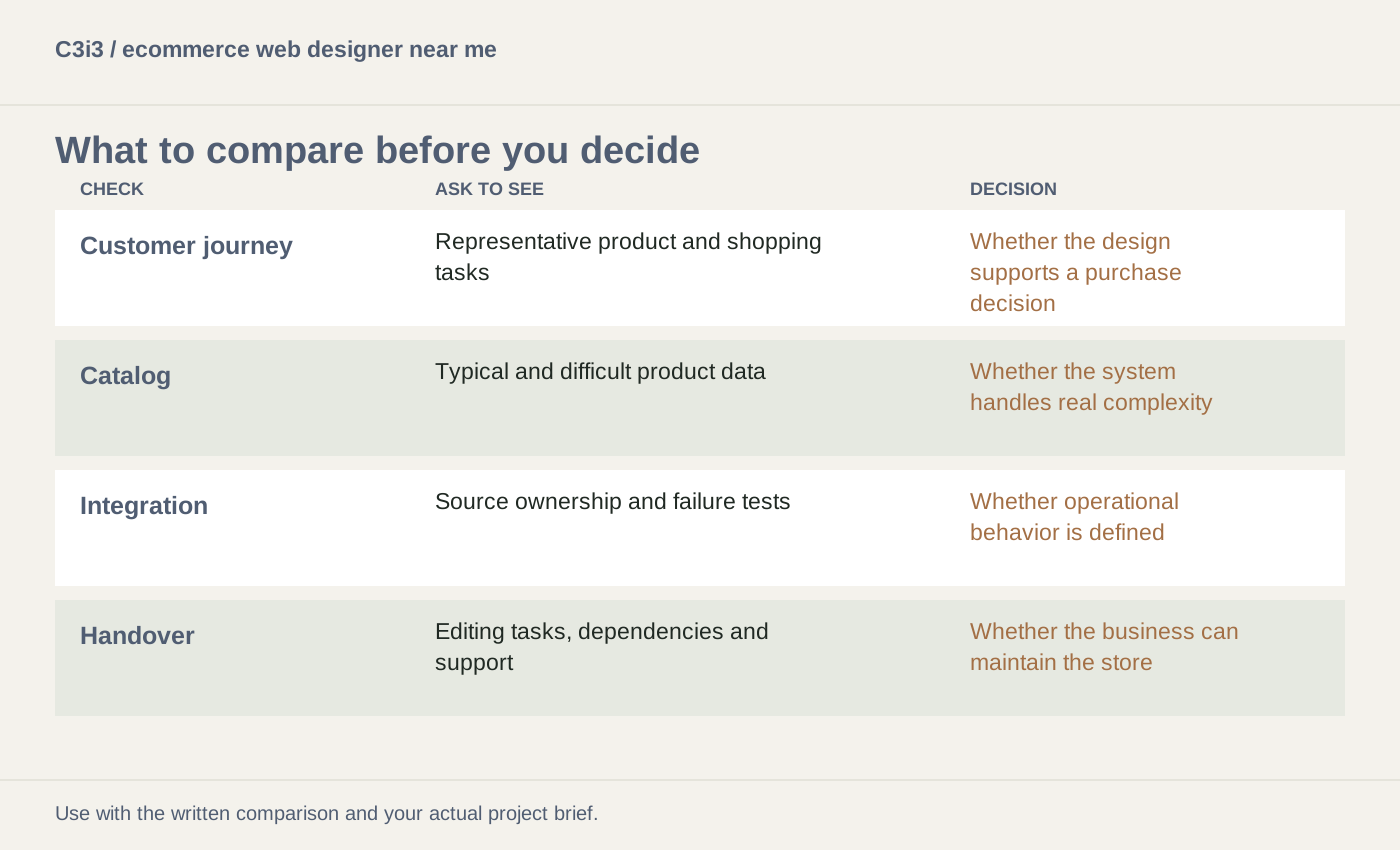
How do the key evaluation criteria compare?
| What to compare | Evidence to request | Decision it supports |
|---|---|---|
| Customer journey | Representative product and shopping tasks | Whether the design supports a purchase decision |
| Catalog | Typical and difficult product data | Whether the system handles real complexity |
| Integration | Source ownership and failure tests | Whether operational behavior is defined |
| Handover | Editing tasks, dependencies and support | Whether the business can maintain the store |
How could a Bay Area brand compare two ecommerce teams?
Imagine a brand with products that differ by size and compatibility. One candidate shows an attractive product-page mockup. Another walks through a real variant, an unavailable combination and the staff workflow for updating the product. The brand asks both teams to respond to the same tasks.
The comparison can still value visual quality, but it now includes the behavior and information required for the store. This hypothetical exercise does not favor one platform or guarantee conversion gains. It makes the scope and acceptance discussion more concrete.
What should you remember before the next step?
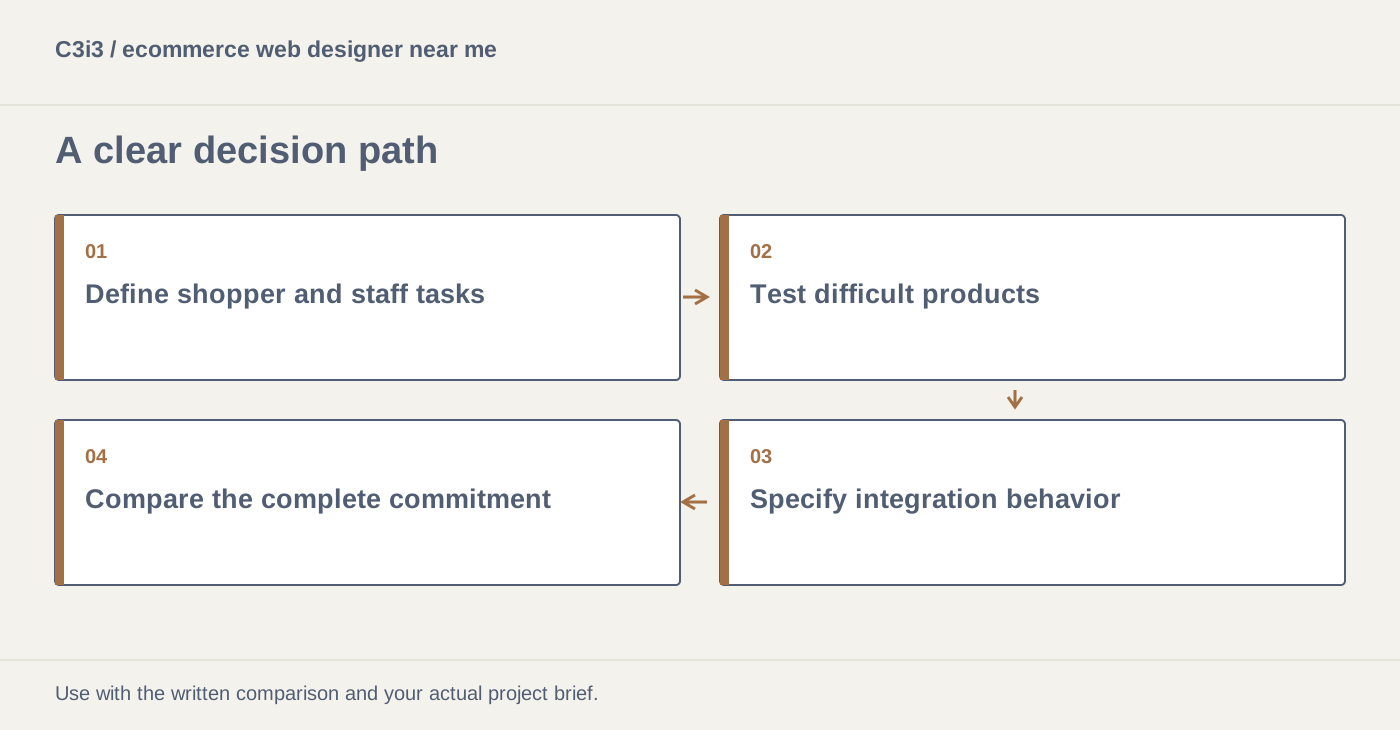
- Define shopper and staff tasks.
- Test difficult products.
- Specify integration behavior.
- Compare the complete commitment.
What else do local business buyers ask?
Does ecommerce web design include payment setup?
Only if the scope says so. Clarify checkout, payment, account and operational responsibilities rather than assuming they are included.
Should I choose a local agency over a platform specialist?
Compare the work you need, the proposed team and collaboration requirements. Local access and platform expertise are separate considerations.
Do we need a new ecommerce platform?
Not automatically. Review the current system and the requirement it cannot meet before committing to migration.
Which sources can help you verify these decisions?
The frameworks and hypothetical examples are C3i3 editorial analysis. The linked primary sources provide platform, usability or disclosure context for the relevant decisions.
How can C3i3 help you plan the right next step?

Share your current website, the customers you want to reach and the work you want to improve. C3i3 brings design, content, technology and marketing into a coordinated project scope.
Review C3i3’s background, explore ecommerce design and development or tell us about your project.