



































Content Operations.

Keep the publishing moving.
Keep the knowledge accurate.
Content operations organize the recurring work behind your website and resource library. We connect topics, briefs, sources, production, approvals, publishing, and maintenance so useful content does not depend on scattered files and last-minute reminders.
The service is the human coordination around the work as well as the tools that support it. We identify who knows the subject, who can approve it, where the current version lives, and what needs updating after publication. Article IDs, topic relationships, and a simple status record help a growing library remain understandable without turning the process into unnecessary administration.
Content inventory and ownership
Identify the agreed pages, assets, current versions, subject owners, and review responsibilities.
A practical production queue
Organize topics, briefs, priorities, source needs, and dependencies within the agreed capacity.
Editorial and approval workflow
Define draft, factual review, revisions, sign-off, and the conditions required for publication.
Clear responsibilities.
Useful ongoing work.
Your written scope confirms the depth and final format of the work. These are the components we can bring together for content operations.
- 01Content inventory and ownership
Identify the agreed pages, assets, current versions, subject owners, and review responsibilities.
- 02A practical production queue
Organize topics, briefs, priorities, source needs, and dependencies within the agreed capacity.
- 03Editorial and approval workflow
Define draft, factual review, revisions, sign-off, and the conditions required for publication.
- 04Publishing coordination
Prepare the agreed headings, imagery, metadata, links, categories, and destinations for release.
- 05Maintenance and refresh planning
Flag material that needs review, correction, consolidation, or a useful update.
- 06A readable progress record
Track stable IDs, status, owners, completed work, and next priorities without implying that a status change is a published result.
Bring the right
specialist into the work.
These specialist services develop the work within content operations. We can combine the relevant parts in one scope or focus on a particular decision.
Ongoing SEO Management
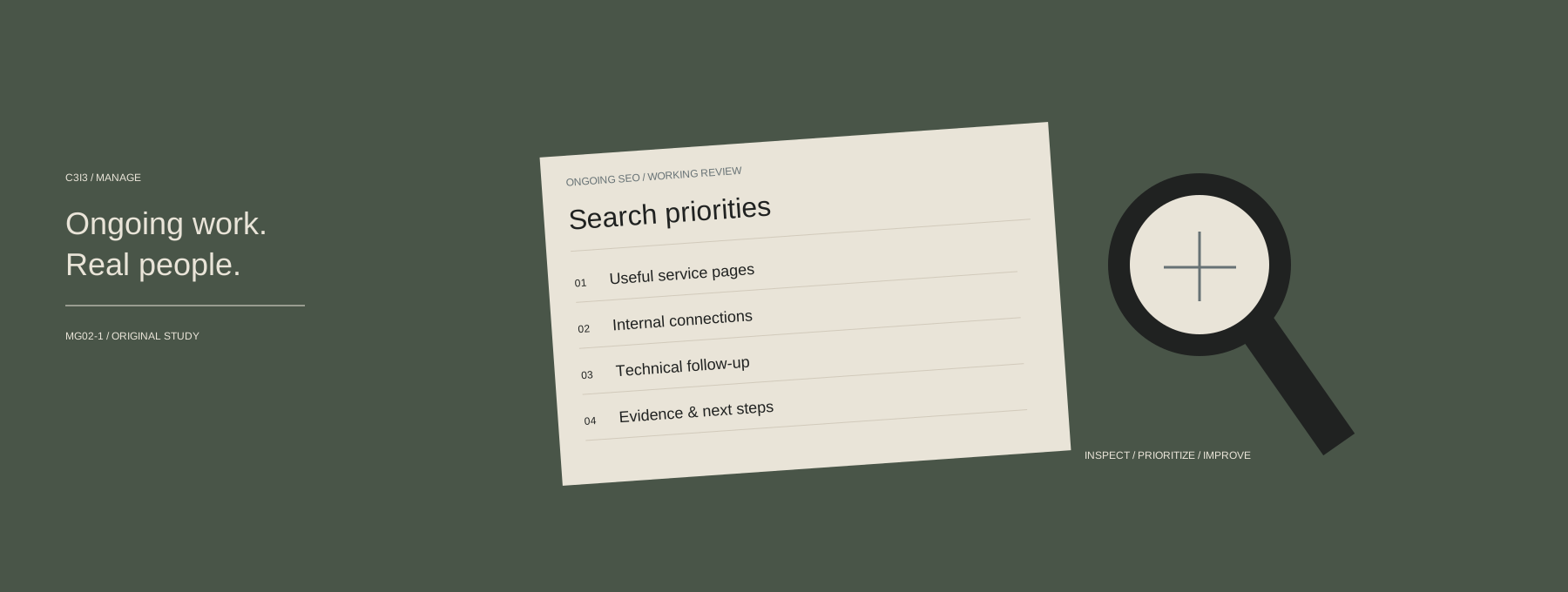
Ongoing SEO management provides a repeatable process for reviewing search performance, maintaining important pages, and acting on agreed priorities. We connect technical findings, content work, internal links, and business feedback instead of treating SEO as an unexplained monthly checklist.
Explore ongoing seo managementContent Refresh Programs
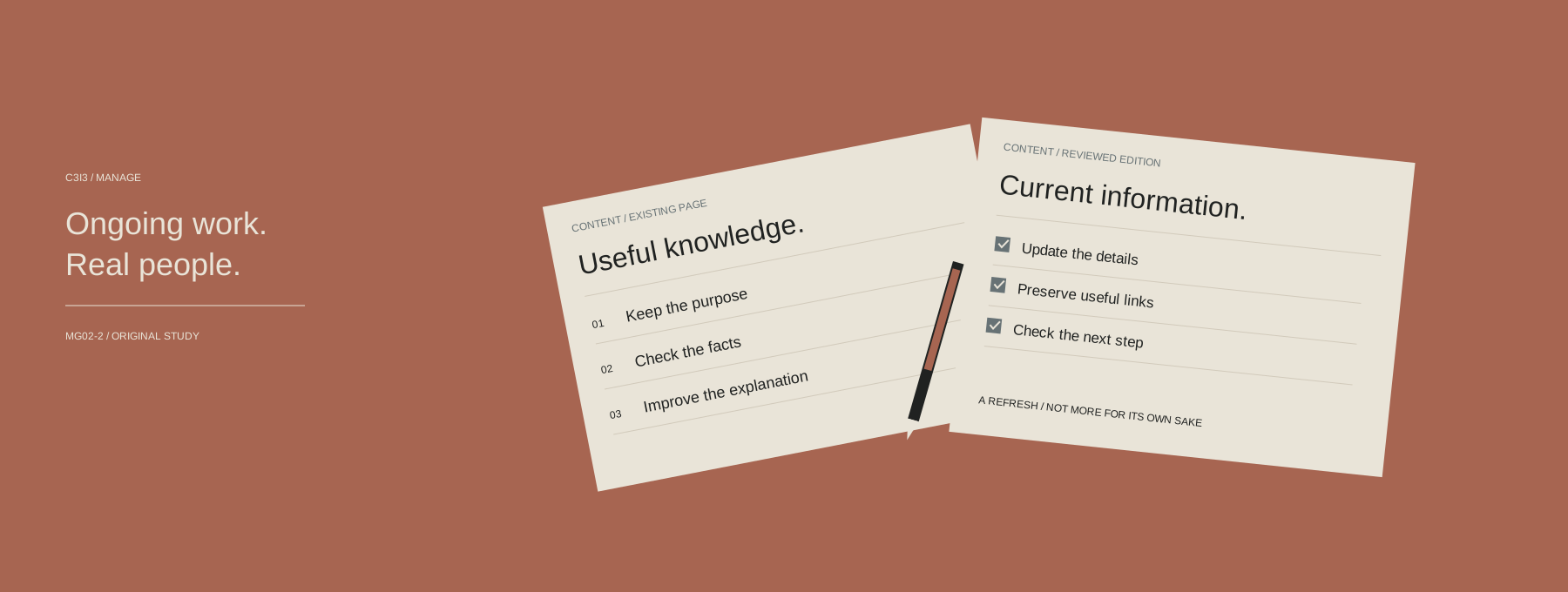
Content refresh programs review existing pages and improve the material that needs attention. We check accuracy, relevance, structure, evidence, links, and the role of each asset before deciding whether to update, expand, combine, or retire it.
Explore content refresh programsYouTube Channel Management
YouTube channel management gives your business an organized publishing and review process. We coordinate the agreed calendar, approved assets, release preparation, channel information and performance reporting so the channel can be maintained consistently.
Explore youtube channel managementA clear process.
An accountable team.
The work follows the business priorities, agreed capacity, responsible people, and review process. Open each step to see what happens and what it produces.
01Review the library and current process.
We identify the assets, recurring bottlenecks, sources, and decision owners.
A content-operations brief and inventory.
02Agree a manageable workflow.
We define the queue, approval stages, handoffs, and record your team can actually maintain.
A clear production and publishing process.
03Coordinate the agreed work.
We move scoped items through research, production, review, and publishing while keeping dependencies visible.
A reliable work and status record.
04Review and maintain the library.
We assess open work and published material and choose the next useful production or refresh tasks.
A practical review and next queue.
The support in practice.
A business with many service articles may know what it wants to explain but struggle to get expert review and final images in time. A simple queue with stable IDs, named reviewers, and a clear publication checklist can make the next article easier to finish and the existing library easier to maintain.
| The question or stage | What we examine | Why it matters |
|---|---|---|
| Queue | A clear brief, owner, and status | Make the next piece of work actionable. |
| Approval | The current draft and factual review | Prevent an outdated or unchecked version from being published. |
| Library | Published records and maintenance needs | Keep the growing resource useful over time. |
To show how content operations can support a decision. Your support plan and priorities depend on the actual systems, workload, people, and constraints in your brief.
Agree the priorities.
Then scope the support.
Scope defines the inventory, production capacity, editorial coordination, publishing work, refresh coverage, tools, and review rhythm. Original writing, illustration, video production, CMS development, and extensive migration are separate unless included.
| Before we start | What we agree |
|---|---|
| The decision | The business priority, current systems, support need, and boundaries the work needs to address. |
| The deliverables | Management and delivery scope, format, review rounds, responsibilities, and handover. |
| The investment | Written fees, schedule, dependencies, and any separate third-party or implementation costs. |
We confirm the proposal before work begins. You can commission a focused improvement, agree an ongoing support plan, or connect specialist work to a broader service.
Discuss scope and timingUseful questions.
Straightforward answers.
How is content operations different from content strategy?
Strategy defines the audience, subject priorities, and purpose. Operations organize the people, material, approvals, publishing, and upkeep needed to carry that strategy out.
Can you work with articles written by another team?
Yes. We agree source files, editorial standards, approval ownership, and publishing requirements rather than assume every draft is ready to post.
Do we need a complicated content-management system?
Not always. The process can use the existing platform and a simple tracking record if that supports the workload and ownership needs.
Can you keep stable IDs for a large article library?
Yes. IDs can remain stable as titles, categories, or status change, helping the team identify the same asset over time.
Does this include writing every article?
Only if the proposal includes that production capacity. Coordination, writing, design, and publishing are distinct responsibilities that we make explicit.
Will you maintain links and metadata as content changes?
That work can be included in the publishing and refresh scope, with coverage defined for the actual library.
How is the work priced and prioritized?
Your proposal defines the workload, deliverables, review rhythm, responsibilities, and fee. We agree priorities within that capacity and identify work that needs a separate estimate. Software, hosting, advertising, creator fees, and other provider costs are listed separately when applicable.
Who will we work with?
You work with a human point of contact supported by the relevant specialists. We agree the communication and approval process, keep a record of decisions, and explain the next priorities in language your team can use.
Keep the ongoing work
connected.
Ongoing SEO Management
Content Refresh Programs
For a related perspective, explore AI search optimization strategies for Bay Area businesses. Or return to all Manage services.