



































Topic Research.

Build around the questions
your customers actually have.
Topic research identifies the questions, decisions, and knowledge gaps your content should address. We explore the subject in context, connect it to your services, and define useful angles with the evidence and expertise each one needs.
Search phrases are one input, but a good topic can also begin in a sales conversation, support request, project review, or recurring customer misunderstanding. We look for specific decisions your team can explain well. Then we separate broad guides from focused answers and check the existing library so a new topic adds something useful rather than repeating an article already there.
Relevant questions
Start with the problems and choices customers need help understanding.
Distinct angles
Define what each proposed page contributes to the subject.
Stronger briefs
Make the source, evidence, and expertise requirements visible early.
Clear deliverables.
Useful decisions.
Your written scope confirms the depth and final format of the work. These are the components we can bring together for topic research.
- 01Topic discovery brief
The audience, services, subject boundaries, and business questions guiding the research.
- 02Customer question inventory
Useful questions from agreed customer, business, search, and subject sources.
- 03Topic clusters
Related themes with broad guide and focused answer roles distinguished.
- 04Existing-content overlap check
What is already covered and where an update is preferable to another URL.
- 05Angle and evidence notes
The specific question, useful answer, source needs, and original input for each idea.
- 06Prioritized topic shortlist
A practical set of next topics ready to move into keyword mapping or briefs.
Go deeper where
the decision needs it.
This work connects to the wider planning decisions below. Explore the relevant service to see its distinct scope and deliverables.
Content Strategy
Content strategy defines what your business needs to explain, who the content is for, and how the pieces connect. We plan service pages, articles, customer questions, and supporting assets around a useful journey rather than a publishing quota.
Explore content strategyKeyword Research
Keyword research identifies the search language, intent, and page opportunities relevant to your offers. We organize the findings into a practical map that helps you improve existing pages and choose useful new content.
Explore keyword researchA clear process.
A practical handover.
The method follows the question and agreed scope. Open each step to see what happens and what it produces.
01Collect real questions.
We review recurring customer decisions and the subject areas your team is equipped to explain.
A relevant starting question set.
02Explore the subject.
We investigate related themes, credible source needs, and different stages of understanding.
A topic map with useful boundaries.
03Check the gaps.
We compare proposed topics with existing content and separate distinct questions from repeated angles.
A cleaner shortlist without unnecessary overlap.
04Define the brief.
We identify the reader, decision, source needs, and relationship to the rest of the library.
Topics with a reason to exist and a practical next step.
A better angle begins with a specific decision.
Instead of another general article about marketing, an illustrative service business could explain what to prepare before requesting a quote, how to compare two approaches, or which operational constraint changes the recommendation. Each topic has a reader and a decision behind it.
| The question or stage | What we examine | Why it matters |
|---|---|---|
| Broad guide | Understand the subject | Define terms and link to specific decisions. |
| Focused answer | Resolve one question | Use examples, criteria, and practical detail. |
| Local topic | Explain a meaningful local difference | Include relevant context rather than a swapped city name. |
To show how topic research can support a decision. Your recommendations depend on the evidence, resources, and constraints in your own brief.
Define the question.
Then define the work.
The number of subject areas, depth of investigation, existing library size, and amount of original expert input shape the scope. Topic research identifies useful opportunities; full reporting, interviews, article writing, and image production can be commissioned separately.
| Before we start | What we agree |
|---|---|
| The decision | The audience, offer, question, and boundaries the work needs to address. |
| The deliverables | Research or production depth, format, review rounds, responsibilities, and handover. |
| The investment | Written fees, schedule, dependencies, and any separate third-party or implementation costs. |
We confirm the proposal before work begins. You can commission a focused engagement, connect it to a wider plan, or ask about a separately scoped delivery phase.
Discuss scope and timingUseful questions.
Straightforward answers.
What is topic research?
It is the work of identifying useful questions and angles for a defined audience and subject. It explains why a piece of content should exist, what it should answer, and what information it needs.
How is it different from keyword research?
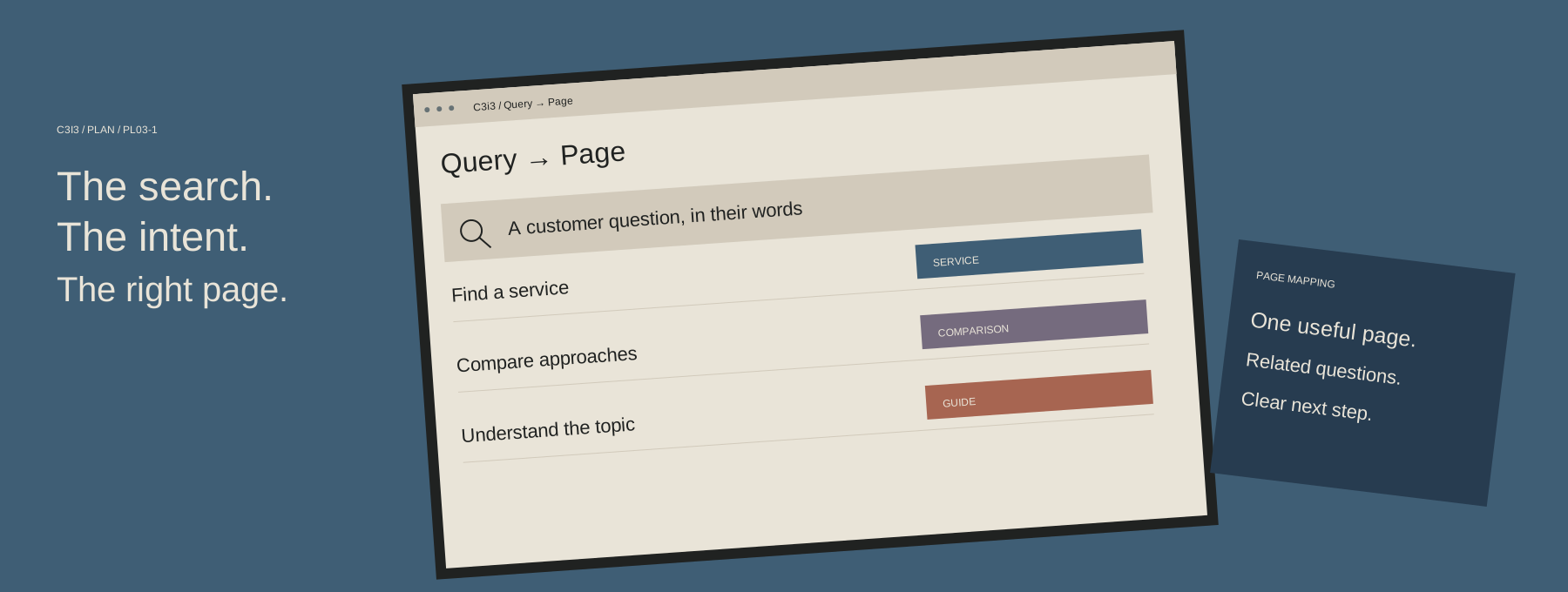
Topic research explores subject coverage and customer decisions. Keyword research examines search language and intent. Connecting the two helps turn useful ideas into a sensible page plan.
Where do you find topic ideas?
Agreed inputs can include customer questions, sales and support conversations, service information, existing content, relevant search questions, and credible subject sources.
Will you produce final article titles?
A shortlist can include working titles and angles. Final titles should follow the brief and actual content, rather than force an article to match a catchy phrase.
Can you plan pillar and cluster content?
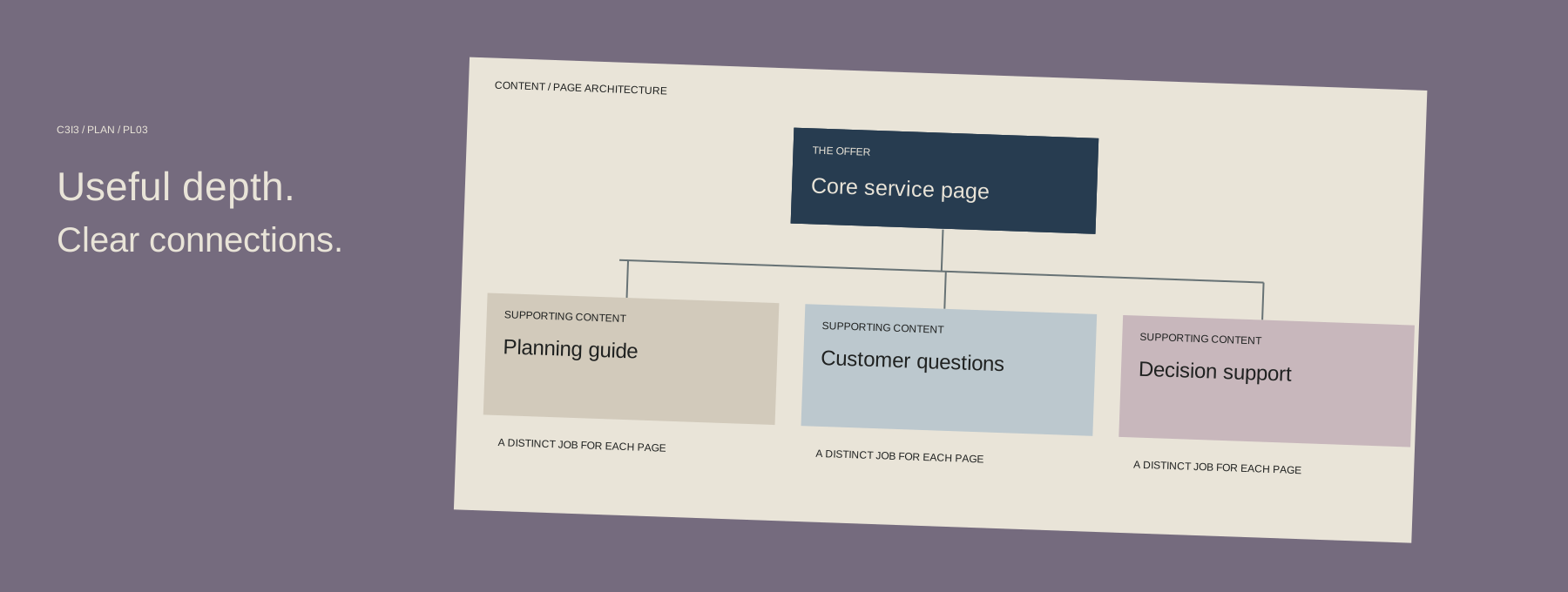
Yes. We distinguish a broad guide from focused supporting answers and define how they relate. A cluster should add depth, not repeat the same introduction across many pages.
How do you avoid repetitive local articles?
We ask what genuinely changes for the reader in that location: service conditions, operating constraints, evidence, or a specific local decision. If nothing useful changes, another article may not be warranted.
Does every topic need original research?
Not every topic needs a formal study, but each needs reliable information and a useful contribution. We identify where expert input, examples, interviews, or other original evidence would improve the answer.
What happens after the shortlist?
Topics can move into keyword mapping, detailed briefs, an editorial calendar, and production. We can support those stages or hand the research to your team.
Keep the next step
connected to the plan.
For a broader planning guide, read what a small business marketing plan should include. Or return to all Plan services.