



































Tag Management.

Keep the measurement organized.
Check before publishing the change.
Tag management organizes the code and configuration used to send selected website events to measurement or marketing tools. We document the agreed tags, triggers, data inputs, permissions, and release process so the setup is easier to understand and maintain.
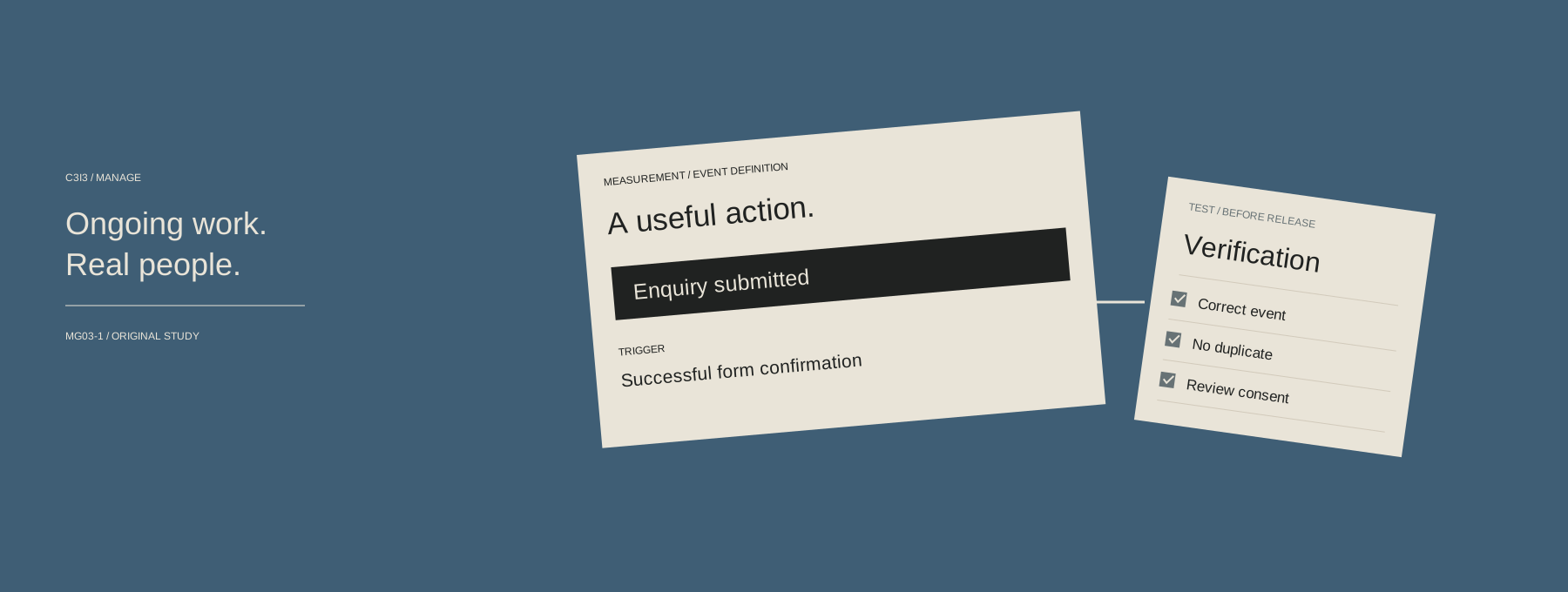
A tag firing is not the same as a business event being recorded correctly. We connect the implementation to a clear event definition and check the relevant conditions, duplicate behavior, and destination. Privacy and consent requirements need an agreed owner and implementation approach. Your business should retain control of the accounts and know which configuration is live.
Tag and account inventory
Identify the agreed containers, installed code, destinations, access, and existing responsibilities.
Event and data requirements
Define what each tag should send, when it should run, and which inputs and conditions it depends on.
Scoped configuration work
Create or revise the agreed tags, triggers, variables, and related implementation requirements.
Clear responsibilities.
Useful ongoing work.
Your written scope confirms the depth and final format of the work. These are the components we can bring together for tag management.
- 01Tag and account inventory
Identify the agreed containers, installed code, destinations, access, and existing responsibilities.
- 02Event and data requirements
Define what each tag should send, when it should run, and which inputs and conditions it depends on.
- 03Scoped configuration work
Create or revise the agreed tags, triggers, variables, and related implementation requirements.
- 04Consent and permission dependencies
Document the approved privacy requirements, access boundaries, and behavior that needs specialist or business review.
- 05Preview and verification
Test representative actions and states, inspect expected behavior, and check relevant destinations within the scope.
- 06Version and ownership handover
Record the released change, configuration purpose, account owners, validation, and future maintenance needs.
Bring the right
specialist into the work.
This work connects to the related website, content, and operational support below. Explore the relevant service to see its distinct scope and deliverables.
Analytics Setup
Analytics setup creates an agreed measurement foundation for a website or digital experience. We define the actions that matter, configure the scoped collection and reporting, and test whether the recorded events represent what actually happened.
Explore analytics setupPerformance Optimization
Performance optimization connects measurement, customer journeys, and focused improvements. We help your team understand the available evidence, identify practical points of friction, and prioritize changes that can be evaluated meaningfully.
Explore performance optimizationA clear process.
An accountable team.
The work follows the business priorities, agreed capacity, responsible people, and review process. Open each step to see what happens and what it produces.
01Review the existing implementation.
We establish what is installed, which accounts receive data, and who can authorize changes.
A tag inventory and access brief.
02Define the required behavior.
We map the actual event, conditions, data inputs, and destination rather than begin with a generic tag template.
A configuration plan.
03Configure and test the change.
We use the agreed preview and validation process to check representative actions before release.
A reviewed configuration and test record.
04Publish and document.
We release through the authorized workflow and record what changed and how it should be maintained.
A live-version and ownership reference.
The support in practice.
A button may be counted twice because one tag is hard-coded and another is configured through a container. A tag review can identify the overlapping setup, agree the intended event, and test the corrected behavior instead of treating the larger count as better performance.
| The question or stage | What we examine | Why it matters |
|---|---|---|
| Inventory | Existing tags and destinations | Understand the current collection before adding more code. |
| Behavior | The event and trigger conditions | Connect the configuration to the intended action. |
| Release | Validation and a clear version record | Make changes traceable and easier to troubleshoot. |
To show how tag management can support a decision. Your support plan and priorities depend on the actual systems, workload, people, and constraints in your brief.
Agree the priorities.
Then scope the support.
Scope identifies containers, tags, events, data-layer work, consent dependencies, environments, validation, and release. Server-side infrastructure, custom integrations, legal assessment, extensive platform repair, and ongoing monitoring are separate unless included.
| Before we start | What we agree |
|---|---|
| The decision | The business priority, current systems, support need, and boundaries the work needs to address. |
| The deliverables | Management and delivery scope, format, review rounds, responsibilities, and handover. |
| The investment | Written fees, schedule, dependencies, and any separate third-party or implementation costs. |
We confirm the proposal before work begins. You can commission a focused improvement, agree an ongoing support plan, or connect specialist work to a broader service.
Discuss scope and timingUseful questions.
Straightforward answers.
Is Google Tag Manager the same as Google Analytics?
No. Tag Manager helps manage when selected tags run. Analytics receives and reports measurement data. They can work together but have different roles.
Can you review an existing Tag Manager container?
Yes. We can inventory the relevant configuration and identify unclear ownership, duplication, missing inputs, or behavior that needs testing.
Will you test tags before publishing?
The agreed process includes representative preview and validation checks. Google Tag Manager provides a preview mode for inspecting a draft configuration before publication.
Can tag management fix inaccurate conversion counts?
It may resolve implementation problems such as duplicate or incorrect triggers. Accurate business definitions and downstream records are also needed.
Does installing a tag automatically resolve privacy requirements?
No. The required consent, disclosure, data handling, and access decisions need their own responsible owner and implementation plan.
Will our team know what is live?
The handover can include the version, purpose, event definitions, validation, account ownership, and remaining maintenance responsibilities.
How is the work priced and prioritized?
Your proposal defines the workload, deliverables, review rhythm, responsibilities, and fee. We agree priorities within that capacity and identify work that needs a separate estimate. Software, hosting, advertising, creator fees, and other provider costs are listed separately when applicable.
Who will we work with?
You work with a human point of contact supported by the relevant specialists. We agree the communication and approval process, keep a record of decisions, and explain the next priorities in language your team can use.
Keep the ongoing work
connected.

For a related perspective, explore what a small business marketing plan should include. Or return to all Manage services.