



































Market Research.

Replace assumptions
with useful evidence.
Market research helps you understand the people you want to reach, the alternatives they consider, and the conditions surrounding a marketing decision. We turn a clear research question into findings your team can use, with the limits of the evidence explained.
You may be entering a new service area, refining an offer, planning a website, or trying to understand why customers choose a competitor. The research should serve that decision. We distinguish what existing records and public information can answer from questions that need interviews, surveys, or other original research. A pile of information is not the deliverable; a reasoned recommendation is.
A sharper question
Define the decision the research needs to support.
A clearer picture
Examine customers, competing offers, and the context behind a purchase.
An informed next step
Separate observed findings, working hypotheses, and unanswered questions.
Clear deliverables.
Useful decisions.
Your written scope confirms the depth and final format of the work. These are the components we can bring together for market research.
- 01Research brief
The decision, scope, audiences, locations, sources, and boundaries of the study.
- 02Audience findings
Customer needs, buying triggers, objections, language, and information gaps supported by the evidence.
- 03Competitor review
A consistent comparison of relevant alternatives, their offers, messages, and customer journeys.
- 04Source and evidence log
Where the information came from and what each source can reasonably establish.
- 05Opportunity assessment
Possible gaps or improvements, with assumptions and confidence made visible.
- 06Recommendations and readout
A practical explanation of what the findings mean for the next planning or creative decision.
Go deeper where
the decision needs it.
These specialist services develop the work within market research. We can combine the relevant parts in one scope or focus on a particular decision.
Audience Research
Audience research examines who you are trying to reach, what creates a need, and what helps or prevents someone from choosing your business. We look beyond broad demographics to the questions and circumstances behind a buying decision.
Explore audience researchCompetitor Research
Competitor research compares the businesses and alternatives your customers may consider. We examine offers, positioning, content, user journeys, and publicly visible marketing to help you identify useful gaps without copying another brand's approach.
Explore competitor researchA clear process.
A practical handover.
The method follows the question and agreed scope. Open each step to see what happens and what it produces.
01Define the decision.
We agree the question, the market or service area, and what you will do differently when you have an answer.
A focused research brief.
02Choose the evidence.
We review existing business records and available sources, then agree whether direct customer research is needed.
An appropriate method and source plan.
03Compare and interpret.
We organize findings consistently and look for patterns without treating one comment or public claim as the whole market.
Findings separated from assumptions.
04Turn findings into action.
We discuss the implications with your team and identify the decisions the evidence supports and the questions still open.
A research readout and next-step recommendations.
A useful question changes the research.
An illustrative Bay Area service company considering a new location may need to understand customer demand, travel expectations, and the competing offers customers already see. That is a different research brief from testing whether existing customers understand a new package.
| The question or stage | What we examine | Why it matters |
|---|---|---|
| Decision | Should we refine the offer? | Study needs, objections, and alternatives. |
| Decision | Should we enter a service area? | Study local context and operating constraints. |
| Decision | What should the website explain? | Study customer questions and decision barriers. |
To show how market research can support a decision. Your recommendations depend on the evidence, resources, and constraints in your own brief.
Define the question.
Then define the work.
Research depth depends on the decision, geographic coverage, source access, and whether direct participants are involved. Recruitment, incentives, survey software, paid datasets, and specialist research are scoped separately when relevant. We agree the methodology and limitations before presenting a quote.
| Before we start | What we agree |
|---|---|
| The decision | The audience, offer, question, and boundaries the work needs to address. |
| The deliverables | Research or production depth, format, review rounds, responsibilities, and handover. |
| The investment | Written fees, schedule, dependencies, and any separate third-party or implementation costs. |
We confirm the proposal before work begins. You can commission a focused engagement, connect it to a wider plan, or ask about a separately scoped delivery phase.
Discuss scope and timingUseful questions.
Straightforward answers.
What market research does C3i3 provide?
Research that supports marketing, messaging, websites, content, and campaign decisions. It can combine audience research, competitor review, existing business information, and relevant public sources; direct interviews or surveys are agreed in the scope.
Is market research the same as competitor research?
No. Competitor research examines the alternatives customers can choose. Market research can also examine customer needs, buying conditions, service areas, and the wider decision context.
Can you research a specific Bay Area city?
Yes, when the city or service area matters to the decision. We define the geography and available evidence rather than assuming that customers across the entire region behave identically.
Do you conduct customer interviews or surveys?
These can be considered when direct evidence is needed. The method, recruitment, participant permissions, question design, and analysis effort must be scoped; they are not automatically included in every research engagement.
Can existing customer records be useful?
Yes. Enquiry reasons, sales notes, recurring objections, support questions, and lost opportunities may reveal useful patterns. We consider how the records were collected and what they leave out.
Will the research prove that an idea will succeed?
No research can guarantee a launch or campaign outcome. It can reduce uncertainty, challenge assumptions, and make the remaining risks and test requirements clearer.
What will we receive at the end?
A research brief, relevant findings, source notes, limitations, and recommendations in an agreed format. We include a readout so your team understands how to use the findings.
How does research connect to the strategy?
The findings can inform audience selection, positioning, the offer, content priorities, and campaign choices. We can scope the next planning stage separately or connect the work within one engagement.
Keep the next step
connected to the plan.
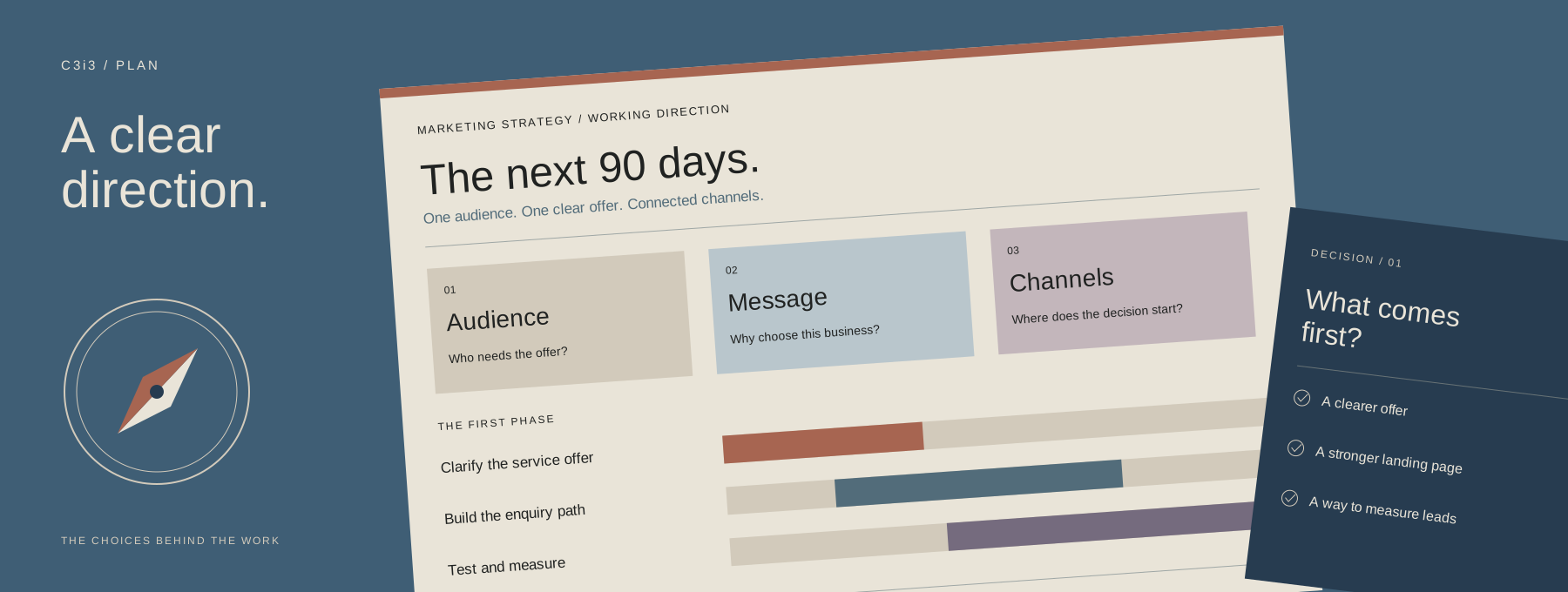
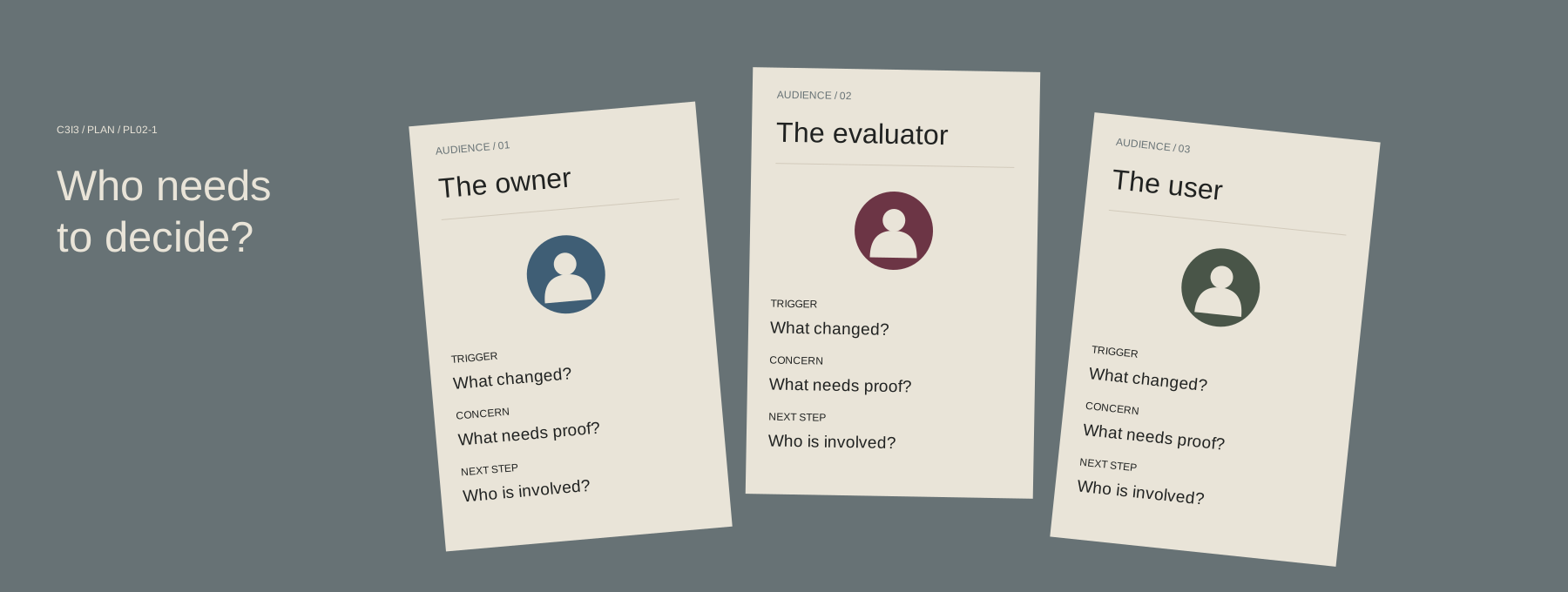
For a broader planning guide, read what a small business marketing plan should include. Or return to all Plan services.