



































UX Design.

Make the journey understandable.
Make the interface feel considered.
UX design shapes how people find information, complete tasks, and move through a website or digital product. We connect user needs, business requirements, structure, flows, and interaction decisions before developing or refining the visual interface.
A polished screen is only one moment in an experience. We work through what happens before it, what information it needs, and how the person recovers when something goes wrong. Research, prototypes, and review help distinguish assumptions from evidence. The level of detail follows the project’s complexity and the decisions that need to be made.
User and business brief
Define the important users, tasks, business requirements, and project constraints.
Research and evidence plan
Identify what is already known and how to investigate the decisions that remain uncertain.
Information architecture
Organize content, navigation, and relationships so people can find a useful path.
Clear deliverables.
Useful decisions.
Your written scope confirms the depth and final format of the work. These are the components we can bring together for ux design.
- 01User and business brief
Define the important users, tasks, business requirements, and project constraints.
- 02Research and evidence plan
Identify what is already known and how to investigate the decisions that remain uncertain.
- 03Information architecture
Organize content, navigation, and relationships so people can find a useful path.
- 04Task flows and wireframes
Work through the main journeys, decisions, inputs, and important alternate states.
- 05Interactive prototypes
Create agreed prototypes to explore behavior, discuss trade-offs, and support user evaluation.
- 06Design and development handover
Document the chosen experience, open questions, and requirements for visual design and implementation.
Go deeper where
the decision needs it.
These specialist services develop the work within ux design. We can combine the relevant parts in one scope or focus on a particular decision.
UX Research
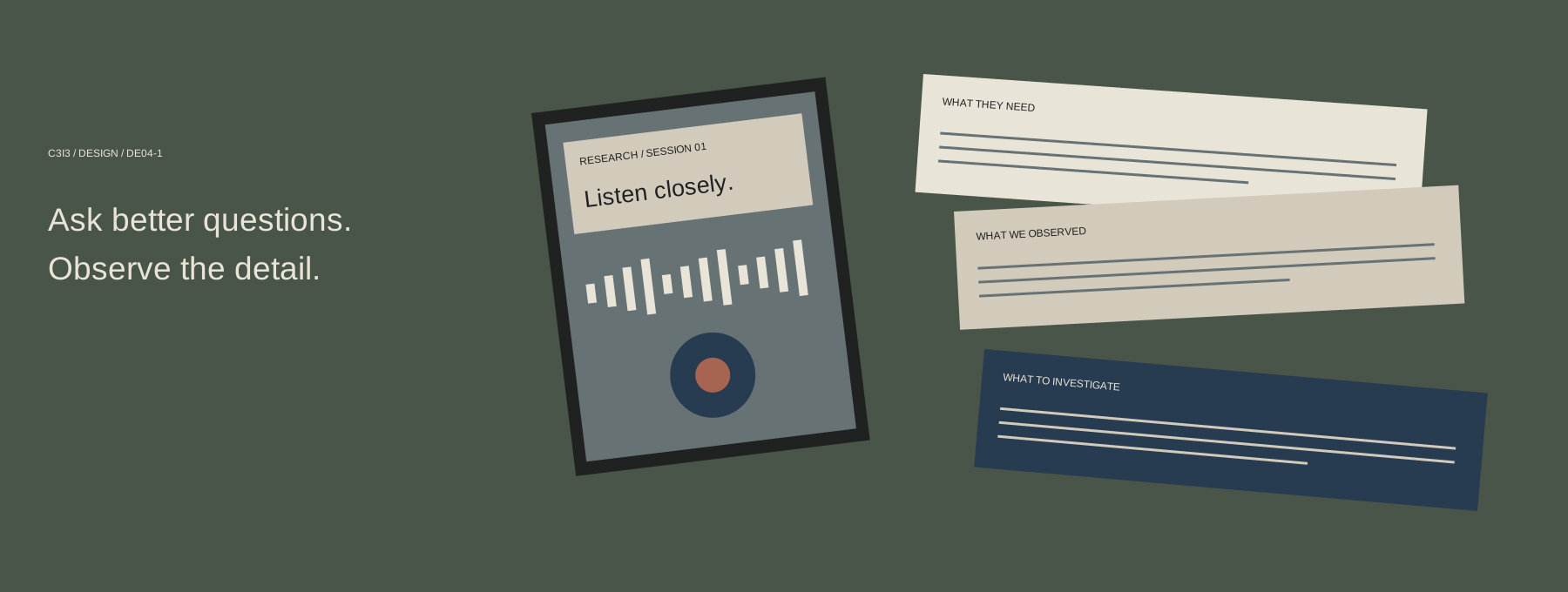
UX research investigates the people, tasks, and conditions a digital experience needs to support. We choose methods around a clear research question and turn the findings into practical implications for design and product decisions.
Explore ux researchUI Design
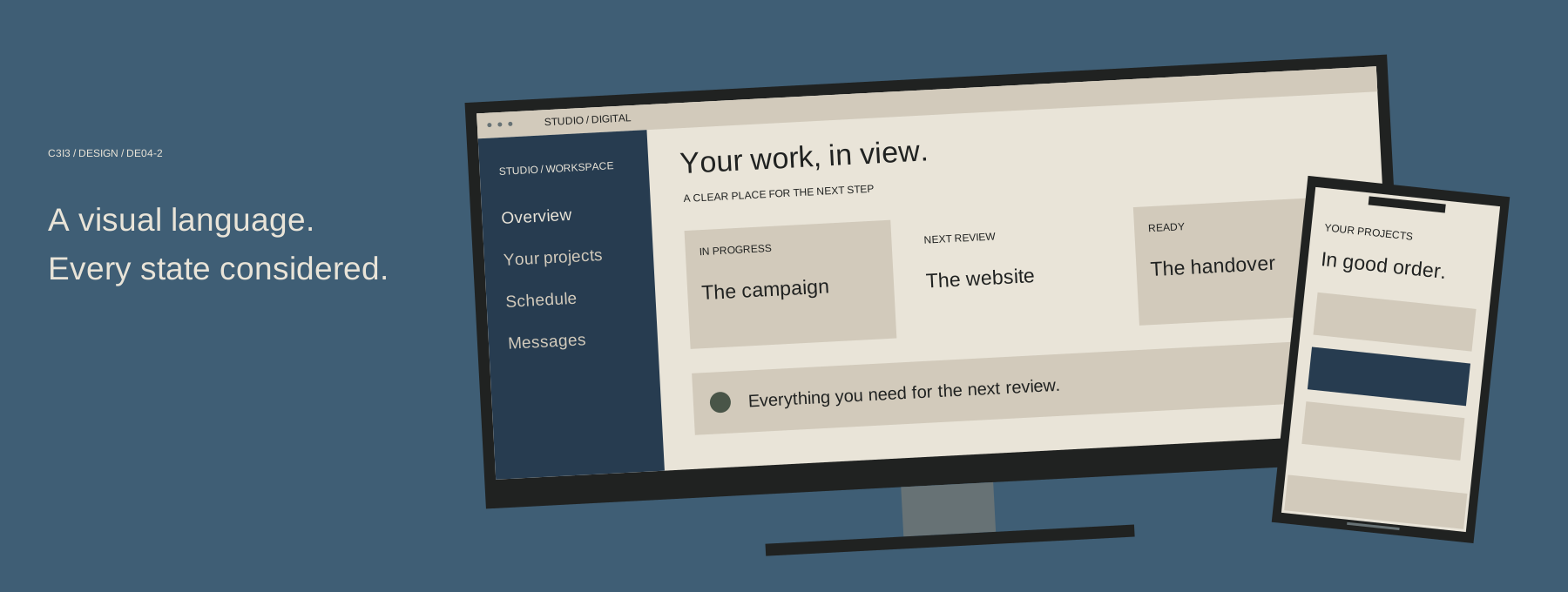
UI design develops the visual and interactive presentation of a website, app, or digital product. We create the screen layouts, component relationships, typography, and states that make the agreed experience clear and consistent.
Explore ui designUX Audits
A UX audit reviews an existing website or product for problems that make important tasks harder. We examine the agreed journeys, document the evidence and reasoning behind each finding, and prioritize practical improvements.
Explore ux auditsA clear process.
A practical handover.
The approach follows the user needs, content, technical requirements, and agreed scope. Open each step to see what happens and what it produces.
01Understand the task and context.
We clarify the users, goals, existing evidence, and constraints that shape the experience.
A UX brief and research priorities.
02Map the structure and journeys.
We organize information and work through the steps people need to complete.
Flows and representative wireframes.
03Prototype and evaluate.
We create the agreed prototype and review it with stakeholders or relevant users where testing is scoped.
Evidence and design refinements.
04Resolve the handover.
We document the experience and remaining dependencies for UI design or development.
A clear interaction-design reference.
The design in practice.
A booking product may look simple until a user needs to change a time, correct information, or recover from an unavailable slot. UX design works through those conditions alongside the happy path so the interface has a coherent answer when the situation changes.
| The question or stage | What we examine | Why it matters |
|---|---|---|
| Task | What the person is trying to do | Give the experience a clear purpose. |
| Flow | Steps, choices, and alternate states | Make the path coherent beyond one screen. |
| Evaluation | Observed use and feedback | Improve decisions with relevant evidence. |
To show how ux design can support a decision. Your design depends on the users, content, requirements, and constraints in your own brief.
Agree the brief.
Then make the work.
Scope follows the user groups, research, journeys, prototypes, evaluation, and documentation required. Visual UI design, production development, recruitment costs, and ongoing product management are separate unless specified.
| Before we start | What we agree |
|---|---|
| The decision | The audience, offer, question, and boundaries the work needs to address. |
| The deliverables | Design and implementation scope, format, review rounds, responsibilities, and handover. |
| The investment | Written fees, schedule, dependencies, and any separate third-party or implementation costs. |
We confirm the proposal before work begins. You can commission a focused engagement, connect it to a wider plan, or ask about a separately scoped delivery phase.
Discuss scope and timingUseful questions.
Straightforward answers.
How is UX design different from UI design?
UX focuses on the experience, structure, tasks, and behavior. UI focuses on the visual and interactive presentation of that experience. The work often overlaps and should connect.
Can you improve an existing product?
Yes. We can assess its current journeys and prioritize the problems before redesigning the agreed areas.
Do you always need to interview users?
The research method follows the question and existing evidence. Interviews, usability sessions, analytics, or other approaches may be appropriate.
Will you create a working prototype?
A prototype can be included at an agreed level of fidelity. It demonstrates selected behavior and is not automatically a production application.
Can UX design support accessibility?
We consider different needs and interaction barriers in the design. The scope should also define implementation and evaluation responsibilities against agreed criteria.
Can you work with our development team?
Yes. We can document flows, states, requirements, and open questions and collaborate through an agreed review process.
How do you price this project?
We quote the agreed deliverables, research, complexity, review rounds, and handover or implementation requirements. The proposal identifies the fee, responsibilities, dependencies, and what would require a change of scope.
What should we prepare before we begin?
Bring the business goal, intended users, existing brand and project material, available content, and any platform, budget, or timing constraints. We will identify missing inputs and agree who can approve the work.
Keep the experience
connected.
For a useful planning guide, read whether you need a website, app, or landing page. Or return to all Design services.