



































Integrated Marketing Plans.

Make every channel
work toward the same goal.
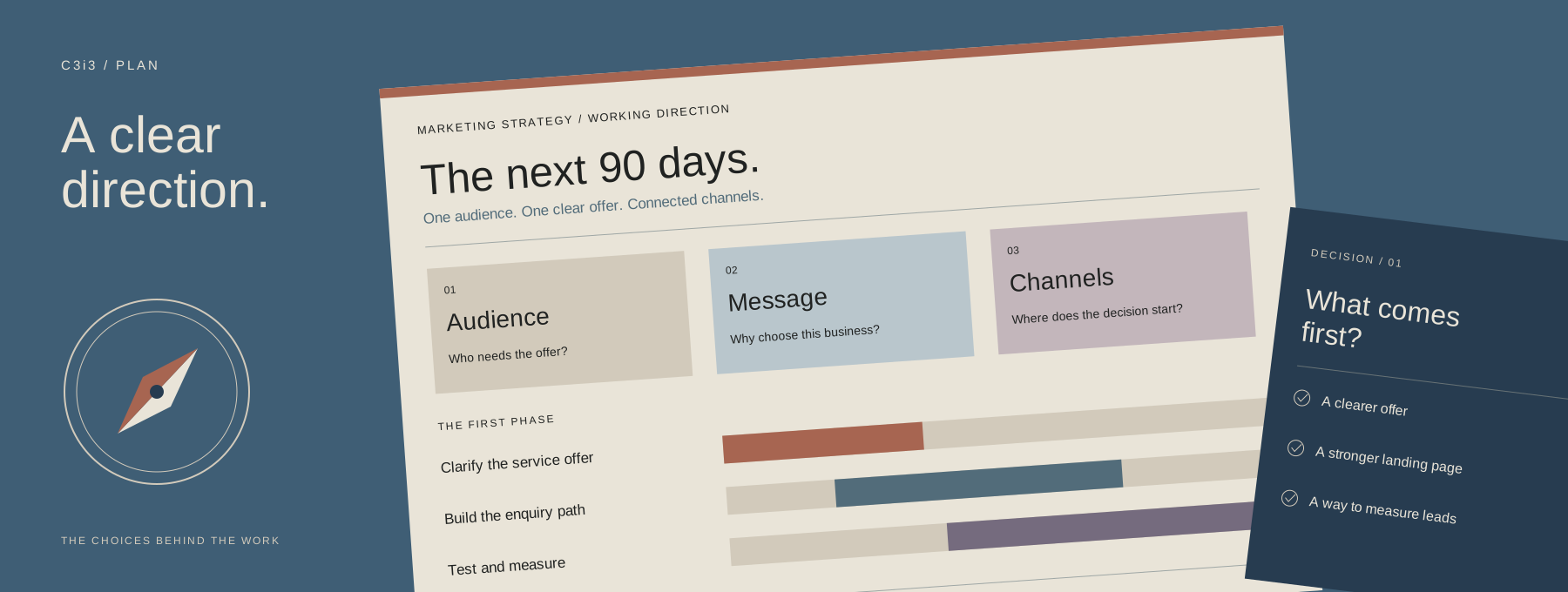
An integrated marketing plan connects your website, search, content, advertising, and customer follow-up around one business objective. We define the role of each channel, the order of work, and who owns the handoffs.
This is useful when campaigns feel disconnected: the ad promises one thing, the website says another, and no one knows what happens after an enquiry. We examine the whole journey, agree a consistent offer, and build a plan your people can coordinate. A channel only earns a place when it has a clear job and the resources to support it.
One shared direction
Align the offer, audience, message, and next step across the campaign.
Clear channel roles
Separate discovery, evaluation, conversion, and follow-up rather than asking every channel to do everything.
A manageable sequence
Schedule the essential work before adding more activity or media spend.
Clear deliverables.
Useful decisions.
Your written scope confirms the depth and final format of the work. These are the components we can bring together for integrated marketing plans.
- 01Customer journey map
The main steps from first contact to enquiry, booking, or purchase, including important handoffs.
- 02Channel responsibility map
The purpose, audience, message, and destination for each recommended channel.
- 03Campaign messaging brief
A shared offer and proof points that creative, content, and advertising teams can use.
- 04Production requirements
Landing pages, copy, graphics, commercial assets, tracking, and follow-up materials needed to launch.
- 05Budget and ownership plan
Separate production, media, software, and management needs, with an owner for each task.
- 06Phased action roadmap
Dependencies, review dates, and measurement priorities for a practical first phase.
Go deeper where
the decision needs it.
This work connects to the wider planning decisions below. Explore the relevant service to see its distinct scope and deliverables.
Marketing Strategy
Choose your audience, message, channels, budget, and marketing priorities with a clear written direction.
Explore marketing strategyCampaign Strategy
Campaign strategy defines the audience, offer, message, channel roles, and conversion path behind a coordinated marketing effort. We plan the work around a specific objective so creative production and media decisions have a useful brief.
Explore campaign strategyA clear process.
A practical handover.
The method follows the question and agreed scope. Open each step to see what happens and what it produces.
01Map the current journey.
We review the website, campaigns, enquiry routes, and follow-up process with your team. We note where the promise or next step changes between channels.
A map of the current experience and its gaps.
02Assign each channel a job.
We compare the audience's buying needs with your capacity and budget, then select a focused channel mix.
A channel plan with a reason for every inclusion.
03Plan the handoffs.
We define messages, production requirements, responsibilities, and the sequence that gets the essentials ready first.
A shared delivery brief and launch sequence.
04Agree the review rhythm.
We choose practical business measures and identify the information needed to compare the channels fairly.
A review plan that connects activity to enquiries and customers.
One offer. Several useful touchpoints.
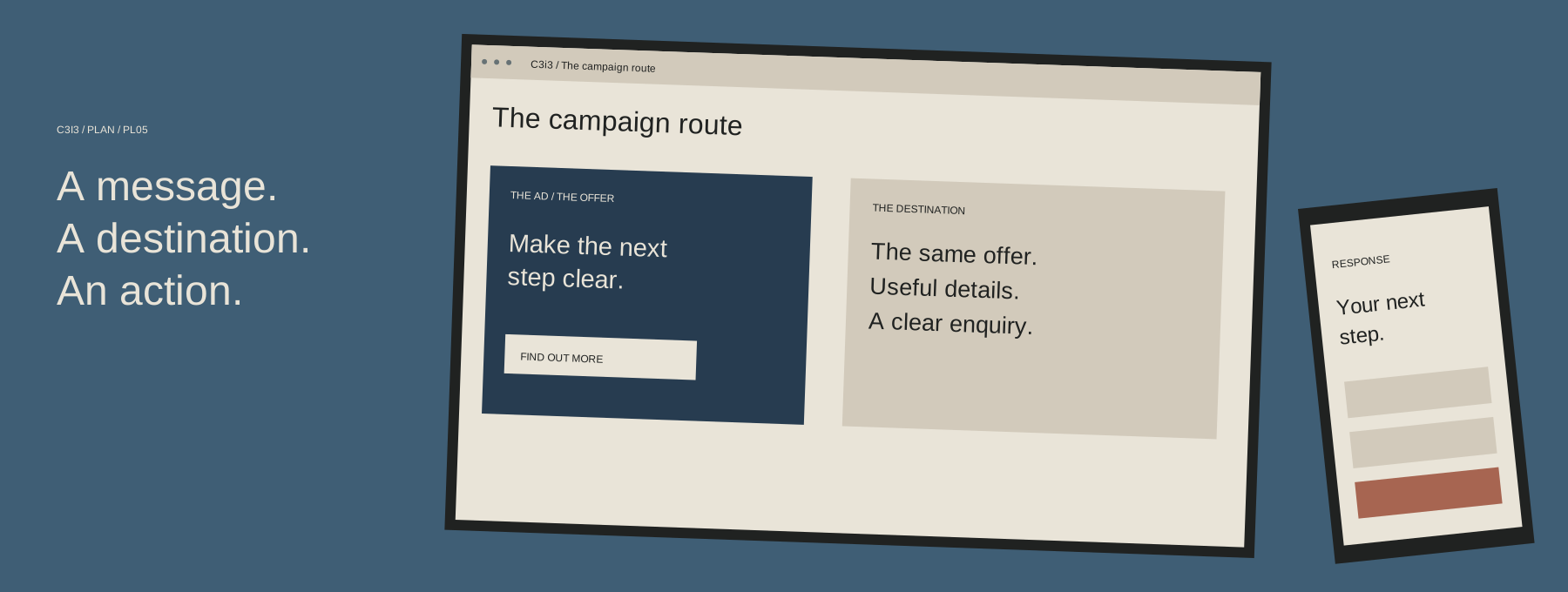
For an illustrative home-service campaign, a search ad can reach someone with an immediate need, a focused page can explain the service, and a follow-up message can answer the questions that prevent booking. The plan joins those steps rather than treating them as separate projects.
| The question or stage | What we examine | Why it matters |
|---|---|---|
| Discovery | Relevant search or local content | Explain who the service is for. |
| Decision | Focused service page | Show scope, evidence, and an enquiry route. |
| Follow-up | Consistent response process | Record qualification, quote, and booking outcomes. |
To show how integrated marketing plans can support a decision. Your recommendations depend on the evidence, resources, and constraints in your own brief.
Define the question.
Then define the work.
An integrated plan may cover one campaign or several ongoing channels. The scope depends on the number of offers, customer groups, existing assets, and teams involved. We identify whether original research, tracking setup, creative production, or account work needs a separate engagement.
| Before we start | What we agree |
|---|---|
| The decision | The audience, offer, question, and boundaries the work needs to address. |
| The deliverables | Research or production depth, format, review rounds, responsibilities, and handover. |
| The investment | Written fees, schedule, dependencies, and any separate third-party or implementation costs. |
We confirm the proposal before work begins. You can commission a focused engagement, connect it to a wider plan, or ask about a separately scoped delivery phase.
Discuss scope and timingUseful questions.
Straightforward answers.
What is an integrated marketing plan?
It is a coordinated plan for how selected channels support the same offer and business objective. It connects messages, assets, budget, responsibilities, customer handoffs, and measurement.
Do I need to use every marketing channel?
No. A focused mix is often more useful than spreading a small team across many channels. We recommend a channel only when its role, audience fit, and ongoing effort are clear.
How is this different from marketing strategy?
Marketing strategy sets the choices about audience, positioning, and priorities. The integrated plan translates those choices into coordinated channel activity. We can combine the two when the direction is still unclear.
Can you work with our existing agencies or staff?
Yes. The plan can define responsibilities for your team, current partners, and C3i3. We clarify who approves assets, owns each channel, and handles enquiries.
Does the plan include advertising costs?
It can recommend how to think about media allocation, but actual media spend is separate from planning and production fees. Any estimates are identified as estimates and reviewed against account information.
Can we start with one campaign?
Yes. One offer, audience, and conversion route can provide a manageable starting point. Expansion should follow what the initial work and available evidence support.
Will you build the assets in the plan?
We can quote design, copy, production, search, and campaign management separately. The planning deliverables also support a handover to your own team.
What should I bring to the first discussion?
Your current offer, website, active channels, goals, budget range, and an explanation of how enquiries are handled. Existing reports and campaign material help us avoid planning in isolation.
Keep the next step
connected to the plan.
For a broader planning guide, read what a small business marketing plan should include. Or return to all Plan services.