



































Product Page Design.

Show the product.
Explain the choice.
Product page design presents the images, options, specifications, and buying conditions that help someone decide whether an item suits them. We organize the information and selection states around the actual product and platform.
A shopper may need to compare a size, inspect a detail, confirm compatibility, or understand delivery before adding anything to a cart. We prioritize that information and keep the chosen variant connected to its image, price, and availability. The page must remain understandable when the product has missing options, stock limits, or extra requirements.
Product decision brief
Identify the information and uncertainties that matter for the selected product types.
Content and attribute hierarchy
Organize imagery, benefits, specifications, compatibility, care, and purchase conditions.
Product-page layout
Design the gallery, description, evidence, option selection, and buying area as one coherent experience.
Clear deliverables.
Useful decisions.
Your written scope confirms the depth and final format of the work. These are the components we can bring together for product page design.
- 01Product decision brief
Identify the information and uncertainties that matter for the selected product types.
- 02Content and attribute hierarchy
Organize imagery, benefits, specifications, compatibility, care, and purchase conditions.
- 03Product-page layout
Design the gallery, description, evidence, option selection, and buying area as one coherent experience.
- 04Variant and availability states
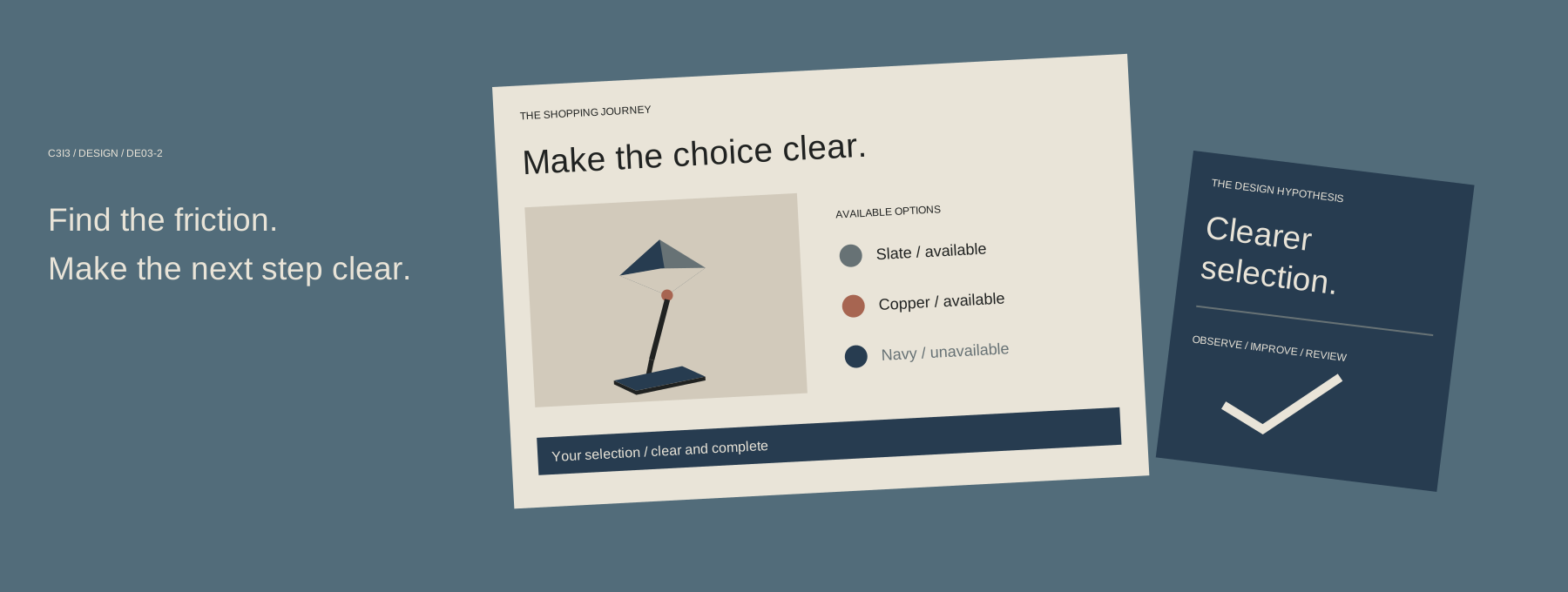
Show selected, unavailable, incomplete, and other relevant conditions with clear feedback.
- 05Responsive product interaction
Design image exploration and selection behavior for the agreed smaller-screen contexts.
- 06Template and data handover
Specify reusable components and the product fields needed to populate them accurately.
Go deeper where
the decision needs it.
This work connects to the related design and development work below. Explore the relevant service to see its distinct scope and deliverables.
Ecommerce Design
Ecommerce design connects browsing, product evaluation, and purchase into a coherent shopping experience. We design the agreed catalog, product, cart, and checkout journeys around the information customers need to choose confidently.
Explore ecommerce designEcommerce Conversion Design
Ecommerce conversion design addresses specific points of friction in a shopping journey. We use the available evidence to prioritize improvements in browsing, product evaluation, cart, or checkout, then design changes that can be implemented and assessed.
Explore ecommerce conversion designA clear process.
A practical handover.
The approach follows the user needs, content, technical requirements, and agreed scope. Open each step to see what happens and what it produces.
01Examine the real product data.
We review representative items, variants, imagery, and customer questions.
A product-page requirements brief.
02Prioritize the buying information.
We decide what needs to be visible near the purchase area and what belongs in supporting sections.
A product-content wireframe.
03Design the page and edge states.
We develop the layout and option behavior using realistic product scenarios.
Reviewed responsive product designs.
04Prepare reusable implementation rules.
We document fields, selection logic, gallery requirements, and the limits of the template.
A product-page handover.
The design in practice.
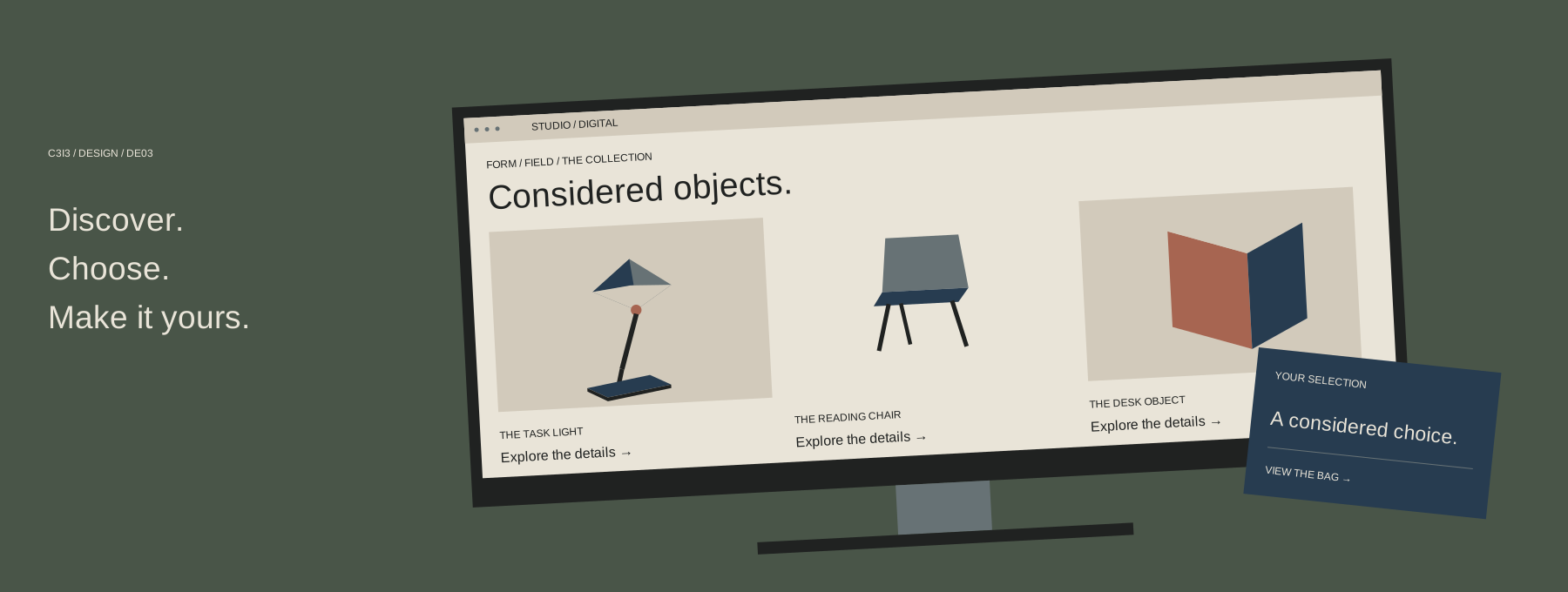
A desk-light product page may need to distinguish mounting options, reach, finish, and power requirements. The design can keep the current selection visible, explain compatibility, and show the relevant image before the buyer adds the lamp to the cart.
| The question or stage | What we examine | Why it matters |
|---|---|---|
| Gallery | The product and important details | Show what needs to be inspected. |
| Selection | Options and compatibility | Keep the chosen configuration understandable. |
| Purchase | Price, availability, and delivery | Clarify the conditions of the decision. |
To show how product page design can support a decision. Your design depends on the users, content, requirements, and constraints in your own brief.
Agree the brief.
Then make the work.
Scope depends on product types, option complexity, gallery needs, platform limits, and the number of states. Product photography, copywriting, data cleanup, and development are separate unless included.
| Before we start | What we agree |
|---|---|
| The decision | The audience, offer, question, and boundaries the work needs to address. |
| The deliverables | Design and implementation scope, format, review rounds, responsibilities, and handover. |
| The investment | Written fees, schedule, dependencies, and any separate third-party or implementation costs. |
We confirm the proposal before work begins. You can commission a focused engagement, connect it to a wider plan, or ask about a separately scoped delivery phase.
Discuss scope and timingUseful questions.
Straightforward answers.
Can one template support different product types?
Sometimes, with flexible components and clear data rules. Very different decisions may need separate templates rather than one overloaded page.
How do you handle out-of-stock variants?
We design clear availability and selection feedback based on the actual store rules. Restock notifications or alternatives require their own implementation scope.
Do you include image zoom and galleries?
The agreed gallery behavior can include detail views, navigation, captions, and responsive interactions.
Can you design subscription or bundle products?
Yes, when pricing, selection, recurring terms, and platform behavior are clearly defined in the brief.
Will the design include product descriptions?
We design for realistic content. Writing or rewriting the descriptions is a separate deliverable unless included.
Can the page include comparisons or sizing help?
Yes, where they address a real buying question and the required data is available and accurate.
How do you price this project?
We quote the agreed deliverables, research, complexity, review rounds, and handover or implementation requirements. The proposal identifies the fee, responsibilities, dependencies, and what would require a change of scope.
What should we prepare before we begin?
Bring the business goal, intended users, existing brand and project material, available content, and any platform, budget, or timing constraints. We will identify missing inputs and agree who can approve the work.
Keep the experience
connected.
For a useful planning guide, read whether you need a website, app, or landing page. Or return to all Design services.