



































Ecommerce Design.

Make the range inviting.
Make the purchase understandable.
Ecommerce design connects browsing, product evaluation, and purchase into a coherent shopping experience. We design the agreed catalog, product, cart, and checkout journeys around the information customers need to choose confidently.
The work begins with the products and operating model. Variants, stock, delivery, returns, subscriptions, or account requirements can change the experience substantially. We use realistic product data and consider what happens when an item is unavailable or a choice has not been made. The store’s visual character should support those decisions without obscuring the practical details.
Store and catalog brief
Understand the range, buyers, product attributes, operating model, and platform constraints.
Shopping journey structure
Map category browsing, filtering, comparison, product evaluation, and the agreed purchase path.
Original store visual design
Develop a coherent storefront and reusable templates that support the brand and product presentation.
Clear deliverables.
Useful decisions.
Your written scope confirms the depth and final format of the work. These are the components we can bring together for ecommerce design.
- 01Store and catalog brief
Understand the range, buyers, product attributes, operating model, and platform constraints.
- 02Shopping journey structure
Map category browsing, filtering, comparison, product evaluation, and the agreed purchase path.
- 03Original store visual design
Develop a coherent storefront and reusable templates that support the brand and product presentation.
- 04Responsive product and cart states
Design variants, availability, selection, cart feedback, and other agreed conditions across devices.
- 05Checkout and trust requirements
Make costs, delivery expectations, policies, and purchase commitments visible in the appropriate places.
- 06Platform handover
Document assets, components, product-data needs, and implementation requirements for the chosen platform.
Go deeper where
the decision needs it.
These specialist services develop the work within ecommerce design. We can combine the relevant parts in one scope or focus on a particular decision.
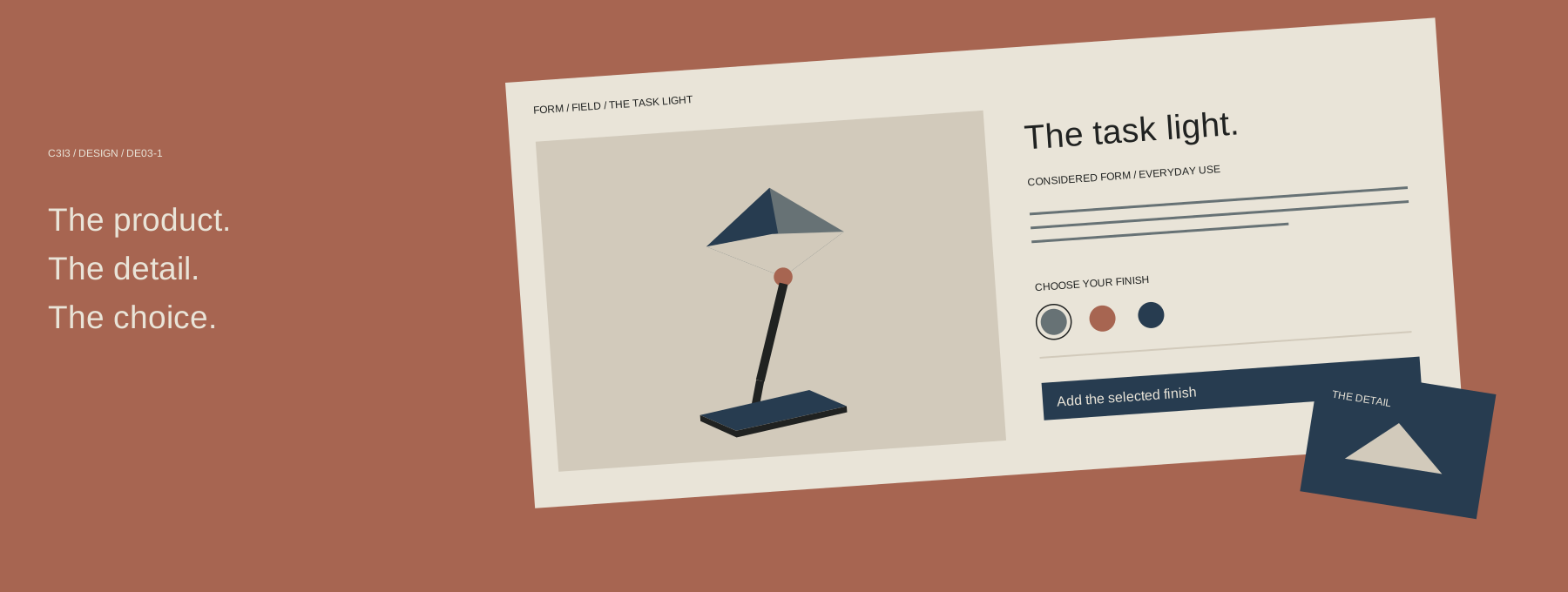
Product Page Design
Product page design presents the images, options, specifications, and buying conditions that help someone decide whether an item suits them. We organize the information and selection states around the actual product and platform.
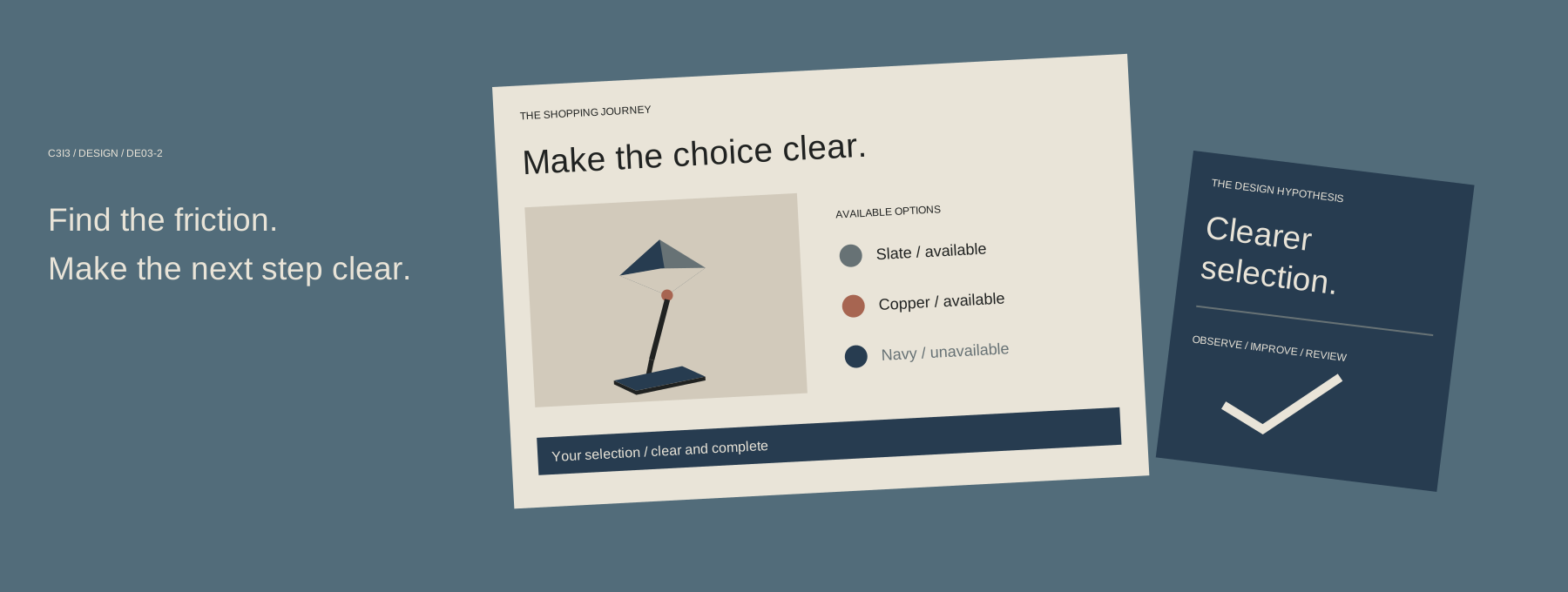
Explore product page designEcommerce Conversion Design
Ecommerce conversion design addresses specific points of friction in a shopping journey. We use the available evidence to prioritize improvements in browsing, product evaluation, cart, or checkout, then design changes that can be implemented and assessed.
Explore ecommerce conversion designA clear process.
A practical handover.
The approach follows the user needs, content, technical requirements, and agreed scope. Open each step to see what happens and what it produces.
01Understand the products and operation.
We review catalog data, purchase conditions, customer questions, and platform constraints.
A store and journey brief.
02Map the shopping tasks.
We organize browsing, product evaluation, and purchase around realistic customer scenarios.
An information structure and wireframes.
03Design templates and states.
We develop the storefront, product, cart, and agreed checkout treatment using representative data.
Reviewed responsive store designs.
04Prepare the implementation.
We resolve component behavior and document what depends on the platform, integrations, or merchant operations.
A practical ecommerce handover.
The design in practice.
A small homeware store may sell products with several finishes and different delivery times. Its category view helps shoppers narrow the range; the product page explains the options; the cart reflects the selected variant and delivery expectations.
| The question or stage | What we examine | Why it matters |
|---|---|---|
| Browse | Categories, filters, and product information | Help shoppers find a relevant item. |
| Evaluate | Variants, details, and purchase conditions | Support a suitable product choice. |
| Purchase | Cart, costs, and confirmation | Make the transaction expectations clear. |
To show how ecommerce design can support a decision. Your design depends on the users, content, requirements, and constraints in your own brief.
Agree the brief.
Then make the work.
Catalog size, product complexity, platform capabilities, templates, integrations, and content readiness determine the scope. Store development, data import, payment setup, photography, fulfillment operations, and ongoing optimization are separate unless included.
| Before we start | What we agree |
|---|---|
| The decision | The audience, offer, question, and boundaries the work needs to address. |
| The deliverables | Design and implementation scope, format, review rounds, responsibilities, and handover. |
| The investment | Written fees, schedule, dependencies, and any separate third-party or implementation costs. |
We confirm the proposal before work begins. You can commission a focused engagement, connect it to a wider plan, or ask about a separately scoped delivery phase.
Discuss scope and timingUseful questions.
Straightforward answers.
Can you design within our existing ecommerce platform?
Yes. We review the platform’s useful capabilities and constraints before proposing templates and interactions.
Does the project include setting up payments?
Payment and checkout implementation are separate unless specified. The design must account for the actual provider and platform behavior.
Can you design stores with many product variants?
Yes. We need accurate variant data and clear rules for selection, availability, price changes, and invalid combinations.
Will the store work on phones?
Responsive shopping tasks and important states are part of the agreed design scope, with implementation testing defined separately.
Can you work with our existing product photographs?
Yes. We assess image consistency and what each template needs, then identify gaps without assuming a complete reshoot.
Does a new design guarantee more sales?
No. Product fit, pricing, traffic, operations, and implementation all matter. Design can address specific usability problems and support useful testing.
How do you price this project?
We quote the agreed deliverables, research, complexity, review rounds, and handover or implementation requirements. The proposal identifies the fee, responsibilities, dependencies, and what would require a change of scope.
What should we prepare before we begin?
Bring the business goal, intended users, existing brand and project material, available content, and any platform, budget, or timing constraints. We will identify missing inputs and agree who can approve the work.
Keep the experience
connected.
Product Page Design
Ecommerce Conversion Design
For a useful planning guide, read whether you need a website, app, or landing page. Or return to all Design services.