



































Brand Messaging.

Make your message
easier to understand.
Brand messaging translates your positioning into the language customers encounter across your website, campaigns, presentations, and conversations. We define the main promise, supporting messages, proof, and tone so the team can communicate consistently.
A message framework gives people more than a paragraph to copy. It explains which point comes first, which details support it, and how the emphasis changes for different audiences. We look for specific, understandable language and claims the business can support. The aim is consistency of meaning without making every page or conversation sound identical.
A clear lead message
Help someone understand the offer without decoding internal language.
Useful supporting points
Connect benefits, service details, and evidence in a sensible order.
Consistent expression
Give writers, designers, and customer-facing staff a shared reference.
Clear deliverables.
Useful decisions.
Your written scope confirms the depth and final format of the work. These are the components we can bring together for brand messaging.
- 01Messaging brief
Audience, offer, positioning, communication needs, and existing material to review.
- 02Core message
A concise lead explanation of the offer and why it matters.
- 03Message pillars
Supporting themes with the benefits and service details behind each one.
- 04Proof and claim notes
What supports the message and where evidence or qualification is needed.
- 05Voice guidance
Practical guidance for tone, clarity, vocabulary, and language to avoid.
- 06Application examples
Agreed examples for places such as a homepage, service introduction, or campaign brief.
Go deeper where
the decision needs it.
This work connects to the wider planning decisions below. Explore the relevant service to see its distinct scope and deliverables.
Brand Positioning
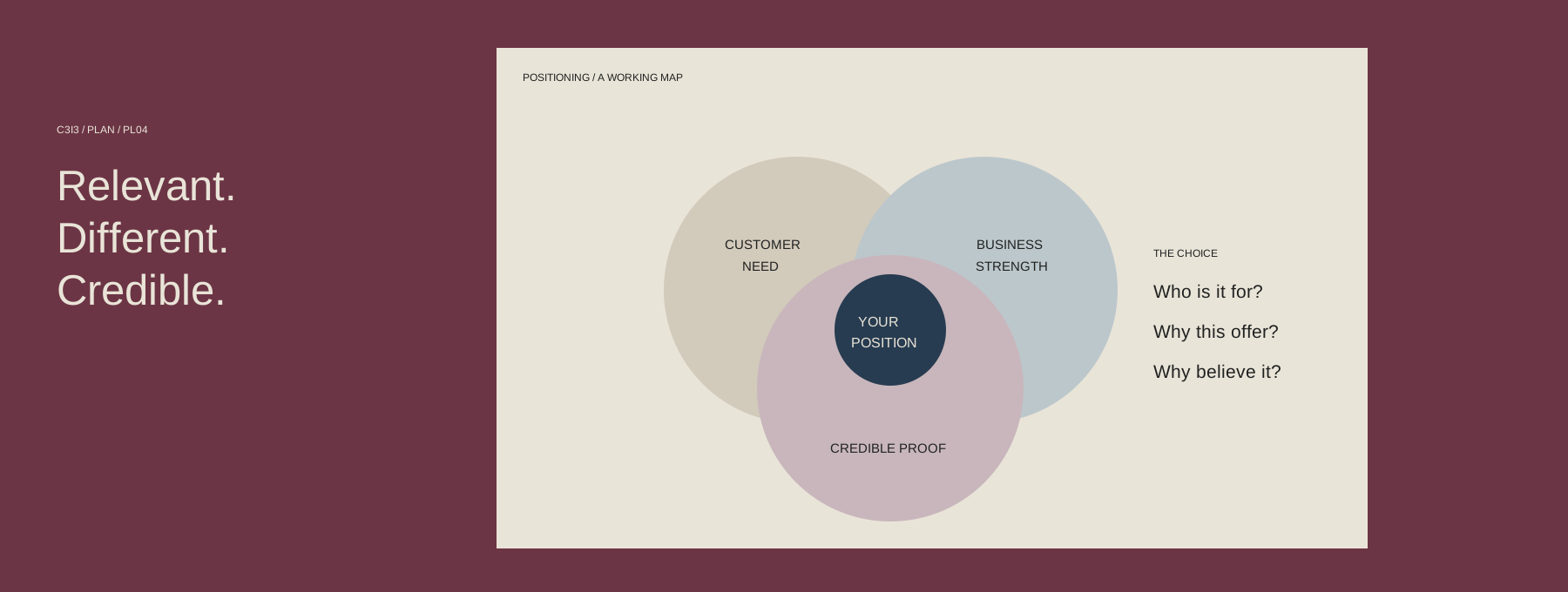
Brand positioning defines who your offer is for, the problem it addresses, and why it is a credible choice among the alternatives. We help turn those decisions into a clear direction for messaging, identity, websites, and campaigns.
Explore brand positioningValue Proposition Development
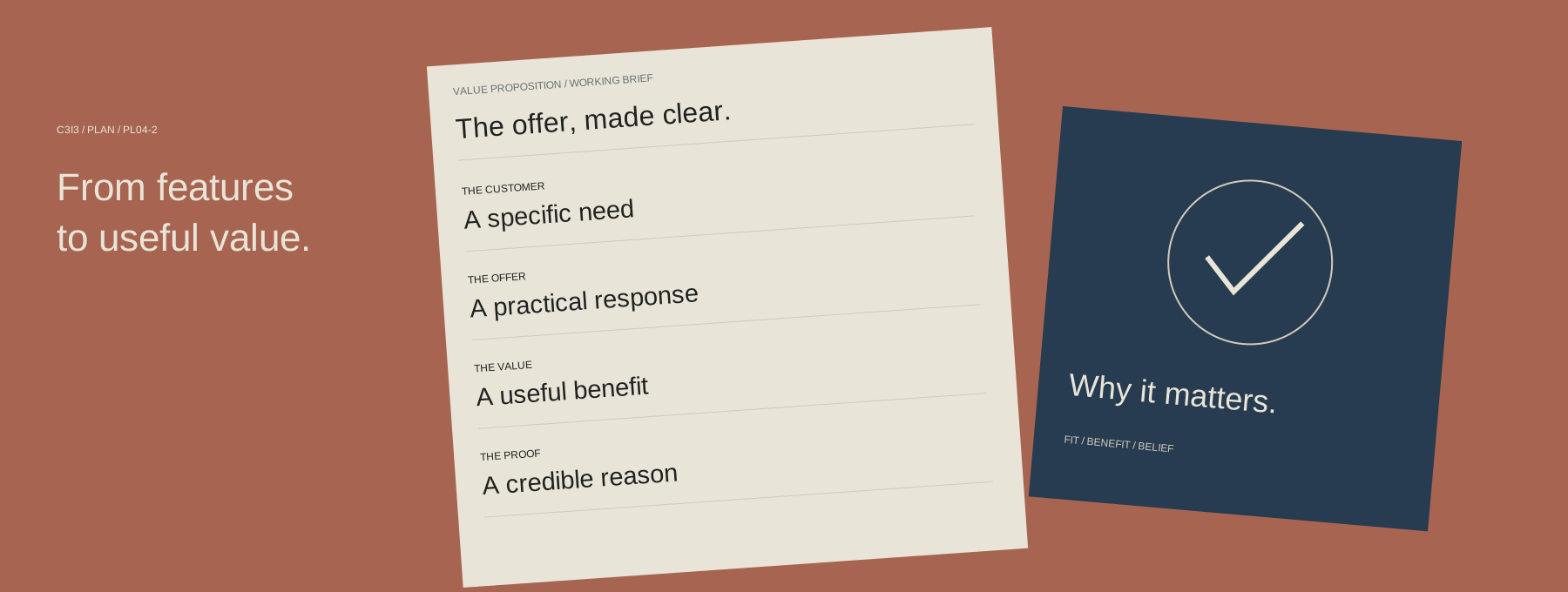
Value proposition development clarifies the customer need your offer addresses, the benefit it delivers, and why it is a useful choice. We help connect the promise with the scope, evidence, and practical realities behind it.
Explore value proposition developmentA clear process.
A practical handover.
The method follows the question and agreed scope. Open each step to see what happens and what it produces.
01Review what is being said.
We compare existing website and campaign language with the offer, audience, and agreed positioning.
A view of confusion, inconsistency, and useful material.
02Set the message hierarchy.
We choose the lead point, supporting themes, and evidence needed to explain the offer.
A message framework.
03Write and refine.
We develop language options, discuss meaning and trade-offs, and revise with the agreed reviewers.
Clear, supportable core messages.
04Show the applications.
We demonstrate how the framework adapts across the selected communication contexts.
A usable messaging reference and examples.
Different formats. The same meaning.
An illustrative service business may need a short homepage message, a detailed service explanation, and a sales introduction. The wording changes to suit the space and audience, but the core offer, benefits, and reasons to believe should stay aligned.
| The question or stage | What we examine | Why it matters |
|---|---|---|
| Homepage | Lead with the useful promise | Help visitors recognize the offer. |
| Service page | Explain scope and evidence | Help the right customer assess fit. |
| Conversation | Use the same underlying points | Keep the handoff from marketing to sales coherent. |
To show how brand messaging can support a decision. Your recommendations depend on the evidence, resources, and constraints in your own brief.
Define the question.
Then define the work.
Scope depends on the number of audiences, offers, message variations, reviewers, and application examples. A messaging framework is distinct from writing every page of a website. We agree the reference deliverables and any production copy separately.
| Before we start | What we agree |
|---|---|
| The decision | The audience, offer, question, and boundaries the work needs to address. |
| The deliverables | Research or production depth, format, review rounds, responsibilities, and handover. |
| The investment | Written fees, schedule, dependencies, and any separate third-party or implementation costs. |
We confirm the proposal before work begins. You can commission a focused engagement, connect it to a wider plan, or ask about a separately scoped delivery phase.
Discuss scope and timingUseful questions.
Straightforward answers.
What is a brand messaging framework?
A practical reference for the core offer, supporting themes, benefits, proof, and voice. It helps the team explain the same business consistently across different formats.
Is this the same as copywriting?
Messaging sets the points and hierarchy that copy should communicate. Copywriting produces the finished material for a particular page, advertisement, or other format. The work can be combined in a defined scope.
Do we need positioning first?
The message needs a clear audience, value, and difference. If those decisions are unresolved, we may recommend a positioning stage before refining the language.
Can you simplify technical services?
Yes. We work with your subject experts to explain the service accurately and clearly. Important technical qualifications should not disappear simply to make the wording shorter.
Will every page use exactly the same message?
No. The core meaning stays consistent, while emphasis and detail change with the reader's question and stage of the decision.
Can this include tone of voice?
Yes. Guidance can include useful examples of clarity, vocabulary, formality, and language to avoid. The scope defines the depth and number of applications.
How do you handle unsupported claims?
We ask what evidence supports a claim and qualify or remove language that cannot be justified. Specific, supportable statements are more useful than unproven superlatives.
What should we share before starting?
Existing positioning, service information, customer questions, website copy, campaign material, and examples of language your team likes or finds confusing.
Keep the next step
connected to the plan.
For a broader planning guide, read what a small business marketing plan should include. Or return to all Plan services.