



































Publishing Workflows.

Make approval clear.
Make publishing repeatable.
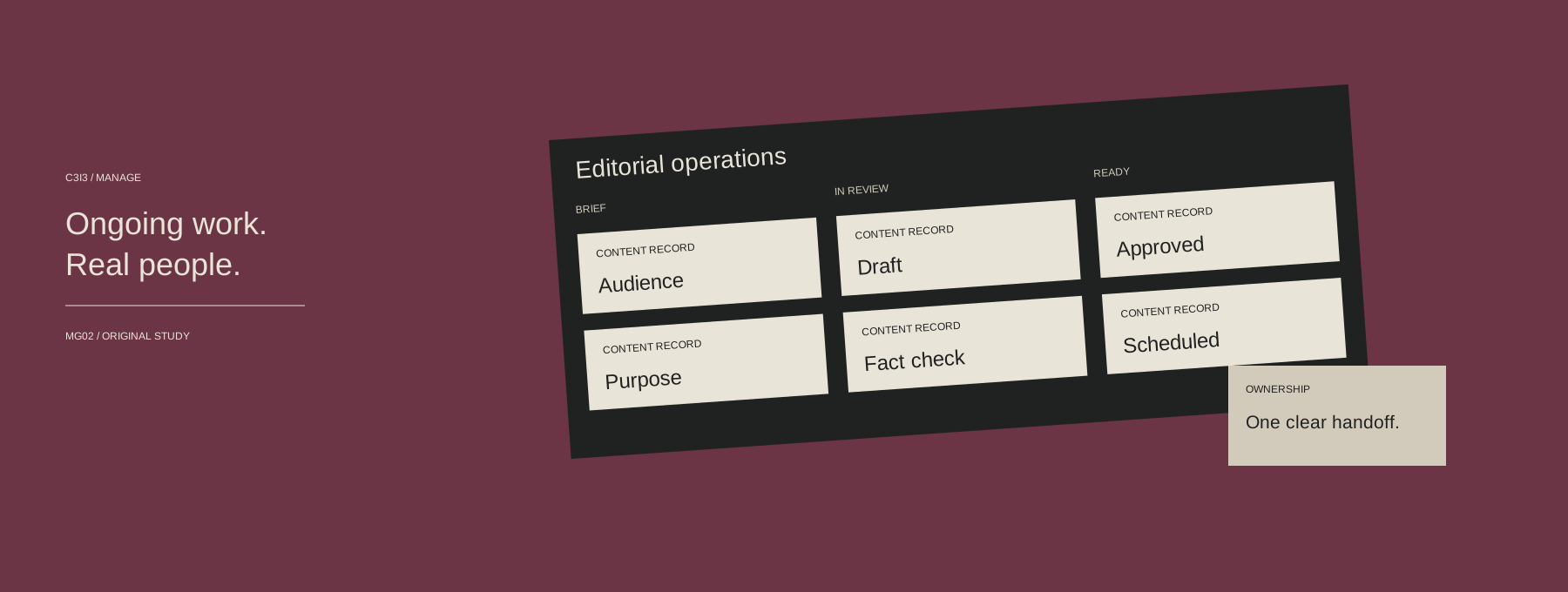
Publishing workflows define how content moves from a brief to a reviewed, released, and maintainable page or asset. We organize the people, versions, approvals, checks, and records needed for the agreed publishing process.
The process should prevent familiar mistakes without making every update a major project. A draft needs a clear source, a factual reviewer, and a final approver. Images, links, metadata, and destination checks need owners too. We can work within existing tools or scope useful automation, while keeping editorial decisions and release authority explicit.
Current workflow review
Identify the content types, tools, handoffs, approval needs, and recurring sources of delay or error.
Roles and release criteria
Define who drafts, checks facts, reviews design, approves, publishes, and maintains the work.
Version and status rules
Keep stable records and a clear current version as content moves through its stages.
Clear responsibilities.
Useful ongoing work.
Your written scope confirms the depth and final format of the work. These are the components we can bring together for publishing workflows.
- 01Current workflow review
Identify the content types, tools, handoffs, approval needs, and recurring sources of delay or error.
- 02Roles and release criteria
Define who drafts, checks facts, reviews design, approves, publishes, and maintains the work.
- 03Version and status rules
Keep stable records and a clear current version as content moves through its stages.
- 04A practical publishing checklist
Cover the agreed headings, media, links, metadata, categories, page behavior, and approvals.
- 05Handoff and exception handling
Specify how incomplete inputs, urgent corrections, rejected drafts, and release problems are handled.
- 06Workflow documentation
Provide a process reference, examples, and ownership so the team can repeat and improve it.
Bring the right
specialist into the work.
This work connects to the related website, content, and operational support below. Explore the relevant service to see its distinct scope and deliverables.
Content Operations
Content operations organize the recurring work behind your website and resource library. We connect topics, briefs, sources, production, approvals, publishing, and maintenance so useful content does not depend on scattered files and last-minute reminders.
Explore content operationsContent Updates
Website content updates turn approved business changes into accurate, well-presented pages. We manage the agreed text, images, links, documents, and selected metadata while checking the context in which the changes appear.
Explore content updatesA clear process.
An accountable team.
The work follows the business priorities, agreed capacity, responsible people, and review process. Open each step to see what happens and what it produces.
01Map the actual publishing process.
We review how material moves today and which mistakes or delays the new workflow should address.
A workflow findings brief.
02Define roles and the release checklist.
We agree the minimum inputs, reviewers, approval stages, and criteria for publication.
A practical publishing model.
03Try the process on real material.
We walk an agreed item through the stages and refine unclear handoffs or unnecessary steps.
A tested workflow and example record.
04Prepare the team handover.
We document responsibilities, exceptions, and the process for keeping the workflow current.
A repeatable publishing reference.
The support in practice.
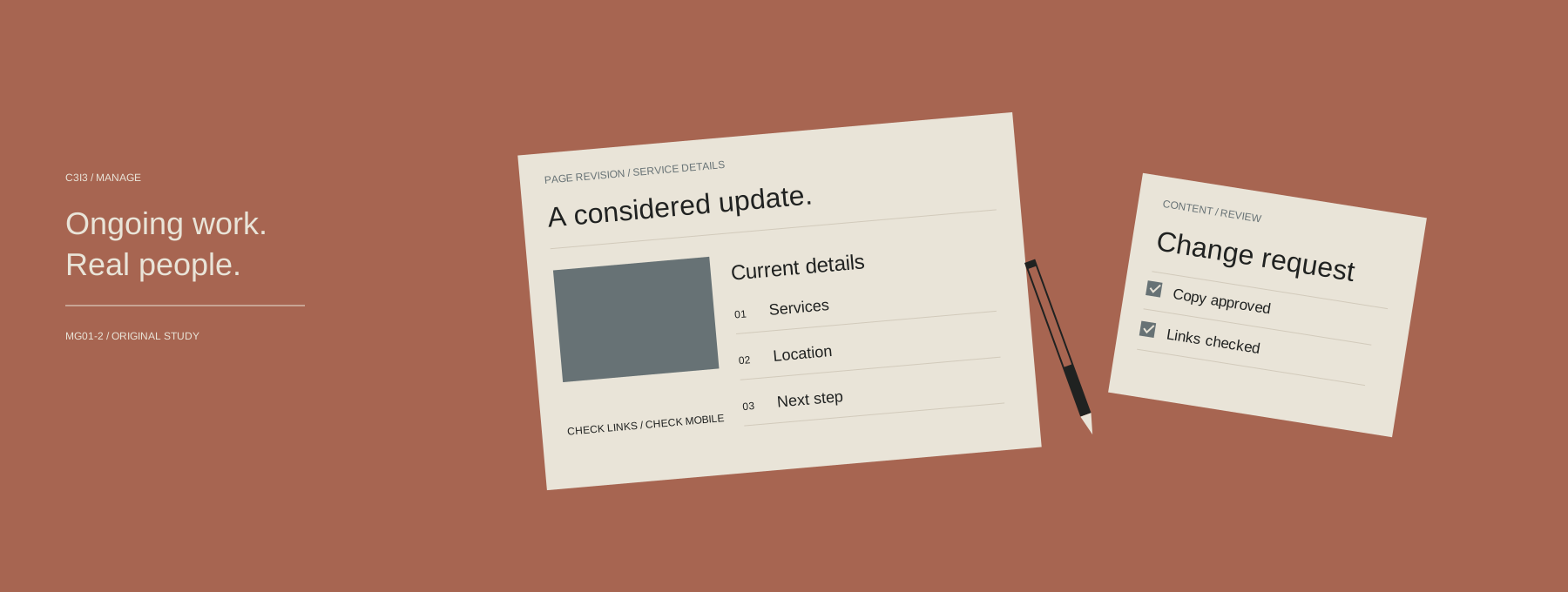
An article may be approved in a document while an older draft remains in the site editor. A clear workflow identifies the current version, records the final approval, checks the image and links, and confirms the released page rather than assuming an approved draft was published correctly.
| The question or stage | What we examine | Why it matters |
|---|---|---|
| Version | The current approved material | Prevent the wrong draft from reaching the site. |
| Checks | Content, assets, and destinations | Make release requirements explicit. |
| Record | The published result and owner | Keep the work traceable after publication. |
To show how publishing workflows can support a decision. Your support plan and priorities depend on the actual systems, workload, people, and constraints in your brief.
Agree the priorities.
Then scope the support.
Scope defines content types, tools, roles, documentation, trial items, and any implementation. A complete CMS replacement, large migration, custom automation, ongoing production, and team-wide training programs are separate unless included.
| Before we start | What we agree |
|---|---|
| The decision | The business priority, current systems, support need, and boundaries the work needs to address. |
| The deliverables | Management and delivery scope, format, review rounds, responsibilities, and handover. |
| The investment | Written fees, schedule, dependencies, and any separate third-party or implementation costs. |
We confirm the proposal before work begins. You can commission a focused improvement, agree an ongoing support plan, or connect specialist work to a broader service.
Discuss scope and timingUseful questions.
Straightforward answers.
Can you work with our existing CMS and documents?
Yes. We start with the actual tools and identify what process changes or small implementation work would make the handoffs clearer.
Do we need a new project-management platform?
Not necessarily. The workflow should solve ownership and version problems before adding another tool.
Can the process support many articles and categories?
Yes. Stable IDs, defined fields, ownership, and release criteria can support a growing library without changing the identity of each asset.
Can approvals be automated?
Notifications or routine checks can be automated where useful, but the responsible person and release authority must remain clear.
What happens when something is wrong after publication?
The workflow should define correction ownership, urgency, release checks, and the record of what changed.
Does this include publishing the articles for us?
Ongoing publishing can be included as a separate responsibility and capacity within the engagement. Workflow design alone does not imply unlimited production.
How is the work priced and prioritized?
Your proposal defines the workload, deliverables, review rhythm, responsibilities, and fee. We agree priorities within that capacity and identify work that needs a separate estimate. Software, hosting, advertising, creator fees, and other provider costs are listed separately when applicable.
Who will we work with?
You work with a human point of contact supported by the relevant specialists. We agree the communication and approval process, keep a record of decisions, and explain the next priorities in language your team can use.
Keep the ongoing work
connected.
For a related perspective, explore what a small business marketing plan should include. Or return to all Manage services.