



































Audience Research.

Understand what customers
need to decide.
Audience research examines who you are trying to reach, what creates a need, and what helps or prevents someone from choosing your business. We look beyond broad demographics to the questions and circumstances behind a buying decision.
A useful audience description should guide a real choice: which service to explain first, what evidence belongs on a landing page, or what an enquiry form needs to ask. We use the agreed sources to identify needs, triggers, objections, decision roles, and the words customers actually use. Where the evidence is limited, a profile is labeled as a working hypothesis rather than presented as established fact.
Relevant customer groups
Group people by needs and buying context rather than stereotypes.
Better questions and messages
Learn what needs to be explained before someone is ready to enquire.
Useful creative direction
Give designers and writers a clearer person and situation to work for.
Clear deliverables.
Useful decisions.
Your written scope confirms the depth and final format of the work. These are the components we can bring together for audience research.
- 01Audience question brief
The customer decisions and uncertainties the research should address.
- 02Evidence review
Relevant enquiries, sales conversations, support questions, and agreed research sources.
- 03Needs-based segments
Meaningful audience groups, including what distinguishes their needs or buying process.
- 04Decision journey
Triggers, evaluation questions, objections, and the people involved in approval.
- 05Audience profiles
Concise, evidence-informed profiles with source notes and unresolved assumptions.
- 06Messaging implications
What the findings mean for page content, campaigns, proof, and the next step.
Go deeper where
the decision needs it.
This work connects to the wider planning decisions below. Explore the relevant service to see its distinct scope and deliverables.
Market Research
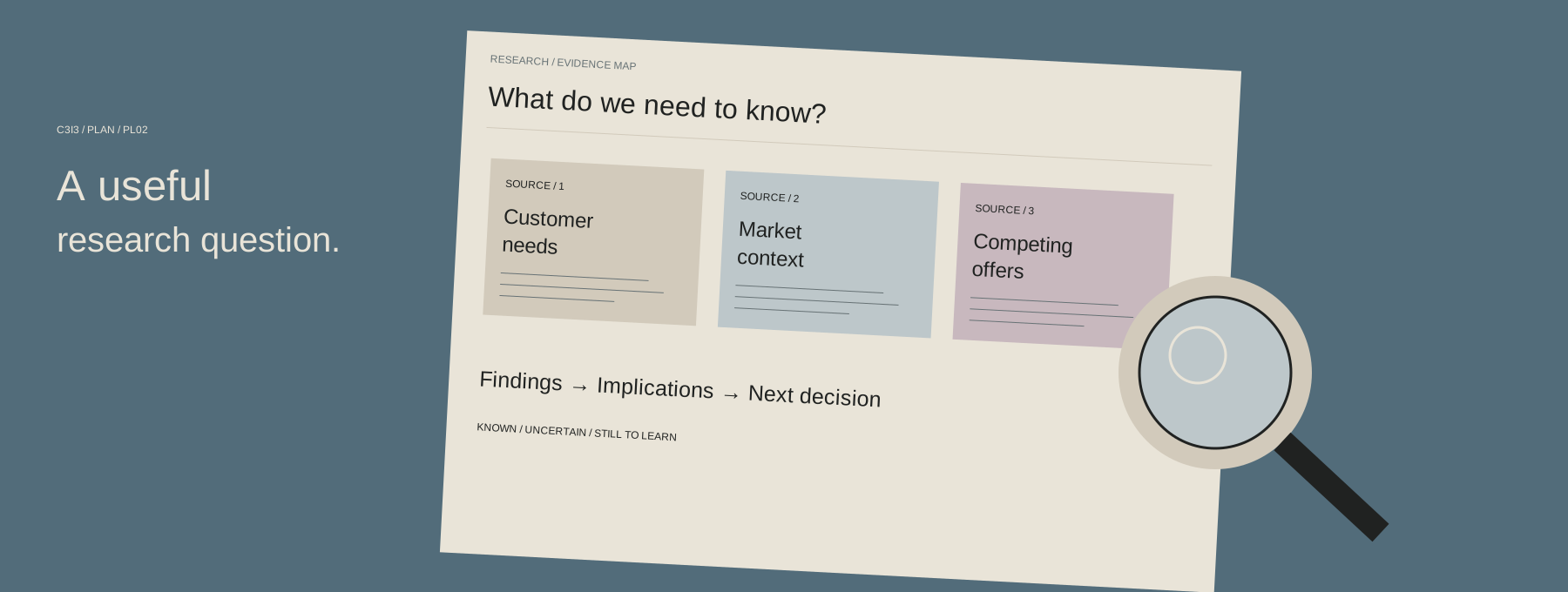
Market research helps you understand the people you want to reach, the alternatives they consider, and the conditions surrounding a marketing decision. We turn a clear research question into findings your team can use, with the limits of the evidence explained.
Explore market researchBrand Messaging
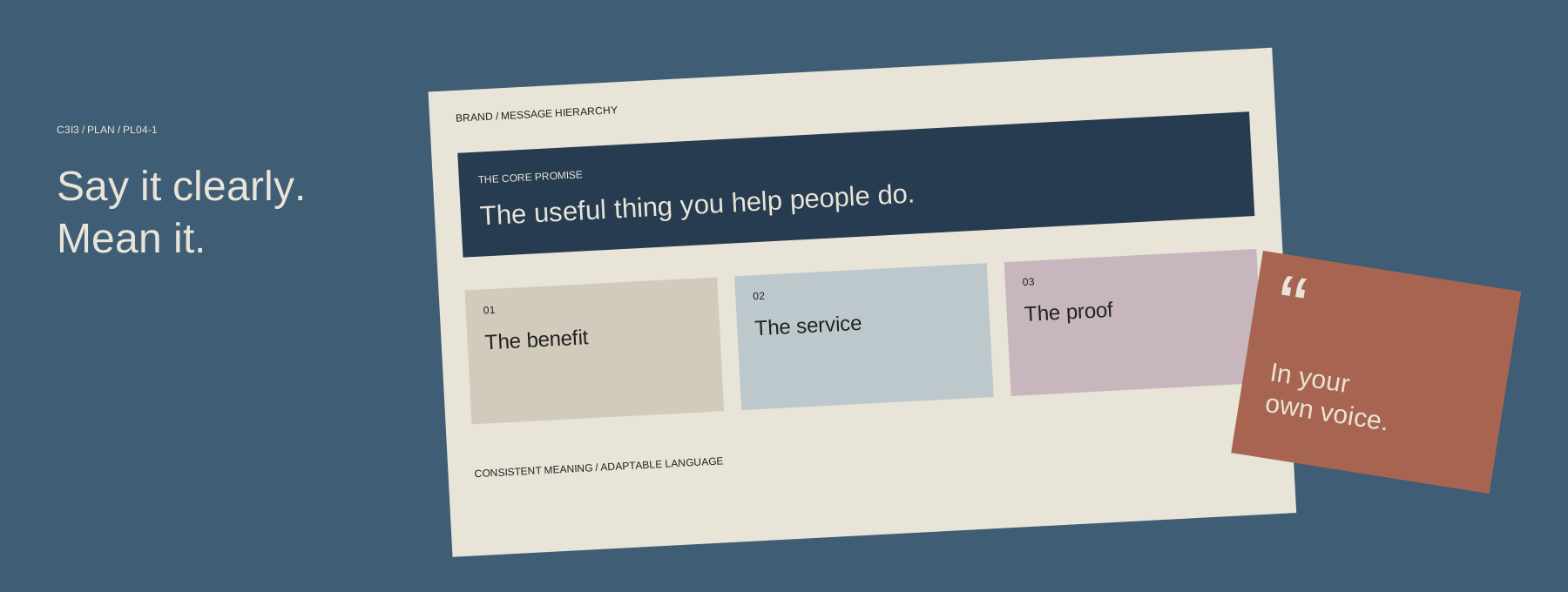
Brand messaging translates your positioning into the language customers encounter across your website, campaigns, presentations, and conversations. We define the main promise, supporting messages, proof, and tone so the team can communicate consistently.
Explore brand messagingA clear process.
A practical handover.
The method follows the question and agreed scope. Open each step to see what happens and what it produces.
01Choose the audience decision.
We agree what the research needs to help you change, such as a service offer, customer journey, or campaign message.
A focused audience brief.
02Gather the right perspectives.
We review available customer material and agree whether interviews or another direct method are needed.
A source set appropriate to the question.
03Find needs and patterns.
We compare buying triggers, objections, language, and decision roles, noting differences as well as common themes.
Needs-based segments and decision insights.
04Apply the findings.
We translate the research into content, design, and campaign requirements your team can use.
Audience profiles and a practical application brief.
The same service can answer different needs.
In an illustrative commercial service business, an owner may care about downtime and cost while a facilities contact needs access details and documentation. Audience research can separate those decision needs so the website supports both without pretending they are the same reader.
| The question or stage | What we examine | Why it matters |
|---|---|---|
| Trigger | What made the need urgent? | Guide the opening message. |
| Concern | What could prevent approval? | Provide relevant proof and explanation. |
| Decision role | Who needs to be involved? | Support the handoff between stakeholders. |
To show how audience research can support a decision. Your recommendations depend on the evidence, resources, and constraints in your own brief.
Define the question.
Then define the work.
The number of customer groups, available records, recruitment needs, and research method shape the scope. We agree participant handling and information access before direct research. A small evidence review and a multi-segment interview study require different time and resources.
| Before we start | What we agree |
|---|---|
| The decision | The audience, offer, question, and boundaries the work needs to address. |
| The deliverables | Research or production depth, format, review rounds, responsibilities, and handover. |
| The investment | Written fees, schedule, dependencies, and any separate third-party or implementation costs. |
We confirm the proposal before work begins. You can commission a focused engagement, connect it to a wider plan, or ask about a separately scoped delivery phase.
Discuss scope and timingUseful questions.
Straightforward answers.
What is audience research used for?
It helps you choose messages, offers, content, and experiences around real customer needs. It is particularly useful before a website redesign, new service launch, or campaign aimed at a different customer group.
Is this the same as creating a buyer persona?
A persona or profile is one possible output. The research is the work behind it: understanding needs, triggers, objections, and decision roles. A polished fictional biography is not a substitute for evidence.
Do you only research demographic information?
No. Demographics may be relevant, but buying circumstances, decision criteria, constraints, and the questions people ask often provide more actionable direction.
Can we start without a large customer database?
Yes. We can review the evidence you have and identify what it can answer. Additional direct research may be needed; we will not present a limited sample as a complete picture of the market.
Can you research B2B decision makers?
Yes. The scope can examine users, evaluators, budget owners, and approvers separately. We focus on the roles involved in your actual buying process.
Will you interview our customers?
Interviews can be scoped if appropriate, including recruitment, permissions, discussion guides, and analysis. They are not assumed to be included in a basic review.
How do you avoid making unsupported assumptions?
We retain source notes, distinguish findings from hypotheses, and make gaps visible. The value is in understanding what the evidence supports, not producing a profile that sounds certain.
How will the findings reach our design team?
We provide practical implications for messaging, information order, proof, navigation, and conversion steps so the research can guide the brief and the work.
Keep the next step
connected to the plan.
For a broader planning guide, read what a small business marketing plan should include. Or return to all Plan services.