In this article
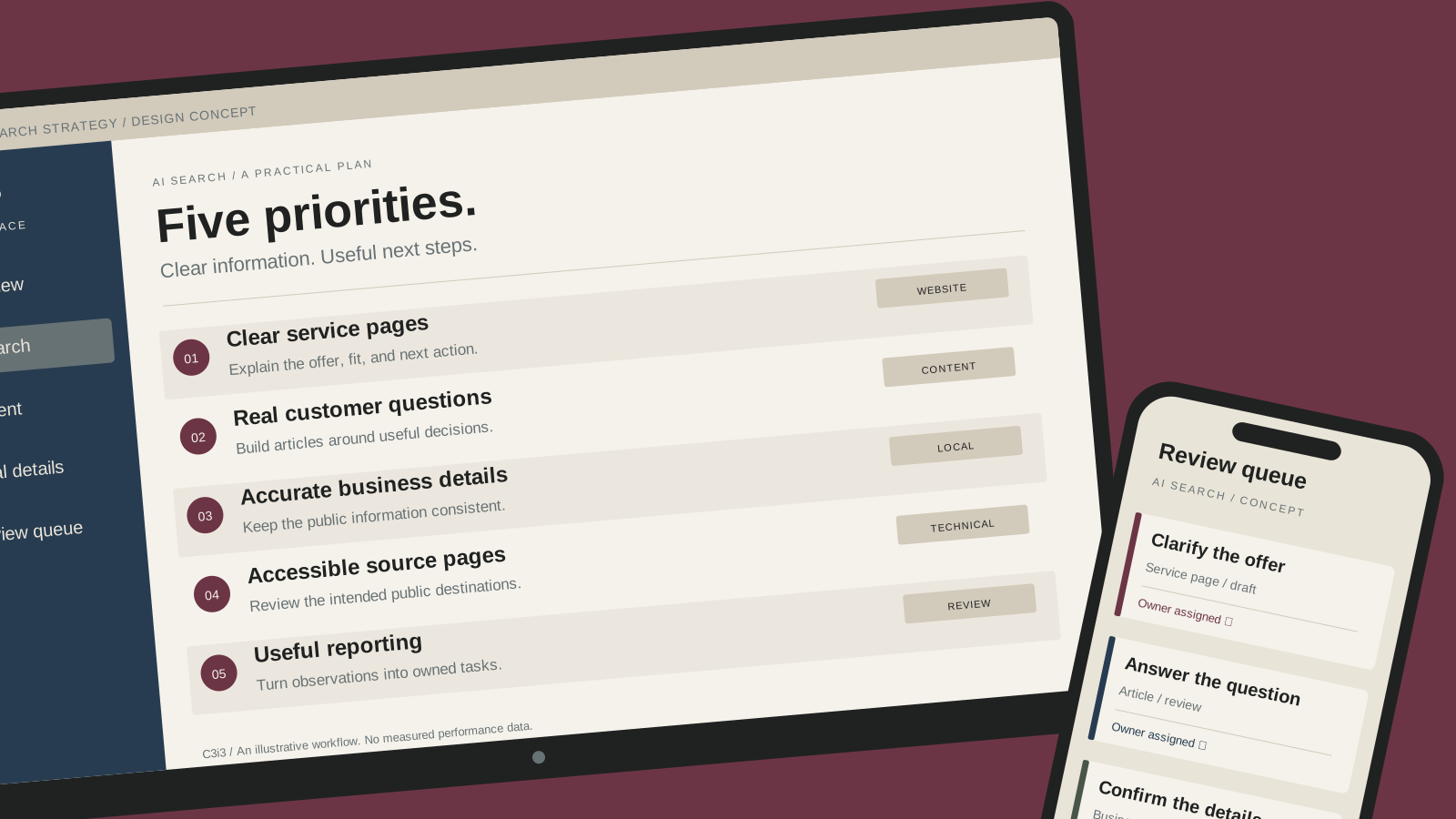
AI search optimization is easier to act on when it becomes a set of decisions about your website, content, and business information. You do not need to chase every new term. You need useful pages, supportable explanations, and a clear way to learn what needs improving.
These five strategies focus on work a Bay Area business can plan and maintain. For the broader definition and platform context, begin with what AI search optimization is. This article turns that foundation into practical priorities.
How can clearer service pages help people understand your business?
Start with the pages that describe what you actually sell. A visitor should be able to identify the service, judge whether it fits their situation, and understand how the next conversation begins.
Replace broad promises with specific information
Describe who the service is for, what is included, where it is available, and what may require a separate discussion. Explain the process in ordinary language. A phrase such as “complete business solutions” needs a concrete explanation before it becomes useful.
Support important claims
Add evidence relevant to the offer: a genuine project example, an approved customer comment, a product specification, or an explanation of how the work is performed. Keep conditions and limitations visible when they matter. Do not let a polished layout imply proof the business does not have.
Connect the explanation to an action
Give the customer an appropriate next step, such as requesting an estimate or discussing a project. Test the destination on a phone and verify that someone receives the enquiry. Better discovery is only useful when the page can help a suitable customer continue.
Use the website copy guide to review the questions your core pages should answer.
What should you write about to make your expertise useful?
Start with the questions customers ask while deciding whether to buy. Ask the people who handle sales and delivery what customers misunderstand, what they compare, and what they need to prepare.
Build a useful relationship between broad and focused articles
A broad guide can introduce a subject, while focused articles explain one comparison, process, or decision in greater detail. Link them where a reader would naturally need the next explanation. Each article should have a distinct job rather than restating the same topic.
Bring in knowledge from the business
Useful material can include an expert's explanation, a real workflow, a carefully described example, or a tradeoff that matters to the customer. Check facts before publishing and make clear when an example is illustrative. Repeating generic advice adds little to an already crowded subject.
Plan the work before filling a calendar
Choose a manageable set of questions, identify the person who can supply the information, and agree on review responsibility. Keep related service pages current as new articles are added. Content should help explain the offer rather than become a separate activity with no clear destination.
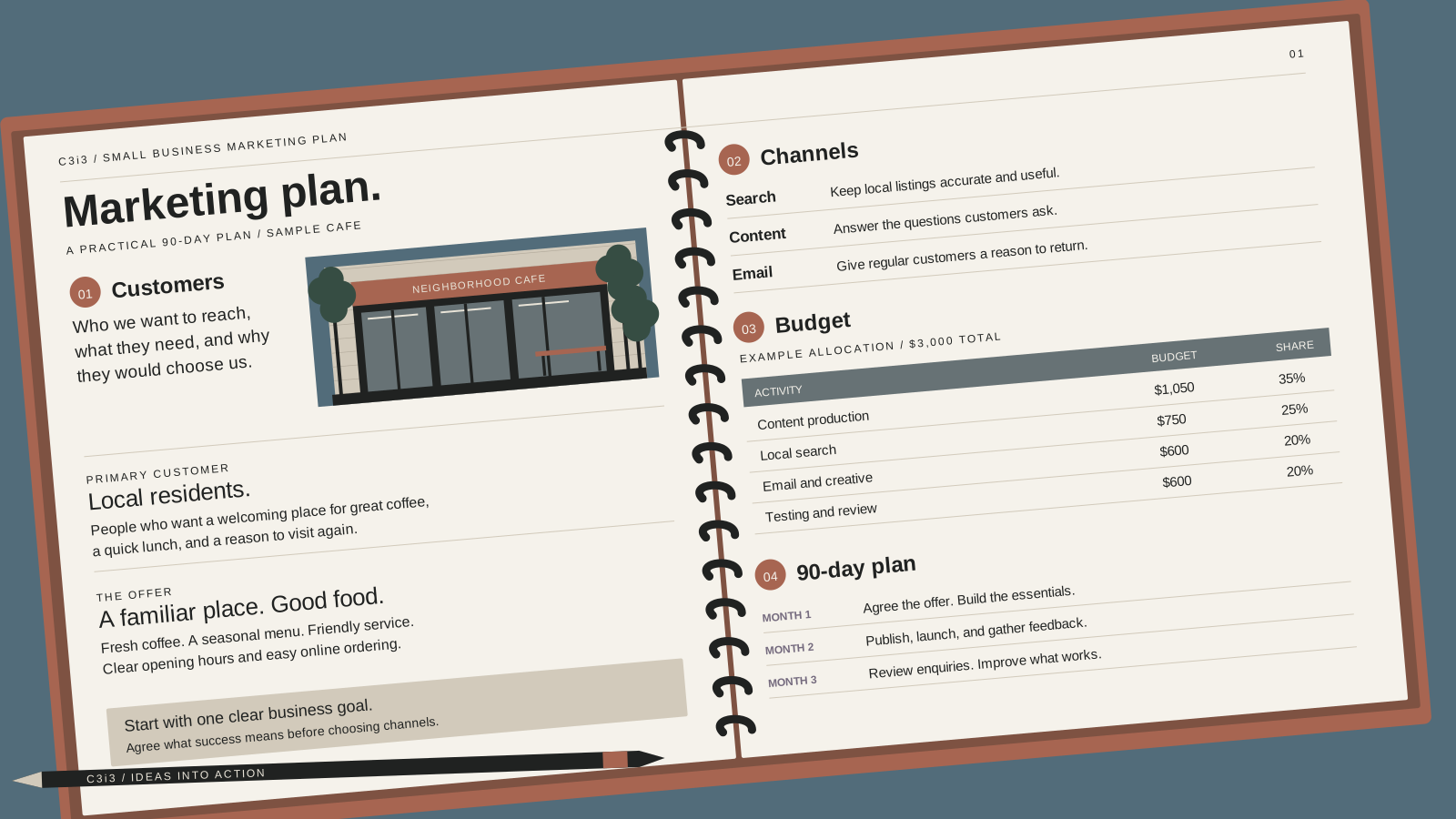
The small business marketing plan guide helps connect those topics to the customers and services you want to prioritize.
Give each article a clear job.
- Question
- What does the customer need to understand?
- Source
- Who can provide the actual knowledge?
- Evidence
- What supports the explanation?
- Next step
- Where should a useful answer lead?
Make the answer worth finding.
Which business details and local signals need to agree?
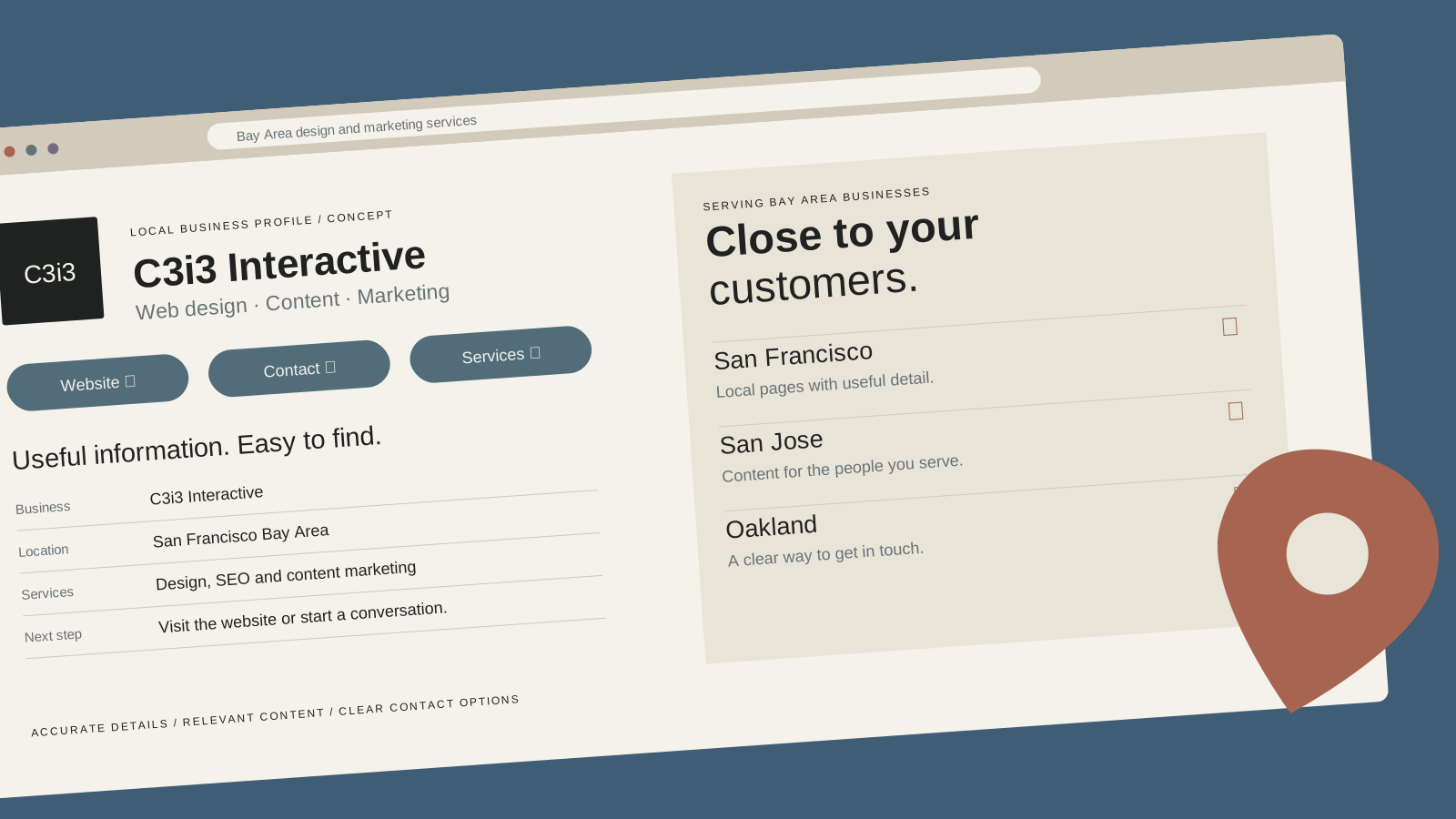
Your website, customer-facing profiles, and published service information should describe the same business. A confusing service boundary or outdated contact detail can make a good explanation less useful.
Review the information customers act on
Check the business name, appropriate location or coverage information, hours, phone number, and service descriptions. Assign an owner for changes. If a service is no longer available, update the places customers use to discover it.
Show genuine local relevance
Use local detail when it helps explain the offer or delivery. A real project, a genuine coverage boundary, or an operational requirement can be useful. Do not imply an office or facility in a city simply because you want enquiries from that area.
For a Bay Area business, the useful detail may be actual coverage in San Francisco, Walnut Creek, San Jose or another part of the region. Explain the service arrangements that matter to the customer rather than adding a list of cities without context.
Keep evidence and customer feedback honest
Review testimonials, images, credentials, and other supporting material for accuracy and permission. A statement should remain supportable wherever it appears. Do not manufacture endorsements or publish invented examples as completed work.
Our Business Profile guide and local service-page guide cover two different parts of that information.
Can search systems reach the pages you want people to find?
Ask your web team to review the intended public pages before commissioning more content. An important explanation is difficult to use if it returns an error, sits behind a login, or is blocked unintentionally.
Review platform-specific access settings
Google's AI features documentation says supporting pages must be indexed and eligible for search snippets. It also makes clear that meeting requirements does not guarantee selection.
OpenAI's crawler documentation distinguishes its search crawler from its training crawler. Review search access and training preferences as separate decisions, using the current documentation rather than assuming one switch controls everything.
Keep the site structure understandable
Make important pages reachable through useful internal links. Review page titles, redirects, canonical references, and the information returned to visitors. If structured data is used, it should describe the visible content accurately.
Fix a specific problem rather than chasing a score
Ask for a list of observed issues, their effect, and the proposed corrections. A useful technical review explains why the work matters. It should not require exposing private information or making unrelated changes simply to improve a tool's report.
How do you know which improvements to make next?
Use a consistent review process and connect observations with the customer journey. A favorable answer from one tool is a useful observation, but it is not a permanent ranking or proof that everyone sees the same result.
Keep a small set of relevant questions
Include the business name, core services, useful comparisons, and real local needs. Record what the answer says and which sources it shows. Distinguish a mention from a linked citation, and a citation from a visit.
Review business outcomes alongside appearances
Look at available search and website reporting, referral information where available, and the questions customers ask when contacting you. Separate suitable enquiries from irrelevant requests. Some journeys will remain only partly attributable, so keep that uncertainty clear.
Turn the review into owned tasks
| Observation | Practical next action |
|---|---|
| The offer is unclear | Improve the core service explanation and supporting evidence. |
| A question is unanswered | Prepare a focused article with input from the business. |
| Details are inconsistent | Correct the relevant profile or website information. |
| Enquiries are unsuitable | Clarify coverage, scope, and the next step. |
Give each task an owner and a review point. Our ongoing marketing team can coordinate website, content, and search work around the business rather than leaving the report as a list nobody acts on.
Where should your business begin?
Choose the first useful improvement rather than trying to do everything at once.
More about putting AI search strategies into practice.
Do we need to implement all five strategies immediately?
No. Start with the most important gap. If the main offer is unclear or a useful page cannot be reached, resolve that before expanding the content library. Build a sequence your business and team can maintain.
Are these strategies a substitute for SEO?
They are connected with the same foundations: accessible pages, useful information, credible explanations, and a clear customer journey. The AI search pillar explains the broader relationship. Do not abandon working basics simply because the terminology changes.
Can these changes guarantee an AI recommendation?
No. You can improve the information and experience your business controls, but you do not control an independent search tool's response to every question. Ask for a clear scope and supportable reporting rather than guaranteed placement.
To turn these priorities into a defined engagement, see Bay Area AI search optimization. If the work needs to continue after the first improvements, our ongoing SEO management scope explains the review and maintenance responsibilities.
Which part needs attention first?
We can help connect your website, content, business information, and ongoing search work.