In this article
Someone arriving on your website is usually trying to resolve a question. They may want to know whether you handle their kind of project, where you work, what the process involves, or whether contacting you will be worth their time.
Good service copy helps that person reach a useful decision. It gives the offer a clear shape, supports important claims, and makes the first conversation easier for both the customer and your team.
What do you do, and who is the service for?
The opening should identify the service in language a suitable customer can recognize. A creative headline can support that explanation, but it should not be the only clue about what the business provides.
Name the work before describing the ambition
“Commercial cleaning for offices” establishes a different offer from “Creating exceptional environments.” The second phrase may describe an intention, but the visitor still needs to know what is being sold.
Help the right customer recognize themselves
Explain the situations you handle and any important boundaries. A business serving ongoing commercial contracts may not be the right fit for a one-time residential request. Clear wording can save both sides an unnecessary conversation.
Use your marketing plan to agree on the audience and priority service before writing. The website should reflect a business decision, not try to appeal equally to every possible visitor.
Where can you help, and what is included?
Describe the actual coverage and the work the customer can reasonably expect. The page should make the offer easier to assess without pretending every project is identical.
Keep the service area practical
If you serve particular cities, deliver within a boundary, or need to review travel for certain jobs, explain that clearly. Do not imply a local office or facility that does not exist. Make sure the team answering enquiries gives the same account.
Distinguish the usual scope from exceptions
List the main elements of the service, then explain what may require a separate discussion. For a website project, that could mean the difference between a defined set of pages and a larger integration. For a delivery service, it could involve order requirements or special arrangements.
Use examples when they clarify a boundary, and avoid presenting an illustrative scenario as a completed client job. The local service-page guide explains how coverage and service information can work together.
Why should a customer believe your claims?
Choose evidence that fits the decision the visitor is making. A relevant project, a clear demonstration, a genuine customer comment, or an explanation of the process can help make an offer credible.
Replace unsupported adjectives with details
If the business emphasizes dependable service, show what that means operationally: a named contact, an agreed review process, or a documented handoff. Use only commitments the team is prepared to support.
Give examples enough context
Explain what the business actually did and what the example demonstrates. Do not detach a result from the circumstances that make it meaningful. When a claim cannot be verified, revise the wording rather than asking design to make it sound convincing.
Keep permissions and accuracy in mind when using customer names, project images, or testimonials. If you cannot publish those details, a transparent explanation of the work can be more useful than vague hints about impressive clients.
Would a new customer know?
- The offer
- What help is available?
- The fit
- Is it suitable for this situation?
- The proof
- What supports the explanation?
- The action
- How does the conversation begin?
Clarity makes the next conversation easier.
What should you say about the process, pricing, and timing?
A visitor does not need every contractual detail before making contact. They do need a reasonable picture of how the service begins and what information will be needed.
| Question | Useful information |
|---|---|
| How do we begin? | The initial conversation, assessment, or booking step. |
| What will you need? | The details that help the team assess the work. |
| How is the price set? | A defined package or the factors used to prepare a quote. |
| What affects timing? | Availability, approvals, preparation, and other dependencies. |
Be clear when an answer depends on the project
If pricing requires an assessment, explain why and what makes the estimate more accurate. If timing depends on materials or approvals, identify those dependencies. A direct explanation is more useful than avoiding the subject entirely.
Make the process easy to scan
Use a short sequence of steps and plain headings. Keep the main action visible without placing an invitation after every sentence. The page should feel like a coherent explanation rather than a collection of disconnected sales prompts.
What should the contact button and form ask people to do?
The action should describe what happens next. Requesting an estimate, discussing a project, and booking an appointment are different expectations. Choose the one the business can support.
Ask for useful information
A form should gather enough context to begin the conversation. That may include the service, location, or a brief description of the need. Avoid asking for detailed information that nobody will use or material better shared through a more appropriate process.
Continue the explanation after submission
Confirm that the request was received and set expectations the team can honor. Make sure the message reaches the right person and has a fallback when they are unavailable. Good copy cannot compensate for an enquiry that disappears after submission.
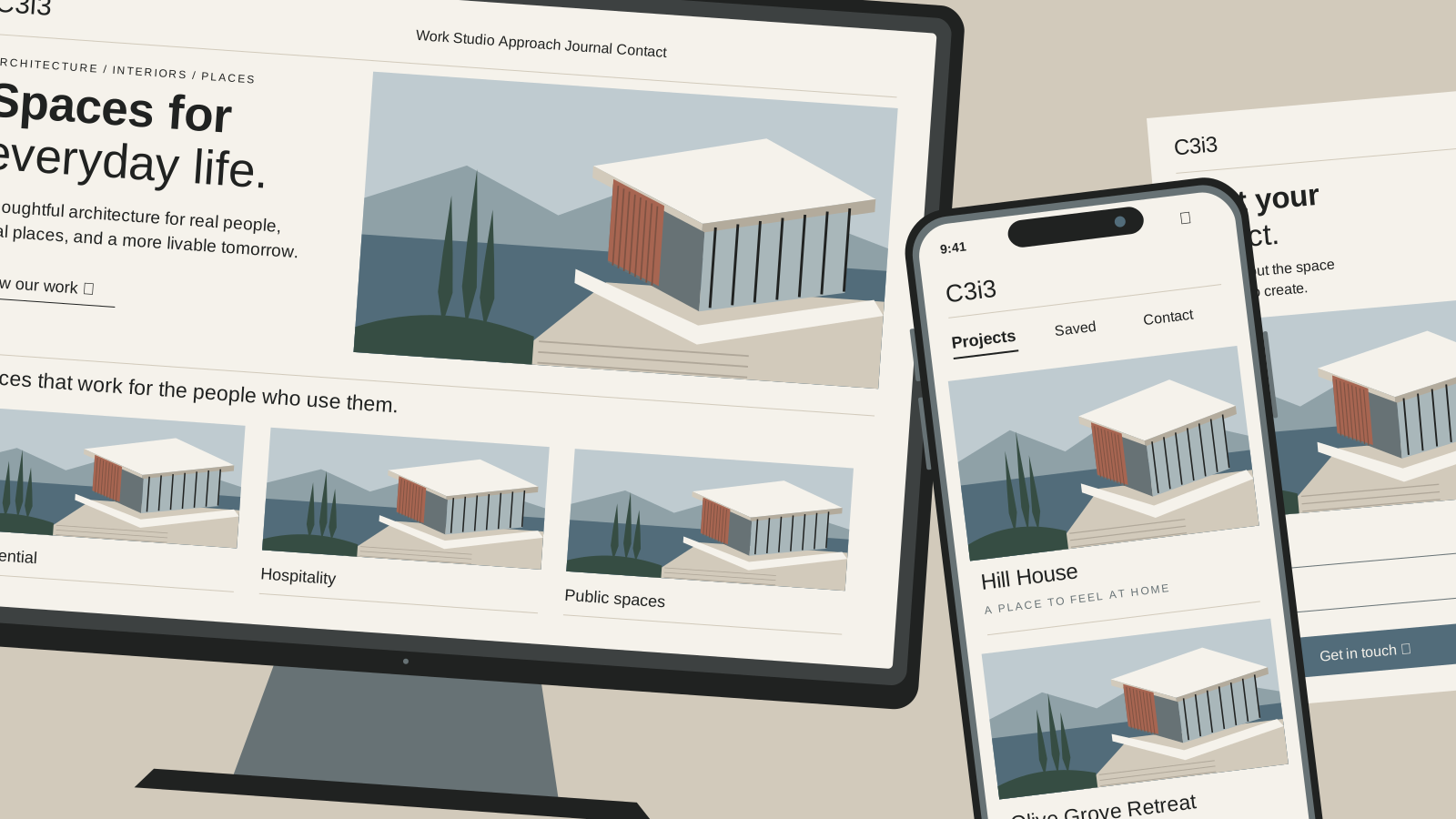
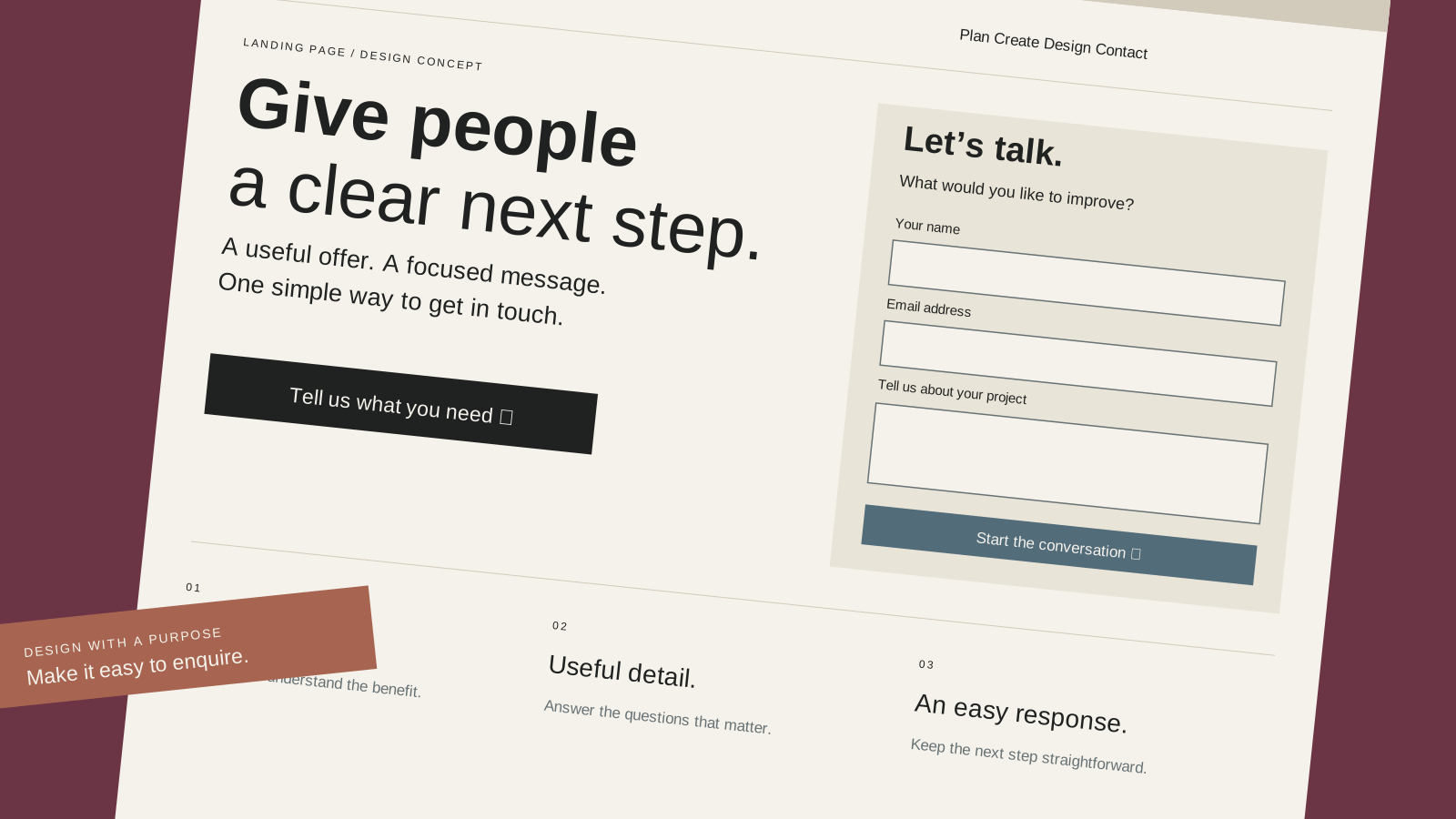
If a campaign needs its own focused path, compare a website, an app, and a landing page. A narrower destination may be useful when the offer and action are especially specific.
How can service copy support search without sounding repetitive?
Use the words customers need to identify the service, then answer their practical questions. The page should read naturally to someone deciding whether to contact the business.
Give each section a clear purpose
One section can explain the offer, another the process, and another the evidence. Avoid restating the same promise under several headings. When a question deserves a detailed explanation, link to a useful article instead of forcing every subject onto one service page.
Use feedback to improve the wording
Ask the enquiry team what people misunderstood or could not find. Review those patterns alongside available website information. A repeated question can indicate a missing explanation, while unsuitable enquiries may reveal an unclear service boundary.
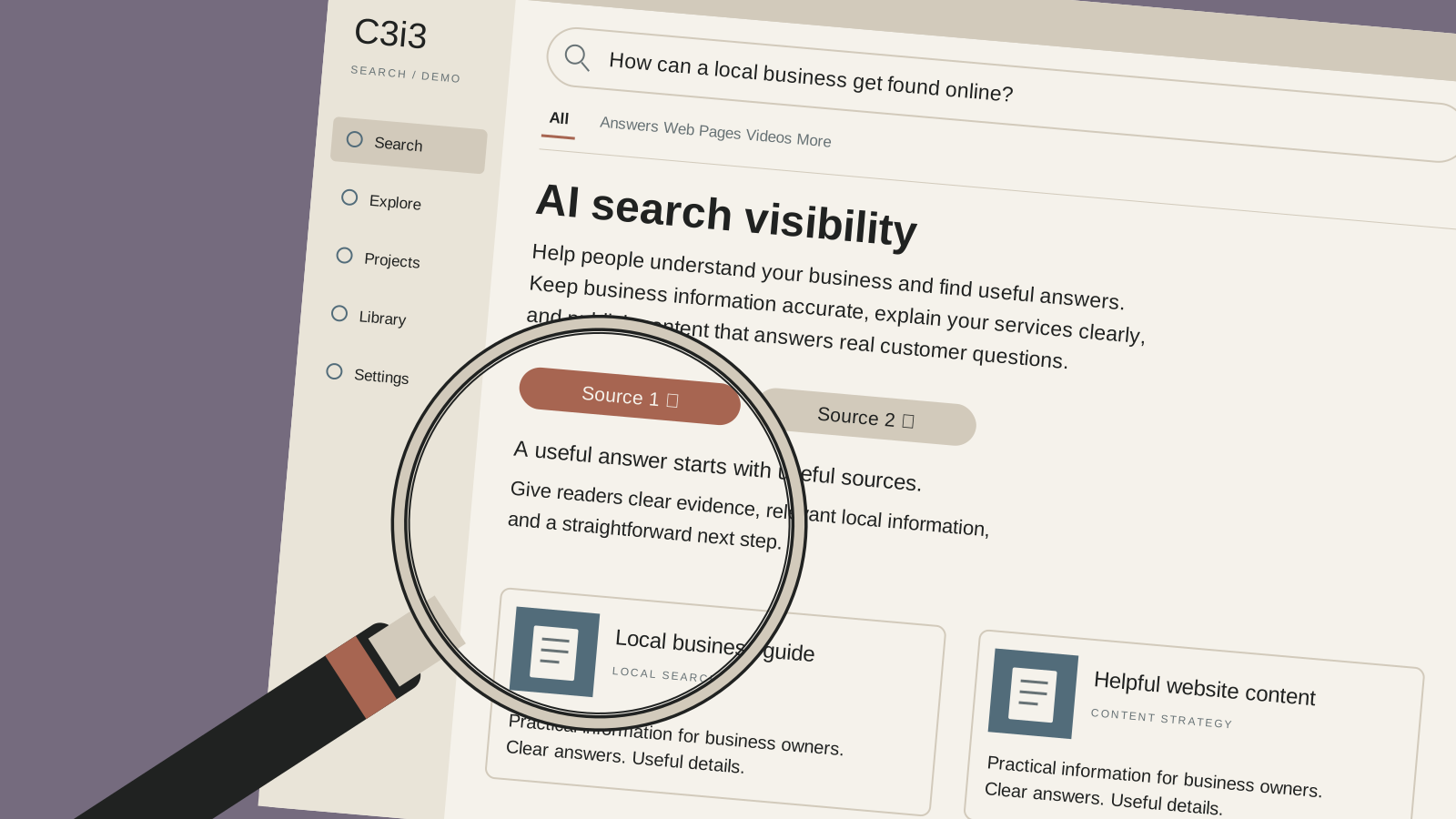
Read the AI search optimization guide for the broader connection between useful content, business information, and search. The goal remains a page that makes sense to a person.
Our website copywriting services can help turn business knowledge into a clearer explanation without losing the company's voice.
Does the copy answer the essentials?
Check the explanation before adding more promotional language.
More about writing for useful enquiries.
Should the page be short or detailed?
Use enough detail to support the decision. A straightforward offer may need less explanation than a complex project. Make important information easy to scan, and remove repetition instead of treating length as the goal.
Do we have to publish exact prices?
That depends on the offer. A defined package may support a clear price, while custom work may require an estimate. In either case, explain the process and the factors that affect scope so the visitor understands how to begin.
Can we reuse the same copy in a commercial?
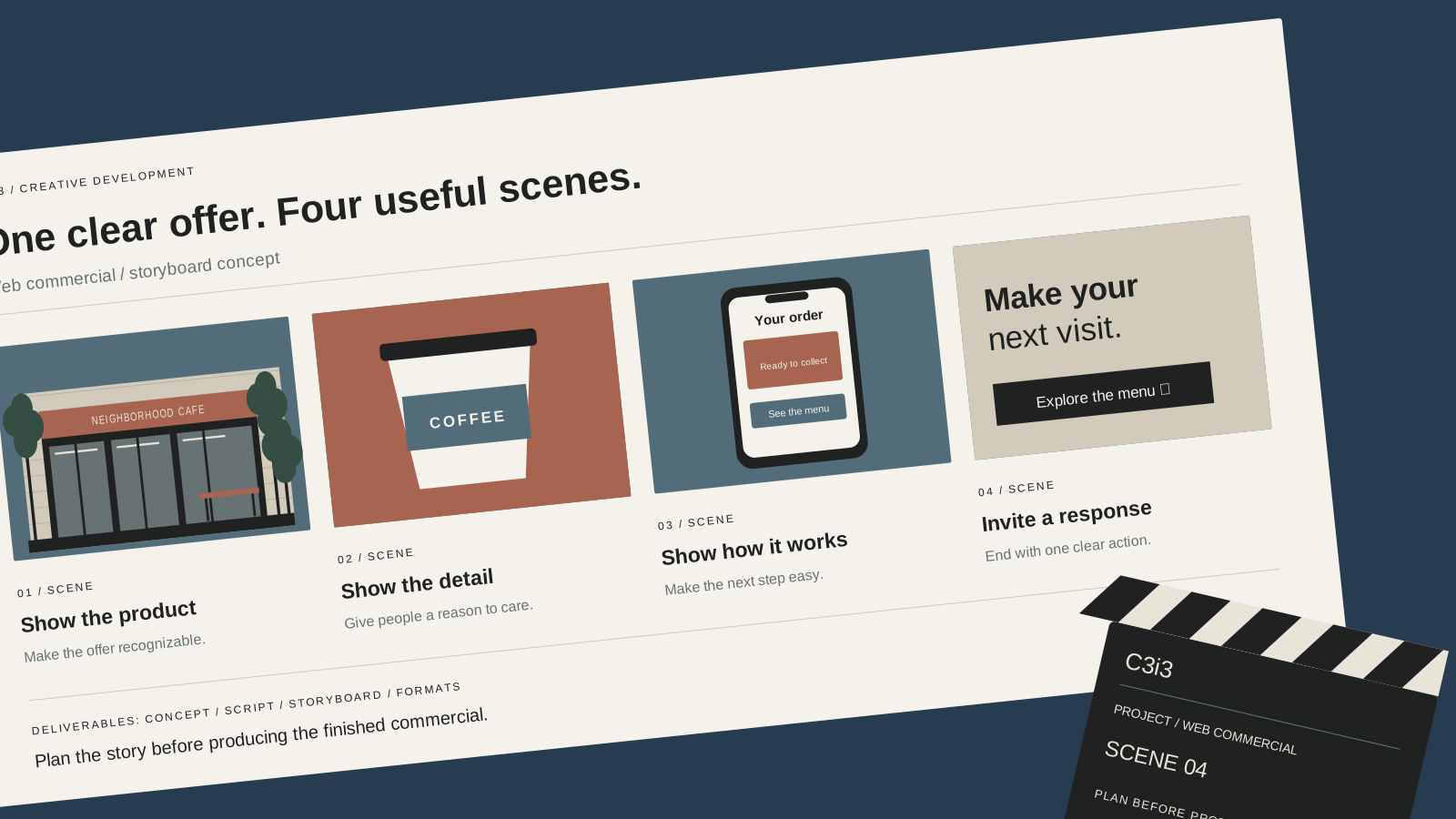
Use the same core offer, but adapt the explanation to the format. A commercial may introduce one situation and action, while the page supplies more detail. See what a web commercial should say about your service for the message sequence.
What do customers need to understand?
We can help organize the offer, evidence, and next step into copy that sounds like your business.