






































Small Business Web Design.

Customers visit.
Can they tell what you do?
A business website has to answer a few important questions quickly: what do you do, who is it for and how does someone contact you? C3i3 designs small business websites around those decisions, with useful service pages, readable mobile layouts and a clear route to an enquiry.
Owners often arrive with an attractive homepage that leaves the practical questions unanswered. We examine your services, evidence and typical buying conversations before deciding how many pages you need. A focused site with clear responsibilities is easier to keep useful than a large collection of pages without an owner. The design brief sets out both the customer journey and the work required to keep it current.
Explain the offer
Organize services in language customers recognize and give each important offer a useful place.
Make contact straightforward
Design the enquiry, phone and booking routes around how your team handles real requests.
Keep updates manageable
Choose reusable page patterns and content fields your staff can understand.
Clear deliverables.
Useful decisions.
Your written scope confirms the depth and final format of the work. These are the components we can bring together for small business web design.
- 01Page and content plan
Define the purpose of each page, the questions it must answer and the material needed from your team.
- 02Responsive page designs
Design homepage, service and supporting layouts for wider screens and phones with consistent navigation.
- 03Trust and evidence layouts
Give approved project examples, credentials and service details a clear role without inventing testimonials.
- 04Enquiry journey
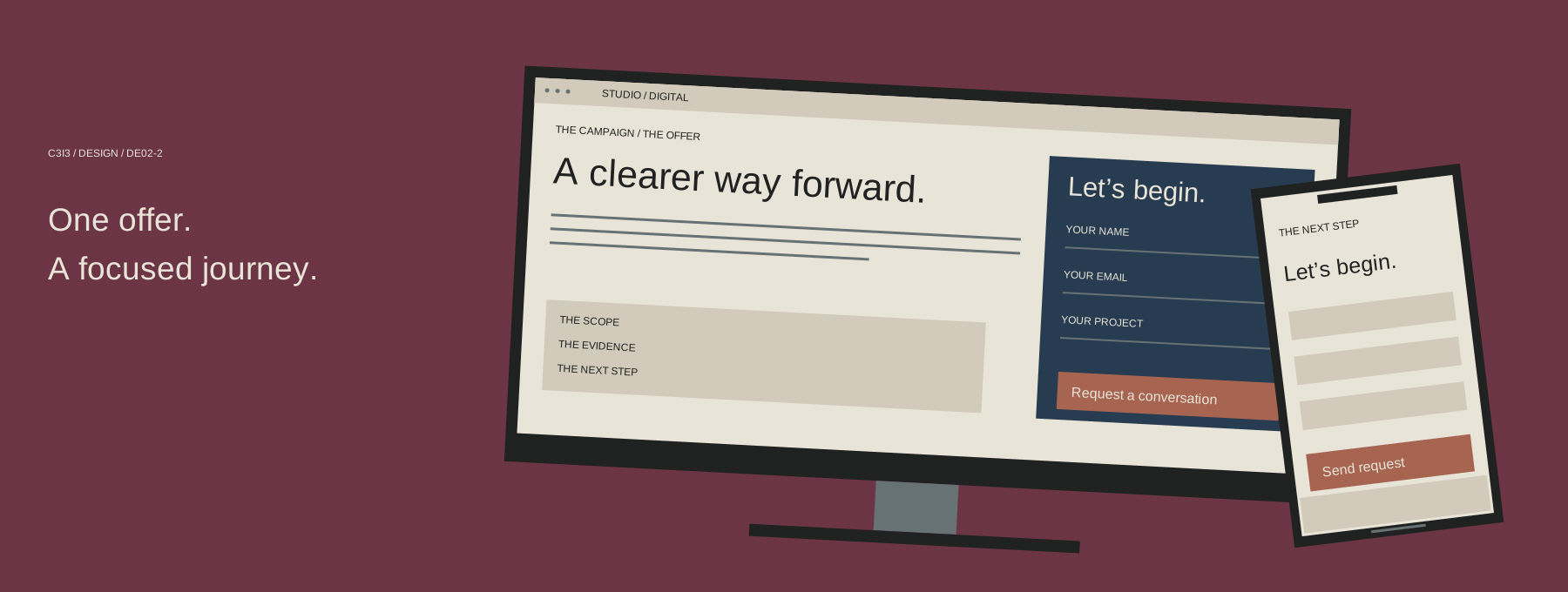
Design field labels, required information, confirmation and the handover to the person responsible for responding.
- 05Content-ready components
Provide realistic examples of headings, service cards and image crops so designs survive actual content.
- 06Build handover
Document approved layouts, states and implementation questions for the development team.
Go deeper where
the decision needs it.
This work connects to the related design and development work below. Explore the relevant service to see its distinct scope and deliverables.
Website Redesign
Choose your audience, message, channels and marketing priorities with a clear written direction.
Explore website redesignLanding Page Design
Choose your audience, message, channels and marketing priorities with a clear written direction.
Explore landing page designA clear process.
A practical handover.
The approach follows the user needs, content, technical requirements, and agreed scope. Open each step to see what happens and what it produces.
01Clarify the customer task
Review the main customer questions and your current website. Identify where visitors cannot find a service or decide on the next step.
A prioritized page and content plan.
02Map the path
Arrange services, navigation and enquiry routes. Confirm who will supply the missing evidence and copy.
A content outline and customer journey.
03Design with real content
Develop representative desktop and mobile screens using approved service details, image proportions and realistic text lengths.
A reviewed responsive design.
04Check the handover
Review the design against the agreed tasks and identify development, tracking and ongoing-update responsibilities.
Build-ready layouts and an operating handover.
A service page
that answers the next question.
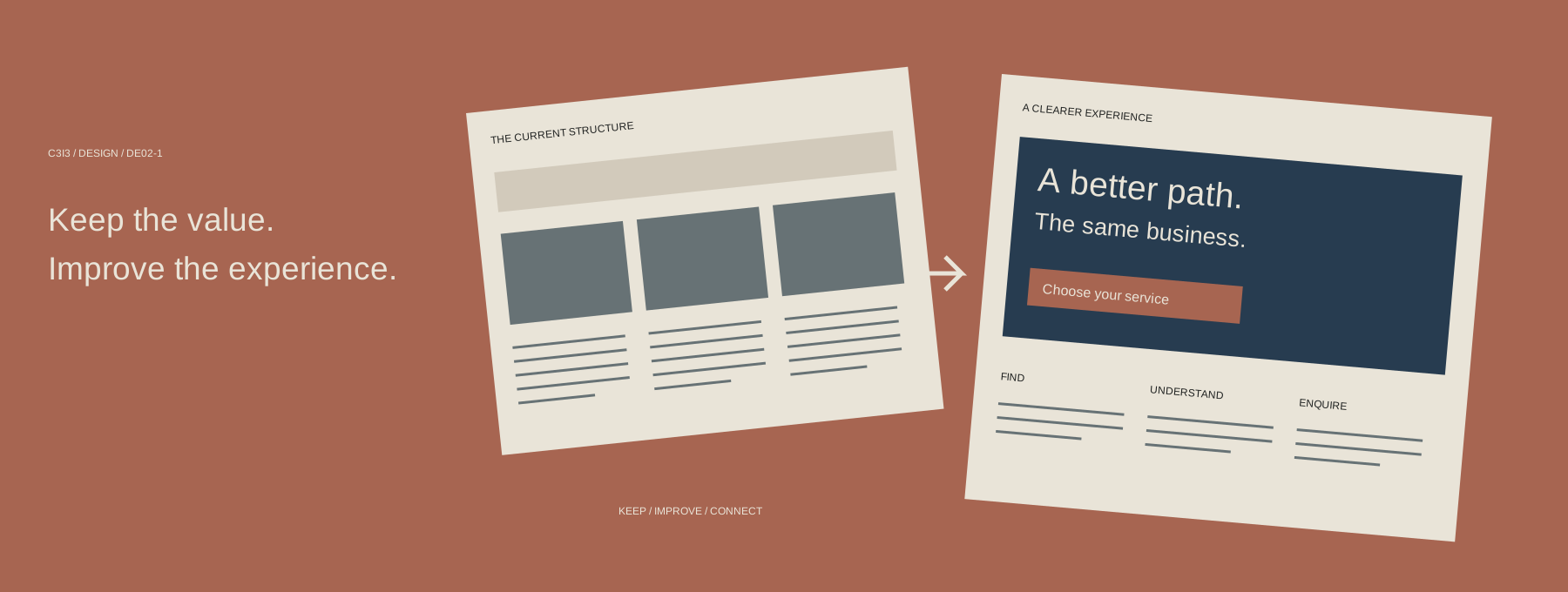
Illustrative example: a business offers three different services but describes all of them in one short homepage paragraph. A focused design would introduce the services together, give buyers enough detail to choose and carry that choice into the enquiry. The number of pages follows the difference between services, not a page-count target.
| The question or stage | What we examine | Why it matters |
|---|---|---|
| Service choice | Names, short explanations and related links | Help visitors identify the relevant offer. |
| Service detail | Scope, process, evidence and common questions | Answer buying questions before asking for contact details. |
| Enquiry | Subject, required fields and confirmation | Give staff useful context for the conversation. |
To show how small business web design can support a decision. Your design depends on the users, content, requirements, and constraints in your own brief.
Agree the brief.
Then make the work.
We agree the audience, applications, review stages, final files and implementation responsibilities before design begins. Bring the existing material and explain what has become difficult to use. The scope identifies what we will design, what needs approval and who will maintain it after handover.
| Before we start | What we agree |
|---|---|
| The decision | The audience, offer, question, and boundaries the work needs to address. |
| The deliverables | Design and implementation scope, format, review rounds, responsibilities, and handover. |
| The handover | Approved source files, implementation notes, content ownership and the person responsible for the next step. |
We confirm the proposal before work begins. You can commission a focused engagement, connect it to a wider plan, or ask about a separately scoped delivery phase.
Discuss scope and timingUseful questions.
Straightforward answers.
Do we need a separate page for every service?
Only when the service has a distinct customer need and enough useful information to justify a page. Closely related variations can often share a well-structured page.
Can you redesign our current website?
Yes. We review existing content, URLs and useful design features first. A redesign should preserve valuable material while improving the parts that create confusion.
Does this include writing all the content?
We agree copy responsibilities separately in the brief. Design uses realistic approved content, and C3i3 can connect website copywriting where needed.
Will the site work on mobile?
Mobile layouts are part of the design review. Implementation checks then confirm navigation, forms, text and images work on the agreed devices.
What should we bring to the first conversation?
Bring the current material, the customer or staff problem you want to solve, representative content and any technical constraints. Explain who will approve the work and who will use the final files.
How do we review the design?
We agree review points and collect feedback against the brief. A useful review identifies the reader or user task, the issue observed and the decision needed, rather than a list of disconnected preferences.
Can this connect to other C3i3 services?
Yes. We identify where strategy, copy, development or ongoing management is needed and link the appropriate service. Each part has an explicit responsibility and a defined handover.
What happens after the design is approved?
The agreed source files, exports and behavior notes are handed over to the responsible team. Implementation, publishing and ongoing changes follow the scope rather than being assumed from a finished visual.
Keep the experience
connected.
For a useful planning guide, read whether you need a website, app, or landing page. Or return to all Design services.
Useful reference: W3C guidance on useful page structure .