



































Online Booking Systems.
Make the booking clear.
For customers and your team.
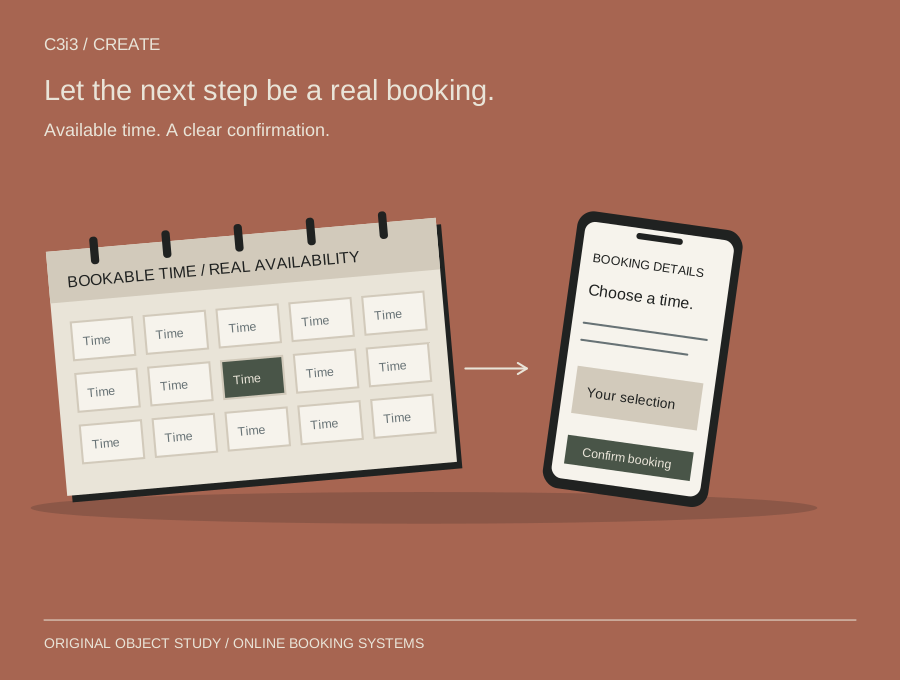
A booking button is only the start. Customers need to understand the service, see relevant availability and know whether the appointment is confirmed. Your team needs the same record. C3i3 creates online booking systems through scoped platform setup, website integration or custom development where the requirements justify it.
We review services, locations, resources, calendars and approval rules before choosing a tool. An existing platform may handle most of the task. The build connects the customer route with the operational record, notifications and exceptions, rather than creating another calendar to reconcile. Ongoing appointment administration remains with the named team unless separately commissioned.
A booking route that fits the service
Define what the customer selects, which availability applies and what makes the request complete.
An agreed operational record
Connect the booking to the relevant calendar or system and identify which record the business should rely on.
Clear confirmations and exceptions
Explain pending, confirmed, changed or unavailable bookings with useful messages and a practical handover to your team.
Clear deliverables.
Useful decisions.
Your written scope confirms the depth and final format of the work. These are the components we can bring together for online booking systems.
- 01Scheduling requirements
Document the commissioned services, durations, availability rules, locations and resources. Identify whether a customer chooses a staff member, a general service slot or another option. Separate instant confirmation from a request that needs business approval so the interface reflects the actual process.
- 02Platform and integration decision
Review suitable existing tools and any required website, calendar or business-system connections. Confirm available access and supported functions. When custom work is appropriate, define the gap it addresses rather than rebuilding standard scheduling features without a clear reason.
- 03Customer booking journey
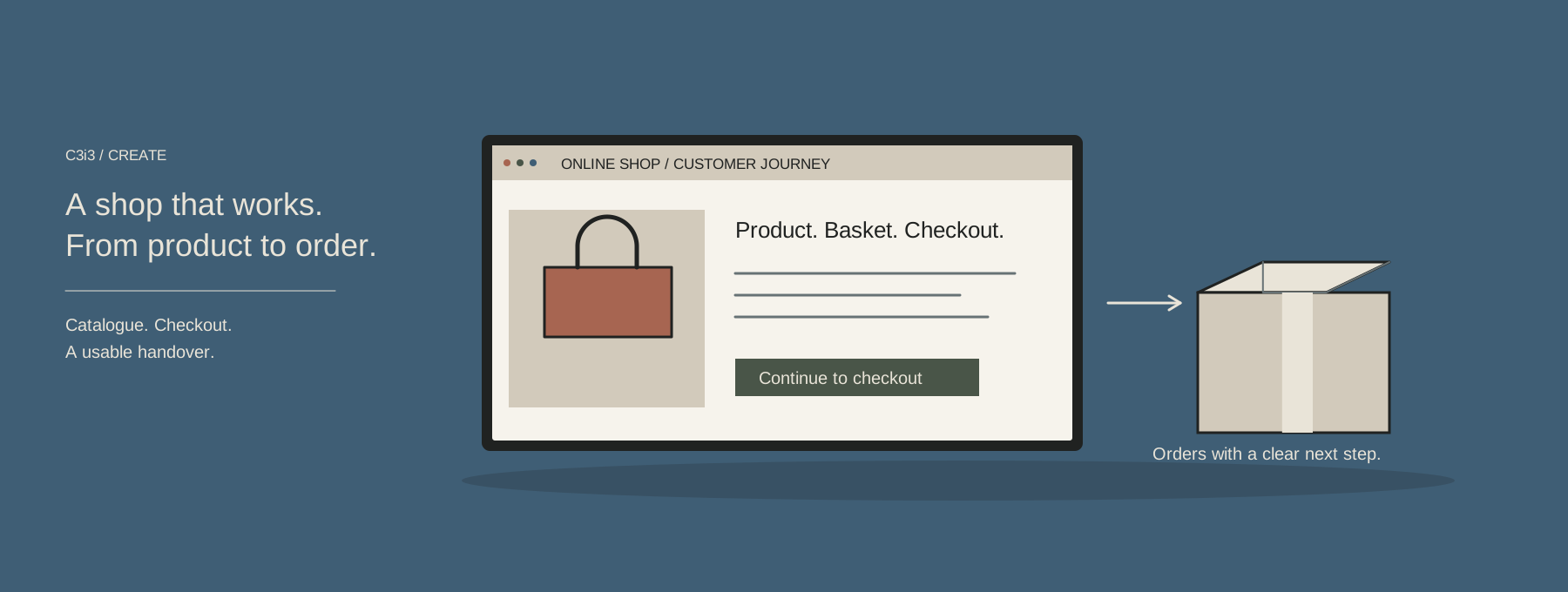
Build the agreed service selection, availability, input and confirmation steps. Review the route on relevant screen sizes and include clear labels, validation and a useful response when no appointment is available. Customers should understand what they have requested before submitting it.
- 04Calendar and notification connection
Connect the booking to the commissioned record and notification routes. Define time-zone handling, relevant staff notices and customer messages. Record synchronization limits and any remaining manual action so a confirmation does not conceal an unfinished operational handoff.
- 05Booking-state and change rules
Implement the agreed pending, confirmed, rescheduled or cancelled states supported by the chosen setup. Identify who may change an appointment and what the customer is told. Deposits, payment connections and additional business rules are included only when specified.
- 06Testing and staff handover
Review representative bookings, unavailable slots, validation and the confirmation received by both sides. Check administrator tasks and document how services, schedules and settings are maintained. Record provider dependencies and the route for investigating a booking that appears inconsistent.
Go deeper where
the decision needs it.
This work connects to the related creative and production work below. Explore the relevant service to see its distinct scope and deliverables.
App Development Services
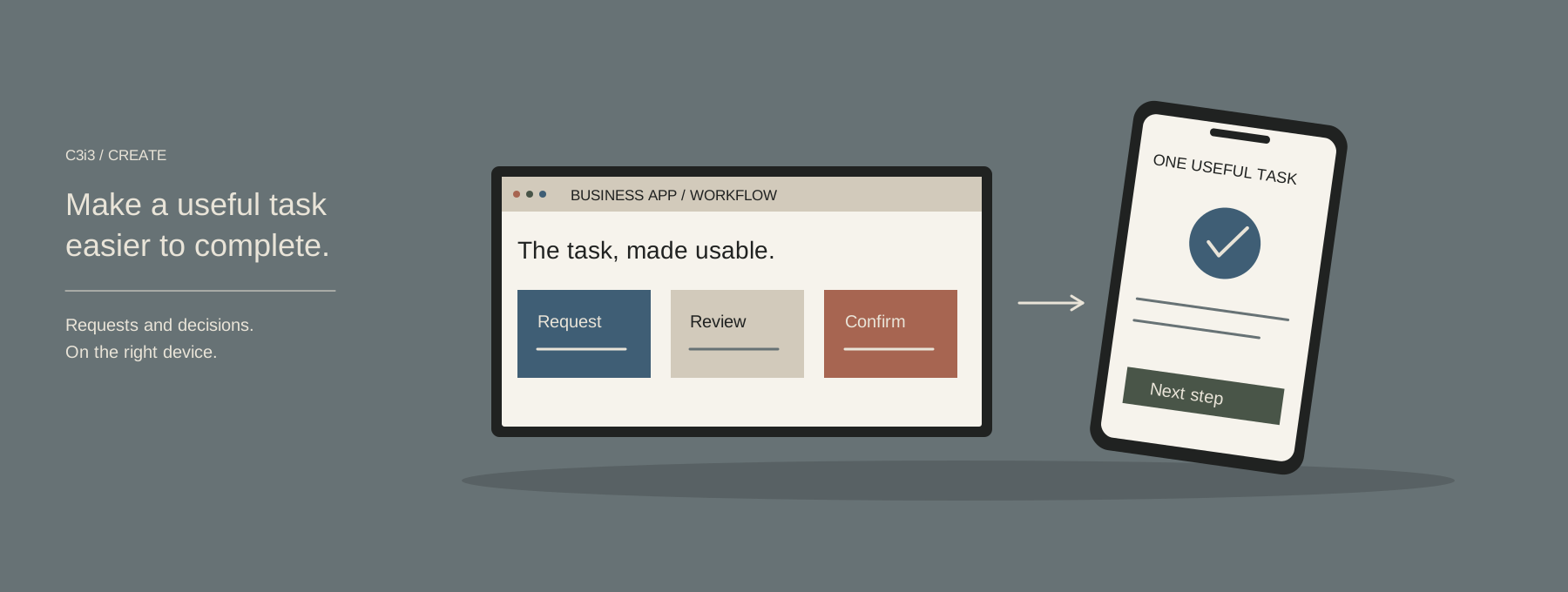
Customers submit the same details twice. Staff move requests between email and spreadsheets. One employee knows which version is current. C3i3 provides app development services to turn a defined business task into a working application. We establish who uses it, what they need to complete and how the business will own the resulting process.
Explore app development servicesWeb Portal Development Services
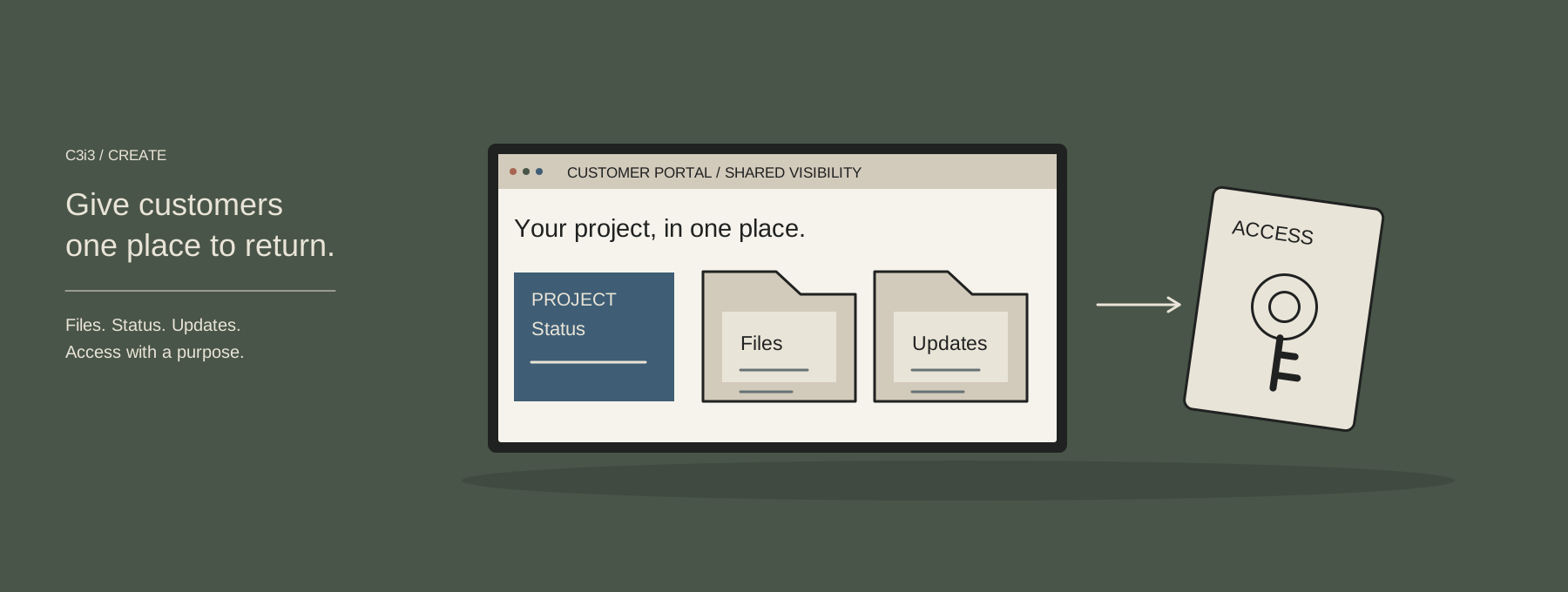
Your customers should not need another email thread to find the latest document, check a project or submit a request. C3i3 provides web portal development services for a defined customer, partner or staff journey, connecting the information and actions people need behind an appropriate sign-in.
Explore web portal development servicesA clear process.
A practical handover.
The production approach follows the message, source material, and agreed scope. Open each step to see what happens and what it produces.
01Understand the real scheduling task.
We review services, existing calendars, staff responsibilities and the questions customers ask while booking. Your team confirms which information is required and who can approve or change an appointment.
A defined booking workflow and operating requirements.
02Choose the implementation route.
We identify which platform and connections can support the requirement. The business reviews the customer journey and the remaining operational duties before setup or custom development begins.
An approved platform route and booking flow.
03Build and check both sides.
We implement the commissioned booking experience and review its calendar records, customer messages and staff notifications. Pending, unavailable and changed-booking states are included in the agreed checks.
A reviewable booking system and acceptance record.
04Launch with a clear administrator.
We prepare the approved release and explain how the business maintains services, availability and account settings. Provider access and any ongoing support arrangements are recorded for the next operational question.
A launched booking journey and staff instructions.
An appointment request should not become a second scheduling conversation.
Consider an illustrative service business using a shared calendar and telephone bookings. A scoped online route could let a customer choose an eligible service and request an available time. The system displays whether the request is confirmed or awaiting review, while the team receives the agreed record. This describes a possible workflow, not a promise that all scheduling conflicts or missed appointments will disappear.
| The question or stage | What we examine | Why it matters |
|---|---|---|
| Selection | Service and required booking details | Capture enough information to place the request correctly. |
| Availability | The appropriate calendar and resource rules | Show options that correspond to the agreed scheduling setup. |
| Confirmation | Customer message and operational record | Make the appointment state understandable to both sides. |
| Change | A defined reschedule or cancellation route | Keep the next action connected to the same appointment. |
To show how online booking systems can support a decision. Your recommendations depend on the evidence, resources, and constraints in your own brief.
Agree the brief.
Then make the work.
The proposal names services, resources, locations, calendar connections, notification routes, supported booking states and acceptance checks. Platform subscriptions, payment processing, extensive data migration and ongoing appointment administration are separate unless included. Provider features and access determine some limits. We agree the business's scheduling and cancellation rules before implementing them, with a named person responsible for keeping availability and service information current.
| Before we start | What we agree |
|---|---|
| The decision | The audience, offer, question, and boundaries the work needs to address. |
| The deliverables | Creative and production scope, format, review rounds, responsibilities, and handover. |
| The investment | Written fees, schedule, dependencies, and any separate third-party or implementation costs. |
We confirm the proposal before work begins. You can commission a focused engagement, connect it to a wider plan, or ask about a separately scoped delivery phase.
Discuss scope and timingUseful questions.
Straightforward answers.
Do we need a custom booking application?
Not necessarily. A suitable platform may cover the task through setup and integration. Custom development is considered where a defined requirement justifies it.
Can the system use our current calendar?
We review provider access and connection options. The scope identifies synchronization, update behavior and remaining manual work instead of assuming all calendar integrations work alike.
Can bookings require our approval?
Yes, when supported or commissioned. Customers should understand that approval is pending, with an assigned reviewer and a defined response after the decision.
Can customers pay a deposit during booking?
This can be scoped through a suitable provider. Your business defines the policy; provider relationships, processing and exceptional refund rules remain explicit dependencies.
Can we handle different locations or staff?
These requirements can be scoped around resource availability, service eligibility and responsibilities. The operating rules are agreed before multiple calendars become customer options.
Will the system eliminate double bookings?
We implement and check the agreed rules. Outside calendars, manual changes and synchronization limits also matter, so the project defines an authoritative record and investigation route.
Who sends reminders and manages cancellations?
The scope defines notifications and change actions. Your team retains service responsibilities and manual decisions, with channels, coverage and messages agreed before launch.
Can our employees change services and availability?
We can provide administrator access and instructions. A named business owner maintains the schedule; ongoing administration or technical support can be commissioned separately.
Keep the next step
connected to the plan.
Read how to decide whether your business needs a website, app or focused page, or return to all Create services.