



































Mobile App Development Services.

A useful mobile task.
A deliberate app build.
Your staff work away from a desk, or customers return to the same task on their phones. The website may explain the service but cannot support the required device interaction or continuing workflow. C3i3 provides mobile app development services for a defined mobile product. We assess the users, task and operating requirements before agreeing whether a native, cross-platform or browser-based approach is appropriate.
An app-store listing is not the starting point for every mobile problem. We first establish what a person must complete, the devices involved and whether the application needs capabilities beyond a responsive website. Accounts, permissions, connected records, notifications and interrupted connectivity can each change the build and operating scope. The project connects an approved experience to the commissioned implementation and release preparation. Design can establish the flows and screens; ongoing support, provider accounts and later platform changes need a clear owner after development. Publication decisions by outside platforms are separate dependencies.
A justified mobile approach
Compare the task and device needs before committing to a native or cross-platform application.
A defined mobile experience
Connect screens, data and permitted device functions around a manageable first-release workflow.
A release and support plan
Identify testing, account ownership, distribution requirements and the responsibilities that continue after launch.
Clear deliverables.
Useful decisions.
Your written scope confirms the depth and final format of the work. These are the components we can bring together for mobile app development services.
- 01Mobile workflow and device requirements
Map the user’s task, frequency of use, working environment and supported devices. Identify the requirement behind requested functions such as a camera, location or notifications. Separate essential capabilities from optional features so the application is based on an actual job rather than an app-store checklist.
- 02Native, cross-platform or web assessment
Compare suitable approaches against the requirements, existing systems and operating responsibilities. The proposal specifies the intended platforms and technical direction before implementation. A responsive web experience may be sufficient; a native or cross-platform build needs a reason tied to the commissioned task.
- 03Mobile interface and application implementation
Develop the approved screens, navigation and business rules within the chosen approach. Include the relevant input validation, loading, empty and error states. UX and UI work can be included as a linked stage, with clear review decisions before the screen design is treated as an implementation specification.
- 04Accounts, data and device connections
Implement the scoped access, record exchange and device features where supported. Identify permissions, account administration and dependencies on external services. Notification delivery, offline behavior and synchronization need explicit requirements rather than being assumed to work in every environment.
- 05Device and task verification
Review representative user tasks on the agreed devices and operating environments. Include relevant denied-permission, interrupted-connection or failed-action states. Record the acceptance results and known limitations. The check plan defines coverage instead of implying that one preview proves compatibility with every phone.
- 06Distribution preparation and handover
Prepare the agreed build, release material, account information and operating notes for the chosen distribution route. App-store review, developer accounts and policy requirements are identified as external dependencies. Document who owns future releases, support and platform-related updates after the first version is handed over.
Go deeper where
the decision needs it.
This work connects to the related creative and production work below. Explore the relevant service to see its distinct scope and deliverables.
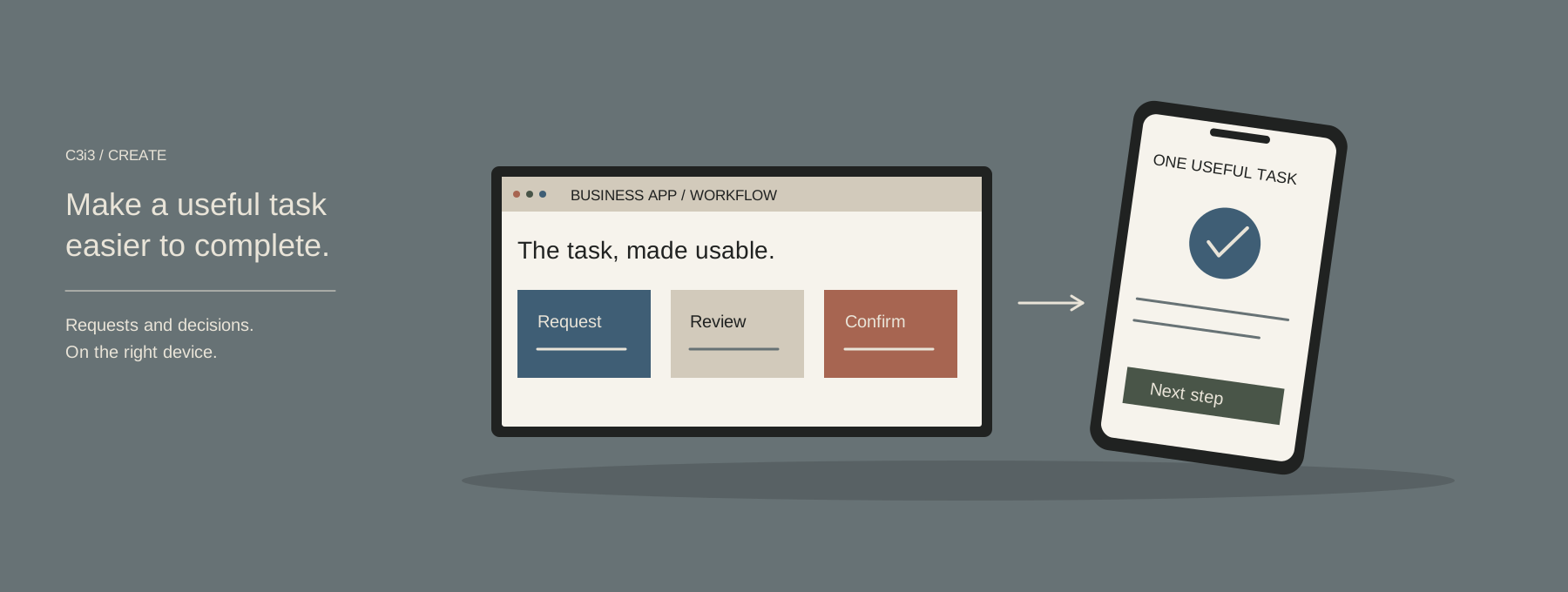
App Development Services
Customers submit the same details twice. Staff move requests between email and spreadsheets. One employee knows which version is current. C3i3 provides app development services to turn a defined business task into a working application. We establish who uses it, what they need to complete and how the business will own the resulting process.
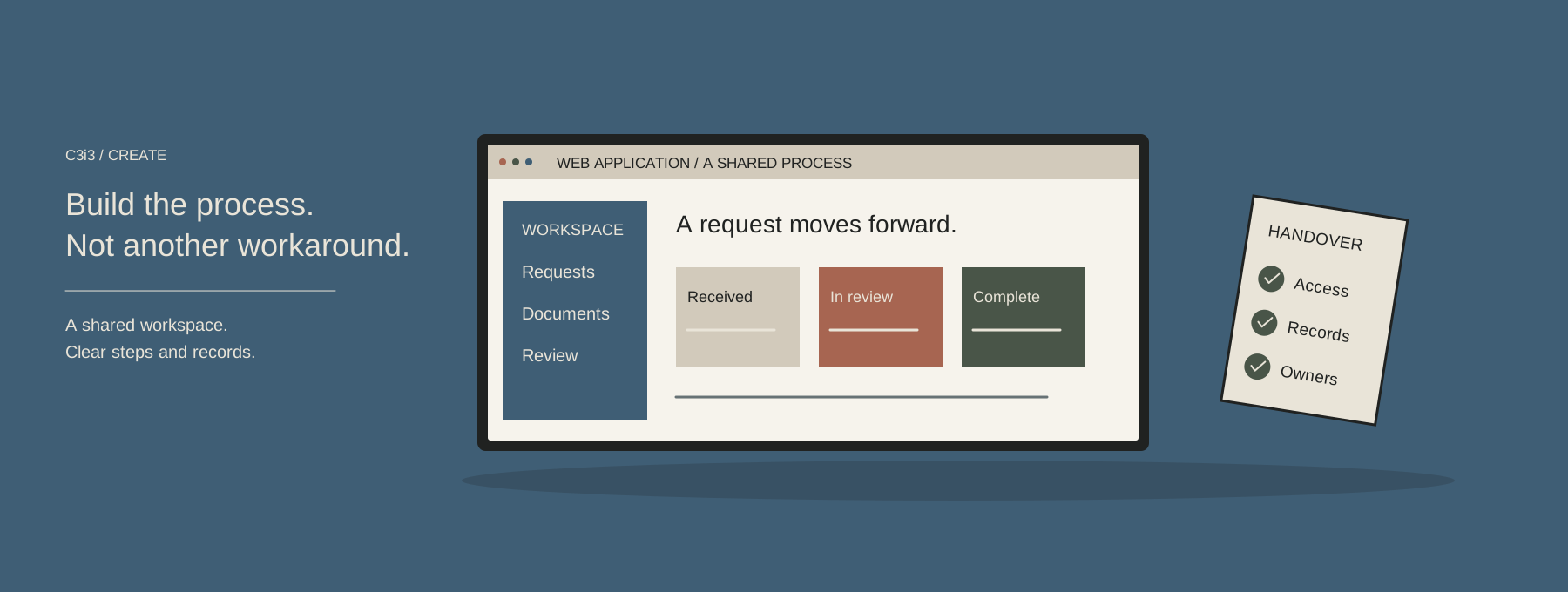
Explore app development servicesWeb Application Development Services
The request starts on a form, moves into a spreadsheet and finishes in an email thread nobody else can follow. A new dashboard will not help if the task still breaks between those steps. C3i3 provides web application development services for defined business workflows that people can use through a browser. We connect the screens, records, rules and responsibilities needed to complete the agreed job.
Explore web application development servicesA clear process.
A practical handover.
The production approach follows the message, source material, and agreed scope. Open each step to see what happens and what it produces.
01Clarify the task and the mobile need.
We review the users, devices, environment and functions that may justify an app. A simpler browser route remains an option when it meets the business need.
A mobile requirement and delivery decision.
02Agree the experience and scope.
We define platforms, flows, records, permissions, integrations and the first-release checks before implementation begins.
An approved mobile build brief.
03Implement and review the application.
We develop the commissioned functions and review the relevant tasks, permissions and exception states with your authorized contacts.
A reviewed build and issue record.
04Prepare distribution and ongoing ownership.
We establish the release material, provider accounts, handover and future support responsibilities. Outside-platform review remains a visible dependency.
A release package and operating handover.
A field request can be completed where the work happens.
Imagine an illustrative business whose authorized staff need to record an equipment-service request from a customer site. The mobile brief defines the required details, any approved photo function, access roles and the record that must reach the office. If interrupted connectivity matters, its behavior receives a specific scope rather than a general offline promise. The example is a possible development requirement, not an existing C3i3 app or evidence of time saved.
| The question or stage | What we examine | Why it matters |
|---|---|---|
| Task | Record a defined request away from the desk | Establish the reason for a mobile experience. |
| Device | Approved camera or other required capability | Define permission and platform requirements. |
| Connection | Data exchange and interrupted-task behavior | Make operating limits visible before development. |
| Release | Verification, distribution and update ownership | Plan beyond the first application build. |
To show how mobile app development services can support a decision. Your recommendations depend on the evidence, resources, and constraints in your own brief.
Agree the brief.
Then make the work.
Scope names the mobile approach, supported platforms, screens, functions, integrations, device checks and distribution work. App-store accounts, review requirements, outside services and later operating-system changes are separate dependencies. Offline operation, device-specific features, subscriptions or existing-app migration require explicit inclusion. We do not guarantee store acceptance, unrestricted compatibility or a business outcome. Bring the task your users need to finish on a phone, their working conditions and the systems the app must use.
| Before we start | What we agree |
|---|---|
| The decision | The audience, offer, question, and boundaries the work needs to address. |
| The deliverables | Creative and production scope, format, review rounds, responsibilities, and handover. |
| The investment | Written fees, schedule, dependencies, and any separate third-party or implementation costs. |
We confirm the proposal before work begins. You can commission a focused engagement, connect it to a wider plan, or ask about a separately scoped delivery phase.
Discuss scope and timingUseful questions.
Straightforward answers.
Do we need a native mobile app?
Not necessarily. We compare the task, device needs and operating conditions with web and cross-platform options. The approach is agreed before a native build is treated as the solution.
Can one app serve iPhone and Android users?
That depends on the requirements and chosen approach. The proposal identifies supported platforms, shared and platform-specific work, and the environments included in verification.
Will you publish the app in the stores?
Distribution preparation or submission assistance can be included when specified. Developer accounts, platform requirements and review decisions remain separate dependencies. We do not guarantee app-store approval.
Can the app work without an internet connection?
Offline tasks, local records and later synchronization need their own requirements and checks. They are not included automatically in every mobile application.
Can we use phone notifications or the camera?
We assess the purpose, platform support, permissions and connected services. Required device functions are defined in the scope, including relevant behavior when a user denies access.
Can the app connect to our existing records?
We review the source system, available interfaces, record ownership and access. The implementation scope specifies what will be exchanged and how failures or outside-system dependencies are handled.
Who owns the application and developer accounts?
The agreement defines commissioned work, licensed components, delivered source or configuration and provider accounts. Your business should retain appropriate ownership, administration and recovery access.
What happens when mobile platforms change?
Future releases, maintenance and platform-related updates need a defined support arrangement. The first-release handover records the application and responsibilities so ongoing care can be commissioned with clear boundaries.
Keep the next step
connected to the plan.
App Development Services
Web Application Development Services
Read how to choose between a website, app and landing page, or return to all Create services.