



































Ecommerce Development Services.
Build the purchase.
Not just the product page.
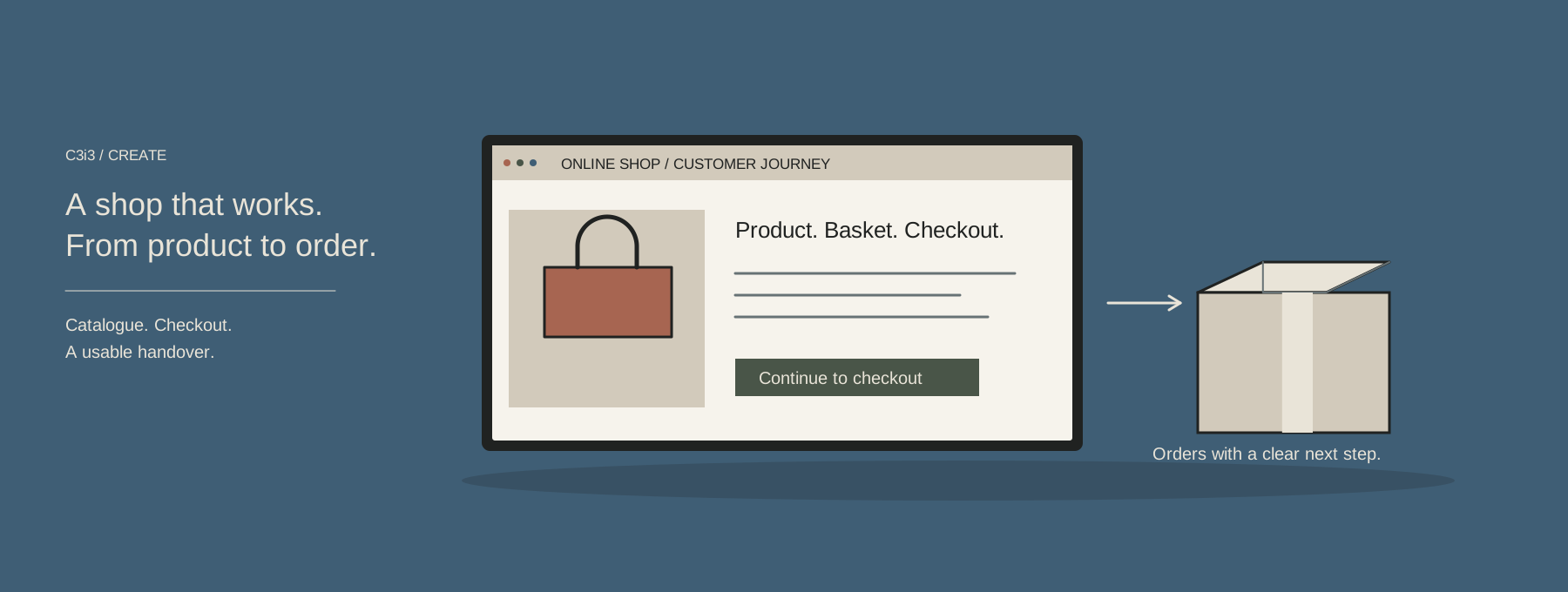
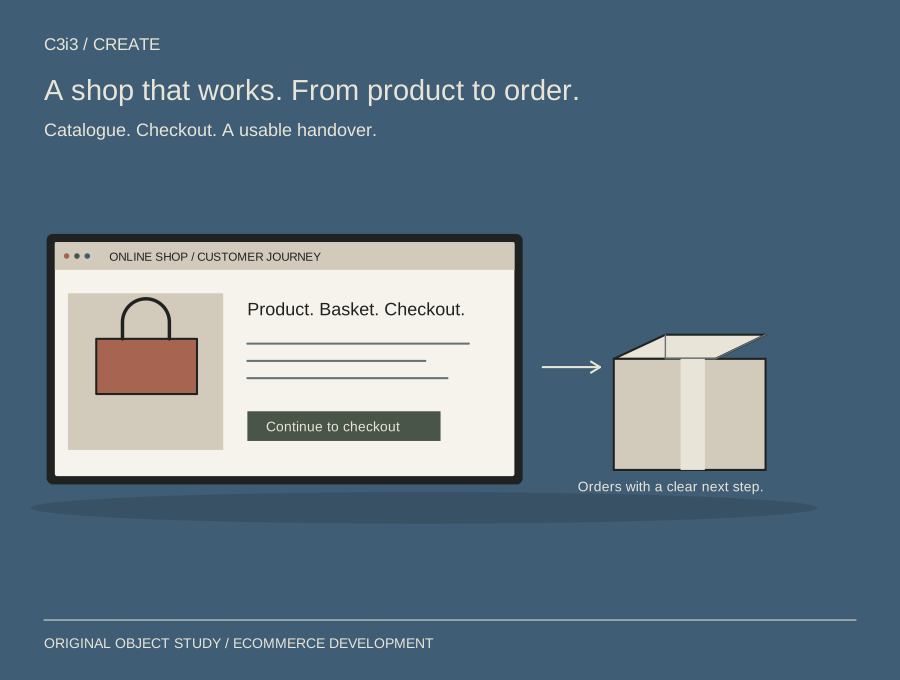
A customer finds the right product but cannot choose a variation, understand delivery or complete the order. Your staff finish the sale by email instead. C3i3 provides ecommerce development services to turn the agreed catalog, purchase rules and business processes into a working online shop. We connect the customer journey to the records and handoffs your team needs after an order arrives.
We begin with how the business sells: products, options, stock information, delivery areas, payment-provider requirements and fulfillment. A small retail range can need a different setup from a restricted or wholesale catalog. Those decisions come before extensions or checkout development. Design services can define the storefront experience; this Create service implements and verifies the commissioned shopping and operating functions. The business approves product facts, trading policies and financial or tax settings.
A complete buying route
Connect discovery, product selection, cart, checkout and confirmation around the way your customers buy.
An operating shop your team can use
Give authorized staff a defined route for products, orders, fulfillment information and exceptions.
A useful launch handover
Record the platform, integrations, checks, account ownership and unresolved decisions before the shop goes live.
Clear deliverables.
Useful decisions.
Your written scope confirms the depth and final format of the work. These are the components we can bring together for ecommerce development services.
- 01Catalog and purchase requirements
Map products, variations, availability, customer groups and required buying information. Identify catalog files, image requirements and factual approvals. Include relevant differences between retail purchases, quote requests, wholesale orders or restricted catalogs.
- 02Store platform and integration plan
Choose a platform around the actual requirements, existing systems and ownership preferences. Define the role of the payment provider, shipping service, accounting tools or inventory source. Record what each integration can exchange and who maintains it instead of assuming every tool connects without additional work.
- 03Storefront and purchase implementation
Build the commissioned catalog, product options, cart and checkout using the agreed design direction. Include relevant empty states, unavailable products and error messages. Connect approved policies and contact information where customers need them, with a usable route back when an option cannot be completed.
- 04Order and staff workflows
Configure the agreed order states, customer messages and staff responsibilities. Establish who checks an unsuccessful payment, missing delivery detail or request to change an order. Your team should know which record is authoritative rather than reconcile several contradictory notifications after launch.
- 05Purchase and exception checks
Use the selected provider testing arrangements to check representative products, shipping choices, confirmation messages and recorded orders. Include agreed failure, cancellation or refund scenarios where supported. Testing follows the approved environment and account permissions; it does not require making unapproved live purchases.
- 06Launch and administration handover
Provide the agreed operating notes, account register, configuration record and remaining issues. Show the authorized contact how recurring catalog and order tasks work. Separate a launch handover from an ongoing care agreement so responsibilities do not disappear when the build is complete.
Go deeper where
the decision needs it.
These specialist services develop the work within ecommerce development services. We can combine the relevant parts in one scope or focus on a particular decision.
Shopify Development Services
Your Shopify shop looks ready, but product options do not match how you sell, staff repeat order details in another system, and each new app introduces another handoff. C3i3 provides Shopify development services for a defined store build or improvement. We connect the agreed theme, catalog, checkout settings and integrations around the customer and staff tasks that need to work.
Explore shopify development servicesA clear process.
A practical handover.
The production approach follows the message, source material, and agreed scope. Open each step to see what happens and what it produces.
01Define the buying and operating rules.
We review products, customer tasks, fulfillment, provider requirements and the information your team can supply. Unresolved business rules become explicit decisions before implementation.
A store brief and responsibility map.
02Plan the shop and connections.
We agree platform choices, customer routes, administrative tasks and integration boundaries. The scope identifies the catalog and technical work included in the first release.
An approved build and acceptance plan.
03Build and check the purchase.
We implement the commissioned functions and review representative purchase and exception journeys with the business contact. Findings remain visible until resolved or explicitly deferred.
A reviewed store and test record.
04Prepare the team for launch.
We agree release readiness, provider access, operating notes and the handover. Ongoing updates and support are defined separately when needed.
A launch decision and usable administration handover.
A product range becomes a shop the team can operate.
Imagine an illustrative shop selling configurable desk accessories. A buyer selects a finish and quantity, sees delivery choices and completes checkout through the chosen payment provider. Staff receive the selected options and know the fulfillment step. A failed payment follows a defined exception route. This is a possible build, not an existing client result or a sales promise.
| The question or stage | What we examine | Why it matters |
|---|---|---|
| Product choice | Variations, required details and availability | Keep an incomplete selection from becoming an unclear order. |
| Checkout | Provider, delivery and confirmation behavior | Review the complete purchase rather than only the storefront. |
| Operation | Order record and staff responsibilities | Give the team an understandable fulfillment handoff. |
| Handover | Accounts, operating notes and remaining issues | Establish ownership beyond the launch date. |
To show how ecommerce development services can support a decision. Your recommendations depend on the evidence, resources, and constraints in your own brief.
Agree the brief.
Then make the work.
The proposal defines the platform, catalog scope, customer functions, integrations, migration, review rounds and acceptance checks. Payment processing is supplied by the selected provider under its own account and terms; we configure the commissioned integration. Product content, shipping contracts, taxes, policies and provider approval need the appropriate business inputs. Subscriptions, large data cleanup, complex inventory work and ongoing shop management are separate unless included. Bring your product range and the sales tasks currently handled by email or spreadsheets.
| Before we start | What we agree |
|---|---|
| The decision | The audience, offer, question, and boundaries the work needs to address. |
| The deliverables | Creative and production scope, format, review rounds, responsibilities, and handover. |
| The investment | Written fees, schedule, dependencies, and any separate third-party or implementation costs. |
We confirm the proposal before work begins. You can commission a focused engagement, connect it to a wider plan, or ask about a separately scoped delivery phase.
Discuss scope and timingUseful questions.
Straightforward answers.
Is this the same as ecommerce design?
Ecommerce design shapes the product pages, navigation and purchase experience. This service implements the commissioned store functions, provider connections, administration and launch checks. They can form one project while retaining clear deliverables.
Can we start with a small catalog?
Yes. We can scope a defined product range and purchase route before considering additional functions. The first release still needs accurate product information, delivery rules, account ownership and an operating handover.
Can you support B2B or wholesale buying?
We can assess customer groups, restricted pricing, quote requests and order requirements in the brief. Those functions depend on the selected platform and integrations and must be explicitly included before they are described as part of the build.
Who handles card payments?
The chosen payment provider handles payment processing through its service. We define the commissioned checkout integration and testing approach. Provider access, business verification and approval remain separate dependencies.
Will this connect to inventory or accounting?
We review the systems, available interfaces and required records first. The proposal identifies what will be connected, the direction of the data exchange and who handles failures or conflicting records.
Can we move an existing shop?
A migration needs a separate record of products, customers, orders, links and functions that must be preserved. We assess the current and proposed platforms before agreeing which data and redirects the project includes.
Will the store automatically bring more sales?
A working shop creates a purchase route. Sales also depend on demand, the offer, traffic, delivery and customer trust. Marketing and measurement can connect to the build without being presented as guaranteed outcomes.
What should we prepare before contacting you?
Bring the product range, sales process, existing systems and orders that need staff intervention. An appropriate private handover can be arranged for customer records or payment-related account information when required.
Keep the next step
connected to the plan.
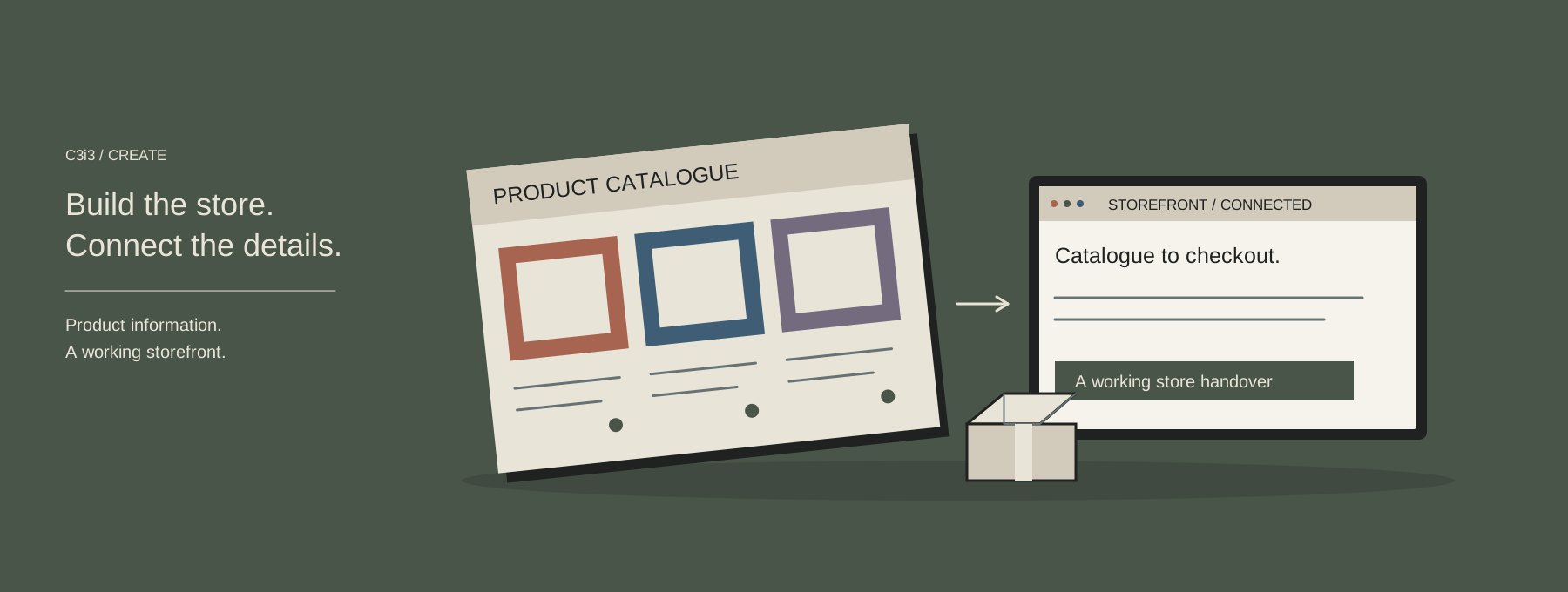
Shopify Development Services
Interactive Calculators
Read how to choose between a website, app and landing page, or return to all Create services.