






































B2B Website Design.

Your buyers need evidence.
Does your website give them any?
A B2B website has to support more than a quick first impression. Several people may evaluate the offer, compare technical fit and discuss it internally before contacting sales. C3i3 designs B2B websites around those buying questions, with clear service or product information, credible evidence and a useful enquiry route.
The starting point is your actual sales conversation. We identify what buyers ask, where they need detail and which claims your team can support. Then we map those questions to service pages, use cases, resources and appropriate contact routes. The design helps readers understand the offer while giving sales a clear context for the next conversation.
Explain a considered purchase
Organize complex offers so buyers can identify relevance, understand scope and find the detail that matters.
Support several decision makers
Give technical, operational and purchasing readers useful information without forcing everyone through the same generic pitch.
Connect the website to sales
Define enquiry subjects, useful qualification fields and the team responsible for following up.
Clear deliverables.
Useful decisions.
Your written scope confirms the depth and final format of the work. These are the components we can bring together for b2b website design.
- 01Buying-question map
Review common sales questions and identify the information needed at different stages of evaluation.
- 02Offer and use-case structure
Plan service, solution and application pages around distinct buying needs rather than repeated keyword variations.
- 03Evidence and resource layouts
Give approved project examples, specifications, case studies and supporting documents a clear role in the page.
- 04Responsive page designs
Create representative homepage, service, use-case and resource layouts with clear reading hierarchy.
- 05Enquiry and demo routes
Distinguish the contact options you actually offer and define the information each route needs.
- 06Implementation and content notes
Document content requirements, component behavior, approval owners and sales handover responsibilities.
Go deeper where
the decision needs it.
This work connects to the related design and development work below. Explore the relevant service to see its distinct scope and deliverables.
Enterprise Web Design
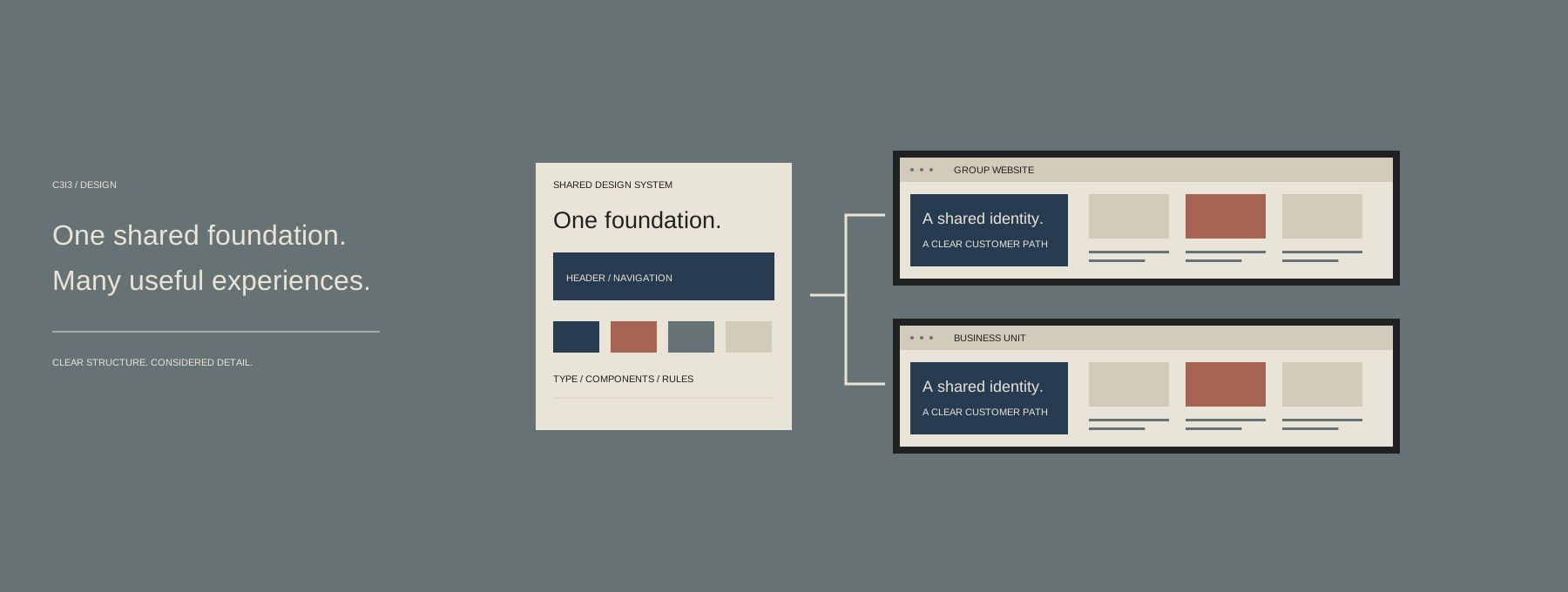
An enterprise website needs to work for customers and the people responsible for maintaining it. C3i3 provides enterprise web design for organizations with multiple divisions, large content libraries and several approval groups. We connect the customer journey with a usable structure, consistent templates and clear publishing responsibilities.
Explore enterprise web designManufacturing Web Design
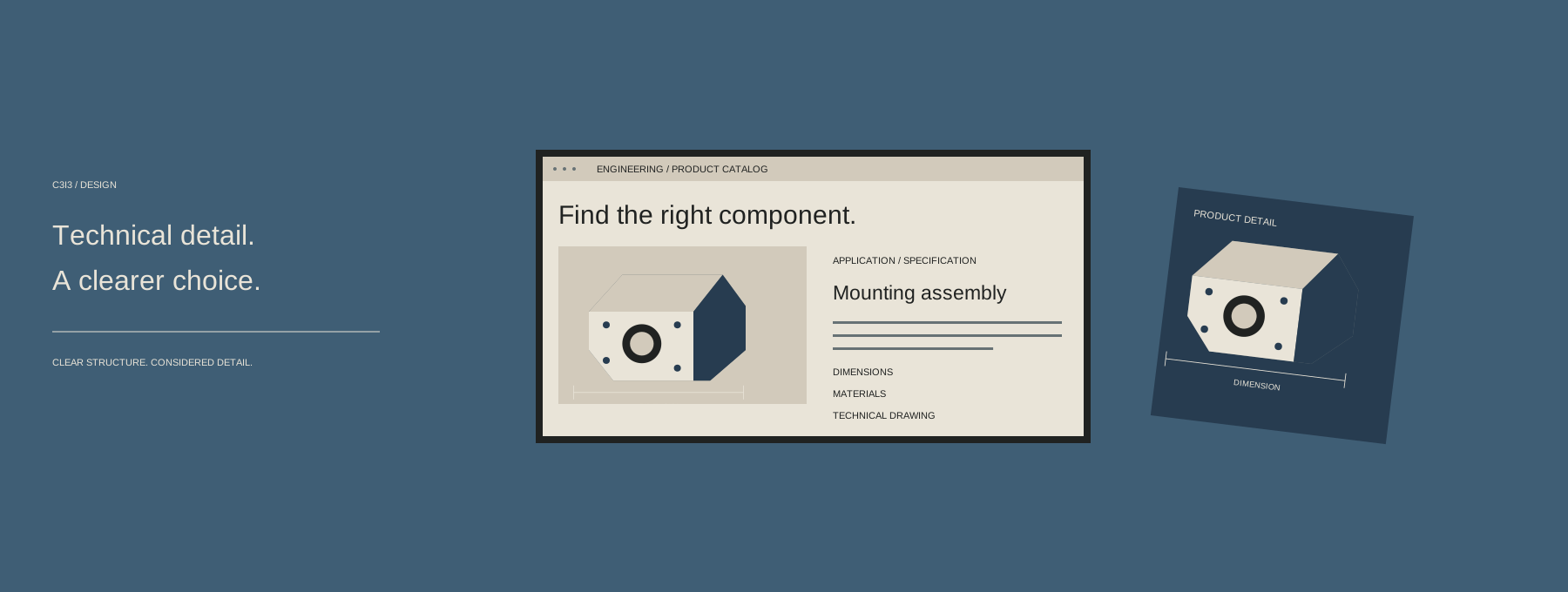
C3i3 designs manufacturing websites around the information engineers, purchasing teams and OEM buyers need to evaluate a supplier. We organize product families, capabilities, applications and approved technical resources, then connect that information to an appropriate request for quotation or technical enquiry.
Explore manufacturing web designA clear process.
A practical handover.
The approach follows the user needs, content, technical requirements, and agreed scope. Open each step to see what happens and what it produces.
01Review the sales questions
Speak with the people handling enquiries and review representative offers. Identify where prospects need more explanation or better evidence.
An agreed buyer-question and content inventory.
02Map the evaluation journey
Connect questions to pages and resources. Decide when a visitor needs a technical conversation, a demonstration or a general enquiry.
A page structure and contact-route map.
03Design the explanation
Use realistic content and approved evidence to compose the responsive layouts. Review whether a reader can identify fit and continue sensibly.
A reviewed set of B2B website templates.
04Connect the handover
Agree form context, routing, content ownership and development requirements before launch preparation.
A design and sales-handover checklist.
One offer.
Different questions around the table.
Illustrative example: a company sells a technical business service. An operations lead needs to understand the workflow, an IT reviewer needs integration information and purchasing needs to understand the engagement scope. A B2B website can connect those questions without requiring three unrelated websites or making every page a long sales pitch.
| The question or stage | What we examine | Why it matters |
|---|---|---|
| Operations | Workflow and practical application | Explain how the service fits the work. |
| Technical review | Requirements, dependencies and approved documentation | Support evaluation without overstating compatibility. |
| Sales conversation | Scope questions and useful context | Make the enquiry relevant to both sides. |
To show how b2b website design can support a decision. Your design depends on the users, content, requirements, and constraints in your own brief.
Agree the brief.
Then make the work.
We agree the audience, important tasks, representative content, review stages and final deliverables before implementation. The brief names approval owners, technical dependencies, data-handling requirements and the operating responsibilities after handover. Work on integrations, migration or additional systems is included only where explicitly defined.
| Before we start | What we agree |
|---|---|
| The decision | The audience, offer, question, and boundaries the work needs to address. |
| The deliverables | Design and implementation scope, format, review rounds, responsibilities, and handover. |
| The handover | Approved source files, implementation notes, content ownership and the person responsible for the next step. |
We confirm the proposal before work begins. You can commission a focused engagement, connect it to a wider plan, or ask about a separately scoped delivery phase.
Discuss scope and timingUseful questions.
Straightforward answers.
How does this differ from enterprise web design?
B2B website design focuses on the buying journey and sales information. Enterprise web design focuses on organizational complexity such as multiple divisions, shared components and publishing governance. A project can need both within one coordinated scope.
Can you design for a long sales cycle?
Yes. We identify the resources, questions and contact routes that support evaluation over time. The design does not assume that every first visit should immediately produce a sales enquiry.
Can you add case studies without naming clients?
Approved anonymized examples can be useful when they remain accurate and explain the context. We do not invent outcomes, identities or testimonials.
Will a new design guarantee more leads?
No. Enquiries depend on the offer, audience, traffic, evidence, implementation and follow-up. We define the website tasks and measurement requirements so the business can evaluate the change.
Can you collaborate with our internal team or another vendor?
Yes. We agree ownership of content, design, code, infrastructure and approvals before work begins. Shared reviews need a designated decision maker and a record of dependencies.
How do you handle accessibility?
We consider accessible structure and interactions throughout the design and build. The brief defines the required checks, representative tasks and implementation responsibilities; accessibility is not established by a visual mockup alone.
Can we begin with one part of a larger website?
Yes. A focused scope can address a content model, priority templates or a specific workflow. We document how that work connects to the wider site so a limited engagement does not create an unrelated system.
What do we need before starting?
Bring the business problem, representative content, relevant existing assets and the people responsible for technical and content decisions. We identify missing requirements during discovery rather than assuming they are resolved.
Keep the experience
connected.
Enterprise Web Design
Manufacturing Web Design
For a useful planning guide, read whether you need a website, app, or landing page. Or return to all Design services.
Useful reference: W3C guidance on usable forms .