






































Enterprise Web Design.

One company. Many teams.
A website that no longer fits?
An enterprise website needs to work for customers and the people responsible for maintaining it. C3i3 provides enterprise web design for organizations with multiple divisions, large content libraries and several approval groups. We connect the customer journey with a usable structure, consistent templates and clear publishing responsibilities.
A corporate web design project can become difficult long before development begins. Every department wants a place in the navigation, important content has no owner and regional pages use unrelated layouts. We start by identifying the audiences, important tasks and decisions that need organization-wide agreement. The work produces a coherent design system for the website, with recorded rules for where teams can adapt and where the experience needs to stay consistent.
A clear structure across divisions
Separate the customer-facing information hierarchy from the internal organization chart. Give important audiences a sensible route through the content.
Reusable templates and components
Design patterns that support long titles, technical detail, related resources and different content densities without rebuilding every page.
Decisions with accountable owners
Define stakeholder review, content ownership and the person authorized to approve each significant design decision.
Clear deliverables.
Useful decisions.
Your written scope confirms the depth and final format of the work. These are the components we can bring together for enterprise web design.
- 01Website and content inventory
Review representative sections, repeated page types, navigation, legacy content and the constraints that affect the redesign.
- 02Audience and task map
Map buyer, partner, employee and other agreed audiences to the tasks and information the public website needs to support.
- 03Information architecture
Propose navigation, content relationships and page responsibilities across divisions or regions, with redirect and migration requirements recorded.
- 04Template and component system
Design a reusable set of responsive templates and components with realistic content states and documented rules.
- 05Stakeholder review framework
Plan review milestones, consolidate feedback and record decisions against the approved brief.
- 06Implementation handover
Provide approved layouts, component notes, content responsibilities and acceptance criteria for development and publishing.
Go deeper where
the decision needs it.
This work connects to the related design and development work below. Explore the relevant service to see its distinct scope and deliverables.
Website Redesign
Choose your audience, message, channels and marketing priorities with a clear written direction.
Explore website redesignUI Design
Choose your audience, message, channels and marketing priorities with a clear written direction.
Explore ui designA clear process.
A practical handover.
The approach follows the user needs, content, technical requirements, and agreed scope. Open each step to see what happens and what it produces.
01Establish the decision structure
Identify the sponsor, content owners, reviewers and technical team. Confirm the important customer tasks and boundaries of the engagement.
An agreed brief, ownership map and review process.
02Organize the content
Review representative content and map the main navigation. Identify duplication, missing material and migration questions before visual refinement.
A content structure and template inventory.
03Design the system
Develop representative screens and shared components. Test them with dense technical content, longer headings and regional variations.
Reviewed responsive templates with component rules.
04Prepare the transition
Walk through content entry, implementation dependencies and release responsibilities. Separate approved work from decisions still open.
A design handover and transition checklist.
A divisional website
without six unrelated experiences.
Illustrative example: an organization has several divisions with different product ranges but shared corporate information. A design approach could retain one navigation and page system, then allow controlled variations for division content. The aim is to make the company understandable while giving each team a workable publishing pattern. This scenario illustrates a process, not a measured client result.
| The question or stage | What we examine | Why it matters |
|---|---|---|
| Shared structure | Primary navigation, corporate pages and reusable templates | Keep the overall organization understandable. |
| Divisional content | Different offers, evidence and technical resources | Support real differences without creating unrelated sites. |
| Governance | Content owners, approvals and update responsibilities | Make the design usable after launch. |
To show how enterprise web design can support a decision. Your design depends on the users, content, requirements, and constraints in your own brief.
Agree the brief.
Then make the work.
We agree the audience, important tasks, representative content, review stages and final deliverables before implementation. The brief names approval owners, technical dependencies, data-handling requirements and the operating responsibilities after handover. Work on integrations, migration or additional systems is included only where explicitly defined.
| Before we start | What we agree |
|---|---|
| The decision | The audience, offer, question, and boundaries the work needs to address. |
| The deliverables | Design and implementation scope, format, review rounds, responsibilities, and handover. |
| The handover | Approved source files, implementation notes, content ownership and the person responsible for the next step. |
We confirm the proposal before work begins. You can commission a focused engagement, connect it to a wider plan, or ask about a separately scoped delivery phase.
Discuss scope and timingUseful questions.
Straightforward answers.
Is enterprise web design different from corporate web design?
The terms often describe the same buying need. We use this page for both and define the actual complexity in the brief: content volume, divisions, audience tasks, integrations and review responsibilities.
Can you work with our internal marketing and IT teams?
Yes. We agree roles, decision owners, technical constraints and review stages at the outset. Internal teams can contribute content, architecture requirements and implementation work without creating several competing approval routes.
Will you preserve important existing URLs?
We review the current URL inventory and record proposed changes. Redirect mapping, migration and post-release checks are coordinated with the implementation team rather than assumed from a design mockup.
Can this include multiple regions or languages?
Yes, where scoped. We define content relationships, translation ownership and locale-specific behavior. Translation accuracy, localized content approval and technical implementation require named owners.
Can you collaborate with our internal team or another vendor?
Yes. We agree ownership of content, design, code, infrastructure and approvals before work begins. Shared reviews need a designated decision maker and a record of dependencies.
How do you handle accessibility?
We consider accessible structure and interactions throughout the design and build. The brief defines the required checks, representative tasks and implementation responsibilities; accessibility is not established by a visual mockup alone.
Can we begin with one part of a larger website?
Yes. A focused scope can address a content model, priority templates or a specific workflow. We document how that work connects to the wider site so a limited engagement does not create an unrelated system.
What do we need before starting?
Bring the business problem, representative content, relevant existing assets and the people responsible for technical and content decisions. We identify missing requirements during discovery rather than assuming they are resolved.
Keep the experience
connected.
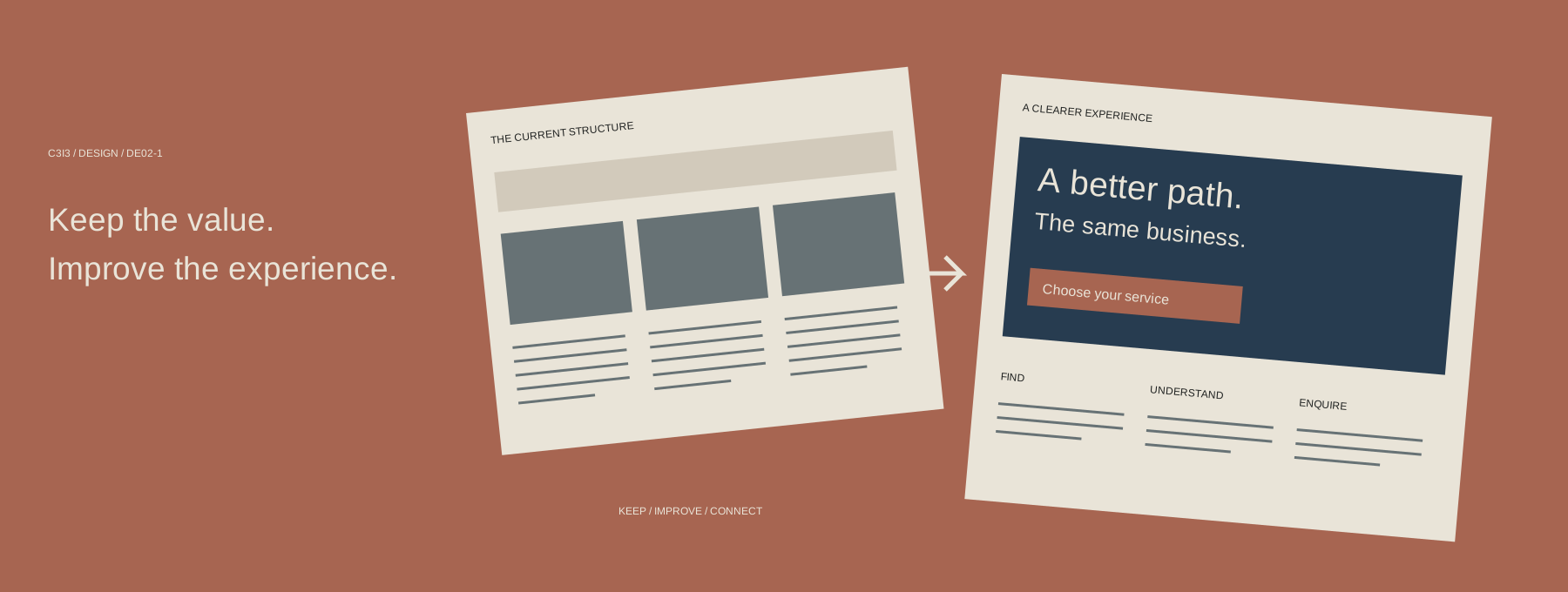
Website Redesign
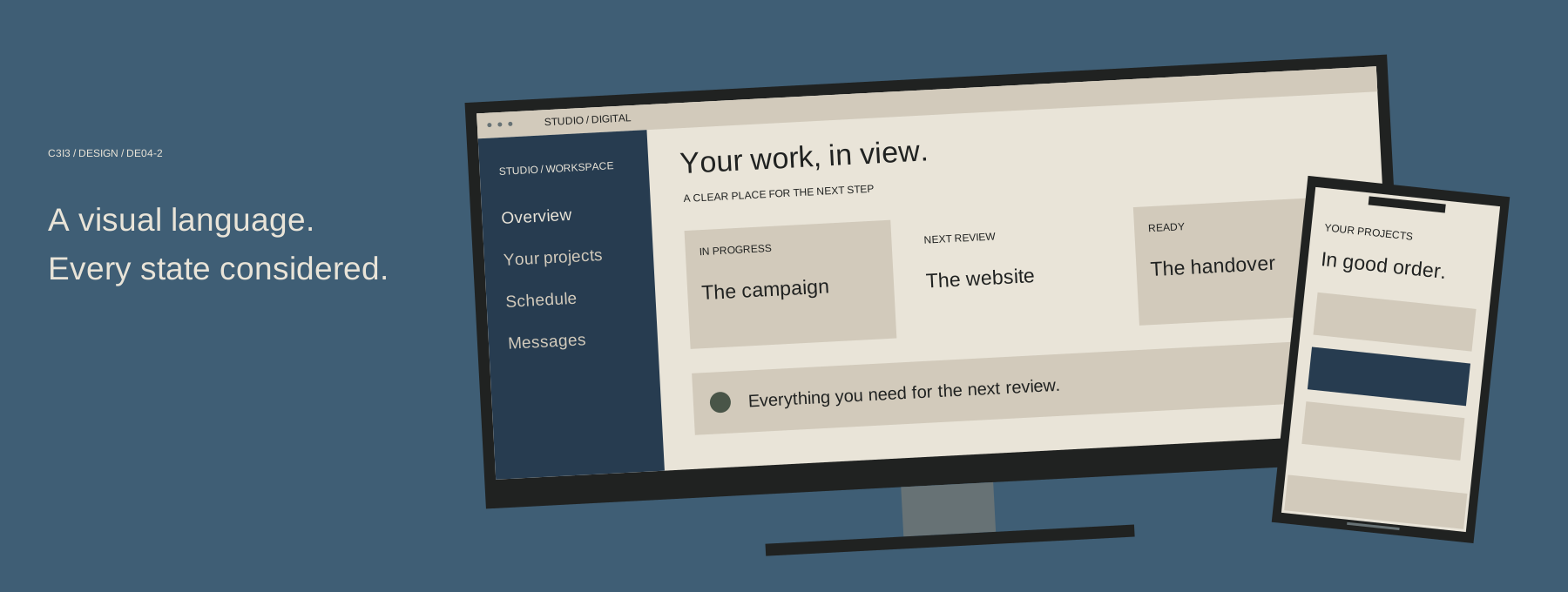
UI Design
For a useful planning guide, read whether you need a website, app, or landing page. Or return to all Design services.
Useful reference: W3C guidance on useful page structure .