






































Manufacturing Web Design.

Your capabilities are strong.
Can engineers find the details?
C3i3 designs manufacturing websites around the information engineers, purchasing teams and OEM buyers need to evaluate a supplier. We organize product families, capabilities, applications and approved technical resources, then connect that information to an appropriate request for quotation or technical enquiry.
Industrial websites often hide important details in an unstructured download library or describe every capability in the same broad paragraph. We review how buyers identify a suitable product or manufacturing process, what specifications they need and which questions require your technical team. The design should help a visitor evaluate fit without making unsupported claims about performance, certifications or production capacity.
Make technical information findable
Give product families, capabilities and applications clear navigation and useful relationships.
Support supplier evaluation
Provide approved specifications, documentation and evidence close to the relevant buying question.
Improve enquiry context
Design an RFQ route that captures useful project information and reaches the responsible team.
Clear deliverables.
Useful decisions.
Your written scope confirms the depth and final format of the work. These are the components we can bring together for manufacturing web design.
- 01Buyer and product review
Identify the main buyer roles, product families, manufacturing capabilities and information needed for an initial evaluation.
- 02Catalog architecture
Map categories, product attributes, filters and related applications using representative catalog data.
- 03Technical page templates
Design product, capability and application pages with clear specifications, document references and revision context where supplied.
- 04Resource library layouts
Organize drawings, data sheets and other approved resources with meaningful names and relationships to the relevant products.
- 05RFQ and technical enquiry design
Define the useful fields, optional project information, routing and confirmation with your sales or engineering team.
- 06Content and build handover
Document structured content, image requirements, approval responsibilities and the development checks needed for release.
Go deeper where
the decision needs it.
This work connects to the related design and development work below. Explore the relevant service to see its distinct scope and deliverables.
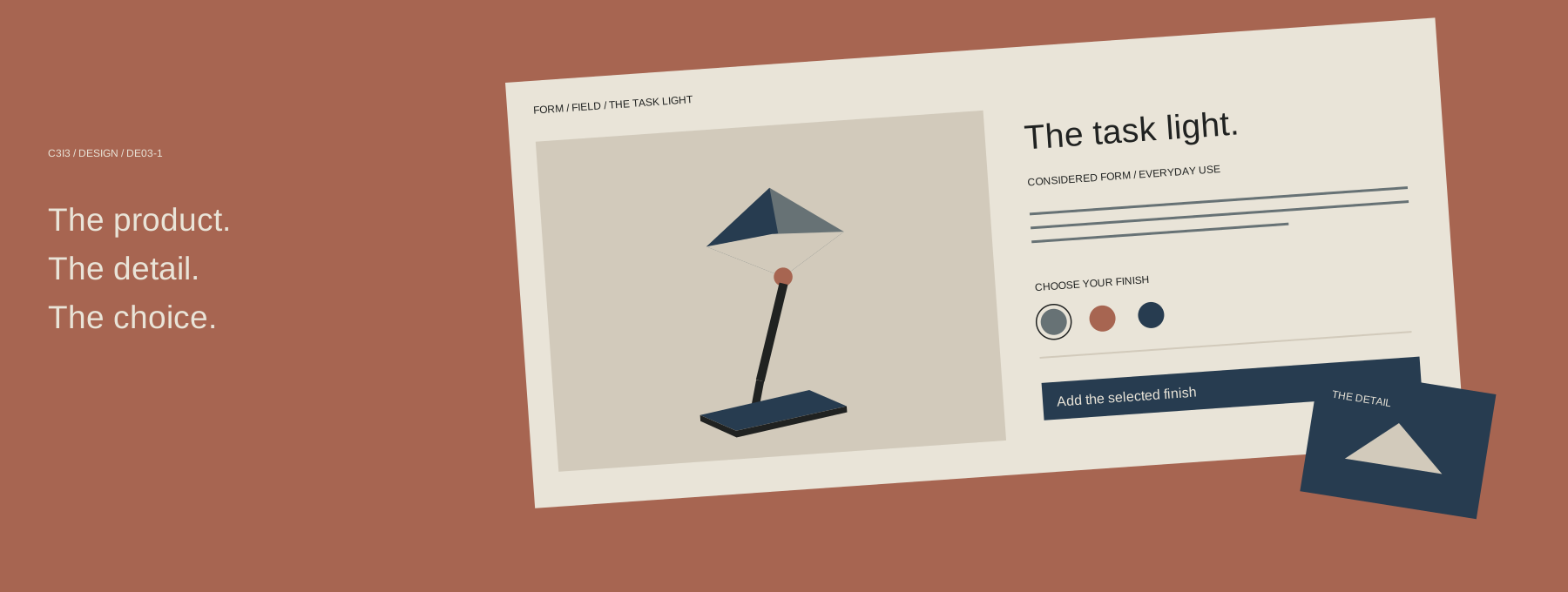
Product Page Design
Choose your audience, message, channels and marketing priorities with a clear written direction.
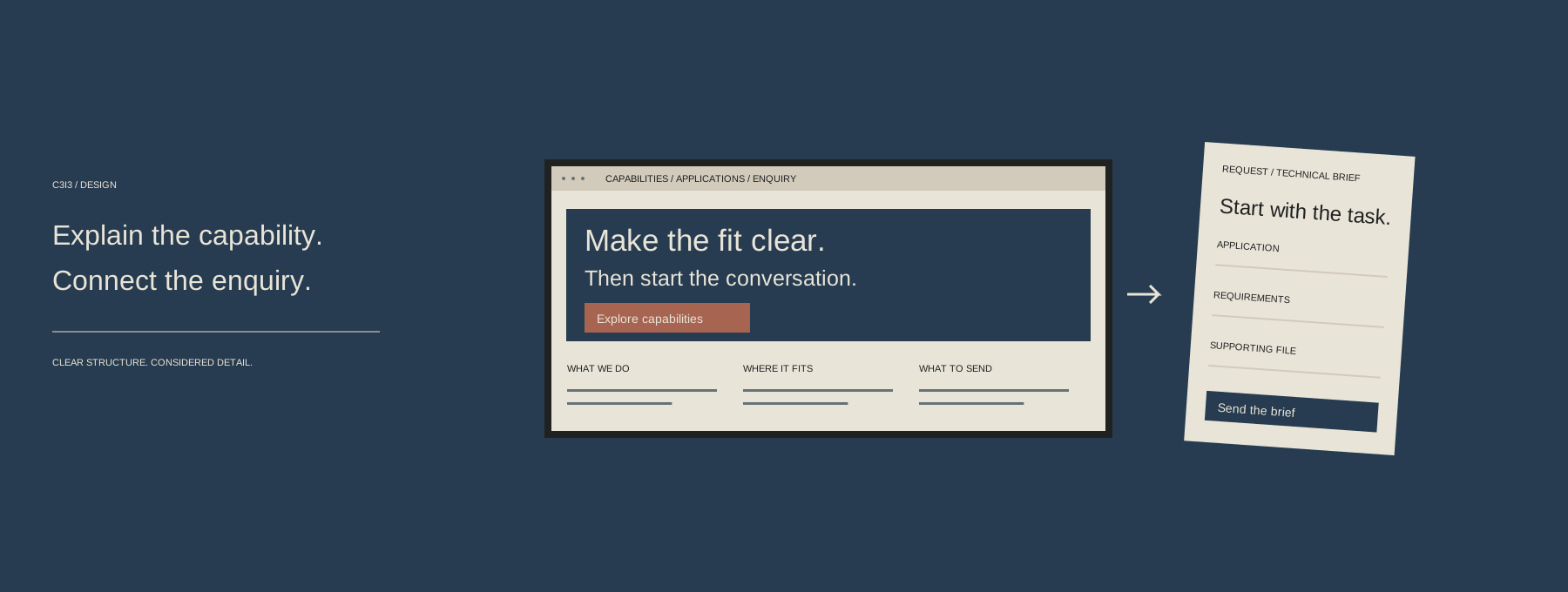
Explore product page designB2B Website Design
A B2B website has to support more than a quick first impression. Several people may evaluate the offer, compare technical fit and discuss it internally before contacting sales. C3i3 designs B2B websites around those buying questions, with clear service or product information, credible evidence and a useful enquiry route.
Explore b2b website designA clear process.
A practical handover.
The approach follows the user needs, content, technical requirements, and agreed scope. Open each step to see what happens and what it produces.
01Understand the buying question
Review a representative product or capability with sales and technical staff. Identify the details that establish fit and the questions that require a conversation.
A buyer-task and technical-content brief.
02Structure the range
Group products and capabilities according to meaningful attributes. Identify missing, duplicate or outdated resources.
A catalog and resource map.
03Design with real specifications
Use approved sample data, drawings and descriptions to test the page layouts. Include complex variants and incomplete information cases.
Responsive templates based on representative technical content.
04Review the enquiry handover
Confirm which team receives each request, what information is useful and how technical content will be updated.
An RFQ journey and content ownership checklist.
From product family
to an informed technical enquiry.
Illustrative example: an OEM buyer is comparing a component family for a specific application. The website can expose relevant attributes, link the correct data sheet and carry the selected family into the enquiry. If performance or availability depends on engineering review, the page should say so clearly rather than inventing an instant answer.
| The question or stage | What we examine | Why it matters |
|---|---|---|
| Find | Product family, application and meaningful attributes | Help buyers identify potentially relevant items. |
| Evaluate | Approved specifications and related documents | Give engineers enough information to frame a useful question. |
| Enquire | Application context and routing | Support a practical sales or technical handover. |
To show how manufacturing web design can support a decision. Your design depends on the users, content, requirements, and constraints in your own brief.
Agree the brief.
Then make the work.
We agree the audience, important tasks, representative content, review stages and final deliverables before implementation. The brief names approval owners, technical dependencies, data-handling requirements and the operating responsibilities after handover. Work on integrations, migration or additional systems is included only where explicitly defined.
| Before we start | What we agree |
|---|---|
| The decision | The audience, offer, question, and boundaries the work needs to address. |
| The deliverables | Design and implementation scope, format, review rounds, responsibilities, and handover. |
| The handover | Approved source files, implementation notes, content ownership and the person responsible for the next step. |
We confirm the proposal before work begins. You can commission a focused engagement, connect it to a wider plan, or ask about a separately scoped delivery phase.
Discuss scope and timingUseful questions.
Straightforward answers.
Do you cover OEM and industrial websites?
Yes. We define the buyer roles, product structure and technical content needed for your business. The scope follows the actual sales process rather than treating all manufacturers alike.
Can you design a searchable product catalog?
Yes. We define useful categories and filters with representative data. Search behavior, data integration and implementation are reviewed with the development team.
Who approves technical claims and certifications?
Your authorized technical and compliance owners approve those details. We design how approved information is presented and flag missing approvals before release.
Can customers upload drawings in an RFQ?
That can be considered in the scope, with clear requirements for permitted files, access, retention and routing. Sensitive drawings need an appropriate handling process, not a generic public upload field.
Can you collaborate with our internal team or another vendor?
Yes. We agree ownership of content, design, code, infrastructure and approvals before work begins. Shared reviews need a designated decision maker and a record of dependencies.
How do you handle accessibility?
We consider accessible structure and interactions throughout the design and build. The brief defines the required checks, representative tasks and implementation responsibilities; accessibility is not established by a visual mockup alone.
Can we begin with one part of a larger website?
Yes. A focused scope can address a content model, priority templates or a specific workflow. We document how that work connects to the wider site so a limited engagement does not create an unrelated system.
What do we need before starting?
Bring the business problem, representative content, relevant existing assets and the people responsible for technical and content decisions. We identify missing requirements during discovery rather than assuming they are resolved.
Keep the experience
connected.
Product Page Design
B2B Website Design
For a useful planning guide, read whether you need a website, app, or landing page. Or return to all Design services.
Useful reference: W3C guidance on accessible data tables .