









































In this article
A Shopify web design proposal may offer a theme configuration, several apps or a custom build for what appears to be the same business requirement. A Bay Area brand should compare how each approach supports the customer and the team maintaining the store. The most customized option is not automatically the most useful.
Planning a project? Explore Bay Area web design and marketing support and ecommerce design and development services.
How do I find the best Shopify web design agency near me?
Look for relevant store tasks and a clear explanation of the provider’s role. Ask how the team handles merchandising content, product options, mobile use and ongoing editing. A portfolio or certification can provide context, but it should not replace a demonstration of the work your store needs.
Explain any local collaboration requirements and who from your brand will approve product and operational facts. A nearby team can help workshops or production. The proposal should still identify the people responsible for implementation and support.
When should a requirement use a theme, an app or custom development?
Begin with the customer or staff task, then compare approaches. An existing theme feature may meet the need with fewer dependencies. An app may provide maintained functionality. Custom work may be appropriate when the requirement cannot be met usefully through the available options.
Ask the agency to explain the trade-off in your context. A custom solution needs maintenance and documentation; an app introduces its own subscription and operating dependency. Avoid selecting a technical approach merely because it sounds more sophisticated.
What should the agency verify before promising customization?
It should check the current platform capabilities, the store’s configuration and any relevant restrictions. Ask which assumptions have been confirmed and which need a prototype or technical investigation. A promise based on another store may not establish what your configuration supports.
Use a small representative example for uncertain behavior. The goal is to resolve the important requirement before it becomes a large production commitment. State what the prototype proves and what still needs full operational testing.
For the connected decision, read San Francisco Ecommerce Web Design: Who Controls Your Store and Customer Data?.
How should I compare app and subscription dependencies?
List the apps, their purpose, recurring costs and the information they affect. Confirm ownership and who maintains configuration. Identify what happens if the app changes, becomes unsuitable or is removed. A dependency is manageable when the business understands its role.
Also check overlapping functionality and the effect on editorial work. Several apps can each solve a small problem while creating an awkward overall workflow. Ask staff to complete the relevant task and assess the combined experience rather than approving each app in isolation.
Which design and editor tasks should acceptance cover?
Test a shopper finding a product, choosing the right option and understanding the next purchase step. Include relevant unavailable or error states. Then test staff updating content, preparing a promotion or maintaining a product without breaking the design.
Use realistic content lengths and images. The store will not always contain ideal demonstration material. Record issues against requirements and assign owners so the accepted result reflects both the shopping experience and the brand’s ability to maintain it.
What should a Shopify design and development handover include?
Request account ownership details, documentation of custom work, dependency records and a support process. Clarify what the team can edit and which changes need technical review. The business should know how to continue operating when personnel or providers change.
C3i3 can help connect Shopify design, content and development requirements around a defined business task. Bring the current store and the changes you want to make. The recommended approach should follow that evidence, with the ongoing commitment visible alongside the initial project.
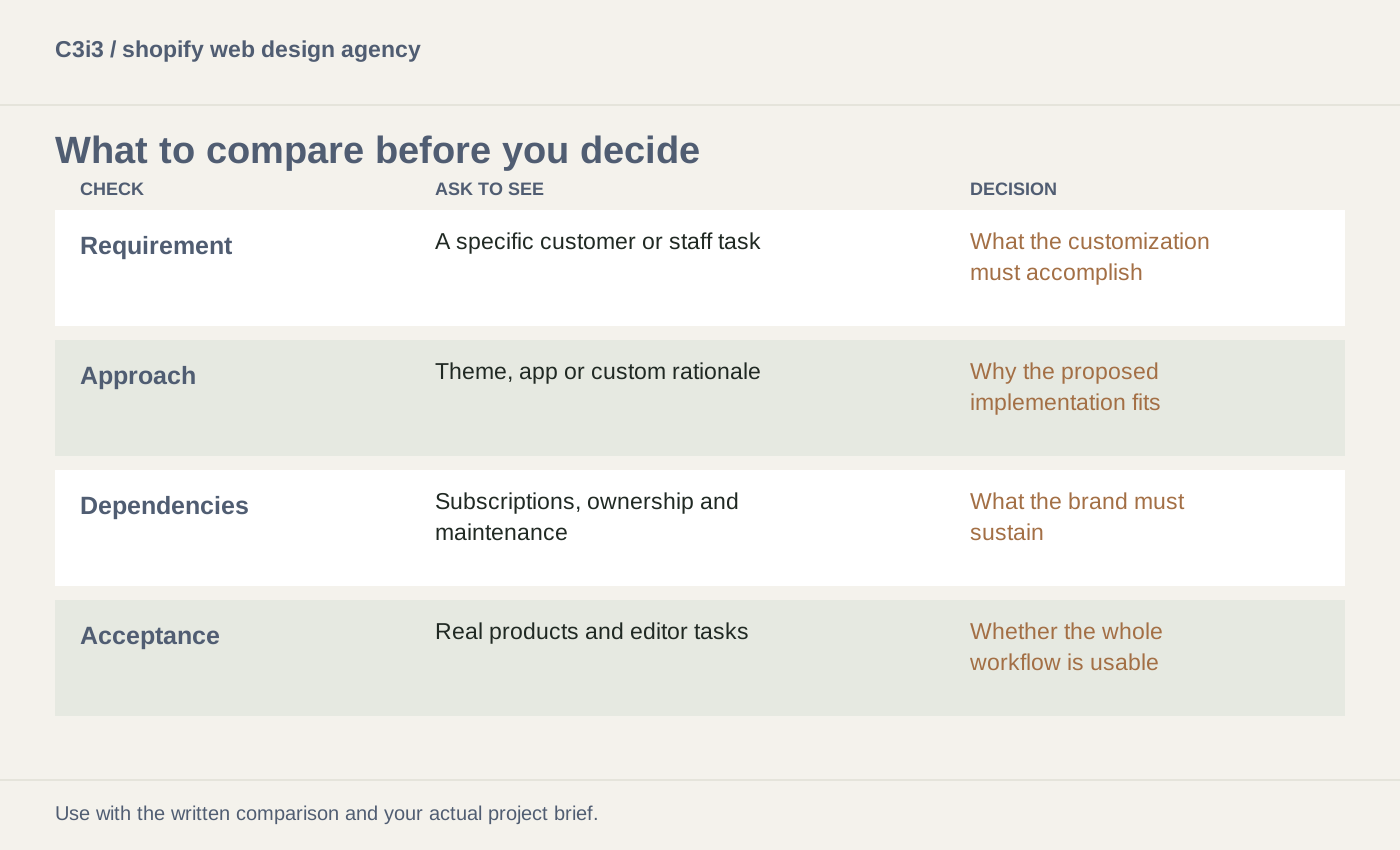
How do the key evaluation criteria compare?
| What to compare | Evidence to request | Decision it supports |
|---|---|---|
| Requirement | A specific customer or staff task | What the customization must accomplish |
| Approach | Theme, app or custom rationale | Why the proposed implementation fits |
| Dependencies | Subscriptions, ownership and maintenance | What the brand must sustain |
| Acceptance | Real products and editor tasks | Whether the whole workflow is usable |
How could a Bay Area brand compare three approaches?
Imagine a brand needing a new product comparison experience. One proposal configures existing theme features, another adds an app and a third builds a custom interaction. The brand gives each team the same products, content conditions and editing task.
It can compare usability, maintainability, recurring costs and unresolved requirements using a common test. This hypothetical procurement exercise does not establish that one approach is always best. It makes the reasons and ongoing responsibilities behind each proposal visible.
What should you remember before the next step?
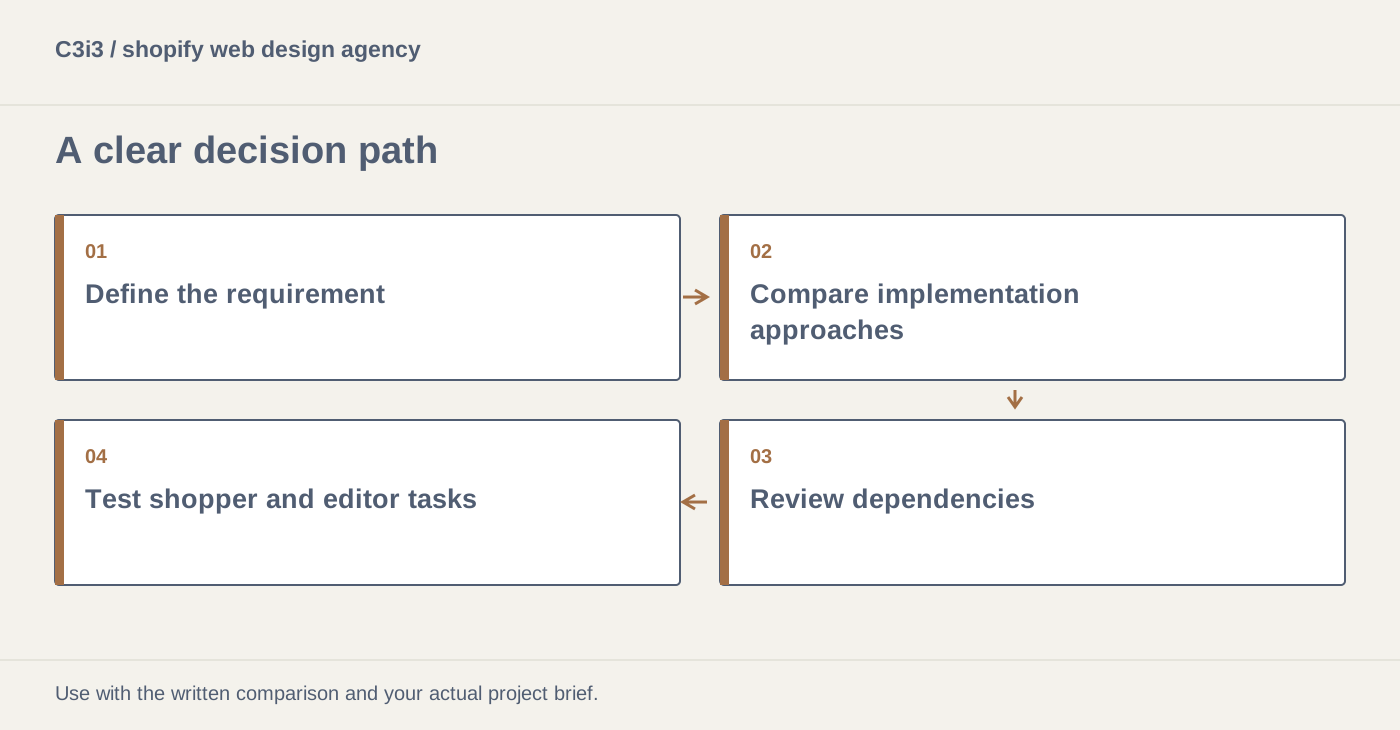
- Define the requirement.
- Compare implementation approaches.
- Review dependencies.
- Test shopper and editor tasks.
What else do local business buyers ask?
Is a custom Shopify design always better than a theme?
No. Compare the actual requirement, visual goals, editing needs and maintenance commitment.
Should every requested feature become an app?
Not automatically. Review existing functionality, dependency costs and the combined workflow before adding another app.
Can current Shopify capabilities be assumed from an old proposal?
No. Verify material platform assumptions against current official documentation and the store’s configuration.
Which sources can help you verify these decisions?
The frameworks and hypothetical examples are C3i3 editorial analysis. The linked primary sources provide platform, usability or disclosure context for the relevant decisions.
How can C3i3 help you plan the right next step?

Share your current website, the customers you want to reach and the work you want to improve. C3i3 brings design, content, technology and marketing into a coordinated project scope.
Review C3i3’s background, explore ecommerce design and development or tell us about your project.