








































In this article
A San Francisco ecommerce product page prototype should show more than a polished image, price and buy button. It should help a shopper understand the item being selected, relevant limitations and the next purchase decision. Use realistic product information early enough to discover problems before the layout becomes a development commitment.
Planning a project? Explore San Francisco web design and marketing support and ecommerce design and development services.
What should a San Francisco ecommerce web design prototype prove?
It should prove that a shopper can identify the item, understand its relevant differences and choose the next action. Select a representative customer question, such as compatibility, size or delivery eligibility, and follow how the page answers it.
The prototype is a decision tool rather than a finished operational store. State which behavior is simulated and which needs later technical verification. That keeps a visual approval from becoming an accidental sign-off on inventory, checkout or integration behavior that has not been built.
How do I find a top ecommerce web design agency near me?
Ask candidates to explain how they use real catalog material during design. A provider should be able to demonstrate a product page with long names, varied imagery or complex options. A generic template with ideal placeholder content may conceal the work your store requires.
For local collaboration, decide who from merchandising, operations and marketing should join the review. The agency needs a route to the people who can verify product facts. A nearby meeting is useful when it helps those decisions happen, not simply because the company appears in a local search.
Which product information should be visible before a shopper chooses?
Prioritize the facts that change the decision: what the product is, who or what it fits, important options and relevant conditions. The exact information depends on the category. Avoid hiding a critical limitation inside an unrelated accordion or a document the shopper would not know to open.
Assign an owner and source for each important fact. Product specifications, stock messages and shipping conditions may come from different systems. The prototype should expose those dependencies so the implementation does not invent a convenient but inaccurate description.
For the connected decision, read San Francisco Ecommerce Web Design: Who Controls Your Store and Customer Data?.
How should variants and unavailable combinations behave?
Use a real example with several options and show what changes when a shopper selects them. The selected image, identity and price information should remain understandable. Include an unavailable combination and decide how the shopper can recover or choose another suitable option.
Do not approve only the easiest product. A store may contain special-order items, bundles or products with incomplete images. Test those conditions deliberately and record which require a separate page pattern or a data cleanup before launch.
What should I test on mobile and with assistive interaction?
Test the information sequence, option selection and the next action on a small screen. Check that labels and instructions remain clear and that feedback explains a selection problem. Include keyboard and accessibility review appropriate to the project rather than assuming a clean visual layout settles those needs.
W3C’s forms guidance can inform the treatment of controls and feedback. A prototype review is not a complete audit, but it should identify important interaction requirements that development and later testing must preserve.
How do I turn prototype feedback into an acceptance record?
Record the task, the observed issue and the decision needed. Distinguish factual corrections from layout preferences and unresolved technical behavior. Give each issue an owner. This prevents a review from becoming a collection of comments that nobody can turn into a clear implementation instruction.
C3i3 can help connect product-page design with catalog information and the wider shopping journey. Bring a typical product and a difficult one. The acceptance discussion should show what the design proves and what remains to be verified in the working store.
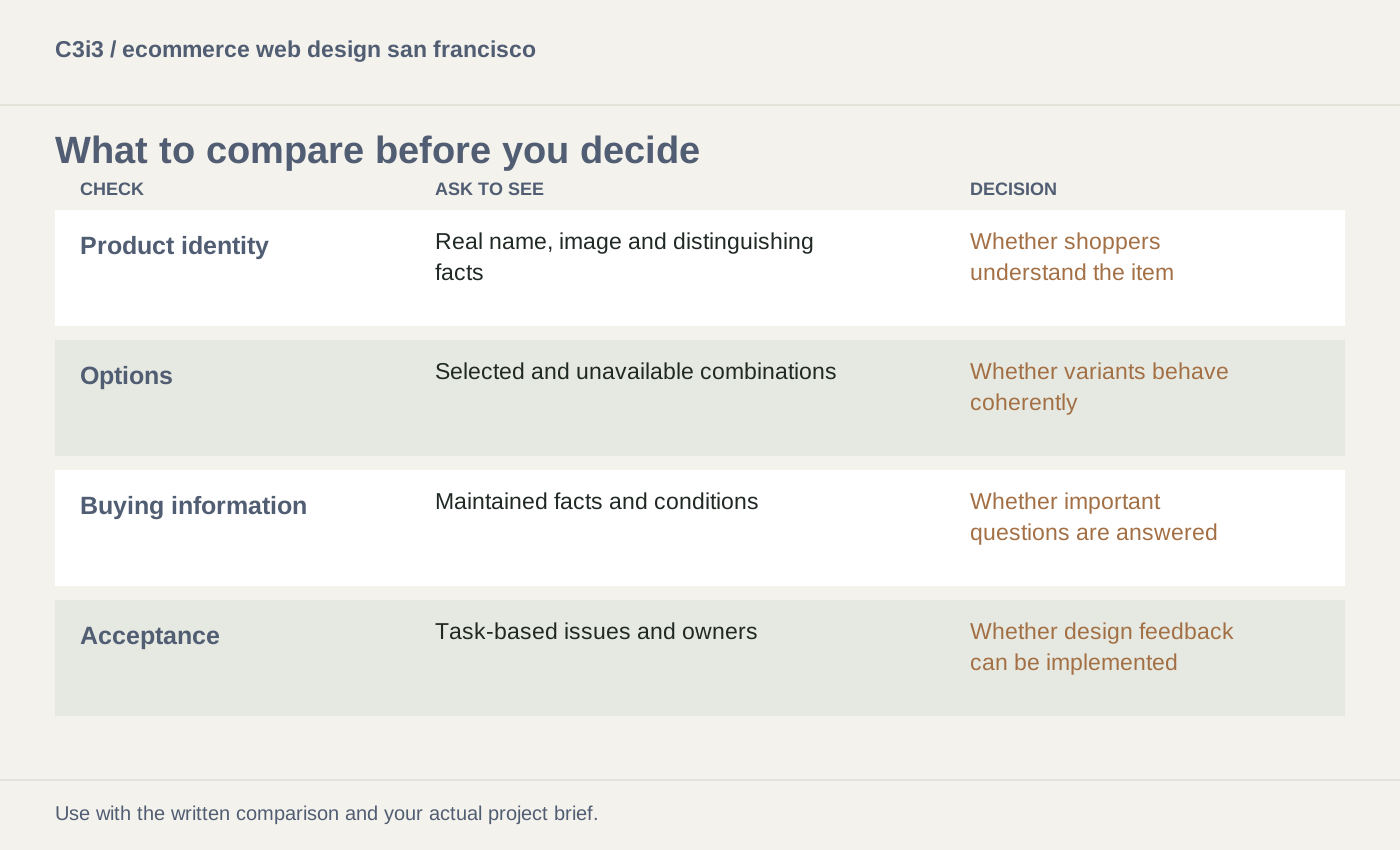
How do the key evaluation criteria compare?
| What to compare | Evidence to request | Decision it supports |
|---|---|---|
| Product identity | Real name, image and distinguishing facts | Whether shoppers understand the item |
| Options | Selected and unavailable combinations | Whether variants behave coherently |
| Buying information | Maintained facts and conditions | Whether important questions are answered |
| Acceptance | Task-based issues and owners | Whether design feedback can be implemented |
How could a San Francisco brand catch a product-page gap early?
Imagine a brand whose product fits only a defined set of accessories. The initial prototype looks complete, but a shopper test reveals that compatibility is buried below several unrelated sections. The team moves the relevant explanation beside the selection controls and verifies the wording with the product owner.
The revision addresses a specific buying question before development. This hypothetical example does not claim a measured conversion improvement. It shows how realistic content and an observed task can make prototype feedback more useful than a general request to make the page clearer.
What should you remember before the next step?
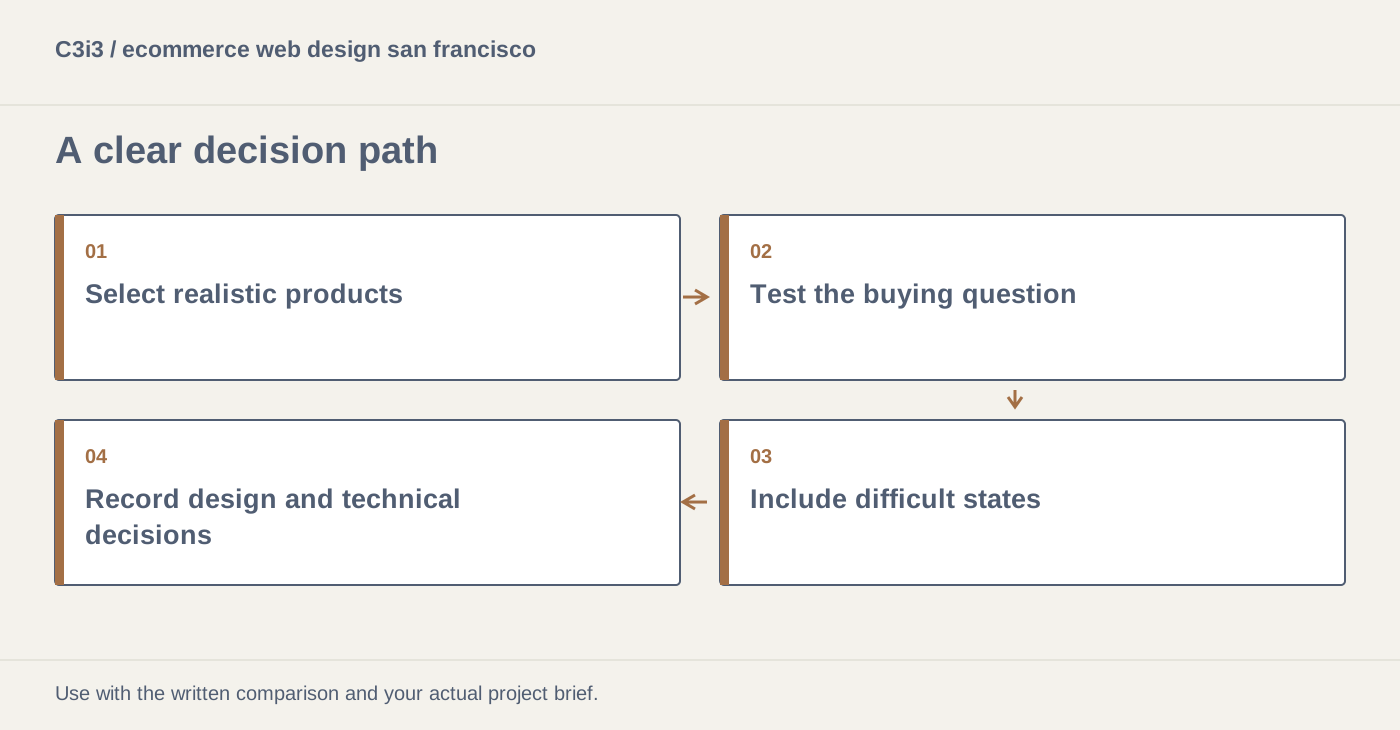
- Select realistic products.
- Test the buying question.
- Include difficult states.
- Record design and technical decisions.
What else do local business buyers ask?
Can we approve the design with placeholder products?
Use realistic examples before final acceptance, especially for complex or long content. Placeholders can hide important data and layout conditions.
Does prototype approval prove the checkout works?
No. Distinguish simulated design behavior from operational testing in the built store.
Should every product use exactly the same page?
A shared system can help consistency, but materially different product conditions may require specific patterns or fields.
Which sources can help you verify these decisions?
The frameworks and hypothetical examples are C3i3 editorial analysis. The linked primary sources provide platform, usability or disclosure context for the relevant decisions.
How can C3i3 help you plan the right next step?

Share your current website, the customers you want to reach and the work you want to improve. C3i3 brings design, content, technology and marketing into a coordinated project scope.
Review C3i3’s background, explore ecommerce design and development or tell us about your project.