








































In this article
A Korean brand entering the U.S. market does not need to start by opening every social account. It needs to identify where relevant buyers can understand the offer and what content will help them evaluate it. A platform that attracts attention for a Korean campaign may play a different role for an English-speaking U.S. audience.
Korean social media marketing should therefore begin with the buyer, not a national stereotype or a list of popular apps. Social media optimization (SMO) connects that audience decision to useful profiles, suitable content and a maintained website destination. This guide helps choose a practical first channel within the broader Korean digital marketing plan.
Which U.S. audience should your social platform decision serve?
Define the intended audience through the buying task. A U.S. consumer comparing a home-office device, a purchasing team evaluating a supplier and a Korean-speaking business owner can need different explanations. They should not be combined into a single audience simply because the brand originates in Korea.
Write one sentence that connects the person, the use case and the appropriate next step. An illustrative Korean desk-equipment brand might want U.S. remote workers to understand how a compact accessory fits a limited workspace. Its content needs to demonstrate the actual use case and lead to current product information.
What makes Korean identity relevant to that content?
Include origin, design context or a Korean-language explanation when it helps the buyer understand the brand or product. Do not rely on origin to substitute for a usable demonstration. A viewer still needs to know what the product does, which version appears and where to learn more.
For a B2B supplier, the important context may be an application or purchasing question rather than a cultural introduction. For an established Korean American business, the priority may be serving a broader local audience. Specify that difference before choosing a channel.
Use the Korean U.S.-growth agency guide for the broader commercial brief. This article focuses on the narrower decision of which social environment can carry a useful explanation to that audience.
How should you compare potential social platforms?
Compare platforms against the same practical criteria rather than selecting the one with the largest visible follower counts. The question is whether the platform can support your audience's task and a content format your team can produce consistently.
| Decision field | Evidence to seek | Question for the brand |
|---|---|---|
| Audience evidence | Relevant account activity and available audience reports | Are the intended people plausibly present? |
| Market fit | Geography, language and inquiry context where available | Does the attention match the market? |
| Useful format | Examples of demonstrations or explanations people use | Can we answer the question credibly here? |
| Owned destination | A current page that continues the explanation | Where can an interested viewer go next? |
| Observable outcome | Available platform and website evidence | What can we actually learn from a test? |
Should you assign a numeric score?
A score can help a team compare its observations, but it should not disguise missing evidence. Use clear notes and mark unknown fields. A precise-looking total built from guesses is less useful than a candid statement that the audience geography is not yet established.
Choose one principal test channel and define why it comes first. A supporting channel can have a different role, such as hosting a longer explanation. Avoid asking two channels to compete on metrics that do not describe the same behavior or content format.
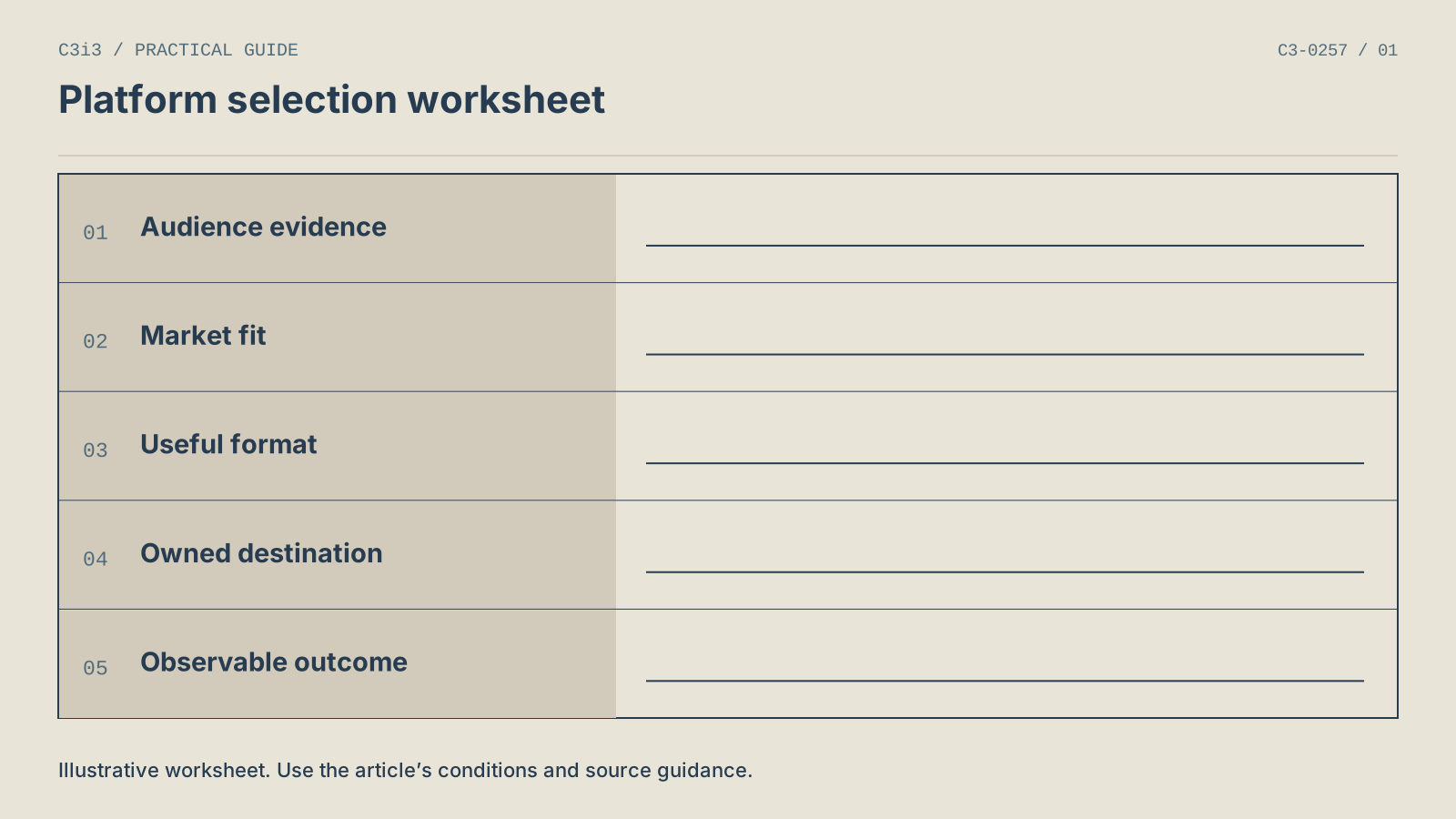
For each candidate platform, record actual audience evidence, fit with the target market, a useful content format, the maintained destination and an observable outcome. Treat unknown fields as research questions.
Which content formats fit consumer and business buying questions?
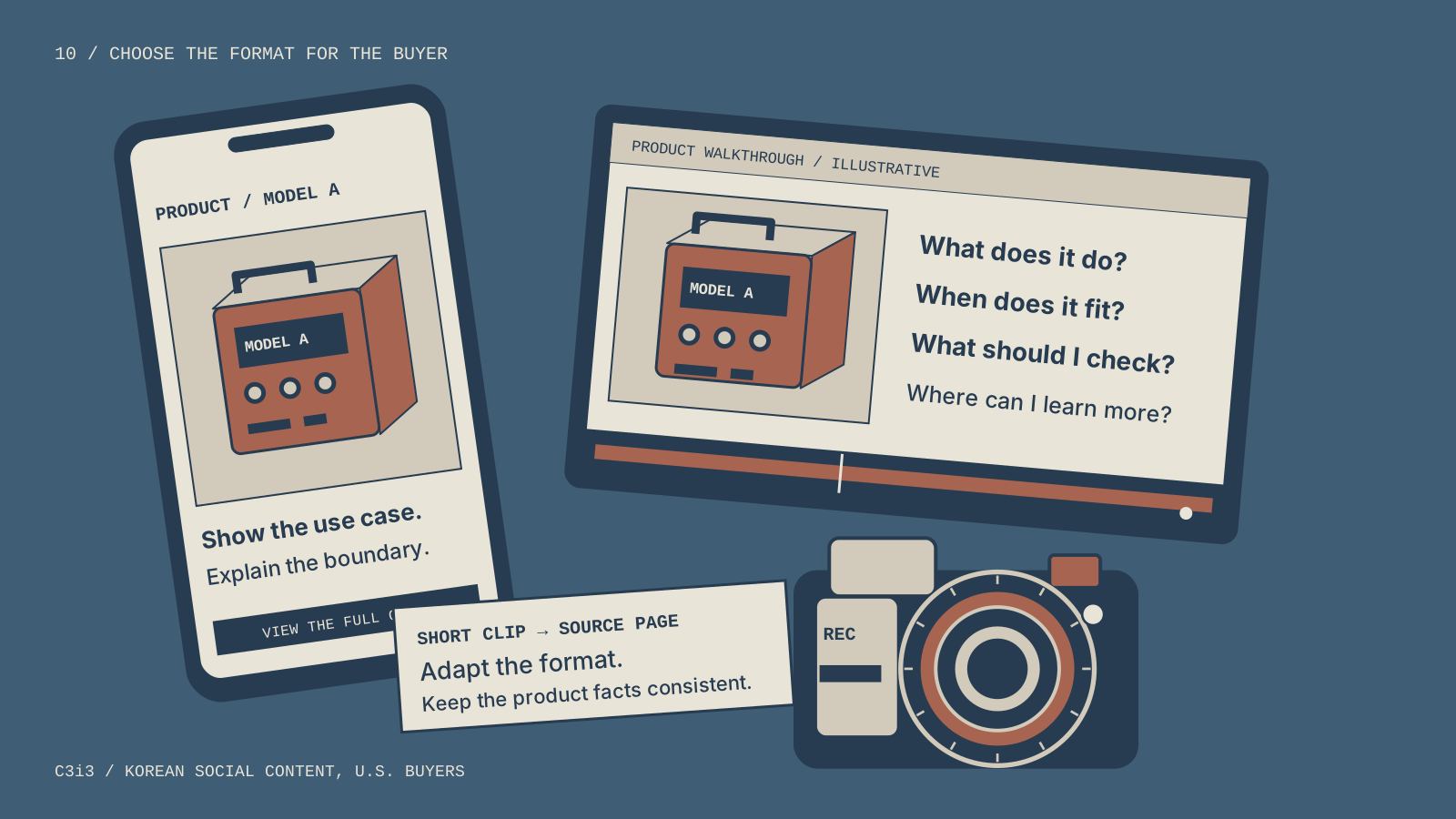
Choose the format according to what the buyer needs to observe or understand. A visual product feature can benefit from a demonstration, while a technical evaluation may need a longer explanation and a source document. The same offer can require more than one format at different stages.
For the illustrative desk accessory, a short demonstration could show how it occupies a small workspace. A longer video could walk through setup and limitations. A sequence of images could compare the relevant configurations. These are editorial format options, not a prediction that one platform will distribute them successfully.
When might YouTube or LinkedIn deserve closer investigation?
Investigate YouTube when a maintained video explanation can help the buyer evaluate the product over time. Examine the actual audience and related viewing context, not only the video's total views. Investigate LinkedIn when the intended reader is evaluating the offer in a professional role and the brand can contribute useful business context.
YouTube's audience documentation describes geography and subtitle-language information, while noting limits on some data. LinkedIn's Page visitor analytics guidance describes available visitor and demographic reporting, subject to its reporting conditions. These tools provide observations, not a complete identity record for every buyer.
For short-form platforms or visually led feeds, inspect how the intended audience asks questions and evaluates comparable content. A format is suitable when the brand can show something useful and provide enough context for a viewer unfamiliar with the product.
How should Korean and English language choices affect the channel plan?
Choose the language that makes the selected task understandable and connect it to an appropriate destination. A Korean voiceover, English captions and a bilingual description can play different roles, but the combination should be tested as a viewer experiences it.
A U.S. buyer should be able to identify the subject early without guessing from a visual alone. Technical model names, on-screen labels and important limitations need readable treatment. A literal caption translation may preserve the words while losing the explanation.
Should one account serve both language audiences?
That depends on the existing audience, content purpose and team's ability to maintain a coherent experience. Do not split accounts automatically or combine unrelated journeys merely to reduce account count. Review whether an unfamiliar viewer can tell who the account is for and which content is relevant.
The illustrative desk-equipment brand might retain a global account while testing a clearly labeled English demonstration series for U.S. buyers. A separate market account would need its own purpose and a sustainable content plan. Neither choice should imply local stock, offices or support arrangements that the brand has not established.
Check the website after the social content. If an English post leads to a Korean-only product page, the journey may stop even when the post itself is clear. Our Korean-English website structure guide addresses that destination relationship.
What should a useful first platform test include?
Test one buyer question, one recognizable demonstration and one appropriate destination. Keep enough of the content approach consistent to interpret what happened, while changing the presentation to suit the chosen format. An unfocused collection of posts is difficult to learn from.
For the illustrative desk accessory, the question might be whether the product fits a small work surface. The demonstration should show the relevant configuration and identify any important boundary. The destination should explain that model in more detail rather than send the viewer to a general corporate homepage.
Which details should the test brief preserve?
Record the buyer question, demonstration point, language treatment, source page and next action. Save the publication date and the observations available from the platform. Keep the example labeled as a test rather than presenting it as a proven acquisition system.
If the post creates product-name confusion, correct that before increasing the number of versions. The bilingual brand-information workflow can help trace naming differences between the social profile and current website sources.
Our product-feature content creation guide develops the transformation from feature to useful explanation. For this platform decision, the key question is whether the test demonstrates that the format and audience belong together. Keep the source information maintained so a successful explanation does not become outdated after the next product revision.
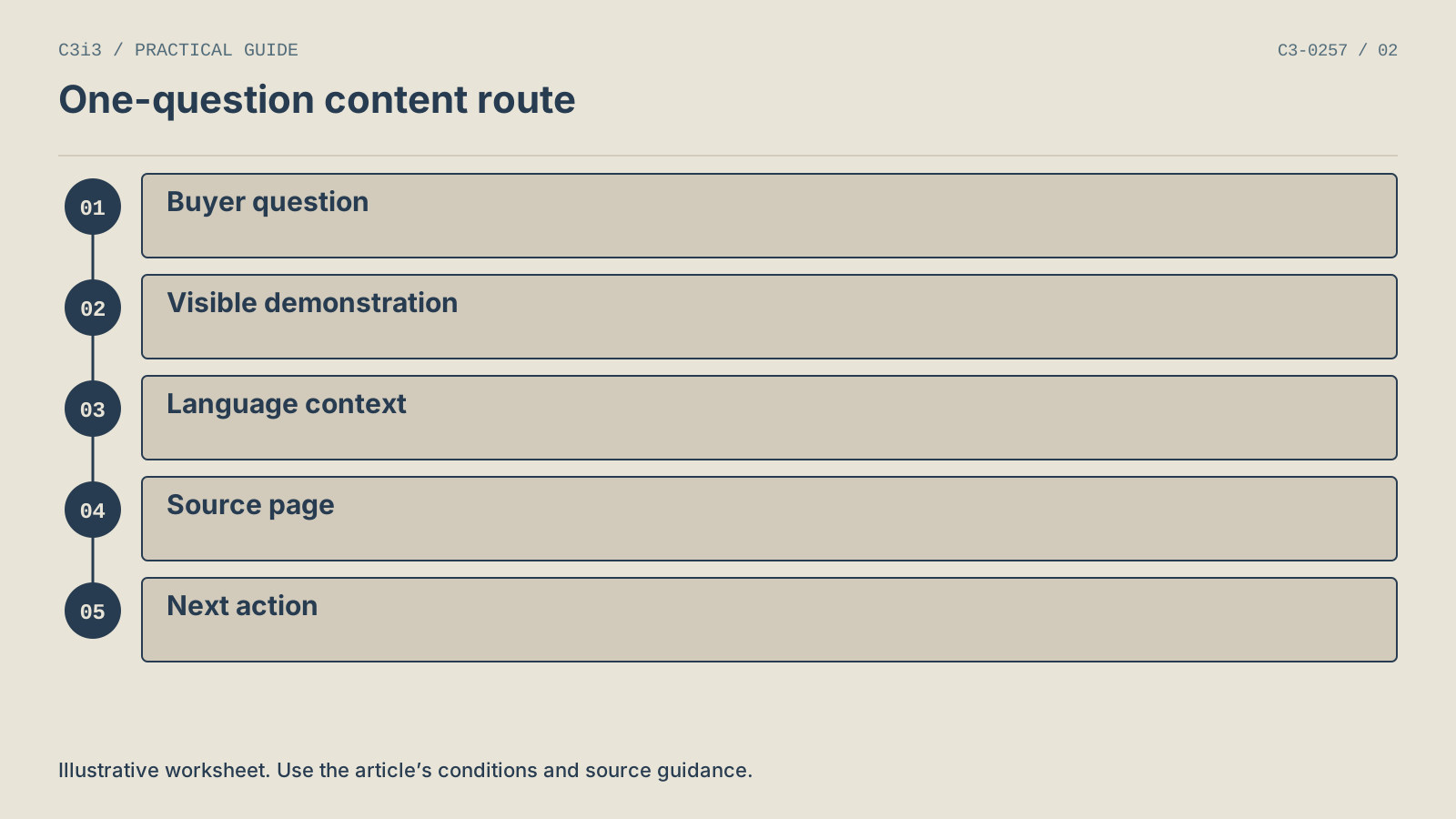
Choose one buyer question, demonstrate an observable point, supply the necessary language context, link to a current source page and make the next action appropriate to the buyer’s readiness.
How do you decide whether to continue, adapt or add another channel?
Review audience fit, content understanding and the next action separately. A high reaction count can coexist with weak buyer relevance, while a modest response may include useful evaluation questions. The decision should follow the goal set before publication.
Look at the questions people ask, the destinations they reach and the inquiries the business can confirm. If the intended audience watches but cannot identify the offer, adapt the opening or demonstration. If interested visitors reach an irrelevant page, improve the destination. If the attention comes from a different market, reconsider the channel or distribution approach.
What can website campaign links tell you?
Where a supported outbound link is available, consistent campaign parameters can help identify referred visits. Google's campaign URL guidance explains that use. A tagged visit is still different from a completed inquiry, and not every buyer journey will be attributable to a single social post.
Add another channel when it has a distinct role and a credible audience case. For example, a short demonstration and a maintained longer walkthrough may complement each other. Do not expand merely because the existing test has not yet answered its own question.
Use the Naver and Google guide when the next audience question concerns website search. Social-platform selection and search-engine priority are connected decisions, but one channel's observations do not establish how another system behaves.
What else should Korean brands ask about reaching U.S. buyers on social media?
Separate the existing audience from the audience the campaign intends to reach. Language, channel expansion and attribution each need their own evidence rather than one broad engagement total.
Should we target only Korean Americans first?
Choose that audience when it fits a defined offer and buying task, not merely because the brand is Korean. A Korean American audience can contain many languages, interests and commercial needs. Describe the specific reader you can help, then investigate where that reader evaluates relevant information. A broader U.S. audience may be more appropriate for some products or business services.
Does a large Korean following establish U.S. demand?
No. An existing following can be valuable, but its size does not establish geography, buying intent or suitability for the new market. Review the evidence available and distinguish an established audience from the audience you want to develop. Preserve useful existing content while defining how the U.S. buyer journey differs.
Do we need a different video for every platform?
You can reuse the underlying question and source material while adapting the opening, length, labels and destination. A complete finished video may not suit every context. Start with the information the viewer needs and the format that can show it clearly. Do not multiply versions before the team understands which explanation is working.
Should Korean-language platforms be excluded from a U.S. campaign?
Not automatically. Investigate a platform when there is evidence that it serves a relevant audience and task. At the same time, do not assume a Korean-language environment provides the intended U.S. market simply because the brand understands it well. Record the reason for including the channel and the observations needed to evaluate that choice.
Can platform engagement prove that social media caused a sale?
Engagement alone cannot establish that causal relationship. Review identifiable referrals and confirmed inquiries alongside platform evidence, keeping unknown or assisted journeys labeled. A buyer may encounter search, social content and other sources before contacting the business. Useful reporting explains what was observed and what remains uncertain rather than assigning every outcome to the most visible post.

How C3i3 Can Help
C3i3 can help Korean brands choose a practical social-content direction for U.S. buyers and connect it to a maintained website destination. Bring one offer, the audience you want to reach and examples of existing content. We can identify a useful buyer question, develop a suitable demonstration approach and define what a focused platform test should reveal.
Explore our social media optimization services or plan a focused Korean-brand social campaign with C3i3.