








































In this article
A search for a WordPress web designer near you should lead to more than screenshots of pages that look easy to edit. Your staff will need to change services, replace images and keep important information accurate after launch. Test those activities before deciding that a proposed editing system fits the business.
Planning a project? Explore Bay Area web design and marketing support and web design services.
How do I find the best WordPress web designer near me?
Look for relevant work and an understandable editorial process. Ask the provider to show how a nondeveloper updates a page in a site similar to yours. The best fit depends on your team’s capability and the type of changes it needs to make, not simply whether a portfolio uses WordPress.
For a Bay Area relationship, explain whether training should happen remotely or in person and who will attend. A designer can tailor the handover around actual staff responsibilities. A generic login walkthrough is less useful than practicing the updates your team will perform every month.
Which editing tasks should I test before signing?
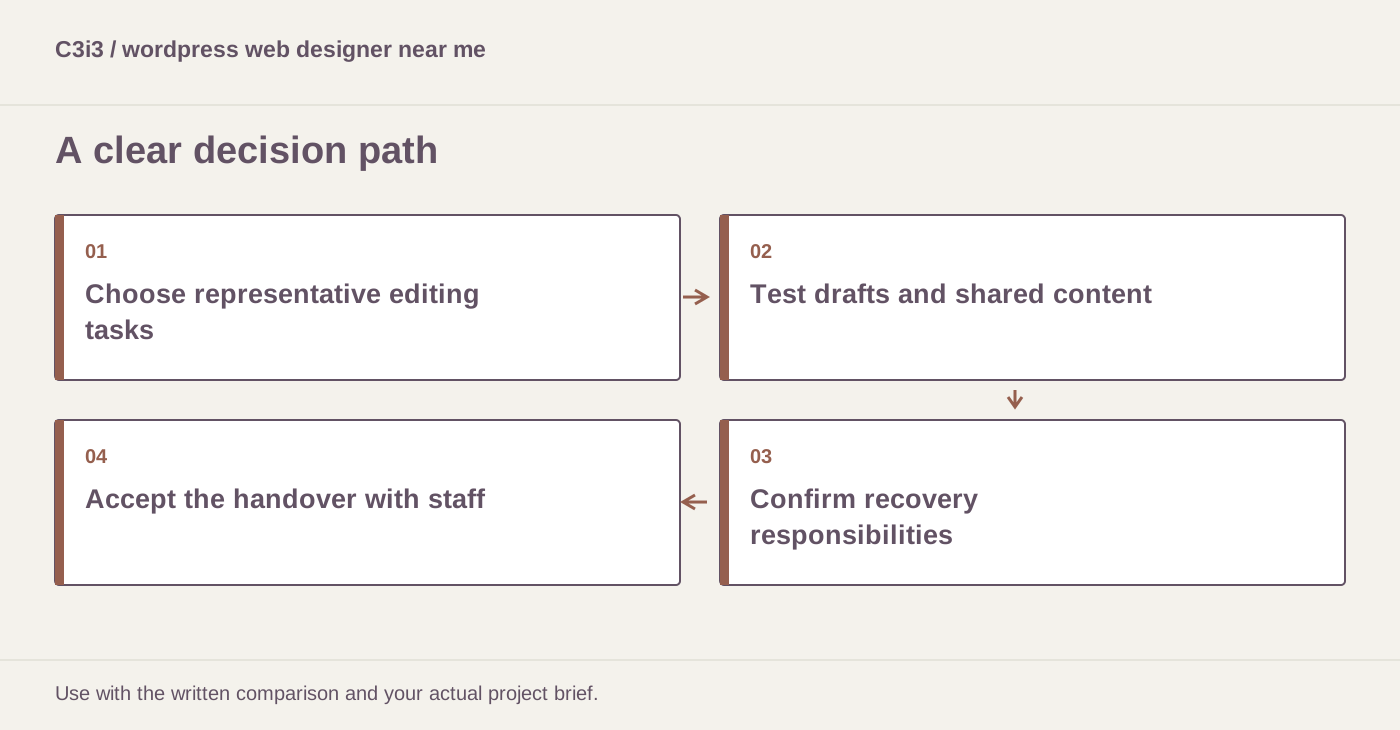
Choose several realistic tasks: change a service description, replace an image with alt text, add a supporting document and update a call to action. Use content with the lengths and formats your business actually publishes. Ask what happens if an editor makes a common mistake.
Include preview and publication. Your staff should understand which changes are drafts, which are live and who approves sensitive facts. If the system depends on reusable components, test whether changing one component affects one page or many. That behavior should be clear before handover.
How do I know whether a page builder will be manageable?
Ask the designer to demonstrate the workflow rather than debate tool names. A builder or block system can be workable when it provides useful constraints and documentation. It becomes difficult when routine edits require navigating an unexplained collection of nested controls or duplicating whole pages.
Give a representative editor time to complete a task and note where help is required. This is not a contest to find the fewest clicks. The goal is a repeatable process that preserves the design and lets staff recognize when a change needs specialist assistance.
For the connected decision, read WordPress Maintenance Services: How Do I Update Plugins Without Breaking My Site?.
What should a WordPress handover include?
Request an account inventory, editing instructions, a support contact and a clear division between content changes and technical maintenance. The business should know who controls hosting, domains and paid plugins, plus which licenses must remain active for the agreed system.
Ask how backups and recovery are handled and which activities are part of the support agreement. A backup is more useful when its recovery process has been checked. Do not assume that a design engagement includes ongoing updates or emergency response unless those responsibilities are written down.
Which changes should remain with a developer or support team?
Changes to integrations, permissions, templates or critical functionality may need technical review. Define a route for requesting that work. Your editors should not have to guess whether altering a reusable layout or installing a plugin could affect the rest of the site.
The right boundary depends on your system and staff capability. A clear boundary is not a failure of usability. It helps the business complete routine updates confidently while giving more consequential changes an appropriate review and testing process.
How should I accept the editing system before launch?
Have a staff member complete the agreed tasks in a safe review environment. Record obstacles, check the resulting pages on mobile and confirm the publication workflow. Resolve important issues before treating the handover as complete.
C3i3 can include editing and support expectations in the web design brief. Bring examples of the updates you currently struggle to make. The acceptance exercise should show what your team can do, which help remains available and how the website can stay accurate as the business changes.
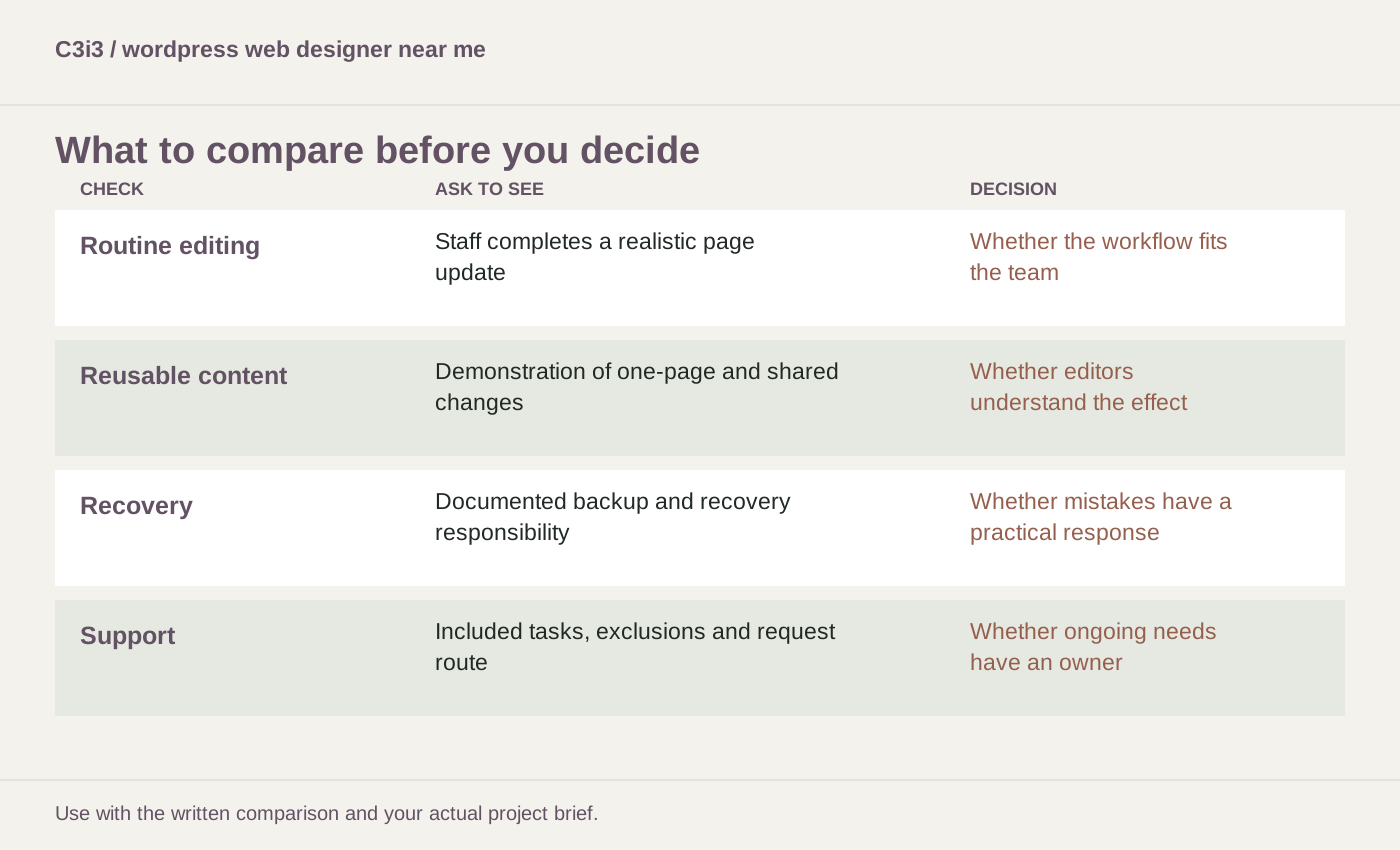
How do the key evaluation criteria compare?
| What to compare | Evidence to request | Decision it supports |
|---|---|---|
| Routine editing | Staff completes a realistic page update | Whether the workflow fits the team |
| Reusable content | Demonstration of one-page and shared changes | Whether editors understand the effect |
| Recovery | Documented backup and recovery responsibility | Whether mistakes have a practical response |
| Support | Included tasks, exclusions and request route | Whether ongoing needs have an owner |
How could a Bay Area company test its handover?
Imagine a company that frequently replaces technical documents. It asks a prospective designer to demonstrate replacing a file, updating its visible label and checking the page on a phone. The exercise reveals that document version information needs a clearer field and that editors need a preview step.
The team adds those requirements to the scope before launch. It can then accept the editing workflow based on demonstrated tasks rather than a promise that WordPress is easy. This is an illustrative acceptance test, not a claim that any specific plugin or page builder is suitable for every business.
What should you remember before the next step?
- Choose representative editing tasks.
- Test drafts and shared content.
- Confirm recovery responsibilities.
- Accept the handover with staff.
What else do local business buyers ask?
Does WordPress mean I can change everything without help?
No. The practical editing boundary depends on the implementation and your team’s capability. Agree which changes are routine and which need technical support.
Should the business own its WordPress administrator account?
The business should have an appropriate ownership and recovery arrangement for its site and accounts. Grant working access according to agreed responsibilities.
Can editor training be part of web design?
Yes, when included in the scope. Define who attends and which real tasks the training and handover must cover.
Which sources can help you verify these decisions?
The frameworks and hypothetical examples are C3i3 editorial analysis. The linked primary sources provide platform, usability or disclosure context for the relevant decisions.
How can C3i3 help you plan the right next step?

Share your current website, the customers you want to reach and the work you want to improve. C3i3 brings design, content, technology and marketing into a coordinated project scope.
Review C3i3’s background, explore web design or tell us about your project.