







































In this article
A large lobby looks ideal for an autonomous scrubber, but the real route includes mats, furniture, narrow corners and changing foot traffic. A useful evaluation asks which floor work the machine can reliably perform and which work remains with the cleaning team.
Which cleaning tasks can a commercial floor robot handle?
Match the machine to the specific task: scrubbing supported hard floors, sweeping suitable dry debris or another documented function. Different machines have different cleaning systems, dimensions and operating limits. A scrubber is not automatically a carpet cleaner or a spill-response machine.
Tennant’s robotic cleaning portfolio distinguishes autonomous floor-cleaning equipment categories. Use the selected model’s documentation for surface and operating requirements. Record work outside the robot’s scope, such as edges, stairs, restrooms and obstructed areas, so the remaining cleaning plan stays complete.
How do you assess whether a building is suitable?
Map the actual cleanable route, including floor materials, transitions, doorways, slopes and access restrictions. Record furniture placement and how the space changes during the day. Confirm water, charging and storage arrangements for the selected equipment.
Ask the supplier to assess the route under representative conditions. A large gross floor area can contain relatively little robot-accessible space. Compare accessible cleaning area with the area that requires manual work. Keep emergency routes and accessibility requirements part of the site review rather than treating the robot’s navigation map as the only constraint.
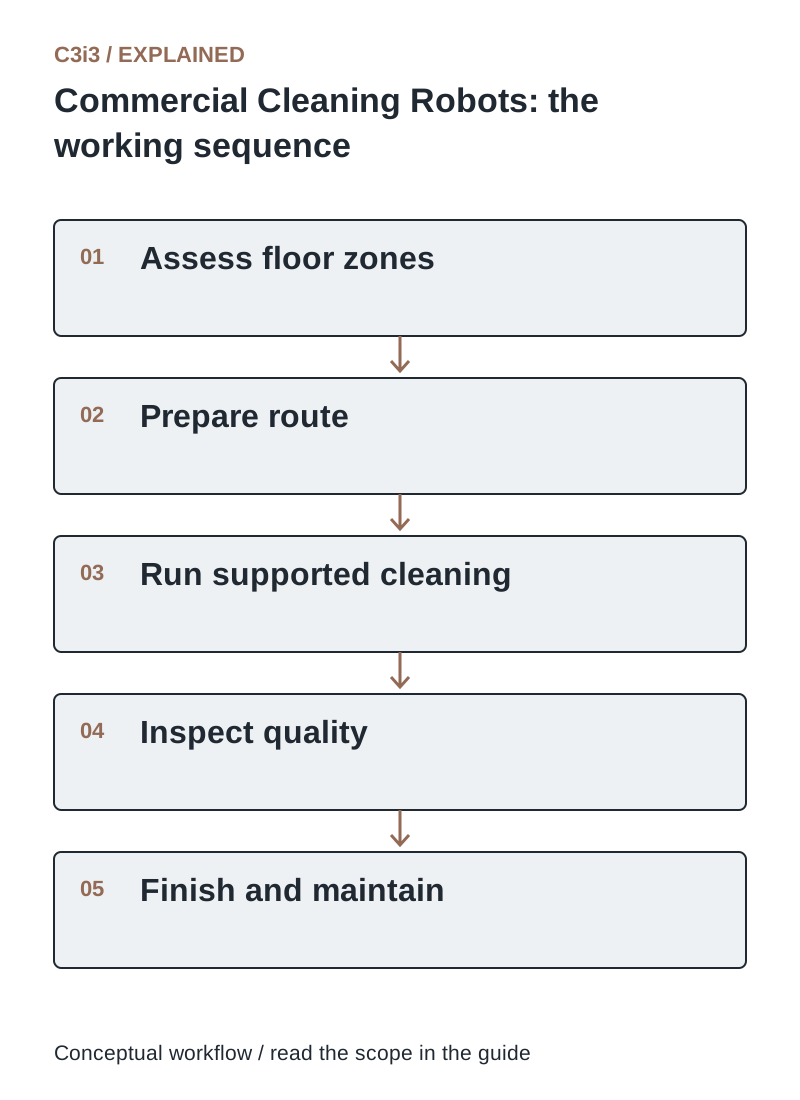
The sequence is: Assess floor zones. Then Prepare route. Then Run supported cleaning. Then Inspect quality. Then Finish and maintain. Each handoff needs the scope and conditions described in this guide.
What preparation and maintenance remain with people?
Staff may need to prepare the route, remove unsuitable debris, fill or empty tanks, inspect cleaning components and respond to stops. The exact duties depend on the model and deployment. Include those tasks in the operating plan and cost comparison.
Assign a trained owner for each shift and a backup. Keep consumables and service contacts available. Record how long routine preparation and cleanup take. If a robot finishes a route but requires extensive manual correction, that work belongs in the performance result. Automation changes the cleaning workflow; it does not eliminate every supporting task.
How do you measure cleaning quality instead of just robot runtime?
Define the required outcome with the facilities team. Review representative zones, missed areas and whether the floor meets the agreed cleaning standard after the run. Runtime and distance traveled do not establish cleanliness.
Track effective completed area, repeat passes, manual touch-up and interruptions. Use the same inspection approach for the baseline and the trial. Do not convert a general floor-cleaning result into a disinfection claim unless the specific process and evidence support it. Keep chemical use and equipment procedures aligned with the manufacturer and the facility’s approved program.
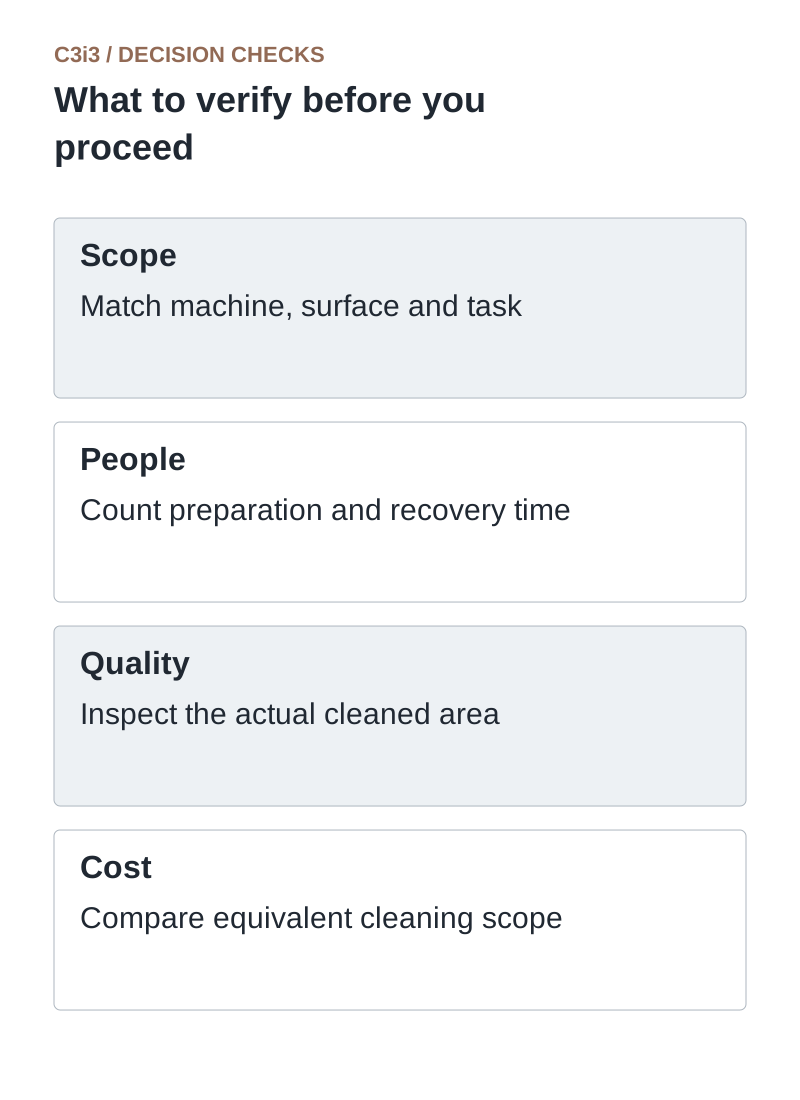
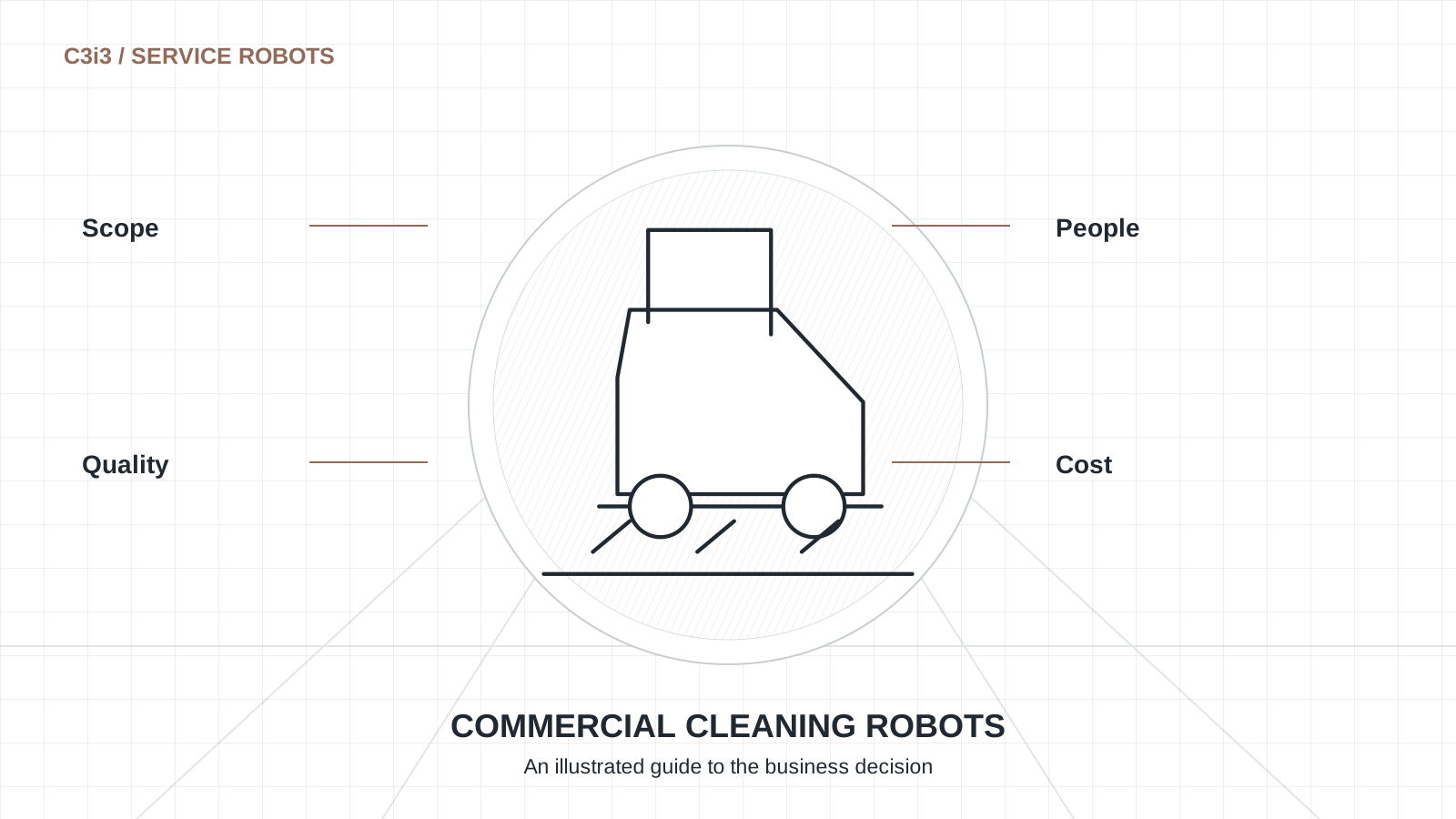
Scope: Match machine, surface and task. People: Count preparation and recovery time. Quality: Inspect the actual cleaned area. Cost: Compare equivalent cleaning scope.
Should cleaning robots run during occupancy or after hours?
Choose the schedule after reviewing the machine, building and operating conditions. Occupied spaces create moving obstacles and public interactions. After-hours operation changes supervision, access and response arrangements. Neither schedule is automatically appropriate for every facility.
Test representative traffic and establish an approved response when a route cannot be completed. Confirm how the cleaning team knows about a stopped machine or blocked area. Start with a controlled route and expand only after the observed behavior meets the site’s requirements. A scheduler setting does not by itself establish that a route can operate without support.
How should you compare the cost with existing floor cleaning?
Include equipment or service fees, commissioning, consumables, maintenance, software and remaining staff time. Compare the same cleaning scope and quality. A machine quote should not be compared with the full cost of a cleaning contract that includes many tasks the machine cannot perform.
Identify what the released time allows the team to do. More frequent floor coverage or attention to other cleaning work may be the benefit even when staffing does not change. Use trial evidence and realistic utilization, then review contract support and downtime arrangements before making a purchase decision.
How should floor-cleaning coverage be reported?
Use these distinctions when reviewing your own workflow.
| Area | Treatment | Interpretation |
|---|---|---|
| Supported accessible route | Inspect actual completed cleaning | Evidence of the automated task |
| Blocked or excluded zones | Assign separate cleaning work | Not counted as completed coverage |
| Gross building area | Use only as facility context | Not a measure of robot-cleaned area |
How would this work in a practical example?
Illustrative comparison: A facility has 40,000 square feet in total, but only 22,000 square feet falls within the robot’s supported daily route. The evaluation compares that route with the same manual cleaning task and separately counts edge work and other rooms. Using the total facility area as “automated coverage” would overstate what the machine actually accomplished.
Key takeaways
- Scope: Match machine, surface and task.
- People: Count preparation and recovery time.
- Quality: Inspect the actual cleaned area.
- Cost: Compare equivalent cleaning scope.
Frequently asked questions
Can a floor robot clean an entire facility?
Usually the scope must be divided by task and access. Stairs, edges, furniture, restrooms and other areas may require separate work.
Does a completed route prove disinfection?
No. Route completion and visible cleaning do not establish a separate disinfection outcome. Use the evidence and procedures applicable to the specific process.
How much staff time will we save?
Measure preparation, oversight, recovery and manual finishing during a representative trial. Do not equate machine runtime with labor savings.
Sources and editorial method
Primary documentation checked November 20, 2026. Linked vendor materials establish stated capabilities and announcements; they do not establish independently tested performance at your business. The workflows, comparisons and illustrative examples are C3i3 editorial analysis.
- Tennant: robotic floor-cleaning machines
Vendor product categories and floor-cleaning context. Capabilities depend on the selected model and site.
- OSHA: industrial robot systems and safety
Industrial robot-system risk-assessment context. Applicability depends on the actual system and workplace; not a universal service-robot certification.
Explain what your robotics product does and who it helps.

C3i3 helps robotics and technical businesses explain product capabilities through technical content, product demonstrations and a clear website buying journey. Site assessments, equipment integration and operational safety belong with qualified suppliers and responsible site personnel.