






































In this article
Your company has been told it needs answer engine optimization. The proposal mentions AI visibility, authority and answer-ready content, but the actual deliverables remain difficult to identify. What will change on the website? Who checks the product facts? What can your team inspect when the work is finished?
For a San Jose business with technical products, several service lines or an enterprise approval process, those questions matter more than a new acronym. Answer engine optimization services should produce useful work that survives a review by the people responsible for the website and the business facts. This guide focuses on acceptance tests rather than another comparison of agency labels.
Which customer questions should the AEO work answer?
Begin with the decisions customers are trying to make. A technical buyer may need to understand compatibility, implementation responsibility or the evidence required before approving a product. A professional-services buyer may want to know whether a firm handles a particular scope and what information to bring to the first conversation. These are different tasks, even when both visitors use AI search.
Build a question inventory from actual sales conversations, website searches and available search data. Keep the source of each question visible. A phrase suggested by an AI assistant is a planning idea until other evidence supports it; it is not automatically a frequently searched query. Avoid turning an unverified prompt list into a publishing quota.
Assign a destination to each question. Some belong on an existing service page, some in a focused guide and some in a support resource. Use the Bay Area marketing decision guide to connect the question to the broader business problem. The first accepted deliverable should be a page-and-question map that shows why each proposed edit is needed and what existing material it replaces or supports.
What should the technical access deliverable prove?
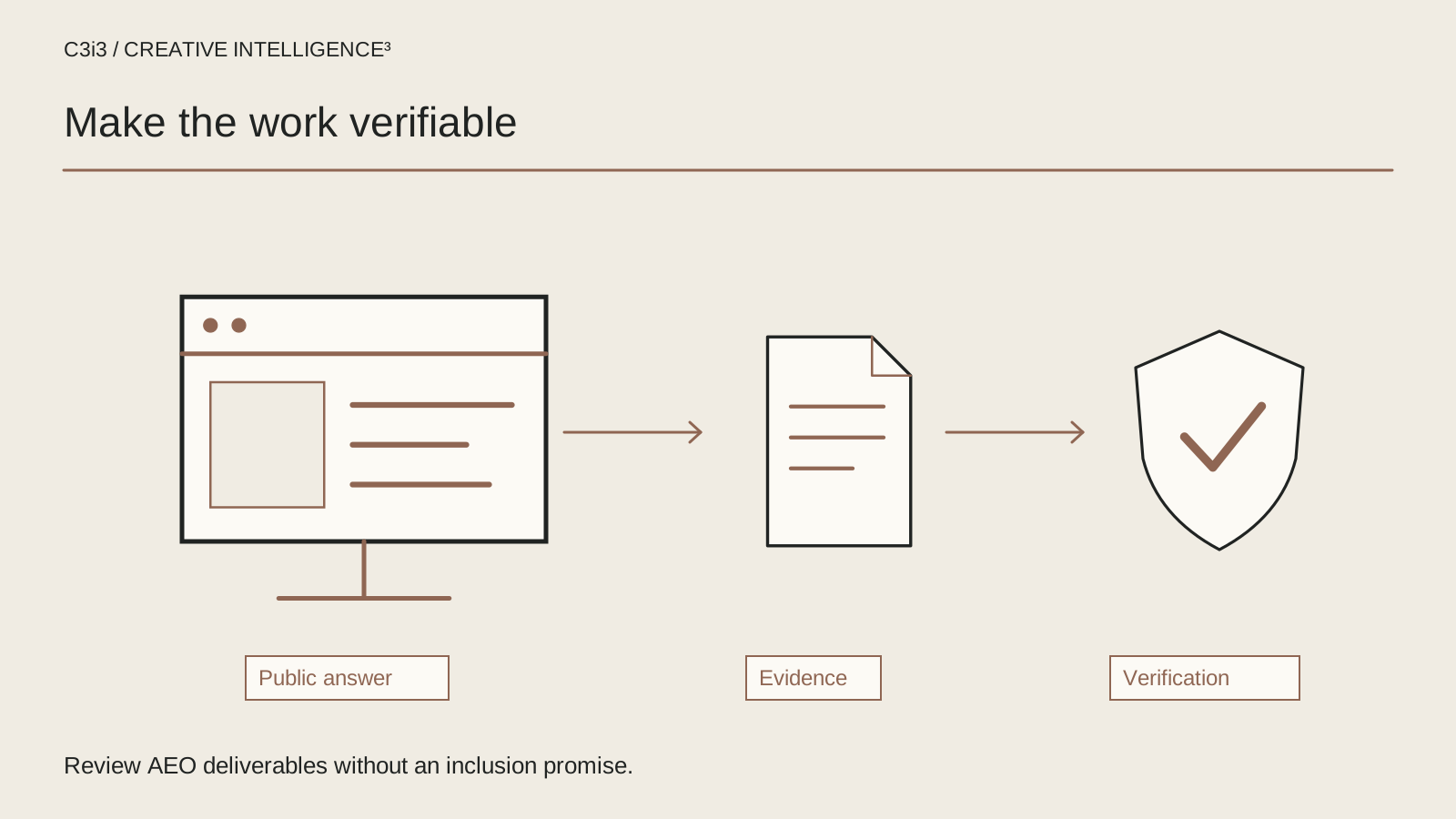
Ask the provider to distinguish public access, indexability and answer selection. A page behind authentication is different from a public page that has not been cited. An unintended restriction is different from a page that offers too little useful evidence. If the report collapses these situations into “AI cannot find you,” it does not give the team enough information to act.
For Google’s AI search features, the official guidance describes the same underlying SEO foundations and does not require a special AI markup format. The practical acceptance test should identify the actual page, the public response and any relevant access or preview restriction. Other platforms have their own published crawler documentation, which should be reviewed separately.
Keep security decisions with the people responsible for the infrastructure. Do not disable a firewall or open private content merely to make a test pass. A proposed access change should name the intended public content and use the platform’s current published verification guidance.
The deliverable is a traceable record of what was checked and corrected. It should not be a screenshot of an agency dashboard with no tested URLs or explanation of the observed condition.
How do you accept an answer-ready page without accepting inaccurate copy?
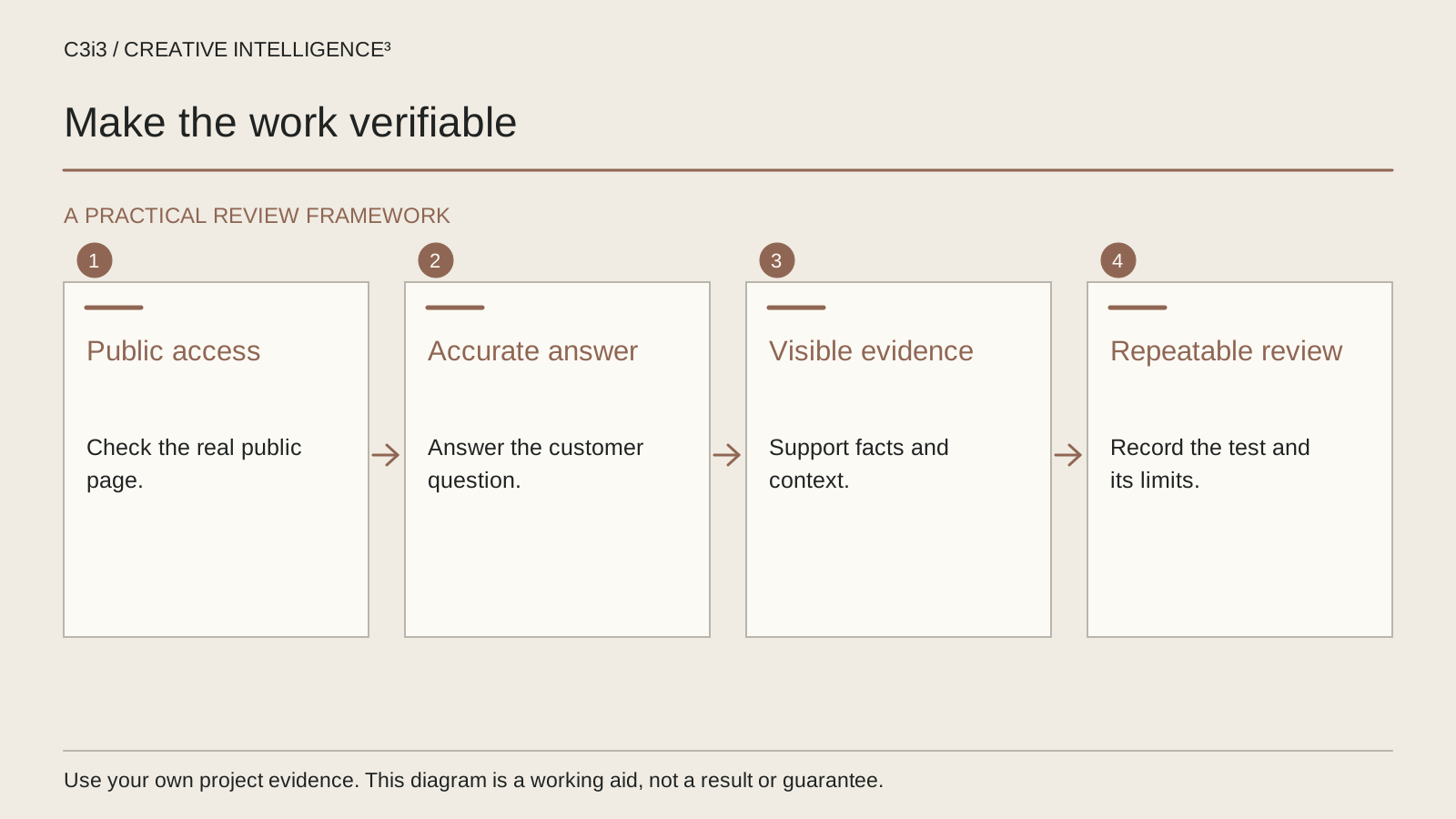
Have the business owner or subject expert review the facts before publication. An apparently clear answer can still be wrong about a product limitation, service boundary or delivery responsibility. Shorter language does not excuse an unsupported statement. Keep the factual review distinct from the editorial review so each person knows what they are approving.
A useful page should explain the answer in ordinary language, then provide the conditions and evidence needed to use it. For a product question, that may include the specific family or configuration. For a service question, it may mean distinguishing planning, implementation and ongoing management. Do not remove these distinctions simply to produce a short paragraph that looks extractable.
| Deliverable | Acceptance question | Reviewer |
|---|---|---|
| Customer answer | Does the answer address the stated question without changing its meaning? | Content owner |
| Business facts | Are scope, limitations and product details supported? | Subject expert |
| Supporting evidence | Can the reader find the source or explanation behind a material claim? | Editorial reviewer |
| Page delivery | Is the approved answer available on the intended public URL? | Website team |
Record corrections instead of silently replacing expert language with a broader marketing claim. That review history becomes useful when the product or service changes.
What should structured data, FAQs and internal links actually do?
Treat structured data as a description of the visible page, not a place to add claims that customers cannot see. An organization name, article headline or service description should agree with the public content. Ask the provider to show the relevant markup and explain why it matches the page type.
FAQs can still help readers with specific follow-up questions. They should not be sold as a guaranteed rich-result feature. Google’s documentation updates state that FAQ rich results are no longer shown in Search. That makes a useful answer and good page structure the reason to include an FAQ, rather than an appearance promise based on outdated eligibility advice.
Internal links should connect the answer to the page that helps the customer take the next step. A service explanation can link to a detailed guide, while the guide can return readers to the relevant service. Use existing San Jose services information where the local working arrangement matters. Do not create duplicate city pages merely to add another entry to a sitemap.
A practical acceptance test checks the destination, the descriptive link text and whether the surrounding sentence explains why the link belongs there.

What should an AEO report show after the pages are published?
Separate work completed from observations collected. A useful report identifies the pages changed, the factual reviewer, the release date and the tests performed. A separate section can show the questions tested in AI systems and what appeared during those tests. Mixing the two can make a single answer screenshot look like proof that the entire project succeeded.
Record the question, platform, date and relevant context for each observation. Distinguish a business mention from a clickable citation and both from a visit recorded on the website. An answer can name a firm without linking to it, and a link can appear without producing a measurable enquiry. Those are different facts.
Use the existing AI visibility measurement guide for the broader reporting framework. The AEO delivery report should then show the specific work and observations for the agreed question set, including where the available data does not establish a result.
Avoid comparing a newly selected set of easy questions with an earlier set of difficult ones. A stable test set is more useful for learning, even though it cannot guarantee what every customer will see.
Who owns updates when the answer becomes outdated?
Every approved answer needs an owner after launch. Product specifications change, service responsibilities shift and a new support process can make yesterday’s wording misleading. Ask who receives the change and which pages or related assets must be reviewed together. This is especially important when several teams use the same approved facts.
Keep a compact maintenance register: page, question, subject expert, supporting source, review trigger and last decision. A review trigger can be a product release, service change or correction from a customer-facing team. It does not need to become a calendar full of automatic rewrites that add no value.
When an answer is corrected, check its related pages and internal links. A factual change on one page may conflict with an older article, video description or sales document. The acceptance test should confirm the public wording and identify any follow-up work that remains open.
If you are still comparing providers, use the AIO agency selection guide for that broader decision. Once the engagement begins, return to the actual deliverables: accurate answers, responsible ownership, useful connections and evidence your team can inspect. That is a stronger foundation than an unexplained promise of placement.
Keep this checklist beside you
Questions before the next step
Do AEO services require a special AI file?
Google’s published guidance does not require a new AI text file or special schema for its AI search features. Other systems publish their own documentation. Ask the provider to identify the specific platform requirement behind any proposed technical addition rather than treating an optional convention as a universal prerequisite.
Should every page have an FAQ?
No. Include follow-up questions when they help the reader make a decision or avoid a misunderstanding. A repeated FAQ block on every page can add noise. Check the current platform documentation before making any claim about special search-result treatment.
Can the agency guarantee that AI assistants recommend us?
No responsible acceptance test can guarantee a particular generated recommendation. The agency can document the work, the public evidence and repeatable observations. Your agreement should describe those controllable deliverables and keep later answer-system behavior separate from completion of the work.

How C3i3 Can Help
C3i3 helps teams plan AI search optimization around accurate service information, useful customer answers and a clear review process. Bring the questions your buyers ask and the people responsible for the facts. We can turn the assignment into work your team can verify.