






































In this article
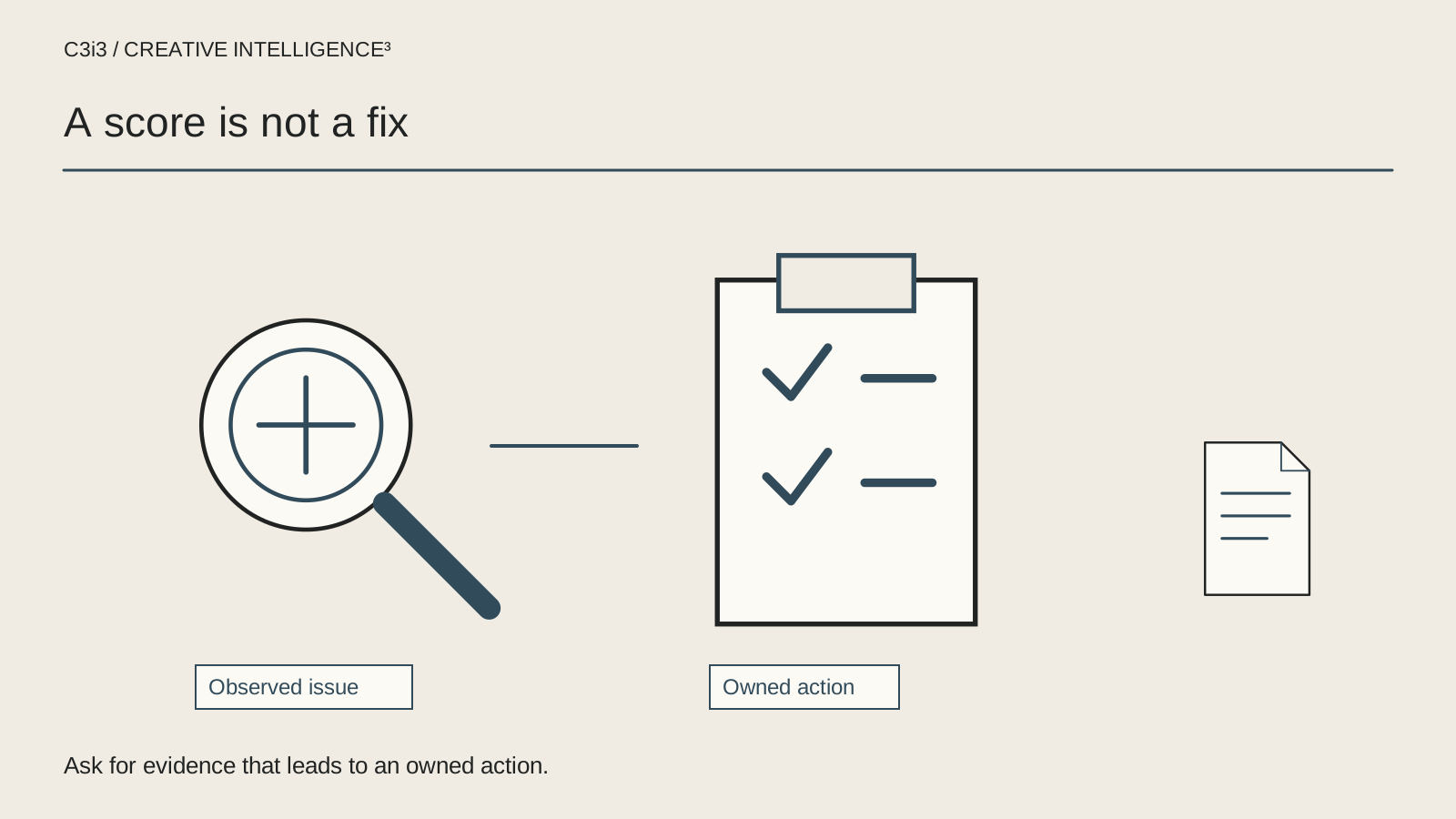
An SEO audit arrives with a colored score and a long list of warnings. Your team still does not know which page to fix, who can change it or whether the change would help customers find the service that matters. The report may contain correct observations while failing to provide a usable next step.
For a Bay Area business with an established website, SEO audit services should turn a search problem into a documented work plan. That is different from buying another general introduction to SEO. The practical question is whether another person can reproduce an issue, make an appropriate correction and verify what changed.
What business question should the SEO audit answer?
Start with an observable problem. “Our service pages are not appearing for relevant searches” is different from “search visitors are arriving but not enquiring.” The first calls for discovery, indexing and relevance checks; the second may require an examination of the customer journey. An audit that treats both as a reason to publish more articles has skipped an important diagnosis.
Write the important service, audience and destination beside the question. A company selling a technical product in San Jose may need a different content review from a San Francisco professional-services firm. Neither needs a report built around every keyword the crawler can collect. The audit should show which pages support the actual business task.
Ask what is outside the assignment as well. A technical review, content review and analytics investigation overlap, but they are not interchangeable. Use the marketing problem decision guide to define the starting point. Document the evidence available and the unanswered questions before asking a team to implement anything.
Can someone reproduce each technical finding?
A useful finding identifies a page and the condition observed. “Canonical problem” is not enough. The report should say which URL declares which canonical, how the auditor checked it and why the relationship may be inappropriate. The same principle applies to redirects, broken links, empty titles and blocked resources.
Separate the live page from a crawler’s stored observation. A report generated before a deployment may describe an older state. Record the collection date, the tested version where known and the method. If different tools disagree, preserve the difference rather than hiding it behind a single severity label.
Google’s Search technical requirements provide a useful baseline for checking public access, a successful page response and indexable content. Meeting that baseline does not establish that a page will be indexed or rank. For the audit, the deliverable is a reproducible test and an appropriate action, not a guarantee about Google’s later decisions.
When the question concerns a specific page’s Google state, distinguish what the live browser displays from what Search Console reports. The auditor should identify the relevant evidence rather than assume those views are identical.
What should an actionable issue register contain?
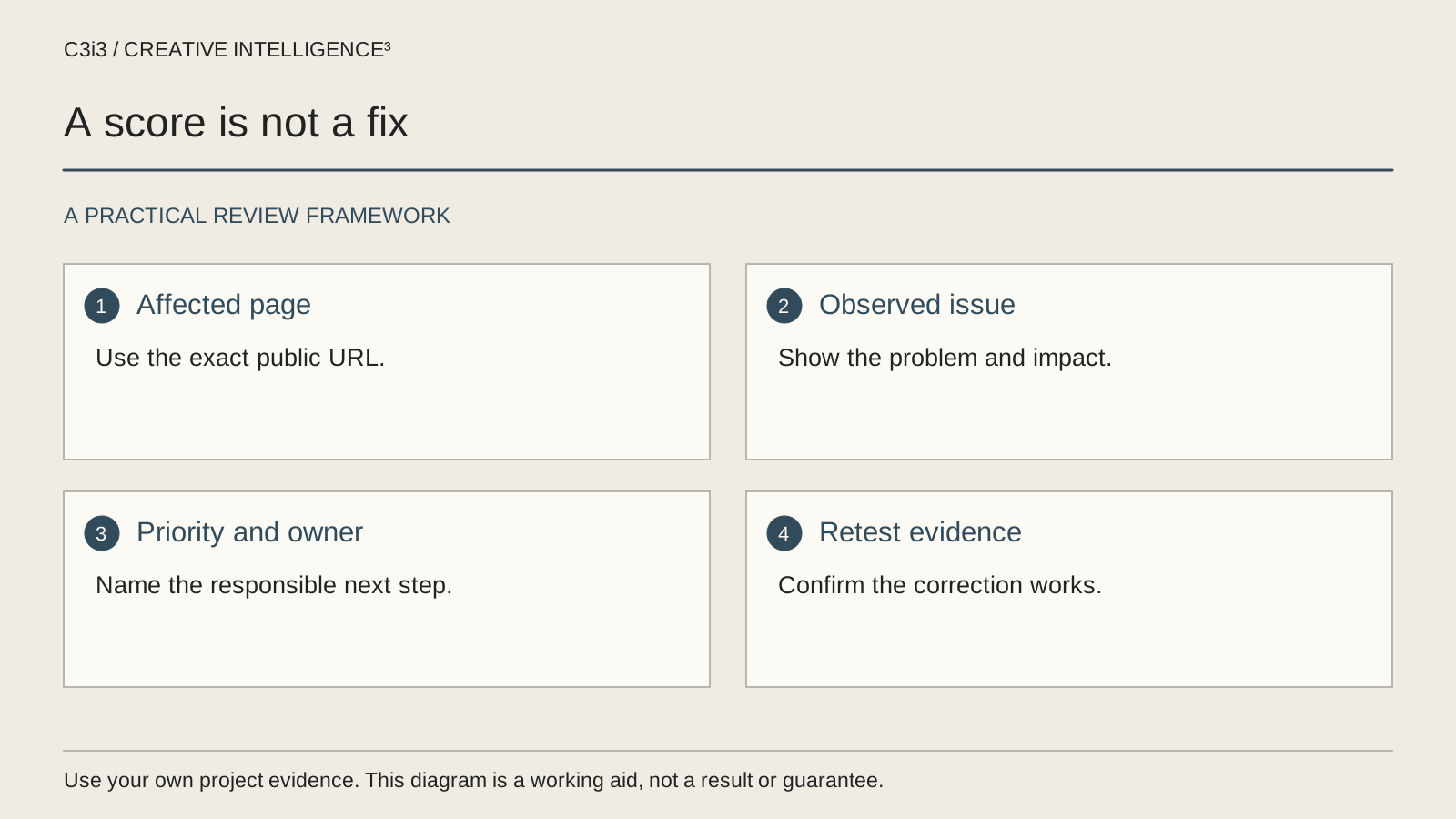
Use a working register that someone can take into a production meeting. Keep symptoms separate from causes until the cause has been established. One inaccessible template could affect many URLs; treating every URL as a different root problem can make the work look larger without making it clearer.
| Field | Example entry | Why it matters |
|---|---|---|
| Affected page | Named service-page URL and related template | Identifies the exact work item. |
| Evidence | Recorded response, directive or visible content condition | Lets another reviewer reproduce the finding. |
| Business impact | Important service explanation unavailable to public visitors | Connects the technical issue to a customer task. |
| Proposed correction | Remove unintended restriction from the public template | Defines the intended change without prescribing unrelated work. |
| Owner and retest | Site team; confirm public response and rendered content after release | Creates accountability and a completion test. |
These are example fields, not a diagnosis of your website. Require the provider to populate them with actual evidence. If the report cannot identify an owner, it should at least name the type of access or specialist needed to resolve the issue.
How should priorities change when every warning looks urgent?
Prioritize by the importance of the affected page, the severity of the condition and the confidence in the diagnosis. A public service page accidentally restricted from indexing deserves a different response from a minor wording suggestion on an old article. Both may appear in a tool, but the owner needs a sequence of work.
Look for shared causes before approving page-by-page edits. A broken navigation component can create many repeated link warnings. Fixing the component and checking its affected pages is more useful than assigning dozens of isolated tasks. Conversely, a content problem on one specialist service may require page-specific research rather than a template change.
Include dependencies and risk. Replacing URL structures can require redirect planning and careful verification. Editing a title is usually a smaller change. The report should not treat every correction as equally reversible. If a redesign is involved, compare the proposed changes with the existing redesign traffic-loss checks before another large release.
Ask the auditor to explain one high-priority recommendation in ordinary language. If the reasoning only repeats a tool’s label, the business still lacks a basis for deciding whether to act.

Which content and internal-link checks belong in the audit?
Check whether the important service is explained on a page a customer can actually find. Review the heading, visible content, supporting evidence and the next action together. A page may contain a keyword while leaving the buyer uncertain about the scope of the service. That is a content problem the report should describe specifically.
Map overlapping pages before recommending new ones. If several articles answer the same question, another similarly titled page may add confusion. The audit should identify the strongest existing destination and explain whether to improve, combine or differentiate the material. Do not turn every keyword variation into another URL.
Google’s link guidance supports ordinary crawlable links and useful descriptive text. Apply that principle to the existing Bay Area service hub, related city pages and relevant articles. The audit should show actual missing or misleading connections, not prescribe a magical number of links per page.
For a business already publishing regularly, compare the proposed content work with the checks for a website receiving no search traffic. Confirm the obstacle before assigning another batch of writing.
What proves that an SEO audit finding is closed?
A task is ready to close when the agreed correction is released and the specified retest passes. Keep the before-and-after evidence with the issue. If the fix changes a shared template, test more than the single example URL. Record any affected pages that still behave differently.
Distinguish completion from downstream search results. Correcting a directive can make a page eligible for processing; it does not mean Google has already recrawled or selected it. A sitemap submission similarly helps discovery without proving indexing. The official recrawl guidance explains that requesting another crawl does not guarantee inclusion.
Agree who watches for regression. A later content update, plugin change or template release can reintroduce an issue. Give the website team a short repeatable check rather than leaving the reasoning inside an inaccessible audit dashboard.
Finally, keep a separate list of unresolved questions. “Need Search Console access” and “awaiting content-owner evidence” are useful states when they are explicit. Marking them all complete because the final report was delivered hides work the business still needs to do. That distinction is what turns an audit from a document into a maintainable improvement process.
Keep this checklist beside you
Questions before the next step
Is an SEO audit score useless?
A score can summarize a tool’s chosen checks and help track comparable runs. It does not explain every business issue or prove search performance. Keep the score beside the underlying findings, affected pages and completion evidence rather than treating it as the entire deliverable.
Should an audit recommend new blog articles?
Only when the content review identifies a real unanswered customer question and checks the existing library first. Technical access problems, unclear service pages and weak internal navigation may need attention before more publishing. The recommendation should name the gap and the intended page role.
Can an audit guarantee that Google indexes every page?
No. The audit can identify and help correct conditions within the site’s control, then document the tests. Google makes its own crawling, indexing and serving decisions. A responsible report distinguishes technical eligibility and completed work from outcomes it cannot guarantee.

How C3i3 Can Help
C3i3 can review your search problem, the pages involved and the evidence available, then organize practical corrections around the work your team can verify. Our search visibility services connect technical checks, service content and internal links without reducing the assignment to a colored score.