






































In this article
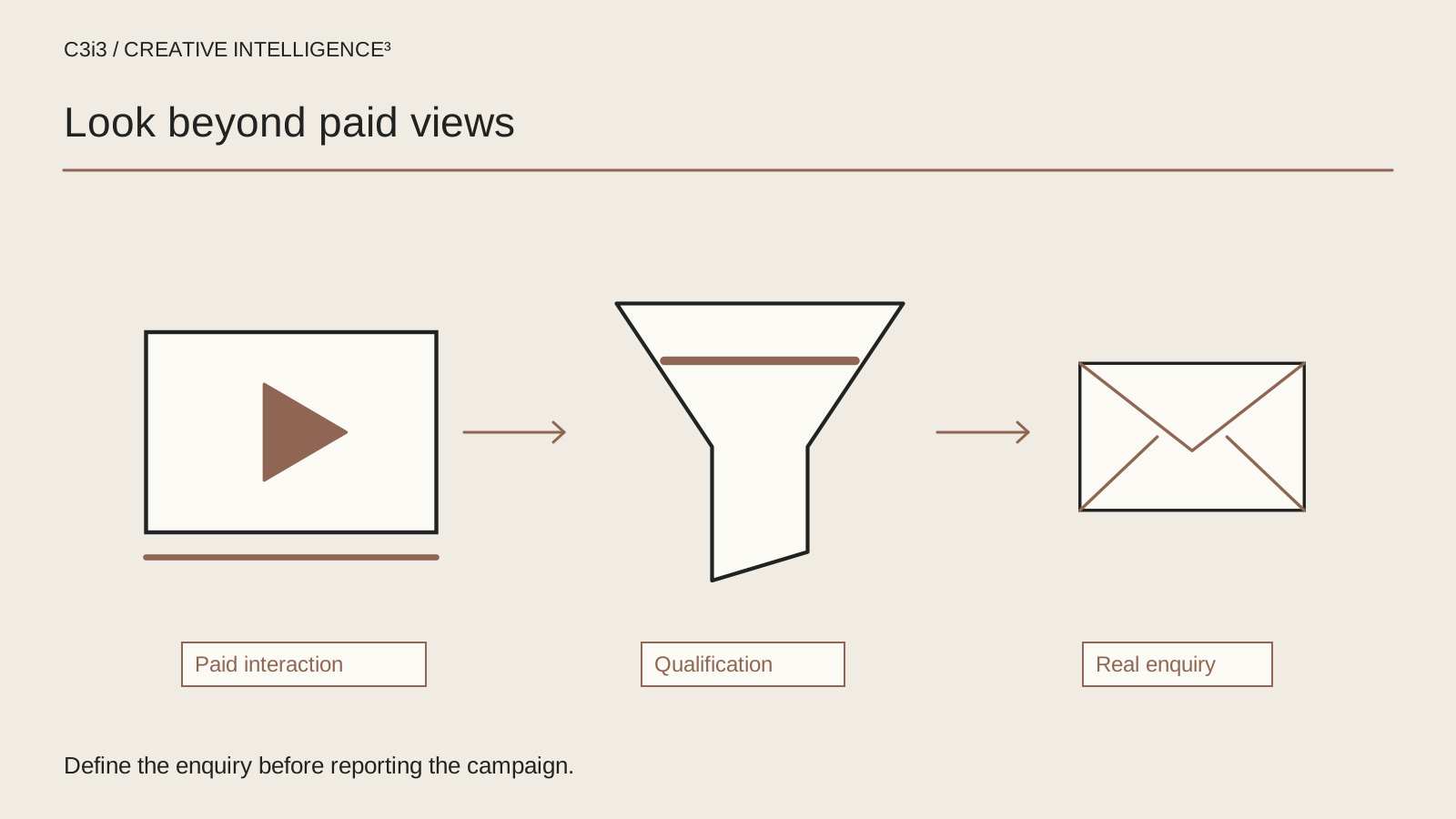
The video report looks active. People are watching, the agency has a presentation ready and your sales team still cannot name a useful enquiry from the campaign. That gap is worth investigating before you commission another commercial or change agencies. A paid view, a recorded conversion and a conversation with a suitable buyer are different events.
For a San Francisco business, the useful question is not simply whether a YouTube advertising agency can distribute video. It is whether the team can connect the campaign's objective to a working customer journey and explain the limits of the evidence. This guide focuses on paid YouTube advertising. The broader Bay Area video production diagnostic helps separate production problems from website and campaign problems.
What should count as a real enquiry before a YouTube campaign starts?
Write a lead definition that your sales team can use without interpreting the ad report. For a professional-services business, it might require a relevant service request, usable contact details and an eligible project. For a product company, an engineer requesting a specification review is different from a student downloading a document. Neither event becomes a sales opportunity merely because a platform can count it.
Separate three records: the action taken on the website, the lead accepted by your team and any later sales outcome. An enquiry may be genuine but outside your scope. A useful report should preserve that distinction instead of removing inconvenient submissions or calling every contact a success.
| Website action | Follow-up check | Useful reporting label |
|---|---|---|
| Project form submitted | Relevant request and usable contact | Enquiry received |
| Meeting requested | Correct service and buying situation | Enquiry accepted for follow-up |
| Guide downloaded | Permission and intent remain separate | Content interaction |
This working table is an editorial example, not a report from a client. Replace the definitions with your actual sales process and assign an owner to resolve uncertain cases.
Which conversion actions is the agency asking Google Ads to optimize?
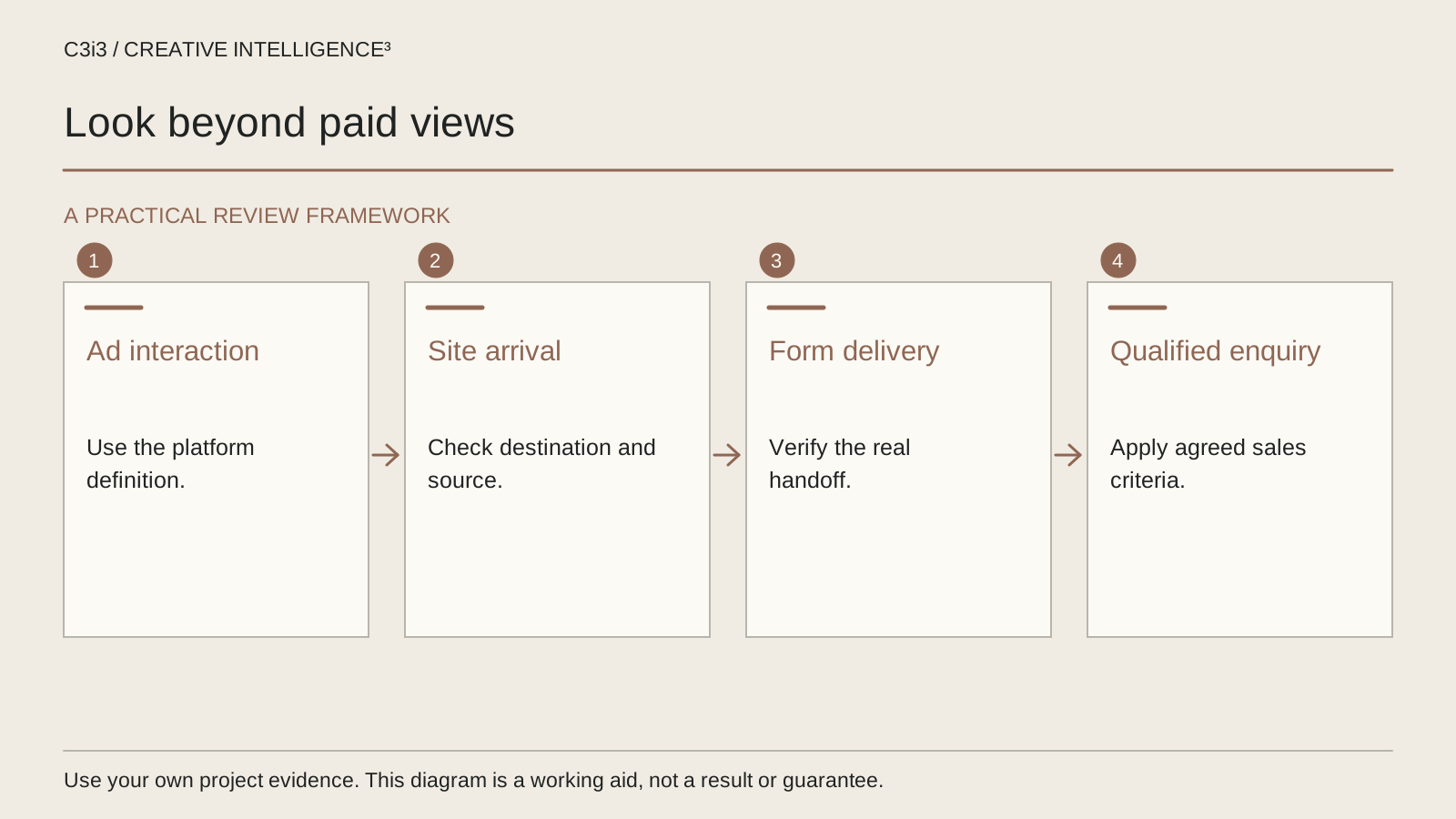
Ask to see the conversion action's name, trigger and reporting role. A button click can be useful diagnostic information, but it does not establish that a form arrived. A page visit may show interest without identifying a person who wants to talk. Review the underlying event rather than accepting a friendly label such as “lead.”
Google's explanation of primary and secondary conversion actions distinguishes actions normally used for bidding from observation-only actions, with exceptions for custom goals. Ask the person managing your account to explain the actual goal configuration. Do not change bidding settings simply because a checklist recommends a different label.
Have the agency demonstrate a controlled test on the approved live destination. Record the event that fires and verify the business-side delivery separately. Keep personal information out of analytics event names and URLs. Where consent or browser settings affect measurement, document the gap rather than attempting to circumvent it.
The acceptance question is specific: “What evidence shows that this action means an enquiry reached our team?” If nobody can answer, treat the conversion count as an unresolved measurement issue. Our marketing reporting guide explains how to keep activity and business outcomes separate.
Why might YouTube conversions appear without a website click?
A viewer can watch an advertisement and take action later through another route. That makes a last-click-only view incomplete. It also makes it important to understand what the advertising platform is attributing.
Google documents engaged-view conversions, which can credit a later conversion after qualifying video engagement within the configured window. The precise requirements depend on format and settings. Ask the agency to identify which interaction types are included in the report being discussed, rather than assuming the viewer clicked directly from the commercial.
Keep attribution claims appropriately narrow. A platform-attributed conversion means the platform's rules associated an action with an advertising interaction. It does not, by itself, establish that the advertising caused a sale or that the lead met your qualification standard. Your website, advertising account and customer records can describe different parts of the same journey.
For a considered B2B purchase, a buyer might first see an ad, return to research the company and ask a colleague to submit a request. The example is hypothetical, but the reporting question is practical: what can be observed, what has been matched and what remains unknown? Do not force those categories into a single reassuring total.
Is paid distribution reaching the people who can use your service?
Review the actual campaign settings with the agency, including selected locations, audience approach, exclusions and available placement information. Serving San Francisco does not make every nearby viewer a suitable customer. A business selling an enterprise service needs different buyer context from a consumer product advertised for immediate purchase.
Read the commercial as the intended customer. Does it name the problem clearly enough for an unsuitable viewer to recognize that it is not for them? Broad creative can attract curiosity without useful buying intent. Narrower language is not automatically better either: an overly technical opening can lose the person responsible for evaluating a supplier.
Ask for a short distribution explanation in plain language. It should describe who the campaign is intended to reach, how the selected approach supports that aim and what evidence will be reviewed. Avoid a presentation that lists targeting features without connecting them to the buyer's task.
Keep organic YouTube discovery separate from paid placement. An advertising campaign is not a substitute for answering the questions people search for on your channel. Both can contribute, but their work, ownership and evidence differ.

Does the destination continue the promise made in the commercial?
Open the exact final URL on a phone and compare it with the approved ad. If the commercial offers a product demonstration, the destination should make that demonstration or its next step easy to find. Sending every viewer to a broad homepage makes them reconstruct the connection themselves.
Follow the complete route. Check the main message, proof, enquiry button, form fields and confirmation. Then verify delivery to the responsible team. A successful-looking page can conceal a failed notification, an unclear question or a form that never reaches the right person.
Google's destination requirements describe expectations for functional, useful advertising destinations. Compliance is a starting point, not a conversion guarantee. A technically working page can still be a poor match for the particular commercial.
When coordinating a local campaign, use the existing San Francisco website services page to understand the website work alongside the advertising task. The campaign needs a destination built around the next decision, not a different page for every minor keyword variation.
Record the issue precisely: “The product demonstration ad lands on a page where the demonstration is absent” is actionable. “The website needs to convert better” is not yet a useful instruction.
What should you ask a YouTube advertising agency to review each month?
Request a brief report that starts with decisions, not a wall of metrics. It should identify the agreed enquiry definition, show what was observed and state which changes the team recommends. Preserve the period, campaign scope and attribution settings so comparisons have context.
A practical review covers accepted enquiries, rejected or irrelevant contacts, website delivery issues, creative observations and unresolved measurement gaps. Where volume is limited, the correct conclusion may be that there is insufficient evidence to choose between two explanations. The agency should be able to say that without replacing uncertainty with a story about brand awareness.
Assign a next action and owner to each material finding. A creative change belongs with the production team; a form delivery failure belongs with the website team; a qualification disagreement needs sales input. Our paid advertising services can be discussed alongside the production and website responsibilities rather than treated as isolated work.
For the next review, bring the same definitions back. Changing what counts as a conversion every month makes a trend difficult to interpret. Keep a dated change record, explain material settings changes and judge the campaign using evidence that the business can actually inspect.
Keep this checklist beside you
Questions before the next step
Does a YouTube ad view count as a lead?
No. A view describes a video interaction under the platform's applicable reporting rules. An enquiry requires a further action and a business-side record. Keep views useful for diagnosing distribution and creative while separately checking whether relevant contacts reached your team.
Can the agency guarantee enquiries from a commercial?
A responsible scope should describe the work, measurement and review process. It should not replace uncertainty about buyers, competition and the customer journey with a guaranteed result. Ask what will be tested and how an underperforming campaign will be investigated.
Should a San Francisco business hire separate video and advertising teams?
Either arrangement can work when responsibilities are explicit. The important issue is who owns creative changes, distribution, website checks and reporting. If the work is split, appoint one person to coordinate decisions and ensure every team is reviewing the same campaign version.

How C3i3 Can Help
C3i3 can help connect video creative, paid distribution and the website enquiry route for San Francisco businesses. Bring the commercial, campaign objective and current reporting questions. We can review the handoffs and define the work needed to investigate the gap between paid views and enquiries.