






































In this article
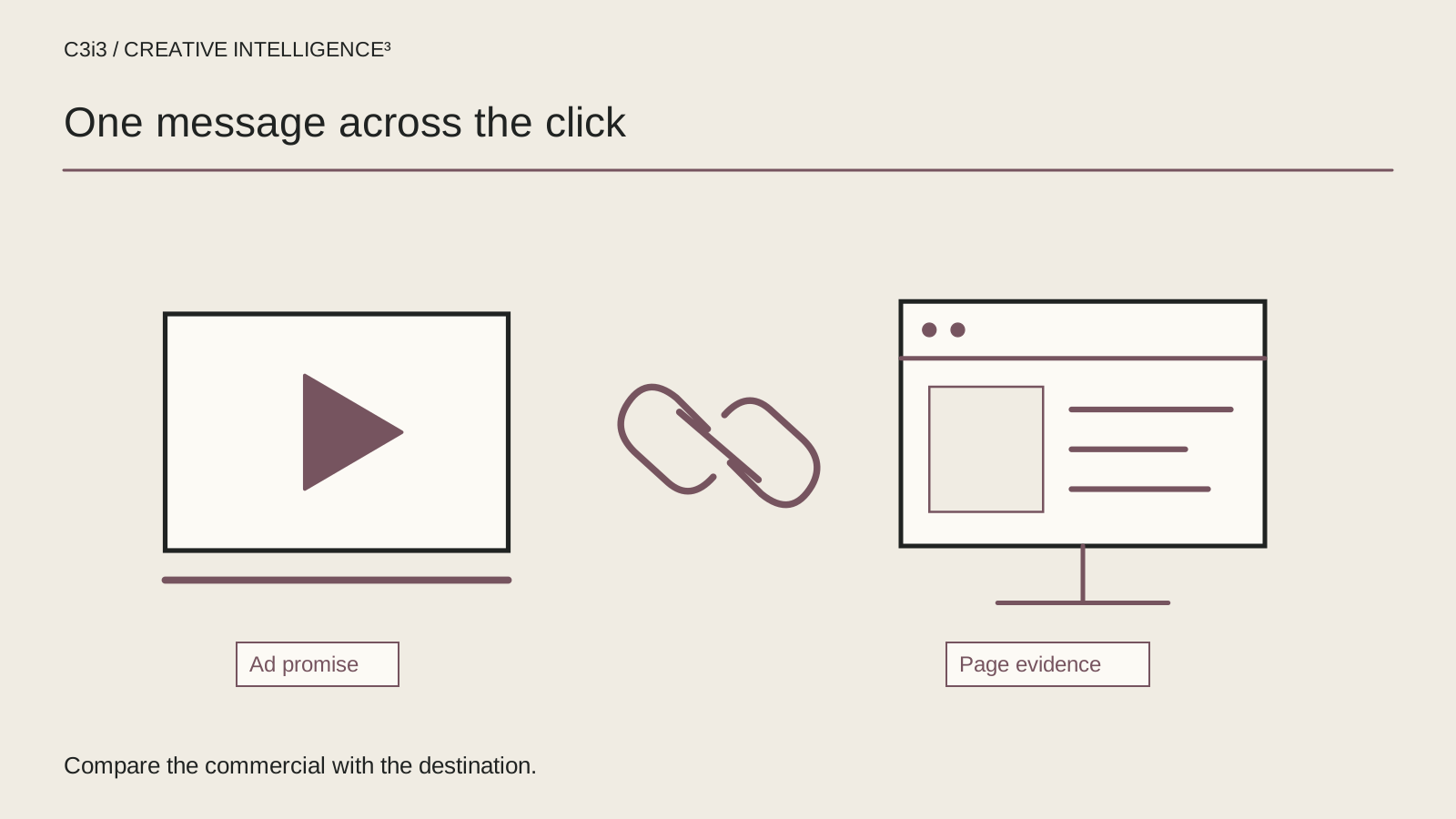
The commercial shows a particular product solving a specific problem. The click leads to a homepage with several divisions, a broad introduction and no sign of the demonstration. The viewer has not necessarily rejected the product. They may simply have lost the thread.
East Bay video advertising needs a continuous customer journey, not just a polished ad and a separately polished website. This guide shows how to compare the two using the same buyer question. It extends our video production and enquiry diagnostic with a detailed review of the handoff after the click. The examples are editorial exercises, not client results.
What expectation does your commercial create before the click?
Describe the ad's proposition without borrowing language from the website. What does the commercial actually invite the viewer to do? A product demonstration may invite closer inspection. A service commercial may invite a discussion about a defined problem. A brand introduction might only aim to make the company recognizable.
List the visible evidence as well as the spoken claim. A detailed equipment close-up suggests that a visitor can learn about that equipment. An interface walkthrough suggests that the next page will explain the demonstrated workflow. An attractive but unrelated destination breaks that expectation even when the company name remains consistent.
Ask a reviewer who has not worked on the project to finish this sentence: “After clicking, I expect to find…” Record the answer before opening the destination. Then compare it with the actual page.
Avoid treating every commercial as a demand for immediate contact. Some considered purchases need specifications, examples or an explanation of the process before an enquiry is reasonable. The destination should support the next decision the ad has prepared the viewer to make.
This exercise turns “the campaign is not converting” into a more useful question: did the destination deliver what this particular commercial led the person to expect?
Which message mismatches should you check first?
Look for contradictions before cosmetic differences. A commercial about an enterprise service should not land on a page that appears to serve only individual consumers. A product ad should not lead to an outdated model. A request to review a demonstration should not unexpectedly require a long sales form before the demonstration is available.
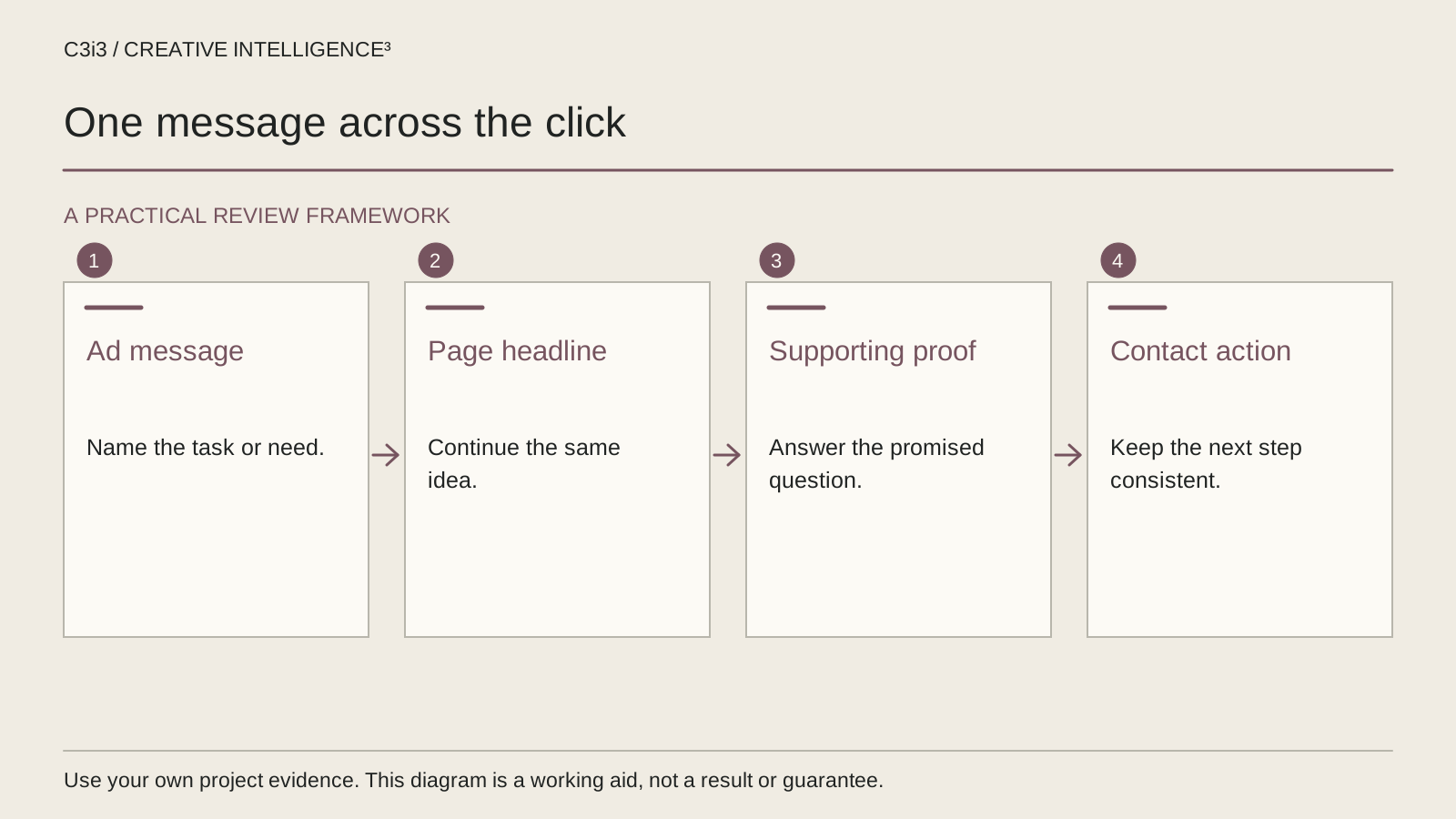
Use a simple side-by-side record rather than relying on memory. This original worksheet can be adapted to a service, product or software campaign.
| Check | What the ad establishes | What to confirm on the page |
|---|---|---|
| Customer problem | A specific task or frustration | The same problem is recognizable |
| Product or service | A named item or defined capability | The correct item and scope appear |
| Proof | A demonstration or supported claim | Useful detail supports the same idea |
| Next action | Review, request or discuss | The button and form continue that action |
Mark each mismatch with the location of the evidence: the relevant shot, line of narration, heading or form label. This makes the worksheet useful to both the production team and the website team.
A page does not need to repeat every frame. It needs to preserve the meaning that brought the visitor there.
Does the page provide the proof the commercial cannot fit?
A short commercial cannot contain the entire evaluation a business buyer needs. The landing page should expand the useful evidence, not merely repeat the slogan in a larger typeface.
For a physical product, that may mean identifying the actual model, showing the demonstrated task and explaining relevant conditions. For software, it may mean clarifying the workflow and the information shown in the interface. For a professional service, it may mean explaining what the work includes and what a prospective client should prepare.
Separate evidence from decorative reassurance. A row of vague claims does not answer a concrete question about compatibility, scope or the next step. Use material your team can maintain and verify, with a named owner for any information likely to change.
Google's landing page guidance describes relevance, usefulness and the expectations created by an ad as parts of the destination experience. This does not establish that adding a certain block will produce enquiries. It does support reviewing the destination as part of the advertising task.
The broader web commercial production guide covers how a campaign is planned. This review narrows the question to the evidence a visitor needs immediately after this specific ad.
Is the next action clear and proportionate to the buyer's task?
Read the button and the first form question together. If the ad invites someone to explore a product but the page immediately asks for an extensive project brief, the request may be out of sequence. If the visitor is ready to discuss an implementation, a vague newsletter invitation may be too weak.
Choose a primary action that matches the page's purpose. Describe what happens next in ordinary language. A request for a technical discussion should not be presented as an instant account activation. A form submission should not imply that a meeting has been confirmed unless the system actually confirms it.
Review the fields with the receiving team. Each required answer should have a reason. A contact route can ask enough to direct the enquiry without demanding information the buyer cannot reasonably know yet. Preserve useful instructions and accessible error messages instead of using placeholder text as the only label.
For broader page structure, landing page design can be coordinated with digital video advertising creative. The two teams should review one customer journey rather than approve their parts in isolation.
A practical acceptance test is simple: can a new reviewer explain what the button does, what information is requested and what the business will do after receiving it?
What must you test on a phone before the campaign changes?
Open the exact destination used in the ad, including the route a visitor reaches after any ordinary redirect. Test on the devices and browsers your business reasonably supports. Check the message before scrolling, the visibility of the main action and the readability of the evidence.
Follow one full enquiry. Confirm that required fields accept plausible input, errors can be understood and a successful submission leads to the expected confirmation. Verify delivery to the correct team separately. A success message on the screen is not proof that someone received the request.
Check that a video embed does not hide essential information from a visitor who cannot or chooses not to play it. Plan appropriate captions and supporting text. W3C's media planning resource is useful when deciding how the commercial and its surrounding explanation should work together.
Record problems with enough detail to reproduce them, without putting a person's private information in a shared screenshot or analytics URL. An approved test name and a non-sensitive test message are usually more appropriate than a real customer enquiry.
The existing Bay Area website services hub provides the wider context for website work. This campaign review should remain focused on its actual destination, not become an excuse to rebuild every page.
How do you decide whether to revise the ad, the page or both?
Use the mismatch record to locate the first break in the story. If the ad accurately explains the product but the destination omits it, start with the page. If the ad implies a capability the product does not have, revising the destination cannot repair the underlying problem. If both are individually accurate but aimed at different buyers, revisit the campaign brief.
Assign each change to an owner and preserve the approved versions. A production team should not silently change a product claim to match an outdated page. A website team should not add unsupported statements because they appeared in a draft commercial.
Google's destination requirements provide a baseline for working advertising destinations. Passing a policy check does not prove that the customer journey is persuasive, and persuasion does not excuse a broken destination.
After the change, repeat the same route and note what was altered. Keep distribution and measurement context visible when reviewing any later performance. The guide to reporting enquiries helps prevent website fixes, ad views and accepted leads from being blended into one success claim.
The aim is a coherent, verifiable next step for the buyer. Once that is working, the team can investigate the campaign with fewer unresolved handoff problems.
Keep this checklist beside you
Questions before the next step
Does every video ad need a separate landing page?
No. An existing page can be appropriate when it clearly supports the commercial's message and next action. Create a new destination when the current route cannot reasonably serve that task, rather than making a page for every small variation of a keyword.
Should the landing page repeat the commercial's script?
It should preserve the meaning and provide the additional evidence needed for the next decision. Copying the entire script can add repetition without clarity. Expand the useful demonstration, explain relevant conditions and make the intended next action understandable.
Can a landing page fix an inaccurate commercial?
No. If the ad creates an unsupported impression, correcting a later page does not make the original message accurate. Review the commercial itself and have the appropriate product or service owner approve the revised claim and the evidence used to support it.

How C3i3 Can Help
C3i3 can help East Bay businesses connect commercial creative with landing-page content, forms and campaign reporting. Bring the approved ad and its current destination. We can help identify where the message changes and define a focused revision plan around the buyer's next decision.