






































In this article
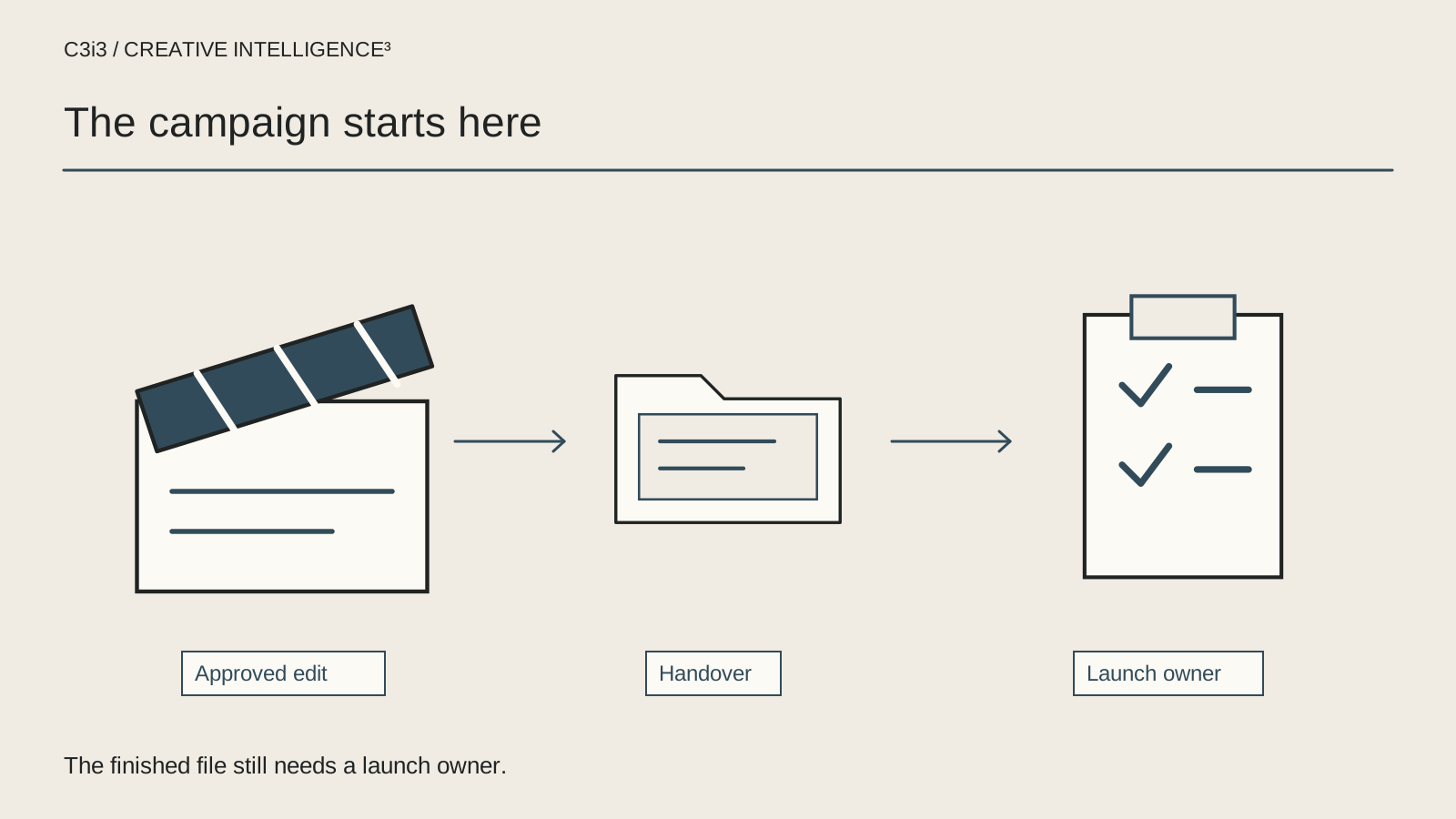
The final commercial has been approved. The production folder is organized, the team is pleased with the edit and the project seems finished. Then someone asks who is uploading the file, which page the ad should use and who will notice if the enquiry route stops working.
Bay Area video marketing can break at that handover because production delivery and campaign operation are different jobs. A finished commercial is an asset, not a complete operating plan. This guide covers the responsibilities after approval. For diagnosis before another production decision, use the Bay Area guide to views without enquiries. For the earlier creative stages, see what a web commercial project includes.
What exactly is being handed over after production?
Start with an approved asset record rather than a folder called “final.” Identify the commercial version, intended placement, approved wording, captions and destination. Record which files are exports for publication and which are working materials. If different teams have different versions, resolve that before anyone schedules distribution.
The handover should also state what the asset may be used for under the agreed arrangements. A production approval does not answer every question about licensed music, supplied footage or future edits. Keep those questions with the project owner and the applicable written permissions rather than assuming all material can be reused indefinitely.
Include the practical context that an operator needs: the audience, the specific message, the requested next action and the person who can approve a change. This is not a repeat of the creative brief. It is a record of the decisions that the live campaign must preserve.
For a larger organization, list any internal reference needed to connect the asset with the approved campaign. Keep private customer information and credentials out of that document. The objective is a handover another authorized colleague could use without reconstructing the production history from email threads.
A good package lets the receiving team answer, “Which version is approved for this use, and who resolves a question about it?”
Who is responsible for each part of the live campaign?
Avoid using “the agency” as the owner for every task. Even within one company, production, advertising, website support and sales follow-up may be handled by different people. Name the accountable role and the person who accepts the work.
| Work | Accountable owner | Acceptance evidence |
|---|---|---|
| Publish the asset | Channel or publishing owner | Correct approved version is visible |
| Manage distribution | Advertising or marketing lead | Documented campaign settings and destination |
| Maintain the landing route | Website owner | Page and enquiry test completed |
| Review measurement | Analytics owner | Defined events and reporting limitations |
| Respond to enquiries | Sales or service lead | Routing and follow-up responsibility confirmed |
This is an original working example, not a staffing prescription. A small team may combine roles. An enterprise team may need several approvers. In either case, someone should be able to resolve an issue without sending it around the same group indefinitely.
Use the map to expose missing work before launch. If nobody owns the destination or enquiry response, the commercial is not yet connected to a usable campaign.
What account access should the business retain?
Confirm that the business can reach the channels and advertising accounts used for its campaign. An exported video file is not a replacement for access to the publication, reporting or account history. Record the account owner and the approved way each supplier receives access.
Use platform permissions rather than passing around shared sign-in details. YouTube channel permissions let authorized people work with a channel using assigned roles. Google Ads access management similarly provides mechanisms to review and change account access. Check the current role capabilities before choosing the permissions for a particular task.
Keep the access inventory separate from passwords and other secrets. It should identify the business owner, purpose of the access, responsible administrator and review point. It should not become a document containing everything someone would need to take over the accounts.
Our agency account access guide provides a wider checklist for handing over business accounts. The practical standard is that your team knows who can publish, change distribution and see reports.
When someone changes roles, review access through the normal administrative process. Do not leave that task until a supplier departure or an urgent campaign correction.
What needs to work before anyone starts distribution?
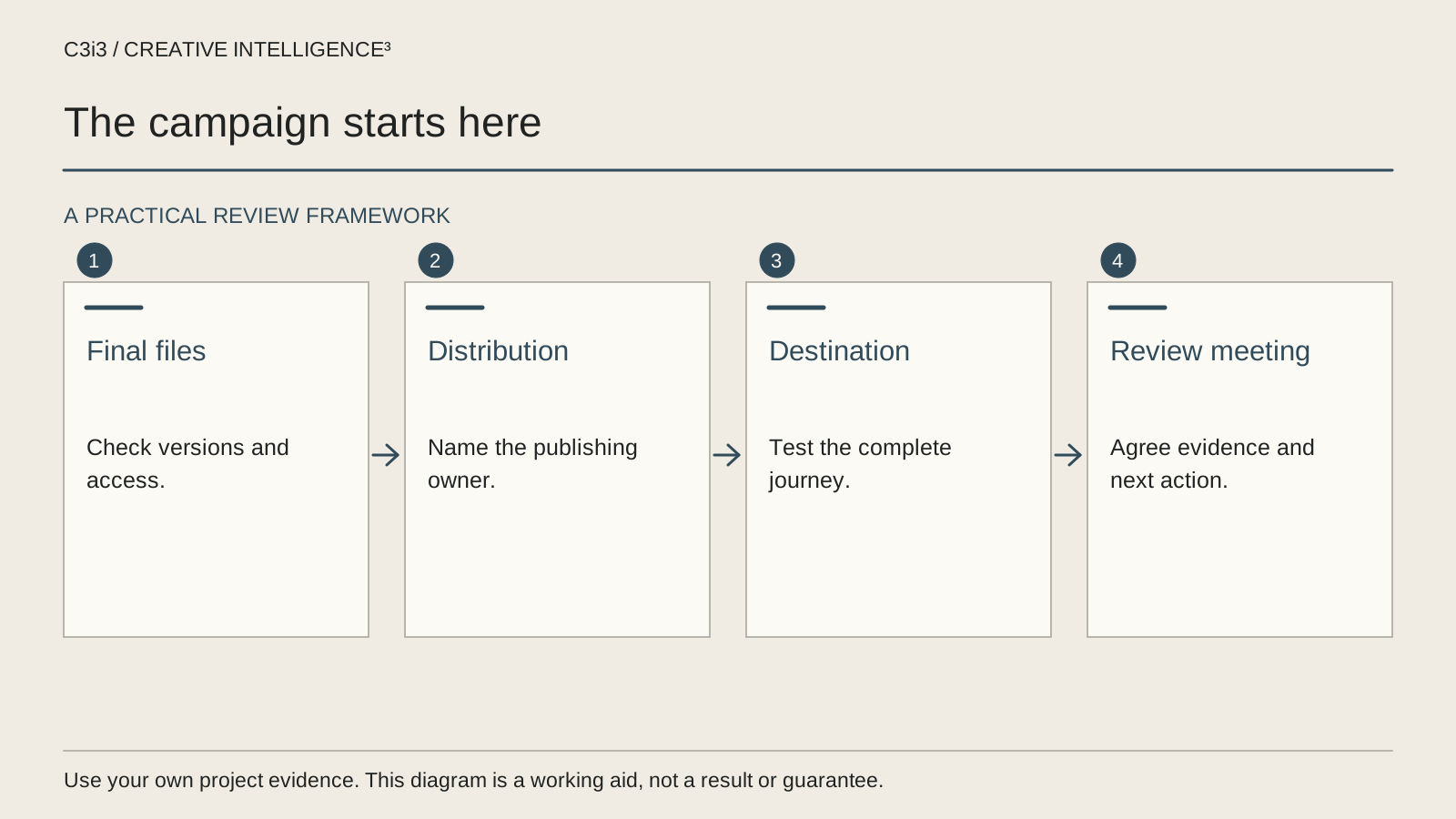
Perform a campaign readiness review using the exact asset and destination. Confirm that the published commercial has the right title, captions and approved content. Check the final link, the receiving page and the intended next action. If the asset has been replaced since testing, repeat the relevant checks.
The landing page owner should demonstrate a complete enquiry route. The receiving team should verify delivery and explain how the request will be handled. A form notification sent to an unmonitored inbox is a handover problem even if the website appears to function.
The measurement owner should identify which events are diagnostic and which represent business actions. Do not let a convenient playback event stand in for an enquiry. Agree how campaign naming and reports will help the team locate the correct asset without exposing personal information.
Google's destination requirements provide a useful baseline for advertising destinations. They do not replace your own test of the customer task. A policy-eligible page may still give the wrong instructions for this commercial.
Connect the review with your existing Bay Area website and marketing services rather than creating an unrelated location page for the campaign. The next step should be clear whether the visitor arrives through advertising, search or a shared link.

Who decides what changes after the campaign is live?
Agree a review process before opinions arrive from every direction. Someone should collect the evidence, identify the problem and bring a concrete decision to the people authorized to make it. Otherwise the production team may receive conflicting requests from sales, leadership and the person operating the advertising account.
Distinguish an urgent fault from an optimization idea. A broken link, inaccurate product statement or failed enquiry route needs a clear escalation path. A suggestion to try a different opening should enter a planned creative review with the relevant evidence and a version record.
Keep the change request specific. “Move the approved product demonstration earlier to test whether the opening communicates the task more clearly” is workable. “Make it more engaging” still needs a definition. Record who approves the script, product facts, destination and live distribution settings when a change affects several teams.
Use a brief decision log containing the issue, supporting observation, selected change, owner and review point. Do not record a successful outcome before it has been observed. Our marketing reporting guide explains why views, website activity and accepted enquiries should remain separate.
The process should make it easier to correct the campaign, not create an approval ritual for every harmless file label.
What should a useful campaign closeout leave behind?
A campaign closeout should preserve what the next team needs: approved assets, publication locations, destination information, account ownership, meaningful configuration changes and a record of unresolved questions. A slide stating that the campaign performed well is not a substitute for this material.
Record what was learned at the appropriate level of certainty. A confirmed broken form is a technical finding. A preferred storyboard direction is a creative decision. A possible audience mismatch is a hypothesis unless the available evidence supports a stronger conclusion.
Review whether the assets remain accurate for future use. Product details, interfaces, service scope and approved claims can change. Assign someone to decide when an old commercial should be revised or retired rather than allowing every published copy to remain active by default.
C3i3's web commercial services can be scoped with the campaign handover in view. Production, website work and reporting do not have to be supplied by one company, but the boundary between them should be explicit.
The final question is operational: if the original project manager were unavailable, could another authorized person identify the live versions, maintain the destination and route an enquiry correctly? If the answer is no, the handover still needs work.
Keep this checklist beside you
Questions before the next step
Is campaign management normally included in video production?
Do not assume it is. Read the actual scope and identify who handles publication, advertising, website changes and reporting. A production team may deliver approved assets while a different team operates the campaign. The handover should make that boundary explicit.
Can one person own all the handover tasks?
A small team may combine roles, but the tasks still need separate acceptance checks. Verify the asset, destination, enquiry delivery and reporting rather than relying on one overall statement that everything is ready. Record who provides cover if the main owner is unavailable.
What should we keep when changing marketing partners?
Keep the agreed assets, business-controlled account access, current publication and destination records, reporting definitions and unresolved issue log. Rights to source materials and future edits depend on the actual arrangements, so confirm those questions instead of assuming every delivered item carries the same permissions.

How C3i3 Can Help
C3i3 helps Bay Area businesses connect a finished commercial with the work required to publish, distribute and review it. Bring your approved asset and the current ownership gaps. We can help define a practical campaign handover with clear website, advertising and reporting responsibilities.