








































In this article
A new marketing agency asks for access to Analytics, Tag Manager and Search Console. You want work to start, but should you share a password, make the agency an owner or create replacement accounts? Those choices affect who can manage your business information later.
Account handover means giving a team the access it needs within an arrangement your business understands and controls. These five questions help you agree that arrangement. Ask the agency to answer in writing and demonstrate the important parts.
1. Which accounts will remain under our business control?
Ask for an inventory of the existing assets before authorizing changes: Analytics accounts and properties, Tag Manager accounts and containers, Search Console properties, advertising accounts and any relevant reporting tools. Record their identifiers, purpose and current administrators. An account bearing your business name does not, by itself, establish that your employees can administer it.
Agree where new assets will be created and who will retain control. Google's Tag Manager permissions guidance recommends administration by someone in your organization and more than one active administrator. Have the agency help verify that arrangement rather than simply promise future access. If an existing account sits under a previous supplier, inspect the available options before creating a replacement. A new container or property may require changes and does not automatically bring the old configuration or history with it. Write down the chosen path and who checks completion.
2. What permissions do you need, and for which tasks?
Ask the agency to connect each requested permission with its work. Someone reviewing reports may need different access from someone changing measurement settings or managing users. Google's Analytics role guidance describes the available roles and how permissions can apply at account or property level. Have your business administrator review the actual invitation, not just a general description of agency access.
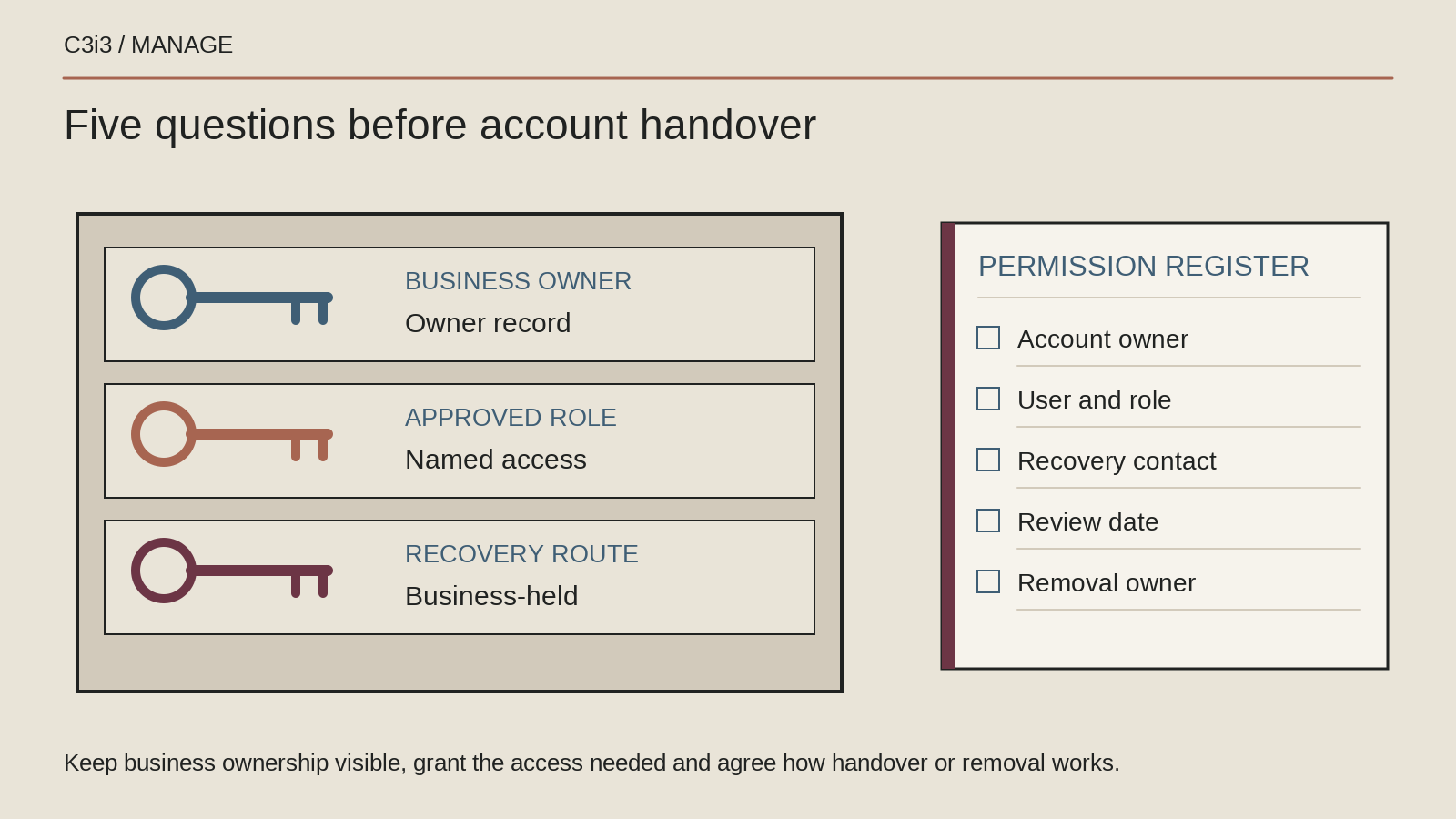
Use separate, named access where the platform supports it and agree how subcontractors are introduced. Confirm whether broader account permissions also expose unrelated properties. Your business should know who can see or change its information, and the agency should have sufficient access to deliver the agreed work. Record the reason for any administrative role. Then test that the invited person can perform the required task without using a password shared by several people or relying on someone else's session.
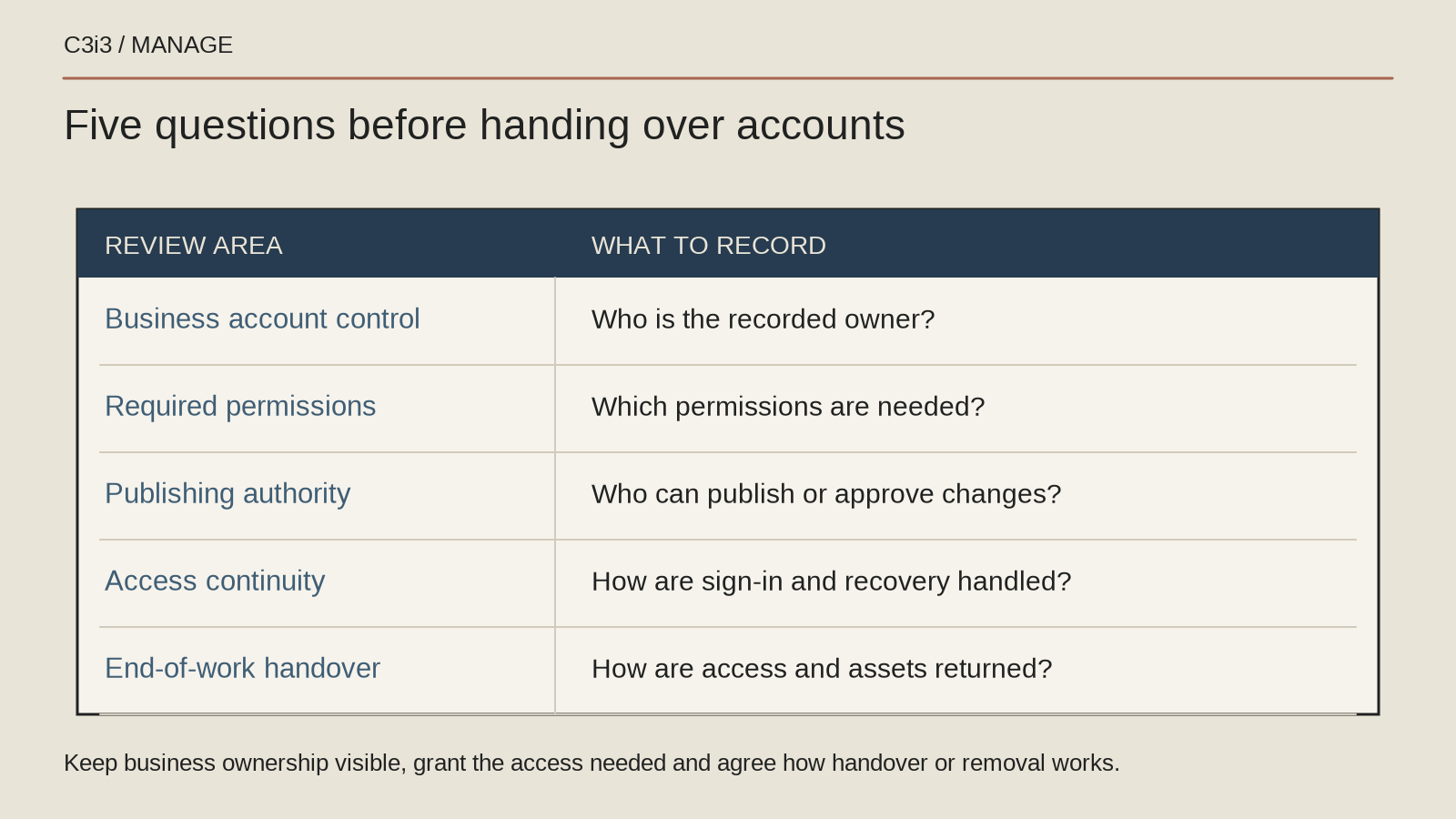
3. Who can approve and publish changes to our setup?
Access to view a system is different from authority to change it. Ask who can edit tracking, approve a draft, publish a container or alter reporting definitions. Establish which changes need business approval and which routine maintenance tasks fall within an agreed brief. Record who provides cover so an absence does not leave a necessary update waiting without a decision.
Request a short example of the release process: the problem, proposed change, test evidence, approval and live verification. That explanation should be understandable without operating the platform yourself. Ask how the team records what changed and how it investigates an unexpected result. For measurement work, insist on checking the real inquiry journey as well as the tool configuration. You want clear authority and a reliable review process, including a way for your staff to report an issue after publication, rather than a blanket instruction to ask the agency about everything.
4. How will we keep access when someone changes roles?
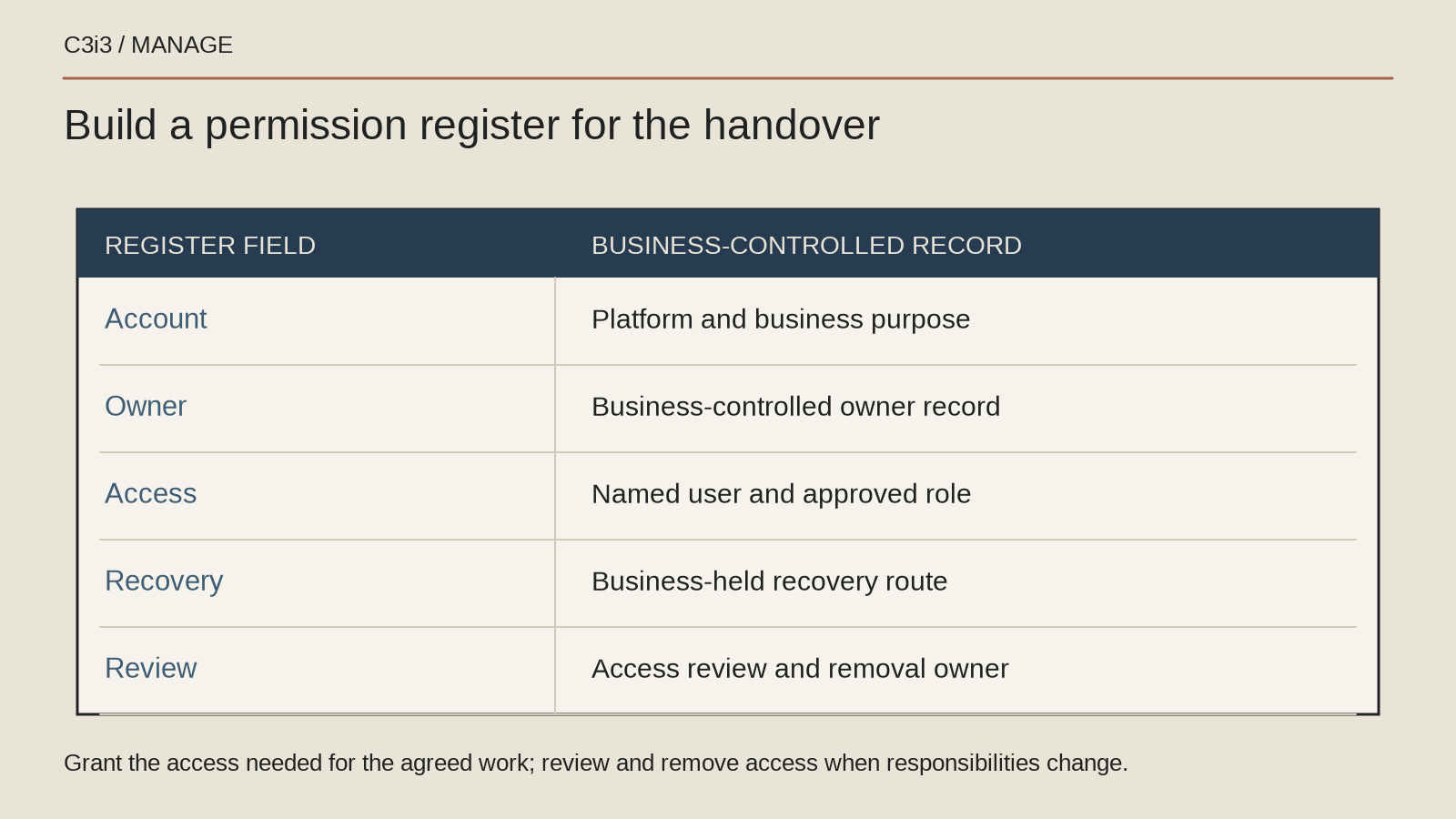
Choose business-controlled administrators and confirm the relevant recovery details are maintained by your organization. Avoid an arrangement that depends entirely on one employee's personal account or one agency contact. Keep an inventory of access holders and a routine for reviewing it when people join, leave or change responsibilities. Store recovery information through your established business process rather than in an ordinary project document.
Check Search Console separately because ownership and verification have their own rules. Google's owners and permissions guidance distinguishes verified owners, delegated owners and users. Ask the agency to identify the verification method and explain how your business retains it. A user list alone may not describe every ownership route. Before removing an old supplier, verify that your business has working access and understands any website or domain changes needed. Record who is responsible for checking those details.
5. What exactly will you hand over when the work ends?
Agree the handover contents before appointing the agency. Include the account inventory, current access roles, relevant configuration notes, reporting definitions, scheduled work and unresolved issues. Clarify which creative files and other deliverables belong to the business under the agreement, and identify third-party tools or materials that require a separate license or subscription. Account control and ownership of every working file are related questions, but they are not identical.
Set a transition sequence that your office can verify. Your administrator checks access, the incoming team reviews the documentation and the outgoing team confirms outstanding changes. Then remove or adjust access that is no longer needed, including any relevant ownership verification arrangements. Ask how automated reports, integrations and scheduled tasks will be reviewed so they do not depend on a departing user's account. A useful handover leaves your next operator able to explain what is running and what still needs attention.
Keep this checklist beside you
Questions before the next step
Should I send the agency our main Google password?
Use platform invitations and named roles where available. Your business administrator can grant suitable access while keeping account recovery under business control. Ask the agency to explain any task it says requires a shared login.
Should a new agency create fresh Analytics and Tag Manager accounts?
Not automatically. Inspect your existing access, history and configuration first. A replacement may sometimes be needed, but the agency should explain why, what will change and how the live website and reporting will be checked.

How C3i3 Can Help
C3i3 can help review the access arrangement and agree how your ongoing marketing work will be managed. Our Manage team can coordinate account documentation, delivery responsibilities and regular reviews with your business.
Bring the accounts you already use and any areas where control is unclear. We can identify the access questions to resolve and define a practical starting arrangement.