



































In this article
You uploaded a drain cleaning video, added the company name and waited. It barely appears for the questions customers ask. The next suggestion you receive is a package of tags and dozens of city names. Before commissioning that, check whether the video itself clearly answers a question a homeowner would search.
YouTube SEO for plumbers begins with a useful subject and an accurate message. Metadata helps describe the film, but it cannot turn an unclear montage into a helpful answer. Work on the topic, presentation and customer destination together rather than treating optimization as a keyword field to fill.
Choose a drain cleaning question with a clear audience
Use actual office questions as seeds: what happens during an assessment, what information helps arrange a visit or how a professional explains the next step after an inspection. Choose a question your team can answer responsibly without diagnosing a stranger's plumbing remotely.
Keep the scope focused. A video about booking a drain cleaning service is different from a technical explanation of sewer repair. Do not combine both simply to include more keywords. A clear topic helps the right viewer recognize the film.
Check whether the existing footage supports the question. If it only shows equipment operating without explanation, add approved narration or useful diagrams. Do not title the film as a complete answer when it only provides background imagery.
Write a title and thumbnail that make the same message
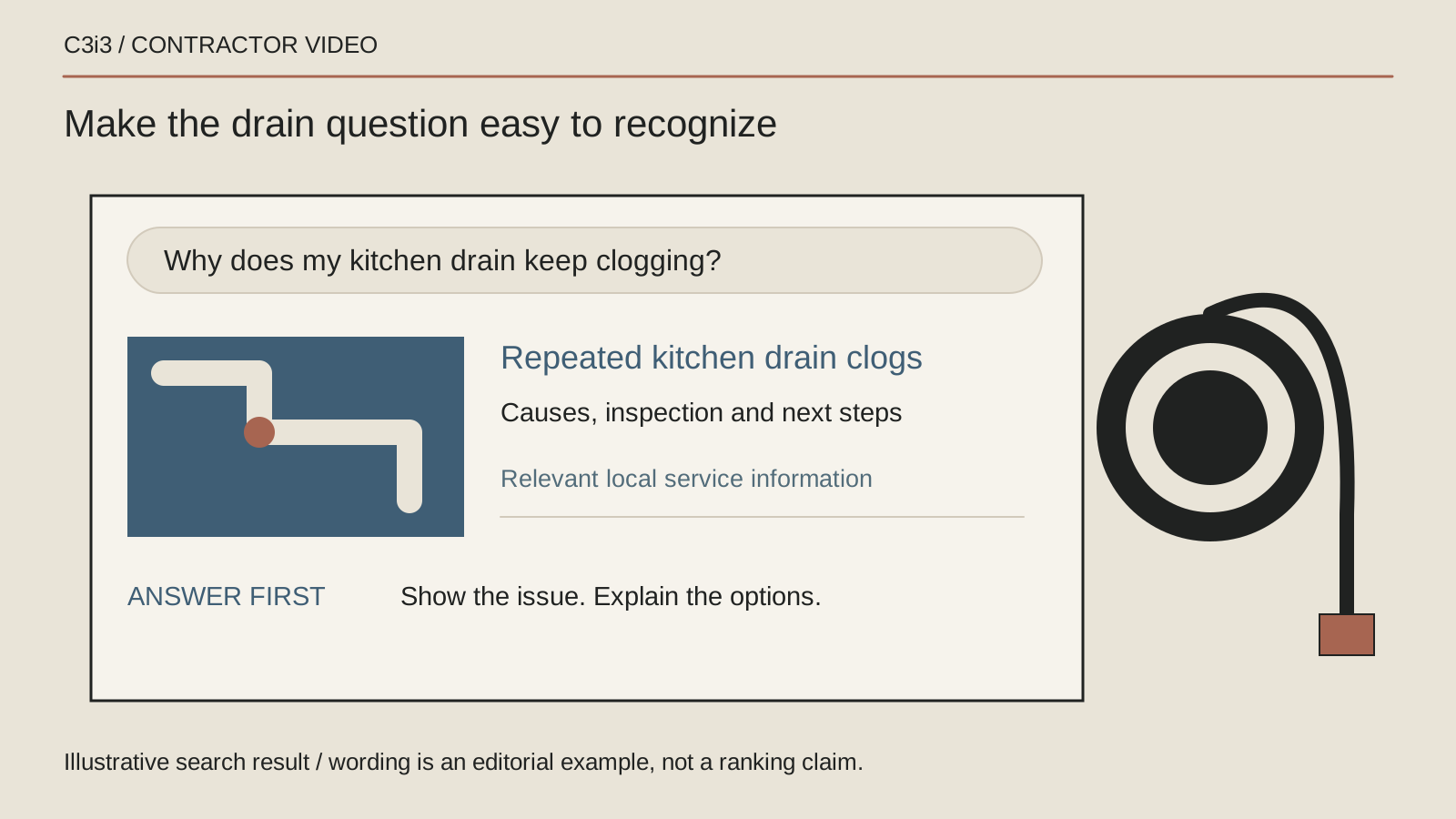
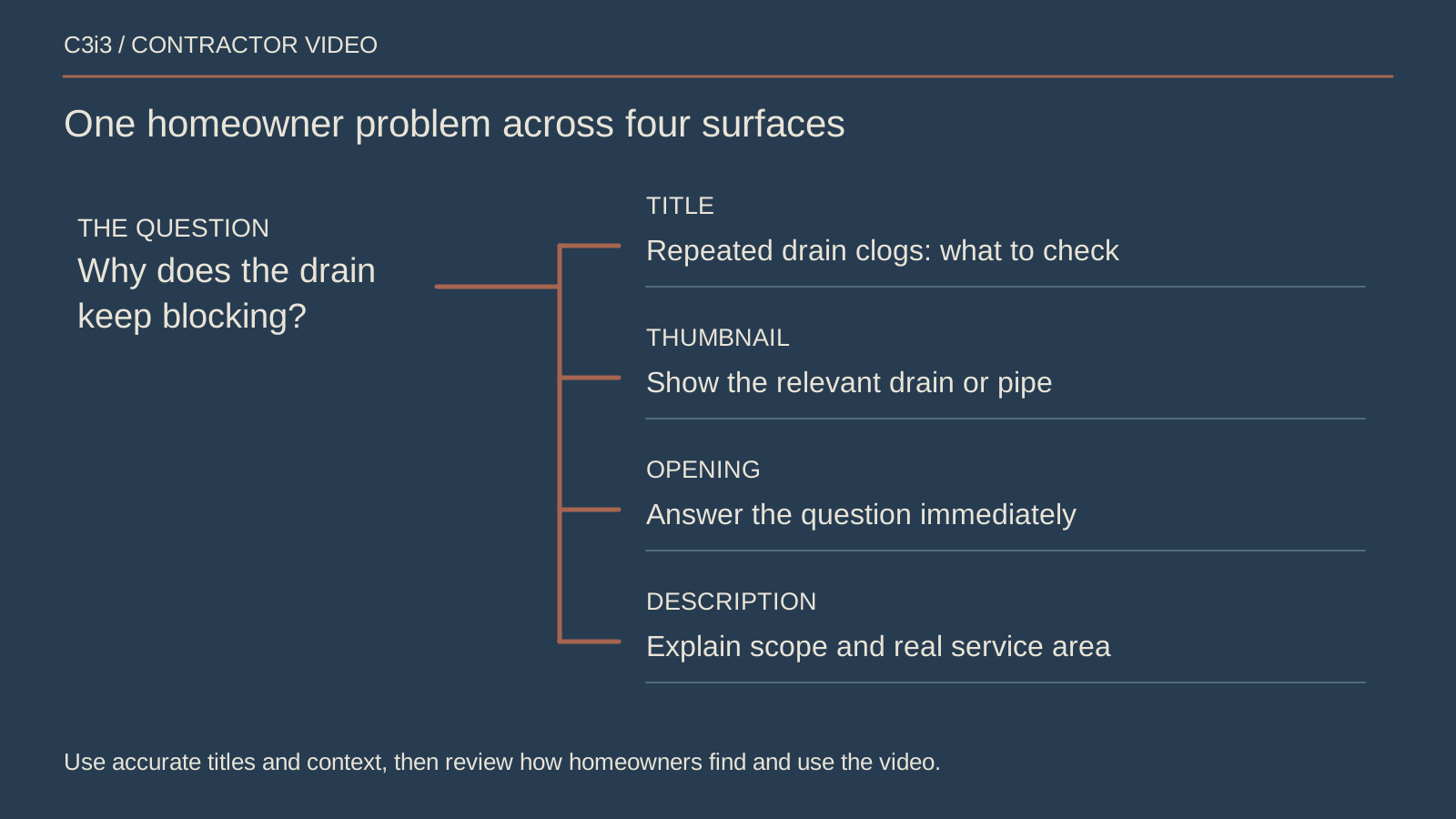
Use the service and question naturally in the title. A working example might be drain cleaning assessment: what should homeowners prepare? This is an editorial wording example, not a claim that the exact phrase has measured monthly demand.
Create a thumbnail that supports the subject with a clear object or relevant image and minimal readable text. Avoid dramatic fault imagery that implies the viewer has a confirmed problem. The title, thumbnail and opening should describe the same subject.
YouTube's search explanation describes several relevance and quality considerations. A repeated phrase is not a substitute for a useful answer. The goal is to help the right person understand what the video offers.
Make the opening answer the described question
Begin with the useful point before a long company introduction. Explain who the video is for and what it will clarify. Then show the relevant sequence or example. Remove unrelated footage that delays the answer.
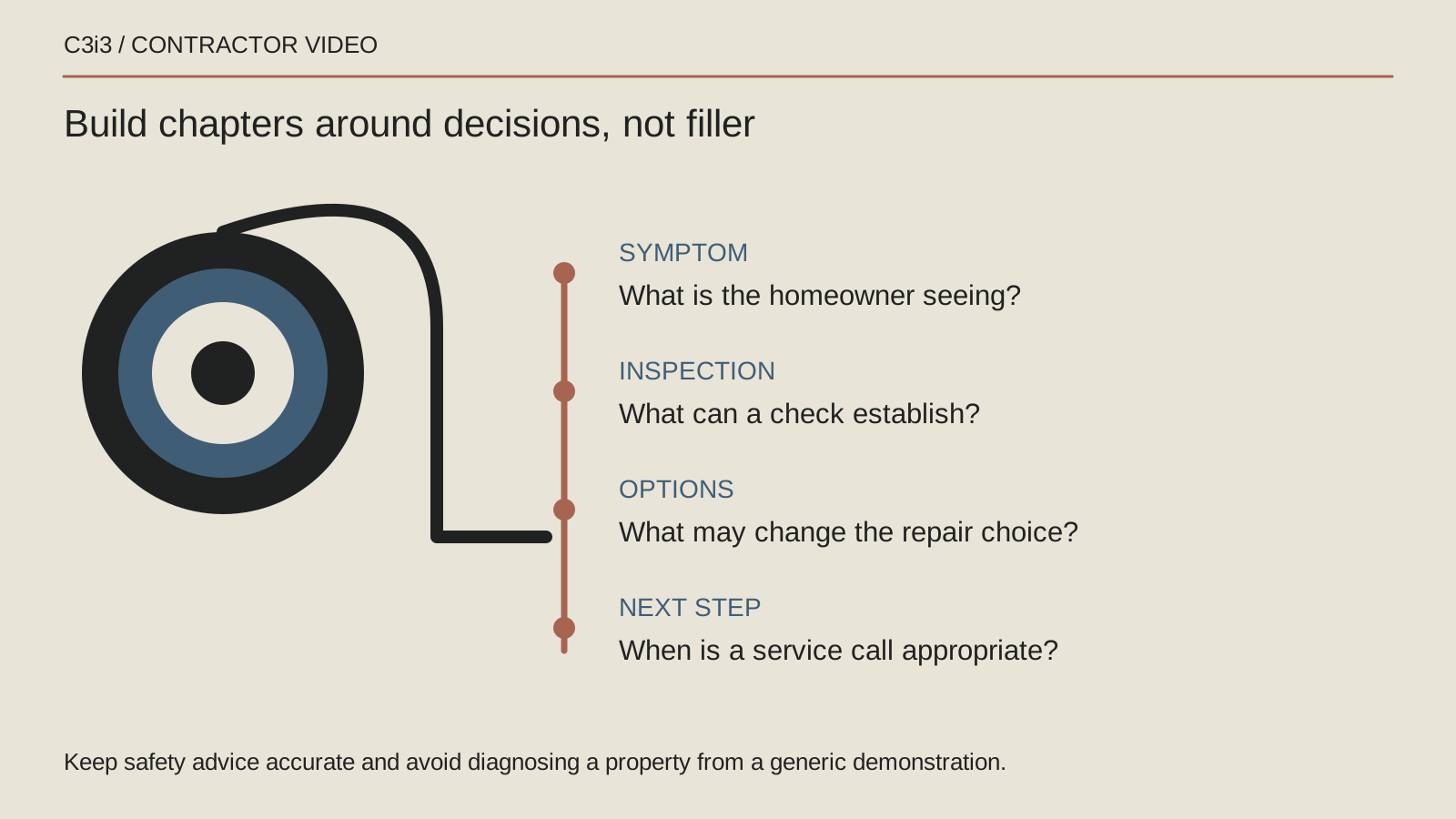
Keep technical statements under qualified review and avoid unsafe do-it-yourself instructions. A preparation guide can explain how to describe the issue or locate existing records without asking a homeowner to open equipment or attempt repairs.
Provide accurate captions and make on-screen labels readable on a phone. If a key point only appears in a small annotation for a moment, many viewers will miss it. The film should remain understandable without relying on music or visual spectacle.
Use the description to support the viewer's next step
Give each video a useful, unique description. Summarize the question near the beginning and include the relevant service link where it makes sense. Explain actual coverage rather than appending a long list of places you do not serve.
YouTube provides description guidance for organizing this information. Use terms that accurately describe the content. Do not turn the description into a repeated block of every plumbing keyword in your research sheet.
YouTube also says tags have a limited role in most discovery situations. Use them appropriately, including relevant spelling variations where helpful, while keeping the main effort on the content, title and thumbnail.
Review discovery and enquiry data separately
Use the channel's available analytics to inspect how people find the video and which search terms appear in reporting. Compare the film's message with the audience it actually reaches. Keep missing data visible instead of estimating a precise local audience from a small report.
Review where viewers stop or continue and consider whether those moments reveal confusion. There is no universal retention percentage that proves a plumbing video is successful. Length, subject and viewer task all affect interpretation.
Track the next step only where the required measurement is configured. Website clicks, enquiries and booked visits are different events. Ask the office whether prospects mention the video, while recognizing that self-reported attribution is incomplete.
Build a small library of connected answers
Link related videos through a sensible sequence and give the website equivalent explanations where useful. A viewer who understands assessment may next want to compare scope or prepare a request. Each film should earn its place by answering a different question.
For the website, follow Google's video SEO requirements where applicable. A video has separate search eligibility requirements even when its page is indexed.
Use the contractor video strategy pillar to keep production tied to customer tasks. A smaller, maintained library can be more useful than a channel full of near-identical clips with slightly different keyword titles.
Keep this checklist beside you
Questions before the next step
Should I put San Francisco and San Jose in every video title?
Only use a location when it is relevant to the film and your real service coverage. A location list can make a title harder to understand and does not establish that the video answers a local question.
Will better tags get my plumbing video to number one?
A tag package is not a substitute for a useful video and accurate presentation. Work on a useful topic, accurate metadata and viewer experience, then review the available discovery evidence without describing a fixed outcome.

How C3i3 Can Help
C3i3 can help connect video production, useful metadata and the website service page. We can review the customer question, the film's opening and the next step a viewer is invited to take.
Bring a video that is not reaching the intended audience and the analytics available for it. We can identify supported improvements and distinguish content questions from tracking gaps. The aim is a clearer discovery path with specific improvements you can review.