



































In this article
The video campaign report looks busy. There are impressions, views and several activity totals. The estimator's calendar is still quiet. Before blaming the film, check what the campaign was designed to achieve and what those numbers actually describe.
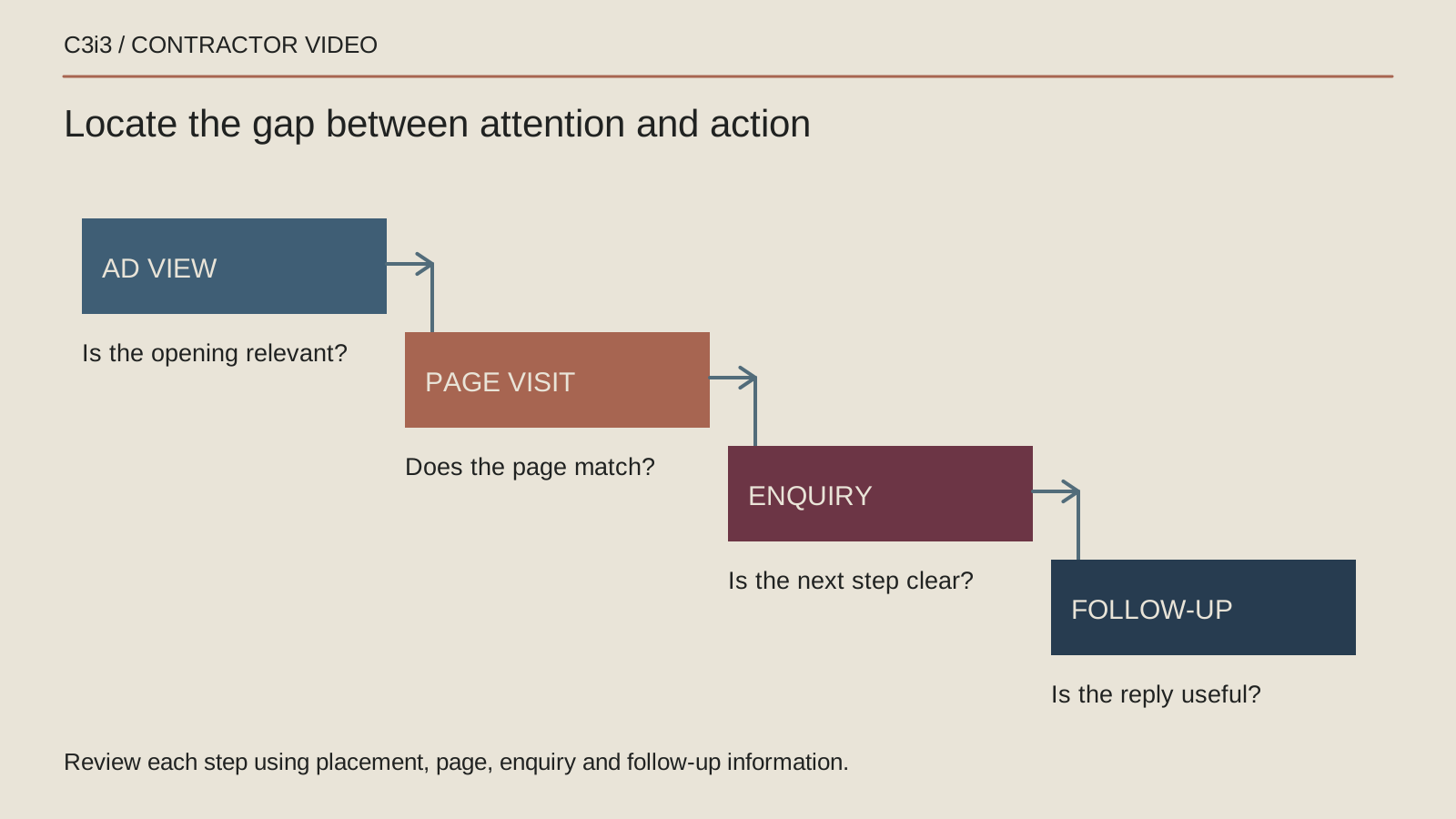
Roofing video advertising connects several decisions: the audience, campaign objective, creative message, destination and office response. A strong roof replacement video cannot compensate for an irrelevant audience or a quotation form that does not work on a phone. Diagnose the whole route before expanding the campaign.
Check what the campaign is optimized to do
Open the campaign settings and record the objective, bidding approach and primary measurement. If the campaign is designed for reach or viewing, a view-heavy report may be consistent with that setup. It does not by itself establish that the creative failed.
Ask whoever manages the campaign to explain each reported metric and conversion action. Identify which actions represent a submitted request, a button click or another event. Use the platform's current definitions instead of assuming all views are measured identically.
Google's video reporting guidance provides context for its metrics. Keep advertising activity and business outcomes in separate columns so a busy dashboard does not hide an empty enquiry pipeline.
Make sure the audience can use the offer
Review the service geography, audience settings and placements against the business's actual coverage. Someone outside the operating area may watch an appealing roof transformation while having no practical reason to contact you.
Inspect the enquiry mix rather than guessing. Are requests about replacement, small repairs or unrelated work? Are they in coverage? Does the office have capacity to respond? These observations help distinguish targeting problems from a confusing offer.
Do not publish exaggerated scarcity or emergency claims to force action. An accurate explanation of assessment availability and scope gives a better foundation for a useful conversation. The campaign should represent the operation you can actually provide.
Give the first moments a specific customer purpose
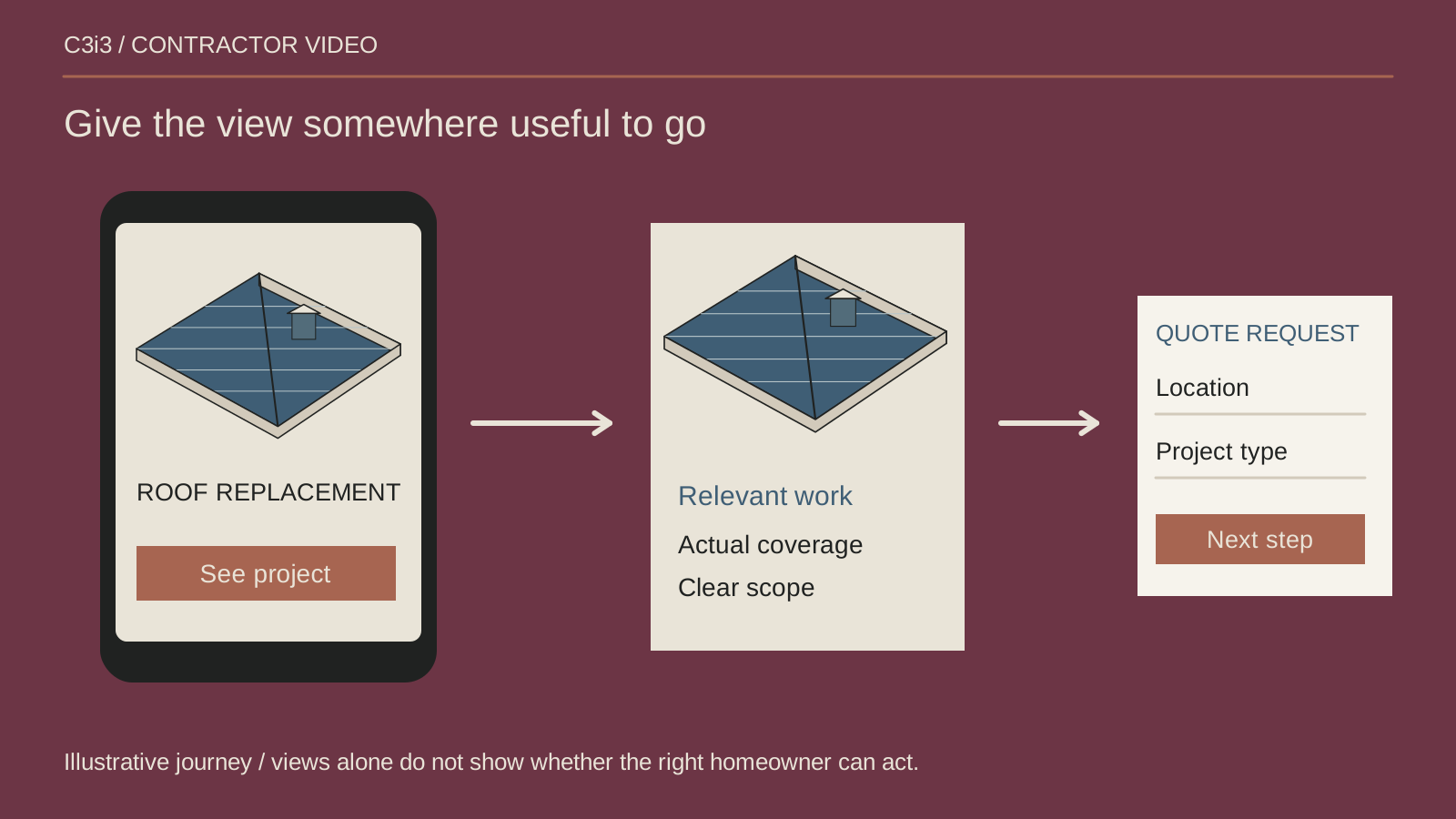
Open with the problem or decision the film addresses. For a roof replacement campaign, that might be understanding what a quotation should include. A long sequence of logos and drone views can delay the reason the homeowner should keep watching.
Use relevant project evidence with permission and explain your role. Avoid using a dramatic image to imply every viewer's roof has the same condition. A marketing film is not a diagnosis of the property being advertised to.
Check the message in the title, spoken script and final frame. If they describe different services or offers, simplify. The viewer should be able to explain what the business is inviting them to do next.
Send the click to a page that answers the next question
Use a destination that continues the roof replacement conversation. Explain assessment, coverage, scope development and the enquiry process. Relevant project stories can support the offer, while a general homepage may require the visitor to begin the search again.
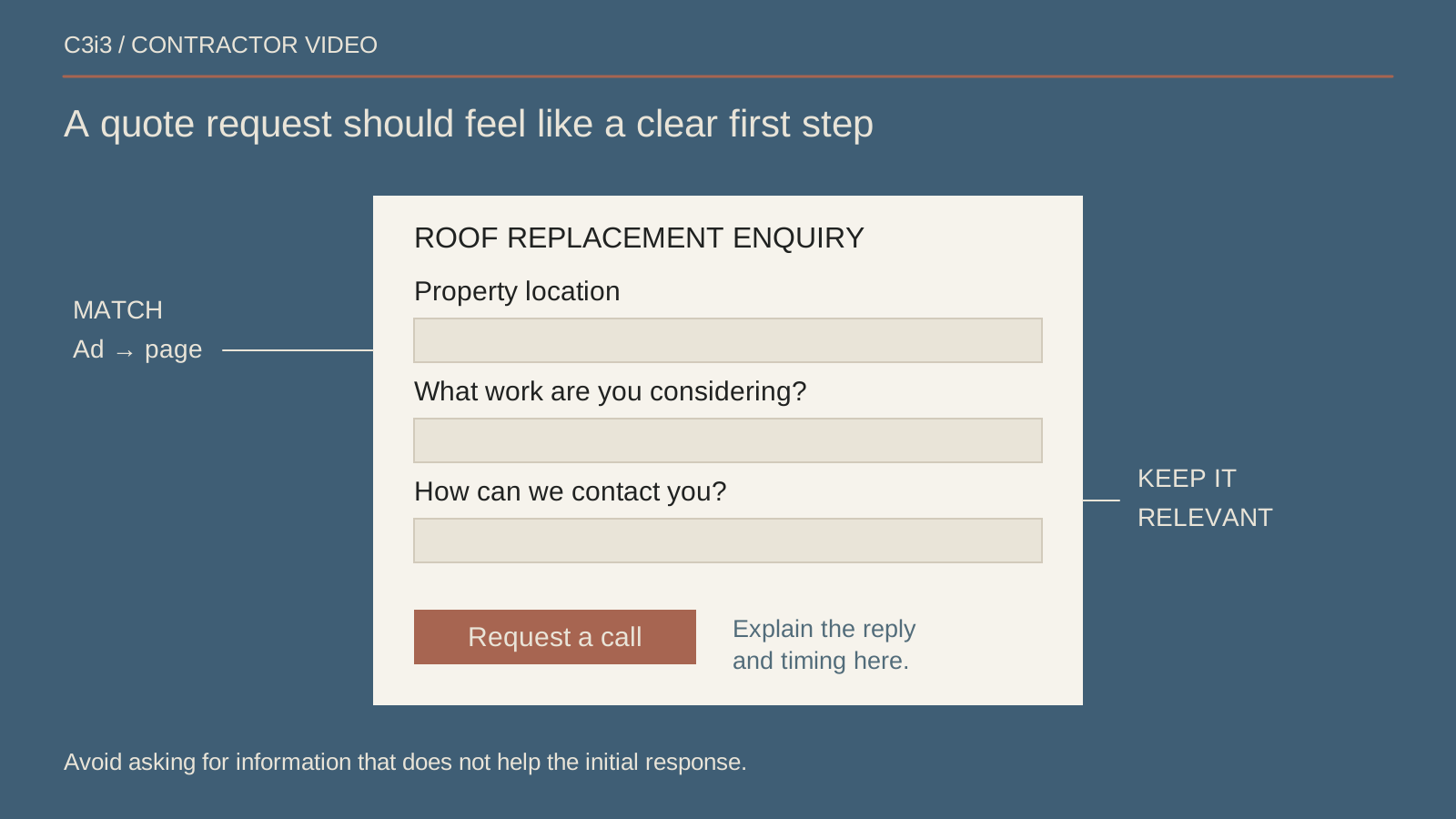
Make the contact route visible without blocking the information. A useful form asks for enough context to route the request and explains what happens after submission. Test it on a phone and confirm message delivery without sending unnecessary test enquiries to production.
The roof replacement quotation page guide examines that destination in more detail. Improving the page may be more useful than re-editing a film whose message is already clear.
Audit conversion measurement before trusting the report
Confirm which events are configured, where they fire and whether they represent the action being reported. A contact-page visit is different from a successful form submission. A click-to-call event does not establish that the office answered the phone.
Check for duplicate events, missing consent behavior where applicable and attribution assumptions. Keep the implementation review tied to the actual analytics setup. Do not claim comprehensive tracking merely because a tag manager container exists on the website.
Compare reported requests with the office's records using appropriate privacy controls. If the figures disagree, investigate the definitions before making campaign decisions. Measurement should help identify the next action, not create a false sense of precision.
Change one supported weak point and review the result
Use the evidence to choose a focused adjustment: audience coverage, opening message, destination or response process. Record what changed and the intended effect. If several elements change at once, interpreting the result becomes harder.
Review qualified replacement requests and their progress, with enough context for seasonality and campaign delivery. Do not declare a winner from a tiny sample. Evaluate the observations against your actual service, coverage and ability to respond.
Connect the findings to the video production pillar. A useful campaign is a coherent customer journey. The film is an important part of that journey, but it is only one part.
Keep this checklist beside you
Questions before the next step
Are video views worthless if they do not immediately produce leads?
No. They can support awareness or understanding, depending on the campaign's purpose. They should not be reported as quote requests or sales. Evaluate the metric against the role you chose for the campaign.
Should I add a stronger sales message?
Only if the evidence shows the next step is unclear. A more aggressive message will not fix irrelevant targeting, a broken form or a service mismatch. Diagnose those issues before changing the tone.

How C3i3 Can Help
C3i3 can review the connection between your video creative, campaign destination and quotation process. We can help clarify the message and identify which part of the customer path needs attention.
Bring the campaign objective, the film, its destination and the enquiry definitions used in reporting. We can separate creative questions from tracking or website issues and agree on a focused next step. The conversation can begin with the existing campaign rather than a commitment to replace everything.