



































In this article
Your roof replacement page gets visitors, but few ask for an estimate. Someone suggests making the button red. Another wants a discount popup. Neither has watched a homeowner try to understand what happens after clicking.
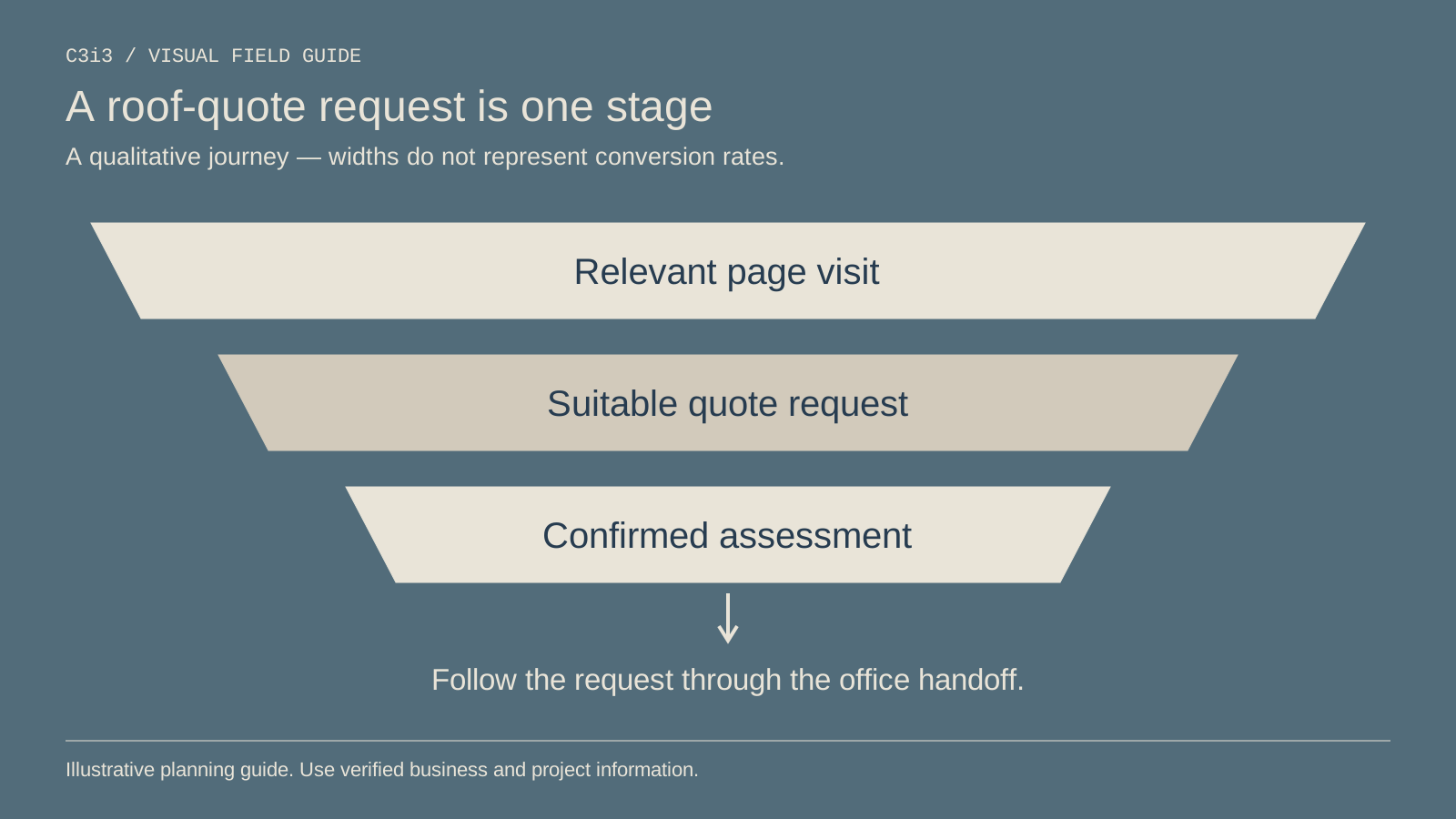
Conversion rate optimization starts with an observed barrier and a testable explanation. For a roofer, the useful outcome is an appropriate assessment request, not simply more form submissions from people your office cannot help.
What should count as a useful quote request?
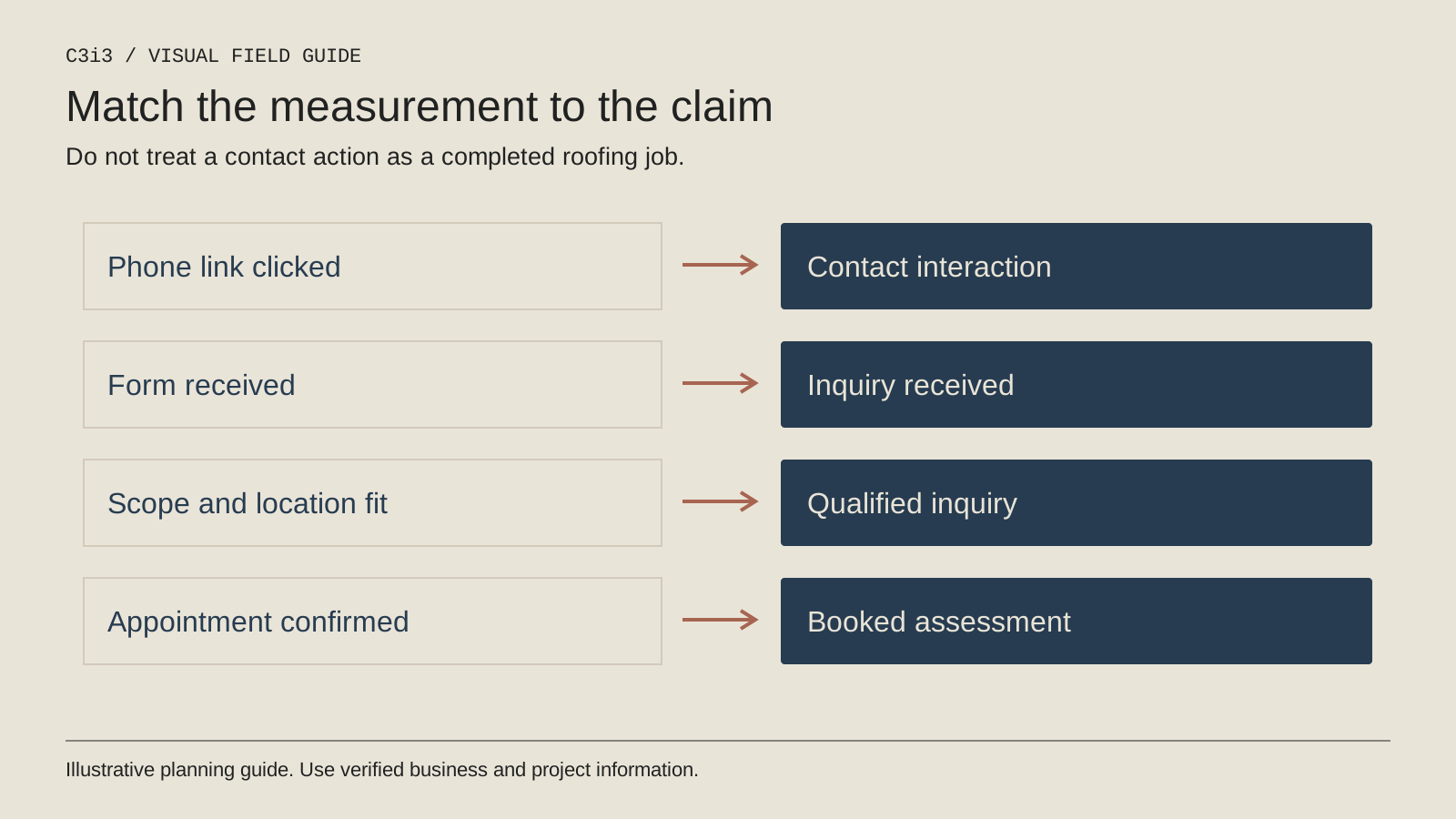
Agree on fit with the people who answer inquiries. A useful request might involve the offered roofing service, a property within coverage and timing your team can discuss. The exact definition belongs to the business, not a dashboard default.
Keep raw submissions, suitable requests, assessments and accepted jobs separate. A shorter form can increase submissions while providing less useful information. That is a result to investigate, not an automatic improvement.
Record reasons for poor fit consistently. Wrong service, wrong area, duplicate messages and an unreachable prospect are different issues. The pattern helps you choose whether the page, targeting or office handoff needs attention.
Which customer questions can block the request?
Ask a person unfamiliar with your business to use the page. Can they tell what roof replacement involves, where you work and how the assessment begins? Observe hesitation rather than telling them where to click.
Review whether the page explains the first appointment and the information the office needs. A customer may avoid a form because “get a quote” sounds like a commitment they are not ready to make. A clearer label can describe an assessment request without pretending it is an instant final price.
Use relevant project evidence and scope explanations. The roofing quote comparison guide shows the kinds of uncertainty buyers face. Your website can help answer those questions before asking for personal contact details.
How do you turn an observation into a hypothesis?
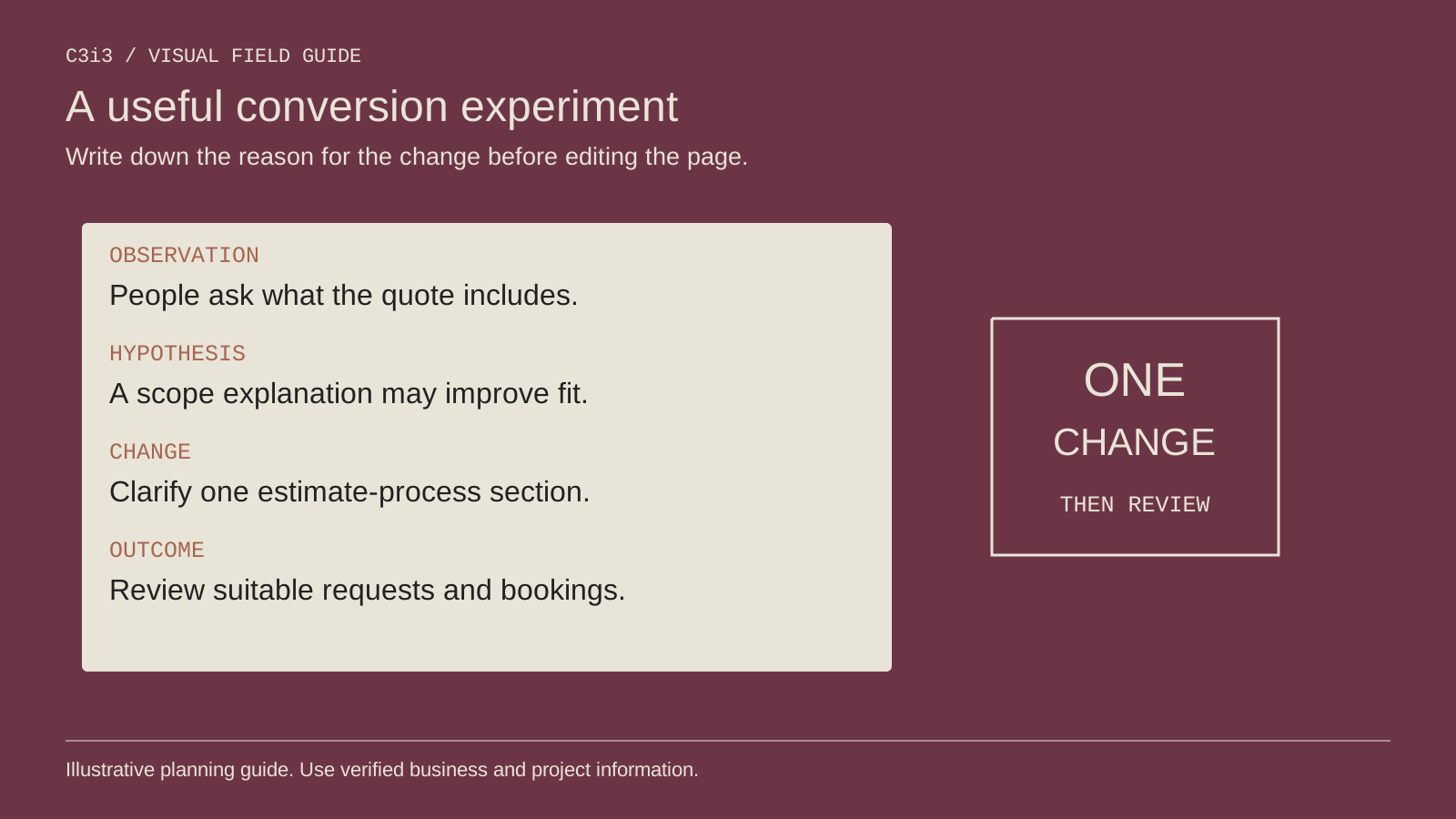
Write what you saw, the proposed explanation and the change you want to test. For example: visitors hesitate because they do not understand the first appointment; a clearer process explanation may help suitable prospects request an assessment.
Keep it a hypothesis until evidence supports it. Do not state that a button, testimonial block or photo caused low conversion merely because someone dislikes it. Several issues can exist at the same time.
Choose a primary outcome and relevant guardrails. You might track suitable requests while checking whether spam or wrong-area inquiries increase. A narrow change is easier to interpret than a release that simultaneously changes the offer, page, form and advertising audience.
Which form changes deserve a closer look?
Inspect unclear labels, unnecessary required fields, technical language and missing feedback. Confirm the form works on a phone and with a keyboard. The W3C forms resources provide useful implementation guidance.
Ask only what is needed for the first conversation, but keep the information the office genuinely uses for routing. Removing the property location might make submission easier while producing more requests outside coverage. Test the whole process, not just the number of fields.
Provide an honest confirmation. The customer should know whether the request was received and what happens next. Do not display a booking promise that the business has not actually confirmed.
When does A/B testing make sense?
An experiment needs enough suitable traffic and a design that can support the decision. Define assignment, outcomes and the analysis approach before launch. The contractor A/B testing guide explains the planning questions.
If traffic is sparse, a test may remain inconclusive. Start by repairing clearly broken behavior and conducting focused usability review rather than waiting for a tiny experiment to pronounce a winner. Do not call a week-before/week-after comparison randomized evidence.
Keep a record of what changed and when. Marketing, pricing, seasonality and office response can also influence requests. A credible report distinguishes a measured result from a promising but uncertain observation.
What should you review after the page changes?
Follow the inquiry beyond the submit button. Did the office receive it, respond appropriately and arrange a suitable assessment? An increase in requests that receive no reply exposes a different problem from a page that fails to attract interest.
Review the agreed outcome and guardrails using the planned method. Do not stop an ordinary fixed-sample test at the first attractive number. Where evidence is incomplete, say so and decide what further observation is worthwhile.
Connect the work with the roofing website scope. A useful optimization cycle leaves a clearer customer path and a record of why the next change is justified, rather than another collection of fashionable conversion tricks.
Keep this checklist beside you
Questions before the next step
Should I optimize for the largest number of submissions?
Define the business outcome first. More unsuitable requests can create work without improving the pipeline. Track quality and later stages separately.
Will changing the button color fix conversion?
Only evidence can establish whether a particular change helps. Begin with a clear customer barrier rather than assuming a visual preference explains the result.

How C3i3 Can Help
C3i3 can help review your roof replacement quote journey, from the service explanation to the office handoff. We can identify unclear decisions, improve page and form usability, and define a focused measurement plan.
Bring the page, current inquiry patterns and the outcomes your team can record. We can help choose whether the next step is a straightforward repair, a usability review or a properly planned experiment. The goal is a clearer route to suitable roofing assessments, not a promise of a particular conversion lift.