



































In this article
One roof replacement quote is several pages long. Another is a single paragraph. The totals are far apart, and you are not sure whether the lower price is a better deal or simply covers less work.
Before choosing a San Jose roofer, turn each proposal into the same set of questions. This guide helps you compare the work and responsibilities in writing. It does not rank companies, estimate the condition of your roof or decide which roof system is appropriate for your property.
1. What exactly is included in the roof replacement price?
Ask the roofer to identify the roof area and system, the preparation included and whether the proposal assumes removal or another approach. Request enough product and scope detail to compare the work. Do not assume that two bids with the same broad material name specify the same installation.
Check the treatment of flashing, penetrations, ventilation and other components relevant to the proposed scope. You are asking for an explanation from the professional, not deciding the technical design through a checklist. Identify what is included, excluded or awaiting assessment.
Ask about hauling, disposal, property protection and cleanup. If scaffolding, equipment or access arrangements are needed, clarify who provides them. A price comparison becomes more useful when these responsibilities are visible.
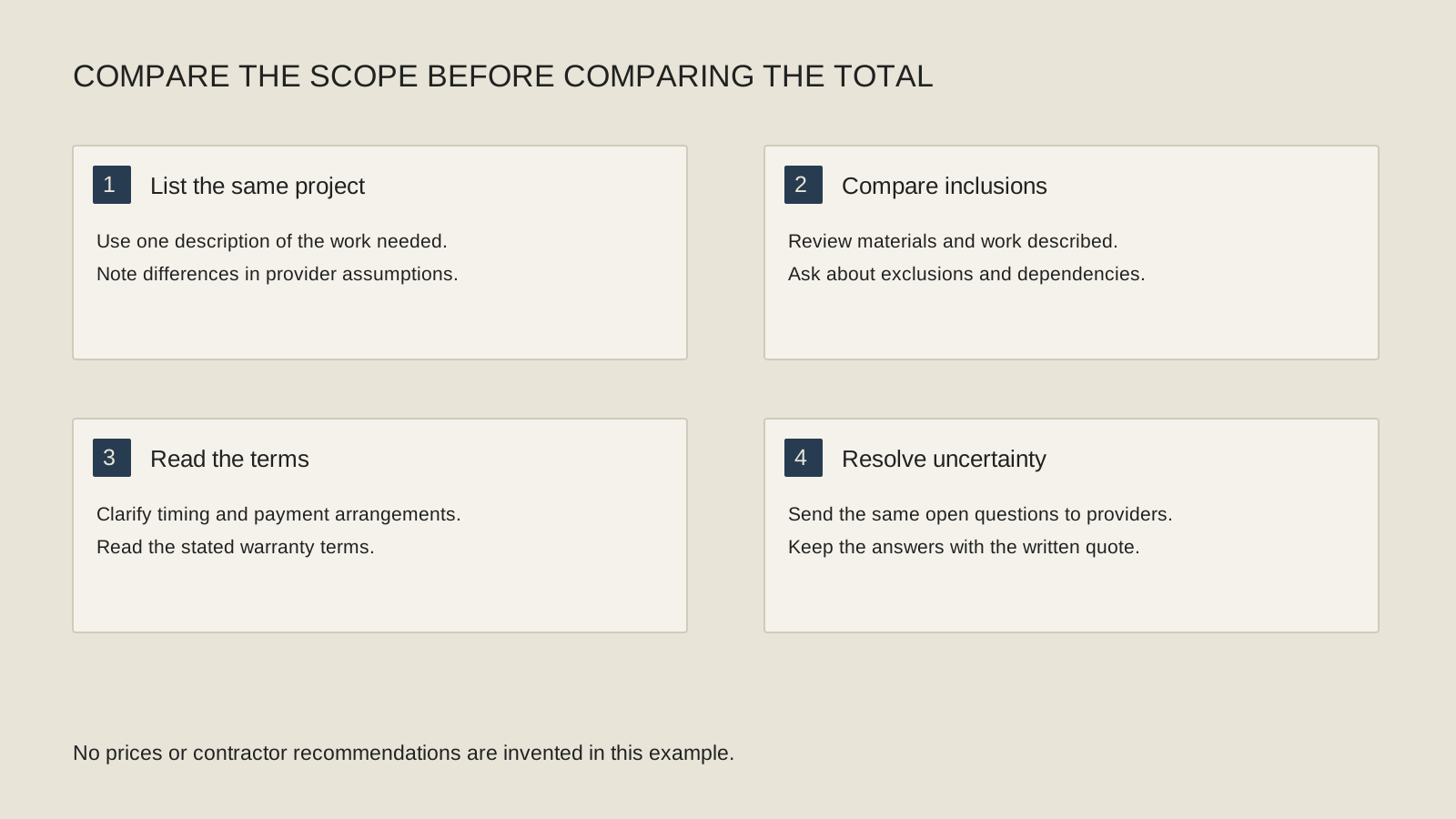
Use the CSLB's bid-comparison guidance as a starting point. Create one row per scope item and one column per bidder. Write “not stated” when information is missing, then ask for a written clarification instead of guessing.
2. How will hidden damage or extra work be priced and approved?
Ask which conditions the quoted price assumes. Roof removal can expose conditions that were not fully visible during an estimate. The important comparison is whether each bidder explains how those findings become a documented decision.
Request the process for photographs, revised scope, pricing and approval. If a proposal uses allowances or unit prices, ask what quantity or condition they apply to. An allowance is not the same as confirmation that all related work is covered.
For a hypothetical comparison, one bidder might include a stated allowance while another prices that work only after removal. Neither number should be silently treated as a complete fixed cost. The worksheet should show the uncertainty so you can discuss it before signing.
The CSLB's contract guidance explains written change orders. Agree on a clear change process and keep the original scope and approved revisions together. Do not let a verbal understanding become the only record of a significant change.
3. Who handles San Jose permits, inspections and completion records?
Ask who determines the permit requirements for the actual project, who applies, which fees are included and who schedules the required inspections. Put those responsibilities in the proposal or contract. Avoid an open-ended “owner to handle permits” line that you do not understand.
San Jose publishes specific reroof project guidance. Confirm the current requirements with the city, especially when the work includes framing, rooftop equipment or conditions beyond a straightforward reroof. Do not rely on another city's rules.
Ask how inspection-related findings or corrections are handled and what records are provided at completion. If solar equipment or other trades are involved, clarify the coordination in writing. A roof proposal may not automatically include every related trade's work.
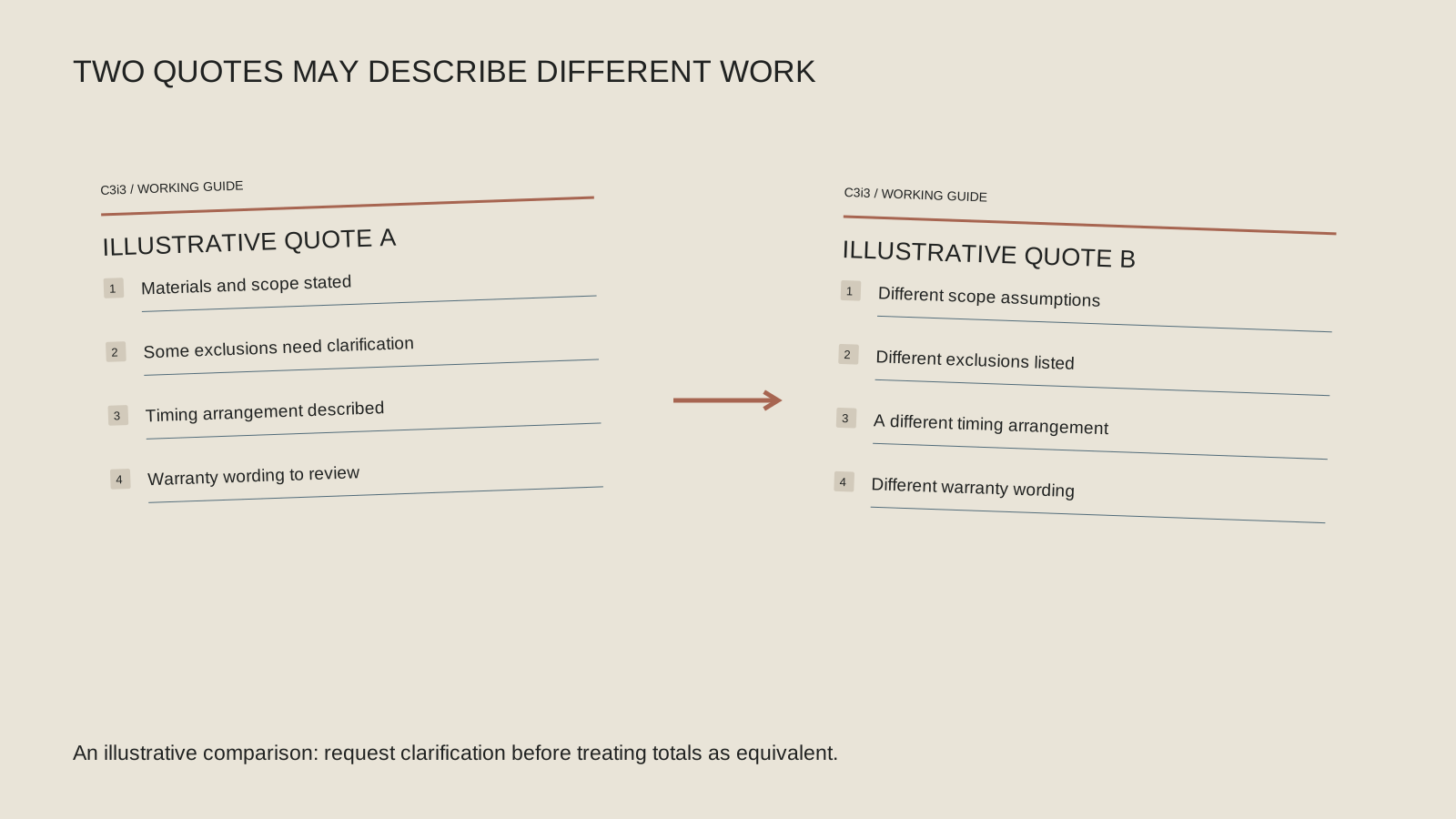
Treat permit questions as part of scope comparison. One total may include administrative work and fees that another excludes. Make the difference visible before deciding which price is lower for equivalent responsibility.
Make the roof quotes comparable
Use one worksheet and keep unknowns visible.
Included
List scope, materials and cleanup.
Conditional
Record allowances and concealed-work pricing.
Assigned
Name permit, inspection and schedule owners.
Documented
Keep payment, warranty and closeout terms.
4. What do the payment stages and schedule actually commit to?
Ask what each payment covers and what event makes it due. A sequence tied to described progress is easier to understand than a set of dates that leaves the work undefined. Review current California consumer requirements before agreeing to payment terms.
Clarify the proposed start arrangements, expected work sequence and how changes are communicated. Weather, discovered conditions or approvals can affect a schedule. Ask who contacts you and how decisions are documented when the plan changes.
Confirm the business identity, license and relevant coverage before committing. Our ten-point roofing hiring checklist covers broader verification questions; use San Jose's own permitting information for the property rather than copying San Francisco details.
Do not let an expiring sales offer substitute for resolving unanswered scope questions. If the proposal includes financing, understand that agreement separately. Keep records of the terms you actually accept, including any written clarifications that influenced your decision.
5. What warranties and documents will I receive after the work?
Separate the contractor's workmanship terms from the manufacturer's product warranty. Ask who handles a claim, what documentation is needed and which exclusions or maintenance conditions apply. The headline number of warranty years does not tell the whole story.
Ask for a closeout list before the project begins. It might include the final scope, approved changes, product information, written warranties and applicable permit or inspection records. Confirm which items your particular project will generate rather than assuming every job has the same paperwork.
Discuss final cleanup and how you raise any remaining concern. Ask whom you contact after payment and how the company records a service request. These are practical questions about responsibility, not a prediction that something will go wrong.
When all five answers are clear, review the totals again. You can now compare stated work, uncertainties, responsibilities and ongoing terms. If important differences remain unexplained, ask for clarification or seek appropriate professional advice before choosing.
A simple quote comparison sheet
| Comparison item | Quote A | Quote B |
|---|---|---|
| Roof system and included scope | Record the answer | Record the answer |
| Removal, disposal and protection | Record the answer | Record the answer |
| Allowances and concealed conditions | Record the answer | Record the answer |
| Permit and inspection responsibilities | Record the answer | Record the answer |
| Payments, warranty and closeout | Record the answer | Record the answer |
Keep this checklist beside you
Questions before the next step
Does the lowest quote usually exclude something?
Not necessarily. Ask every bidder the same scope questions. A price difference can have several explanations, and an omission should be clarified rather than assumed.
Can C3i3 recommend the roofer I should hire?
This article provides comparison questions, not provider recommendations or endorsements. Use current official checks and your project-specific assessments.

How C3i3 Can Help
If you run a roofing business, bring your public quote explanation and customer questions. C3i3 can help make the website journey clearer without making unverified contractor rankings.