



































In this article
Two roofing websites look convincing. Both show attractive project photos, both promise quality and both can arrange an estimate. How do you decide what to check before handing someone responsibility for your roof?
Start with verifiable information and a written description of the work. This guide is a buyer's checklist, not a ranking of roofing companies. It helps you prepare better questions for roof repair or replacement in San Francisco without treating a review score as a substitute for due diligence.
1. Check the business identity and current license
Match the business name on the proposal to the party you would hire. Use the CSLB license lookup to review current status and relevant classifications, rather than relying on a number printed on a truck or website.
Ask who is authorized to discuss and sign the work. A license is a verification step; it is not an endorsement of a specific proposal or a guarantee of workmanship. Save the details you checked with your project records.
2. Ask about projects like your roof
Look for experience relevant to the actual roof system and scope. Repairing a localized problem is a different assignment from removing and replacing a roof. Building access, adjacent property and equipment can also affect planning.
Ask the roofer to explain a comparable project and their role in it. With permission, references can help you ask about communication, cleanup and how unexpected findings were handled. A large photo gallery is more useful when the contractor can explain what it shows.
3. Understand the assessment behind the recommendation
Ask what was observed and why the proposal recommends repair, replacement or further investigation. Request photographs or an explanation you can understand. Do not climb onto the roof yourself to collect evidence for an estimate.
If two recommendations differ substantially, ask each contractor to explain the basis and limitations of the assessment. The purpose is to understand the decision, not to ask an online checklist to diagnose the building. Record unanswered questions before comparing prices.
4. Compare equivalent written scopes
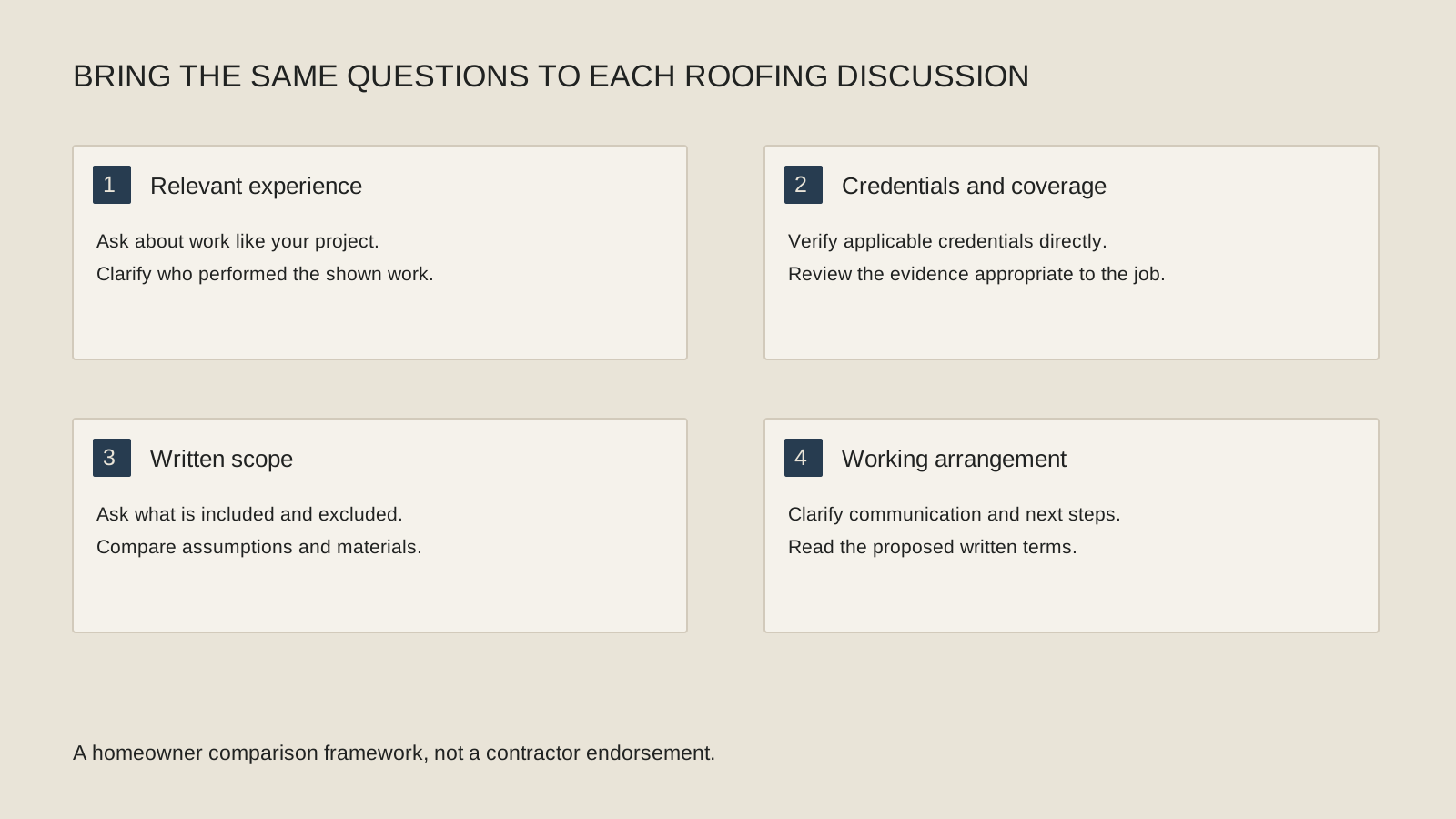
Ask each bidder to describe the roof area, materials, removal or overlay approach, flashing work, disposal and included preparation. Identify allowances and exclusions. A short line reading “new roof” does not tell you whether two prices cover comparable work.
The CSLB recommends comparing written bids on the same scope. Use a simple comparison sheet and mark missing information as unknown. Do not silently assume an omitted item is included.
5. Clarify San Francisco permit and inspection responsibility
Ask who confirms the permit requirements, files the application, pays the fees and arranges inspections for your actual scope. Repairs, sheathing work and replacement can raise different questions. Do not borrow a threshold from another city's website.
San Francisco's DBI portal notice directs new reroofing applications to PermitSF. Confirm the current process with the city and ask what completion documents you will receive. A contractor's verbal assurance should not leave these responsibilities undefined.
A roofing shortlist you can verify
Use the same checks for every company you consider.
Identity
Business, license and relevant experience.
Scope
Equivalent work, exclusions and changes.
Responsibility
Permits, coverage, access and communication.
Closeout
Payment stages, warranties and records.
6. Ask specific insurance questions
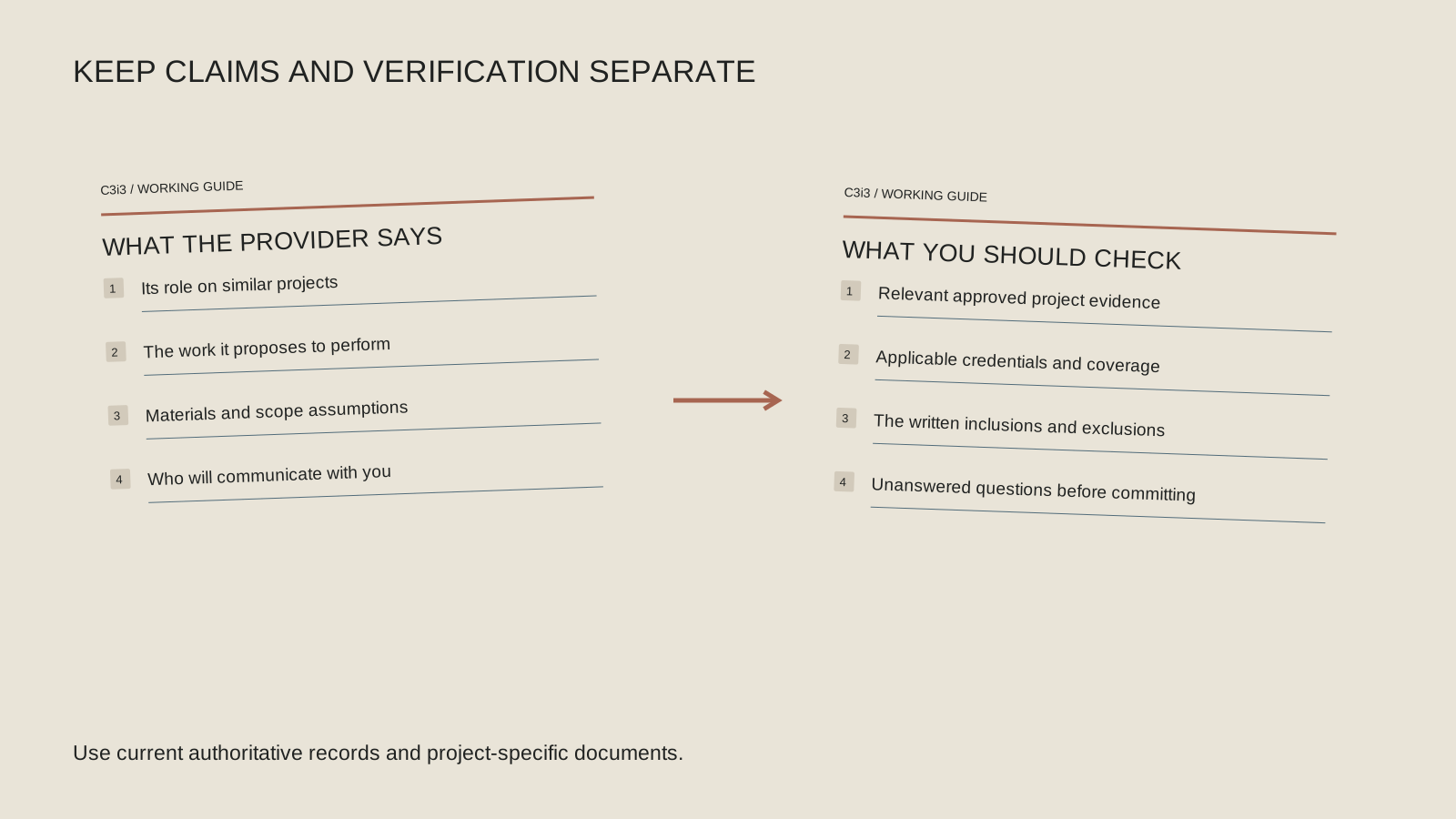
Ask about workers' compensation and liability coverage, the parties covered and how to verify relevant details. Do not treat a license bond, liability insurance and workers' compensation as interchangeable documents.
Use current CSLB consumer guidance when reviewing contractor information, and direct coverage questions to the appropriate insurer or adviser. A generic “fully insured” badge does not explain the actual coverage or the scope of protection.
7. Plan access, protection and cleanup
Discuss where materials and debris will go, how the crew accesses the property and what needs protection. Ask how the contractor coordinates shared access or nearby property where relevant. Do not assume these arrangements are included because the roof itself is described.
Clarify daily cleanup and final debris removal. If there are conditions that could affect work methods or public access, ask who resolves them. Put agreed responsibilities in the scope so the plan is understood before materials arrive.
8. Ask how concealed damage changes the job
A proposal may not establish the condition of every concealed component. Ask how unexpected findings are documented, priced and approved before additional work proceeds. Request the method for any allowances or unit prices you are being asked to accept.
Keep a record of the condition found and the proposed response. The CSLB contract guidance explains written changes. Understand the change process before the project begins, rather than first discussing it during an urgent decision.
9. Read payment and warranty terms separately
Ask what each payment stage corresponds to and who answers a warranty request later. Distinguish a manufacturer's product warranty from the contractor's workmanship terms. Read exclusions and any maintenance or documentation conditions.
Get promised terms in writing and review them before signing. Do not assume the longest advertised warranty covers every possible problem. If a payment request or contract provision is unclear, consult current official guidance or an appropriate adviser before agreeing.
10. Choose a clear communication and closeout process
Identify your main contact, how schedule changes are communicated and what happens when you raise a concern. Ask which records you receive at completion, such as the agreed scope, product information, warranty documents and applicable inspection records.
Keep those records somewhere you can find them after the crew leaves. If a bidder is unwilling to answer reasonable scope questions, pause before committing. A clear explanation now is a useful part of evaluating how the business may communicate during the project.
Keep this checklist beside you
Questions before the next step
Is this a list of the best San Francisco roofers?
No. It is a checklist for evaluating providers. No company is ranked or endorsed, and no paid placement determines the advice.
Should I choose the lowest estimate?
First confirm that the scopes are comparable and the business checks are complete. Price alone does not explain omitted work, exclusions or responsibilities.

How C3i3 Can Help
If you run a roofing business, bring the service page customers use to evaluate your work. C3i3 can help explain scope, project evidence and estimate preparation clearly.