



































In this article
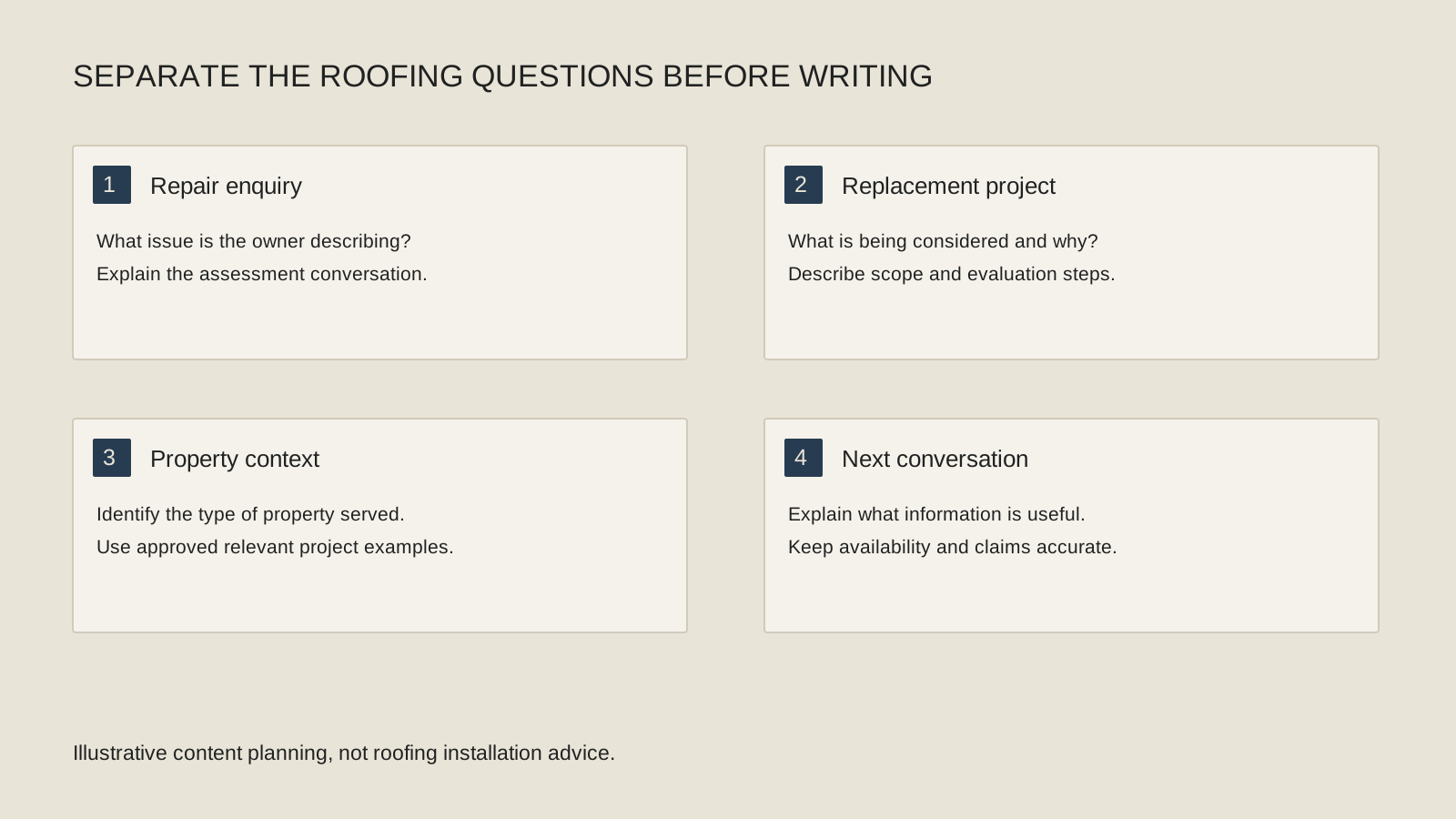
Someone types “roof repair” because water is entering a bedroom. Someone else searches for roof replacement because they are budgeting for work months away. If both land on a page that only says “your trusted roofing experts,” neither receives much help.
Roofing SEO starts with that difference. The question is not simply whether your East Bay company appears. It is whether the page matches the situation, explains your process and gives the customer a sensible next step.
Should roof repair and roof replacement share one page?
Give each a clear route when the services involve meaningfully different questions. A repair visitor may need to know whether you investigate leaks, what to do when booking and whether temporary protection is something you offer. A replacement visitor needs to understand assessment, materials, scope and project coordination.
Do not diagnose a roof from a search phrase. Explain that an inspection determines whether a repair is suitable and what replacement work may involve. Avoid promising that every leak can be fixed the same day or that replacement is always necessary.
A useful roof-repair page can link to replacement guidance when broader work may be considered. The replacement page can explain how assessment informs the recommendation. This creates a helpful path without making two pages compete to answer exactly the same question.
What makes roofing project proof useful?
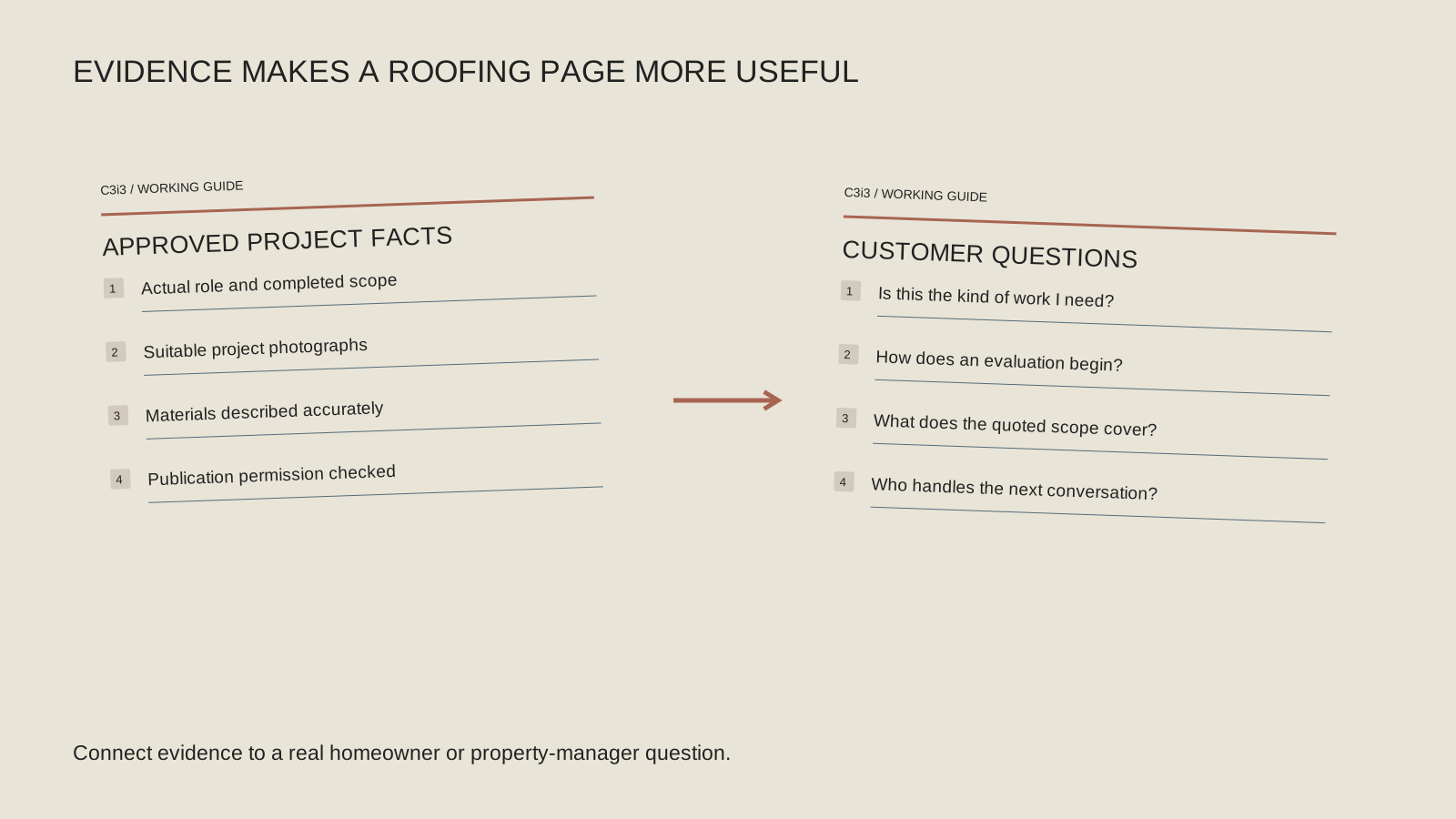
Choose a completed project that resembles the work you want. With permission, show the roof type, the problem that brought the owner to you, the assessment and the agreed scope. Explain what the photographs actually show rather than adding a gallery with no context.
A roof replacement example might distinguish tear-off, substrate findings, flashing work and final cleanup. Only describe tasks your team actually performed. Do not imply an image proves a warranty, structural condition or result that was never documented.
Give people a way to recognize relevant experience before they call. Short explanatory video can help when it shows the process accurately, has captions and is supported by readable text. Our project-story guide offers a practical way to turn existing job records into useful website evidence.
How should an East Bay roofer describe its service area?
Start with real booking boundaries. Your office knows which locations work for small repairs, which make sense for larger replacements and where travel or crew scheduling creates limits. Make that information understandable instead of listing every nearby city in tiny footer text.
Do not create invented offices or addresses. Keep your Business Profile aligned with Google's service-area requirements. Selecting a service area does not establish an entitlement to appear in every local result inside it.
If a location deserves its own page, use actual work examples and useful logistical information. A page that changes “Oakland” to “Berkeley” while repeating the same paragraphs adds little for the reader. Check current query evidence before deciding which city-and-service combinations deserve investment.
Two roofing visitors, two useful paths
Match the page and handoff to the customer’s situation.
Repair need
Explain assessment, availability and the contact route.
Replacement planning
Explain roof-system scope and estimate preparation.
Relevant proof
Use documented projects with permission.
Job outcome
Track fit, assessment and accepted scope.
Which questions belong above the quote button?
Tell visitors what happens after they contact you. Is the first step a conversation, an on-site assessment or a document review? What information helps the office route the request? Can the customer share photographs from a safe location without being asked to climb onto a roof?
For a planned replacement, useful fields might include the property location, building type, known roof material and preferred timeframe. A repair inquiry needs a clear way to describe the immediate problem and reach the office. Keep the first form short enough to finish on a phone.
Separate commercial and residential work where the process differs. Explain whether you work with owners, property managers or general contractors. A helpful inquiry form filters by fit without making a customer understand roofing terminology before they can ask for help.
How do you know whether the SEO is producing better leads?
Tag inquiries by repair or replacement, location, property type, qualification and booking outcome. Review missed calls and requests outside coverage. If search clicks rise but appointments do not, examine the page promise and response process before adding more keywords.
For an illustrative comparison, ten replacement inquiries producing three suitable assessments may be more valuable than 25 calls that mostly concern work you decline. That is a decision example, not an industry conversion rate. Your margins and capacity determine what a useful lead looks like.
Use Search Console to review page and query activity. Compare equivalent periods and remember that not every query is shown. Evaluate the complete route from search to job, rather than expecting one dashboard to explain everything.
What should you improve before expanding the campaign?
Ask someone unfamiliar with your company to open the repair page on a phone. Can they tell where you work, what you assess and how to contact you? Repeat the test on the replacement page. Fix the confusing step you can observe.
Then make the next piece of content answer a real question from recent estimates: what a replacement quote includes, how scope changes are documented or how repair and replacement assessments differ. Link it to the relevant service page and the broader contractor local SEO plan.
Homeowners can use our roofing hiring checklist to understand the kinds of information worth checking. A contractor's website should make those checks easier. That is a stronger editorial goal than declaring yourself “the best” without an explained basis.
Keep this checklist beside you
Questions before the next step
Can roofing SEO replace paid leads immediately?
No. Organic discovery takes work and its results are uncertain. Compare sources using qualified inquiries and job outcomes before changing your entire acquisition budget.
Should roof-system names appear on the website?
Yes, when they describe work you actually perform and help customers understand your experience. Explain the terms instead of repeating them as a keyword list.

How C3i3 Can Help
Bring your service pages and approved project evidence. C3i3 can help clarify job fit, local coverage and the assessment-request journey.