



































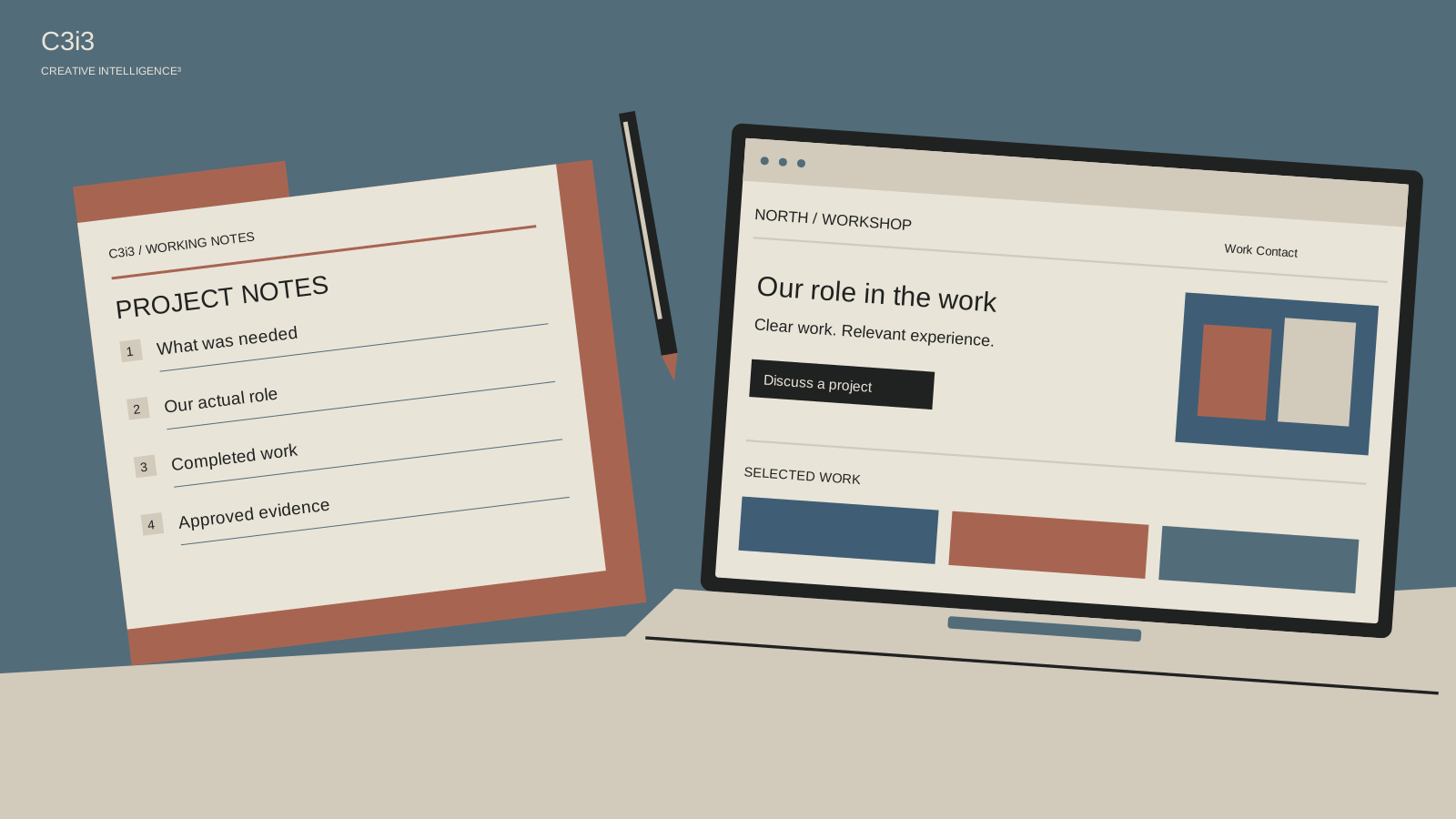
You open an old proposal and think, “This explains our work better than our website does.” The problem is familiar, the scope is clear and the recommendation makes sense. Then you close the file and leave it in a folder.
Meanwhile, the website has a photograph, a project name and almost no explanation. A buyer can see that you were involved in something, but not what you contributed or why it matters.
You may already have the ingredients for a useful project story. The task is to extract and verify them carefully, rather than publish the proposal itself.
Choose a story your next customer would recognize
Start with the question a prospective customer needs answered. Can you handle a project with this constraint? Do you understand this type of application? What happens when a requirement is still being defined? Choose a completed assignment that helps answer one of those questions.
The biggest project is not always the best starting point. A smaller, well-documented assignment can explain your role more clearly than a famous project whose details you cannot discuss. Look for a recognizable situation and enough approved information to describe the work honestly.
For a contractor, it could be a project with a coordination challenge. For a manufacturer, it could be an approved application explanation with current supporting information. For a professional-services firm, it might be a defined deliverable that helped a client make a decision. Keep the intended reader visible while choosing the story.
Separate what was proposed from what actually happened
A proposal describes intended work. It is not evidence that all of that work was completed or that the anticipated benefits occurred. Compare it with approved project records and speak with the person who knows the final scope.
Build a small fact sheet: original situation, your role, completed work, relevant evidence and any outcome that can be supported. Mark uncertain details instead of smoothing them into a confident paragraph. A team member should be able to trace important statements back to a reliable source.
If you lack a measured result, describe the completed work and why it addressed the stated need. “Created a searchable product-document library” can be informative without a claim that it increased sales. Keep estimates, proposed targets and documented results distinct. The strongest story is often the one that helps the reader understand the assignment, rather than the one with the most dramatic number.
Leave private material in the private document
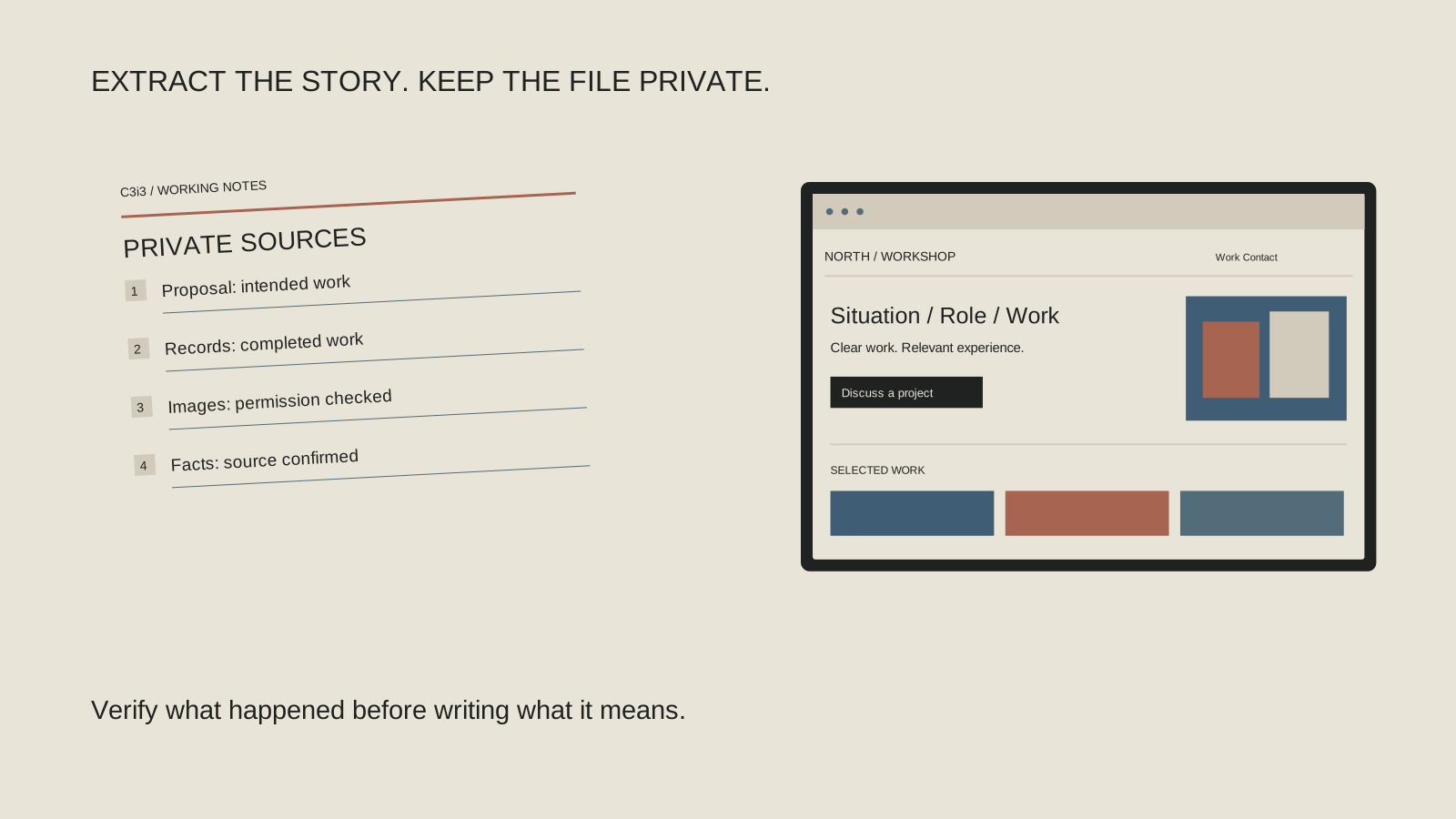
Do not upload the original proposal and hope that removing a name solves every issue. Pricing, contact details, drawings, internal processes, product information and third-party images may need separate handling. The person approving public use should see the actual material you intend to publish.
Check who can authorize the client name, photographs, quotations and project details. If an image includes a logo or a document contains someone else’s work, confirm the appropriate permission. Crop or redact only when that creates a genuinely suitable public asset; it is not a substitute for resolving whether the material may be shared.
When you cannot publish a real assignment, consider a clearly labeled illustrative example that teaches the process. Do not disguise it as a client case study. An honest explanation without a famous name is more useful than a story whose apparent proof cannot be supported.
Build the page around four things
Give the reader a simple sequence: the situation, your role, the work and the supported outcome. The visual example below shows how those parts differ. Each earns its place by answering a question a buyer might ask.
Write the first draft in plain language. “The team needed one place to find current installation documents” is easier to understand than a paragraph about transforming the information ecosystem. Add the technical detail needed to make the explanation meaningful, and let the appropriate expert review that detail.
Choose visuals that reveal the work: an approved detail, a before-and-after interface, a labeled deliverable or a process illustration. Explain what the reader is seeing. If a rendering represents a concept, label it as a concept. A photograph of a completed building does not, by itself, establish your company’s scope on that building.
A project story, built from verified parts
Illustrative website example for a business that reorganized a product-document library. Each statement would need its own approved source.
Situation
“Customers had difficulty finding the right product documents.” Confirm that this describes the actual problem rather than assuming it from the proposal.
Our role
“We organized and designed the document library.” State your actual contribution and distinguish it from the client’s or another supplier’s work.
Completed work
“The library grouped current documents by product family.” Verify the final implementation; a proposed feature may never have been delivered.
Supported outcome
“Buyers can browse documents by product family.” Describe the demonstrated result. Add a sales or time-saving figure only when reliable evidence supports it.
Finish with the question this story helps answer
Ask a colleague to read the draft and explain what the company did. If they can only repeat that the client was pleased, add the missing account of the work. If the story feels technical but its relevance is unclear, return to the customer question you selected at the start.
Have the responsible reviewers approve the exact wording, images and captions. The FTC’s advertising guidance explains the general expectation that advertising claims have a reasonable basis. Keep your important public claims grounded in evidence, and get appropriate advice when specialized claims require it.
End with a relevant next step. Link to the service or product family that matches the story and explain what information would help begin a conversation. Resist adding every service the company offers. A focused project story should help someone recognize a relevant capability and decide what to explore next.
A short checklist to keep beside you
Make one useful change first
Start with one story. Put the approved source material and draft together, then ask whether the page makes your contribution easier to understand. C3i3’s writing and design services can help shape that material into a readable, visual explanation. To see where the story belongs in the wider customer journey, use our website customer-path review. Your existing work should help introduce the work you want next.