



































In this article
Version A receives three bathroom remodeling inquiries. Version B receives five. Someone declares a winner and wants the new layout rolled out across the website. The problem is that eight inquiries may tell you very little about what caused the difference.
A/B testing can support a design decision when the experiment is planned properly. It can also produce false confidence when traffic is limited, the audience changes or the team stops as soon as a favorable number appears.
What should the bathroom remodeling test try to learn?
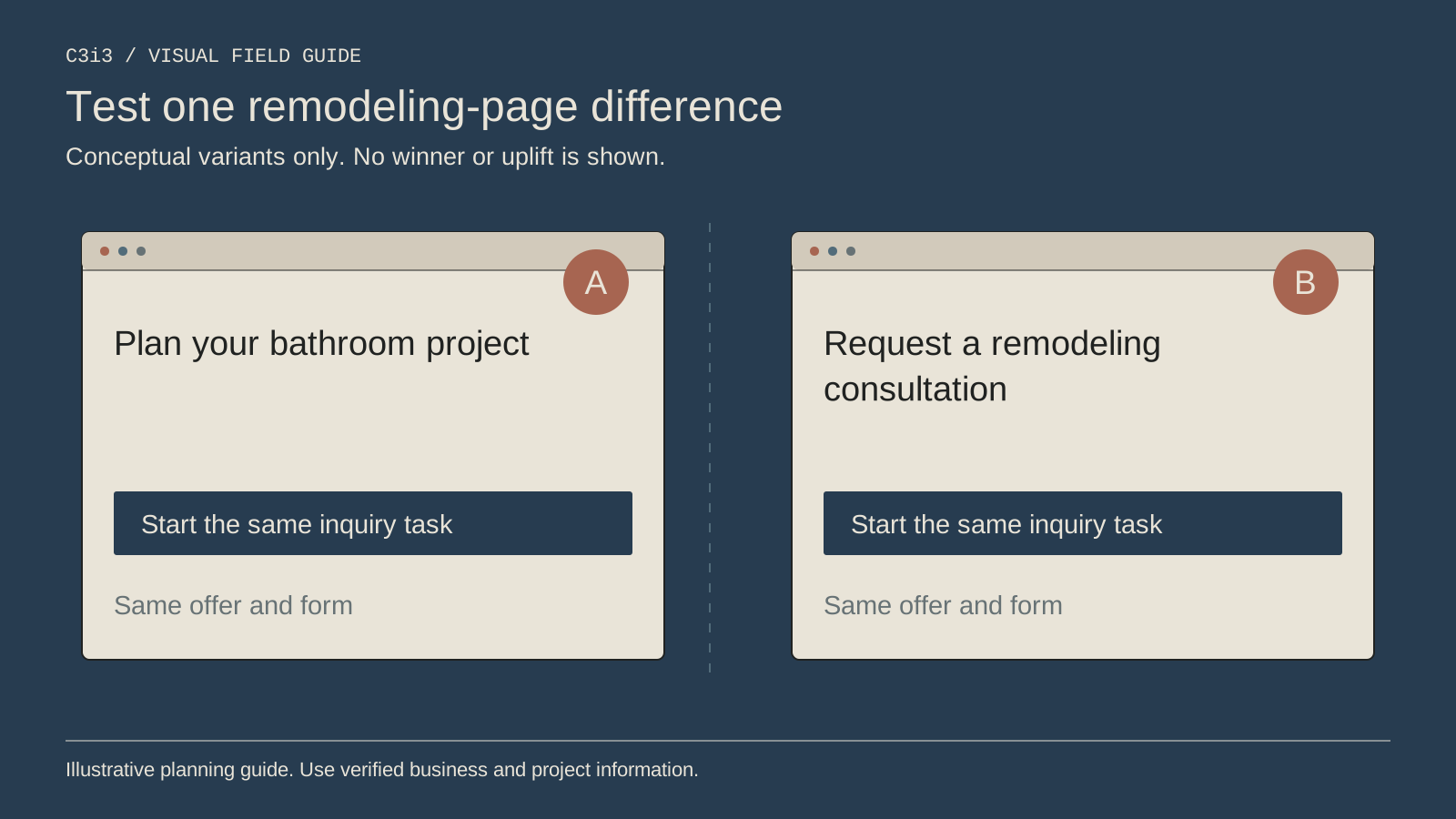
Start with one business question. You might want to learn whether a clearer explanation of the initial consultation helps appropriate homeowners request a conversation. That is more useful than testing two unrelated redesigns without knowing which difference matters.
Write the observation behind the hypothesis. Perhaps customers repeatedly ask whether the company offers design support, or hesitate because the first appointment is unclear. Keep the proposed explanation provisional until it has evidence.
Do not bundle a new price, new audience, different form and complete visual redesign into one casual test. Even if the result changes, it may be difficult to identify what the business learned or which part should be maintained.
Which outcome should you choose?
Define the primary outcome before launch. A suitable consultation request may matter more than a button click, but it requires a consistent qualification process. Agree with the office on how suitability is recorded and how duplicate or spam requests are handled.
Choose guardrails that protect the customer and business, such as failed submissions or poor-fit requests. An apparent increase in the primary measure should not conceal a broken contact path or a sharp decline in inquiry quality.
Keep later stages visible without pretending every small experiment can measure revenue reliably. A booked conversation, accepted proposal and completed remodel are distinct outcomes with different timing and data requirements.
How should visitors be assigned to the versions?
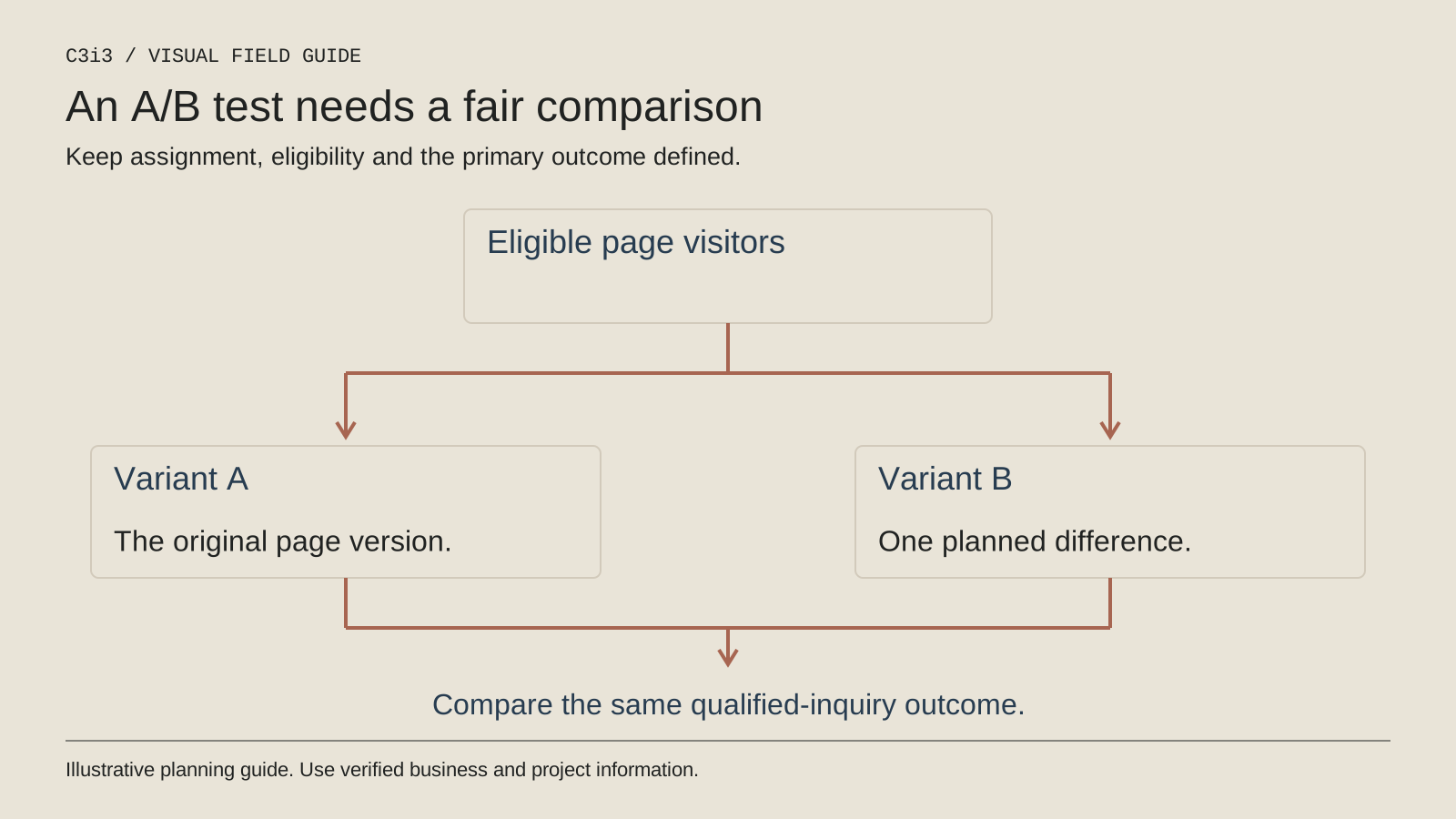
Use an experiment setup appropriate to the question, with a defined assignment unit and consistent exposure. A developer or analyst should be able to explain who can enter, how assignment works and how returning visitors are handled.
Compare variants under the same planned conditions. Sending one advertising audience to A and a different organic audience to B can confound the result. Showing A one week and B the next is not the same as a randomized concurrent experiment.
The Microsoft research guidance on pre-experiment planning is a useful reference. Keep eligibility, instrumentation and ownership in the test brief so the implementation can be checked before interpreting outcomes.
How much traffic and time does the test need?
There is no universal two-week answer. Sample needs depend on the baseline outcome, the effect you want to detect, the analysis method and acceptable uncertainty. Have the calculation and assumptions reviewed rather than borrowing a sample target from an unrelated website.
Low-volume contractor sites may not support a useful experiment on a rare outcome within a practical period. That does not mean you should invent certainty from a handful of inquiries. Consider usability research and clearly necessary repairs first.
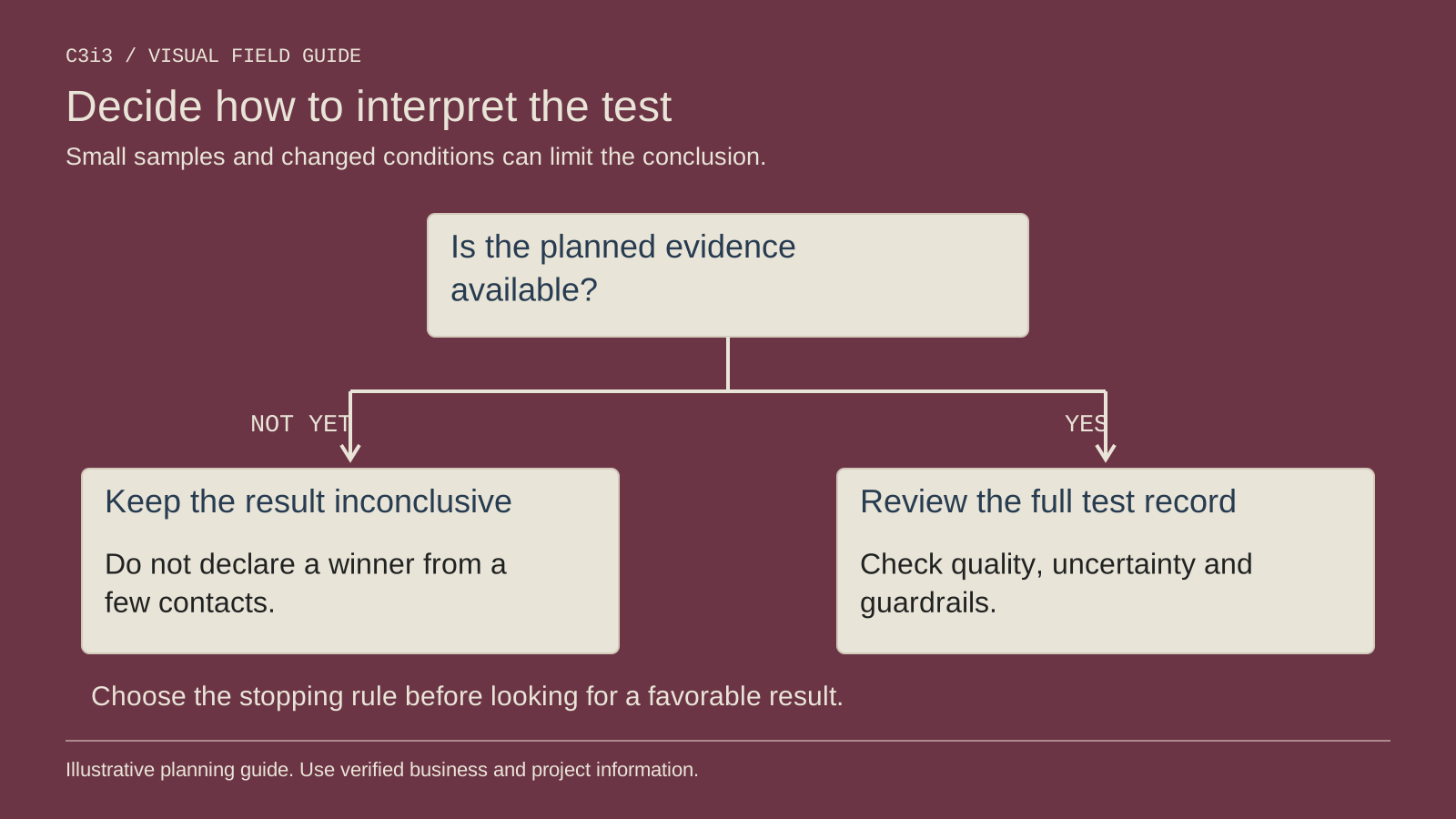
Predefine the stopping and analysis approach. The Spotify experimentation methodology discusses distinctions in experiment analysis. Ordinary fixed-horizon testing should not be repeatedly checked and stopped at the first apparently significant result.
What should you verify while the experiment runs?
Check that both versions function, assignments are recorded as intended and the measurement matches the brief. Investigate unexpected audience imbalance, missing events or a broken form. Do not continue exposing customers to a harmful experience merely to preserve an experiment schedule.
Keep a log of changes outside the test, including campaign shifts, promotions and office availability. These can affect interpretation. Avoid editing the variants midway without recording how that changes the question being tested.
Operational monitoring and declaring a statistical winner are different activities. Make sure the team understands which checks protect the experience and which decisions require the planned analysis.
What if the result is inconclusive?
Say that the test did not provide enough evidence for the planned decision. Do not translate “no clear result” into proof that the versions are identical, or pick the larger raw number and call it a validated lift.
Review whether the experiment addressed a meaningful question, whether implementation was sound and whether further sampling is worthwhile. Some findings may still suggest a usability issue to investigate without establishing a causal conversion improvement.
Our conversion review guide helps separate observations from hypotheses. Connect the next step to the website planning process: repair a confirmed barrier, refine the question or stop an experiment that cannot justify its cost.
Keep this checklist beside you
Questions before the next step
Is five inquiries versus three proof that a page is better?
No. The design, sample and uncertainty matter. Raw counts alone do not establish a reliable causal improvement.
What if our remodeling page has very little traffic?
A formal experiment may be impractical or inconclusive. Start with task observation, customer questions and confirmed usability repairs rather than forcing a winner.

How C3i3 Can Help
C3i3 can help your remodeling business decide whether a page experiment is the right next step. We can review the customer barrier, clarify the consultation path and scope the design and measurement work with appropriate analytical review.
Bring the page, available traffic information and the questions your office hears. We can help distinguish a clear usability repair from a hypothesis that needs testing. The objective is a decision your business can defend with evidence, including an honest account of when the available data cannot support a winner.