



































In this article
A customer clicks your emergency plumbing ad and lands on a homepage filled with services, company news and a slideshow. They still cannot tell whether someone can handle the request, whether you serve the property or which number they should use.
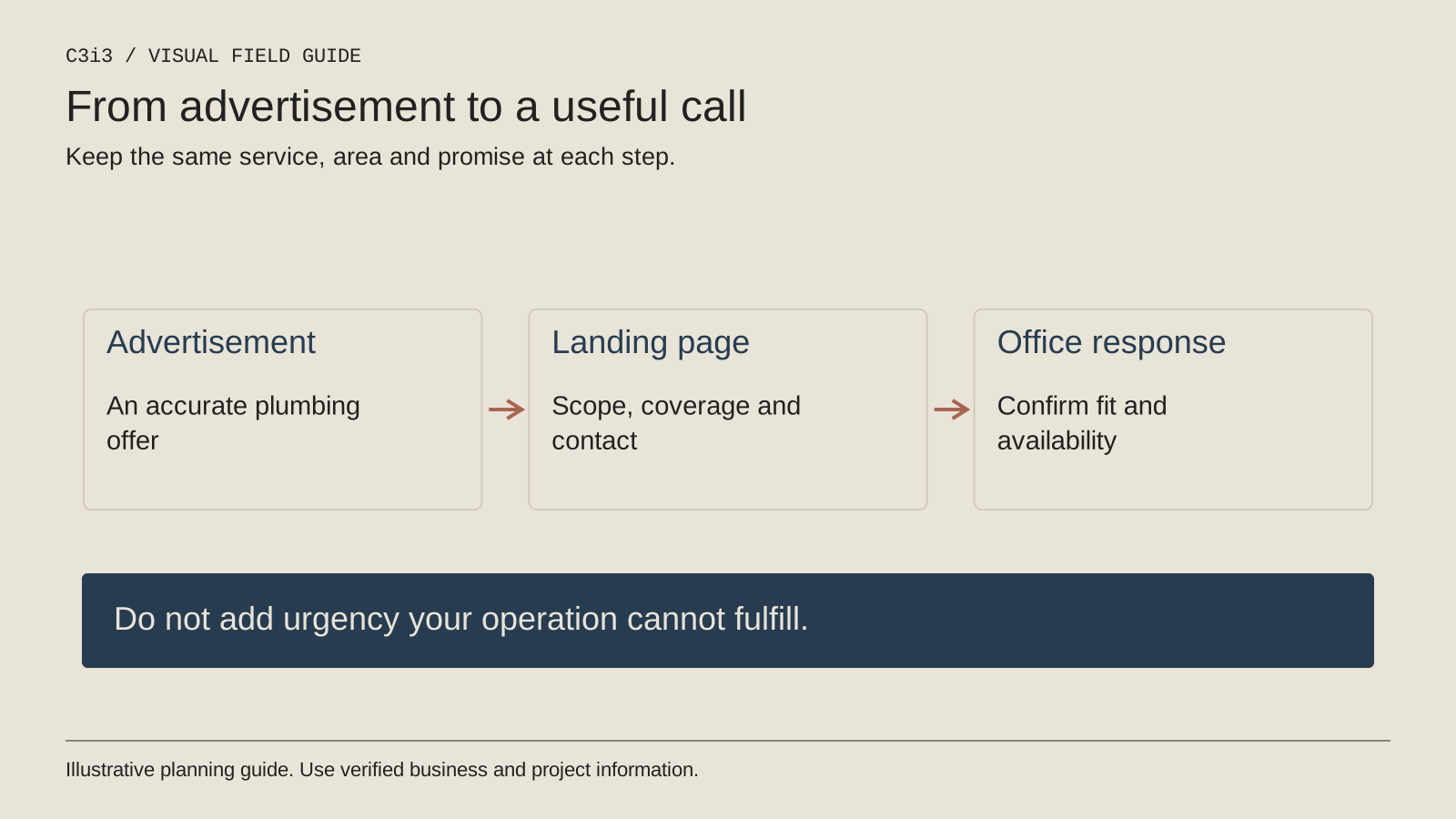
A landing page should continue the promise that earned the click. For an urgent plumbing inquiry, clarity and response ownership matter more than adding every possible reason to admire the business.
What must match between the ad and landing page?
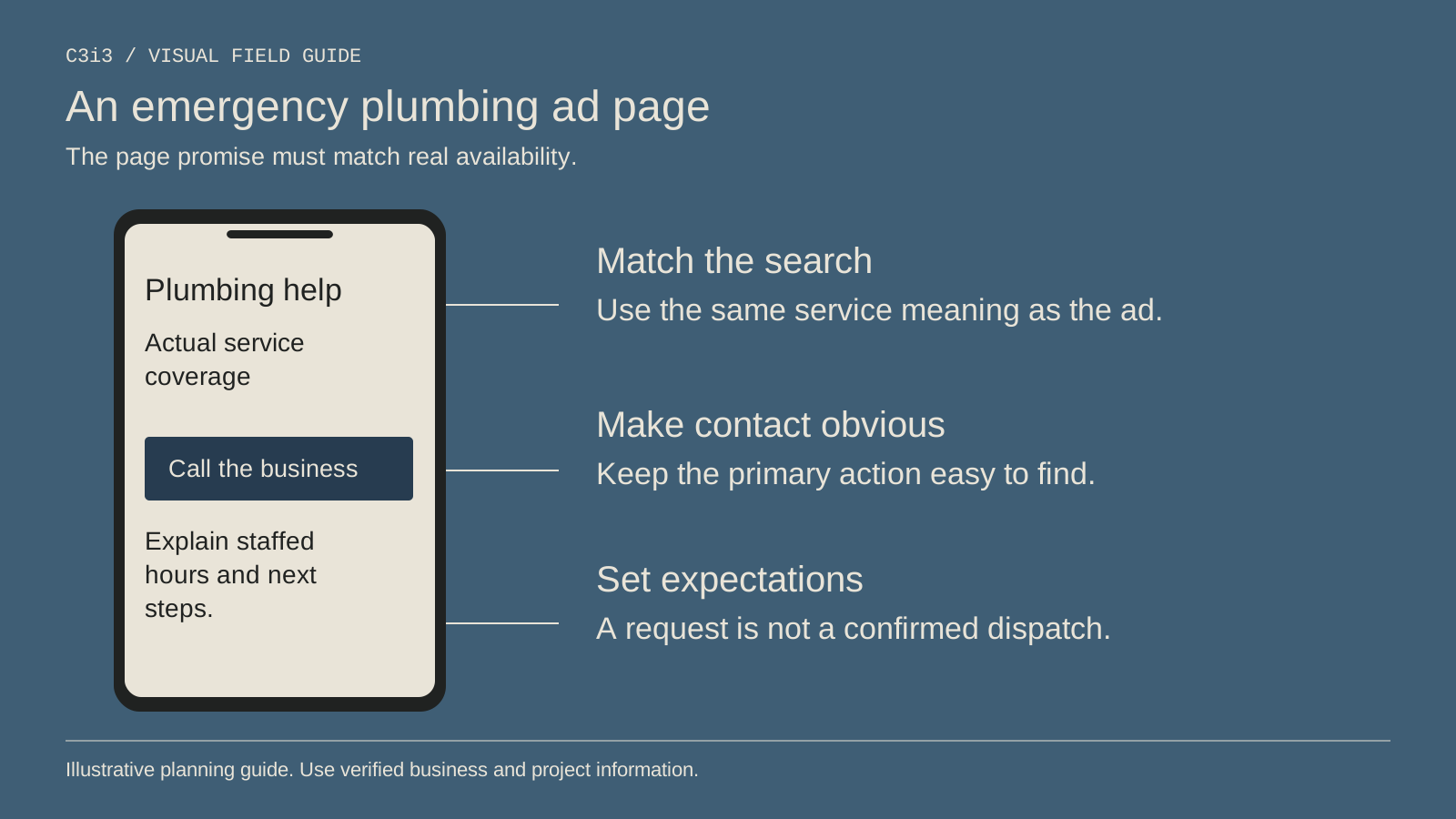
Keep the service, location and availability promise consistent. If the ad promotes emergency plumbing, do not make the visitor search through unrelated services to understand whether that offer applies. Review the wording with the staff who will handle inquiries.
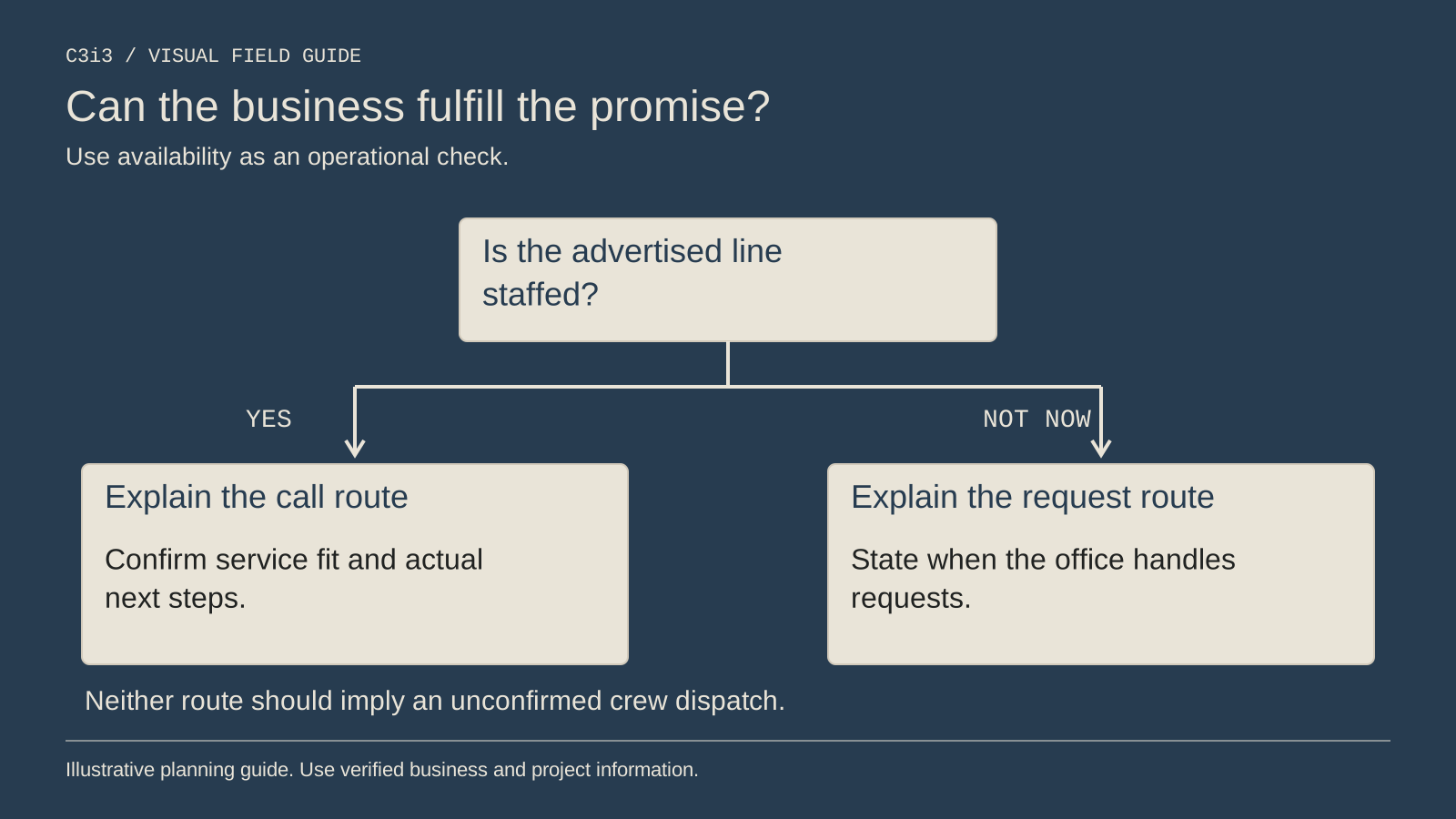
Do not imply that a page visit or form submission confirms dispatch. Explain how availability is checked and what the customer should expect next. A strong headline cannot compensate for an office process that does not support the advertised service.
Use a clear page title and readable service explanation. Keep the scope focused instead of combining several trades or unrelated offers into one campaign destination.
What belongs near the first call button?
Show the actual business identity, service coverage and the most appropriate contact route. Explain when the route is staffed and how after-hours requests are handled, if that is part of the operation. Only publish promises the business can fulfill.
Make the phone link usable on mobile and keep alternative contact options understandable. Do not cover the page with repeated popups that block essential information. A visitor should not have to close several marketing prompts to find the number.
Keep the button label honest. “Call to discuss availability” can be clearer than “Book now” when no appointment is confirmed automatically. The language should match the process, not merely sound more urgent.
How much explanation does an urgent-service page need?
Include enough to establish the type of request, coverage, assessment process and limitations. Use short sections so someone can scan the page. Avoid a long technical tutorial when the useful next action is an appropriate conversation with the business.
Show relevant evidence and accurate credentials without overloading the page with unrelated badges. Explain a real project only with permission and appropriate privacy. A photograph is supporting context, not a guarantee of the same result at another property.
Keep any safety-related situation outside unqualified marketing diagnosis. The landing page should not tell a visitor that a potentially hazardous condition is harmless or that waiting for a marketing reply is an emergency response.
What San Francisco context is useful?
Use information your operation can substantiate: actual service boundaries, building-access coordination and how the office confirms a request. Do not invent a local office or a universal arrival time simply because the ad targets San Francisco.
If property managers and homeowners follow different access processes, explain the necessary first contact. Keep sensitive access information for an appropriate later exchange rather than asking for entry codes in the initial advertising form.
Local detail should help the customer complete the task. A paragraph repeating nearby neighborhood names adds little if it leaves coverage and response expectations unresolved. Our local SEO framework explains the same discipline for organic pages.
How should you measure calls and forms?
Separate the initial interaction from the business outcome. A phone-link click is not proof of an answered call. A submitted form is not a booked visit. Google's call conversion documentation describes different tracking approaches and their limits.
Ask the office to record service fit, coverage and the next action consistently. Do not send sensitive customer descriptions into analytics merely to make attribution feel more detailed. Define the data and privacy requirements before implementation.
Review advertising cost alongside qualified inquiries and actual bookings. If the page attracts appropriate requests that go unanswered, the first repair may be the response handoff rather than another headline test.
What should be tested before spending more?
Open the landing page on a phone, follow the call link and submit a clearly labeled internal test through the form. Confirm the route, receipt and acknowledgment. Test form errors and keyboard use as well as the successful path.
Review whether any banner, chat widget or consent interface blocks the contact action. Check the page's loading experience and the relationship between the ad promise and visible content. Keep a record of the conditions tested.
Use the contractor website planning guide to define ownership and acceptance checks. A better landing page is a working customer path, not just a new screen added to an advertising account.
Keep this checklist beside you
Questions before the next step
Should I promise a fixed arrival time to increase calls?
Only make a promise the business can substantiate and fulfill. Explain how availability is confirmed rather than inventing a response guarantee.
Does every landing-page form count as a booking?
No. Record requests, qualification and confirmed appointments separately. The acknowledgment should match the stage actually completed.

How C3i3 Can Help
C3i3 can help design a focused plumbing landing page that connects your advertising promise to a clear customer action. We can review page structure, mobile usability, inquiry handling and measurement requirements.
Bring the ad, landing page and actual office response process. We can help identify where the journey becomes confusing and define practical improvements before more traffic is purchased. The goal is an honest, usable route to suitable plumbing inquiries, supported by a process your team can deliver.