



































In this article
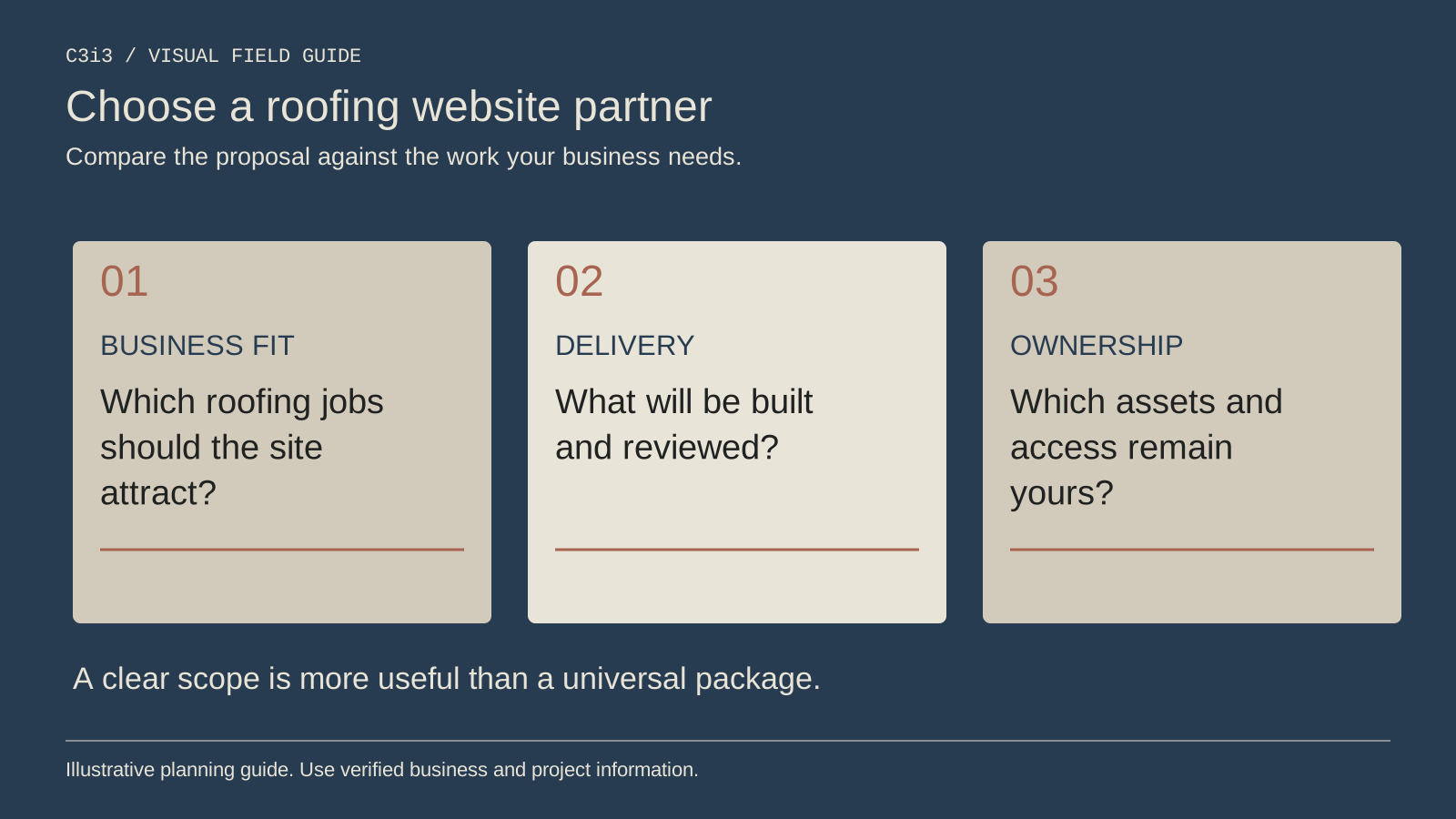
One website proposal promises a beautiful redesign. Another promises SEO, automation and more leads. Both include a long list of deliverables, but you still do not know what your roofing business will be able to do better when the work is finished.
Choose the agency by the customer journey and the responsibilities it is prepared to define. A roofing website needs to explain the work, help suitable prospects request an assessment and give your office a dependable handoff. The design should serve that purpose.
What should your roofing website brief say?
Name the work you want more of, the real coverage area and the projects you decline. State who handles inquiries and what information the office needs to arrange an appropriate next conversation. These details are more useful than “we need a modern site.”
Include examples of confusing inquiries and questions from recent estimates. If prospects misunderstand repair versus replacement, the brief should explain that decision. If people request areas you cannot support, the coverage explanation needs attention.
For a Bay Area business, describe genuine operational boundaries rather than asking for every city name in every headline. The agency should be able to explain how the site's organization supports your service model without manufacturing local offices or interchangeable city pages.
Which work samples should you ask to see?
Ask for examples that demonstrate relevant thinking, not merely an attractive homepage. Have the agency explain how a visitor moves from a service page to a useful inquiry, how project stories establish scope and how the office receives the request.
Distinguish work the agency completed from a concept, template or illustrative mockup. A presentation should make its role clear. Do not assume a polished screenshot proves search results, conversion improvement or ownership of the entire project.
Ask how the same principles would apply to your roofing business. A thoughtful explanation of service fit and estimate preparation can be more informative than a gallery containing a familiar industry photograph.
What should the scope include beyond page design?
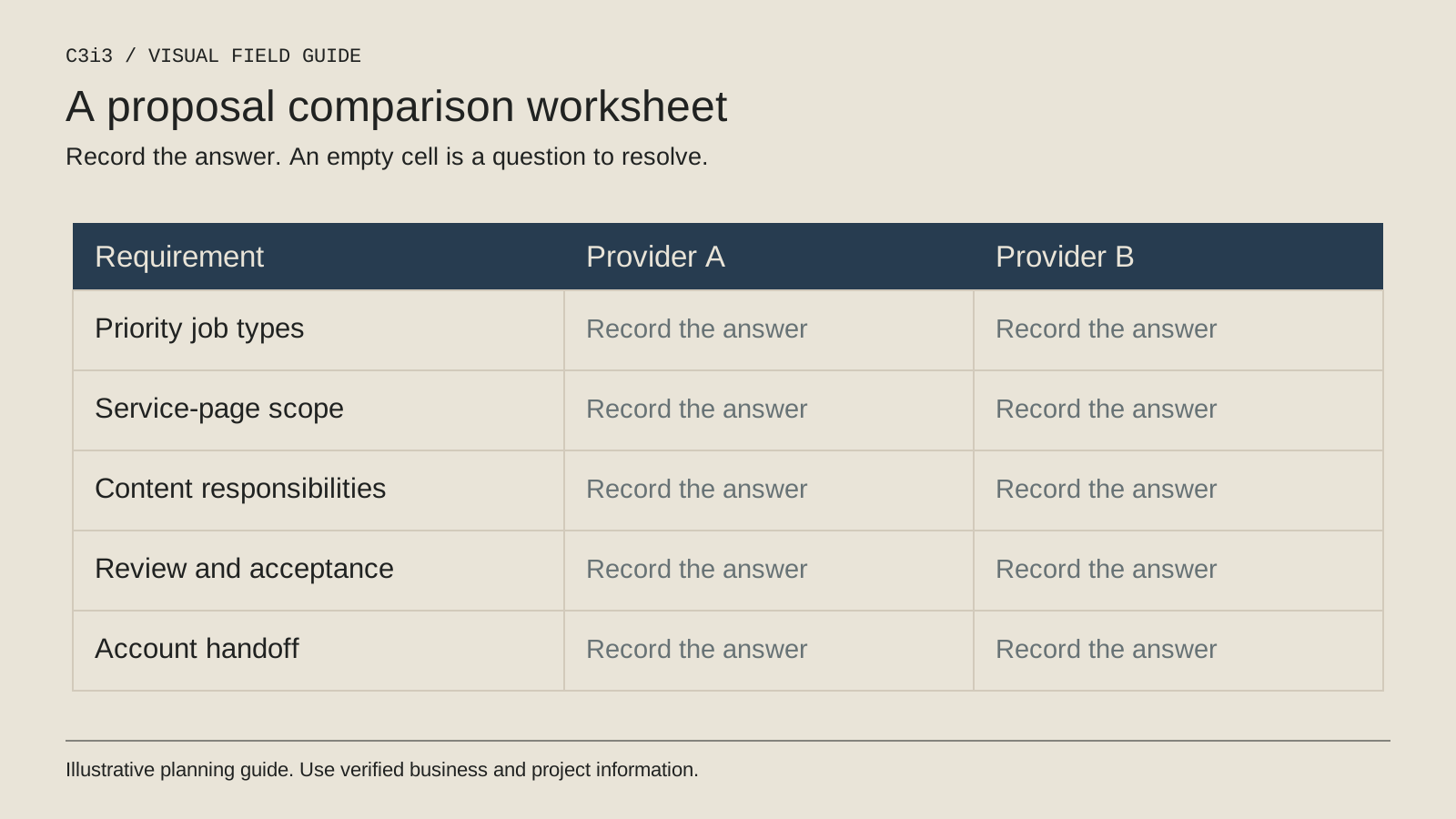
Specify the pages, content responsibilities, image permissions, forms, technical implementation and handover work. Identify who writes the roofing explanations and who checks their accuracy. The business should remain responsible for technical service claims it approves.
Discuss mobile usability, accessibility review and performance expectations in concrete terms. A phrase such as “fully optimized” needs a defined scope and acceptance method. No single scan establishes that every page works for every user.
The W3C accessibility planning guidance is a useful reference for responsibilities and review. Ask which page types and tasks will be checked and how findings are handled, rather than accepting an unexplained compliance badge.
Who owns the domain, site, accounts and content?
Clarify business ownership and access before the project begins. Identify the domain account, website platform, hosting, source or export options and any paid dependencies. Ask what happens when the agency relationship ends.
Discuss licenses and permissions for photographs, illustrations, fonts and third-party components. A design handover should not leave the business uncertain about whether it can continue using the assets. Separate ongoing services from the one-time build so costs and responsibilities are understandable.
Keep account access appropriate to each role. Business ownership does not require every employee to share an administrator password. The proposal should describe a maintainable arrangement that a future team member can understand.
How will you accept the website before launch?
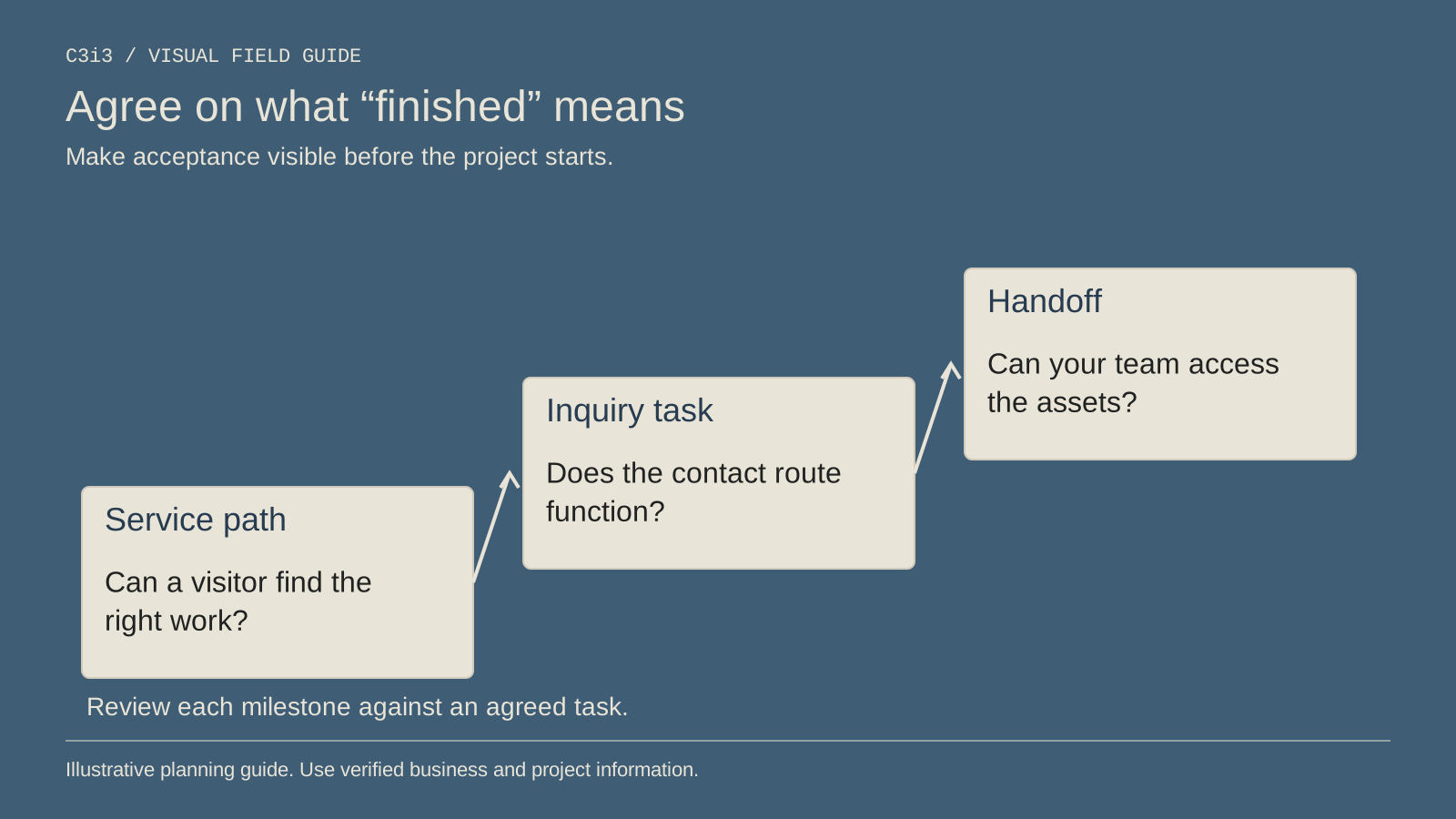
Agree on observable tasks. A customer should find the relevant roofing service, understand actual coverage, review a documented project and submit an inquiry from a phone. The office should receive the test message and know what happens next.
Include the existing website's useful URLs and search information in launch planning. Ask how changed addresses, redirects and important content will be handled. Our redesign traffic guide explains why preservation needs attention before publication.
Use a written review record. Mark issues, the person responsible and the acceptance decision. An attractive homepage should not hide a broken quote form or a missing service page.
How should you judge the proposal’s lead-generation promise?
Ask what will be measured, which outcomes the agency can influence and what depends on your office. A form submission, suitable assessment request and won roofing project are different stages. Do not accept a guaranteed revenue claim without a basis you can inspect.
Discuss the first improvement cycle after launch. Who reviews suitable inquiries? Who updates project evidence? What is included when a page needs revision? A website is easier to maintain when those questions are settled rather than implied.
Our roofing quote-request guide focuses on improving the customer decision, while the local SEO framework connects the site to discovery. Choose a scope that joins those pieces into a useful business process.
Keep this checklist beside you
Questions before the next step
Should I choose the agency with the most pages in its proposal?
Page count alone does not show usefulness. Ask whether each page serves a distinct customer need and what content and maintenance it requires.
Can a designer guarantee roofing jobs?
No website can guarantee that outcome. Discuss the inquiry journey, measurement and your office’s responsibilities rather than relying on a fixed booking promise.

How C3i3 Can Help
C3i3 can help your roofing business define a website design scope around the projects you want and the questions customers need answered. We can connect service-page structure, project evidence, visual design and the estimate-request process.
Bring your current site, priority job types and the proposals you are considering. We can help turn a broad redesign request into concrete deliverables and review criteria, with local SEO and useful content considered from the start. The goal is a website your team can explain, maintain and evaluate.