



































In this article
A drain keeps backing up, and the first company you contact mentions several possible services before anyone has assessed the property. You need help, but you also need to understand what you are authorizing.
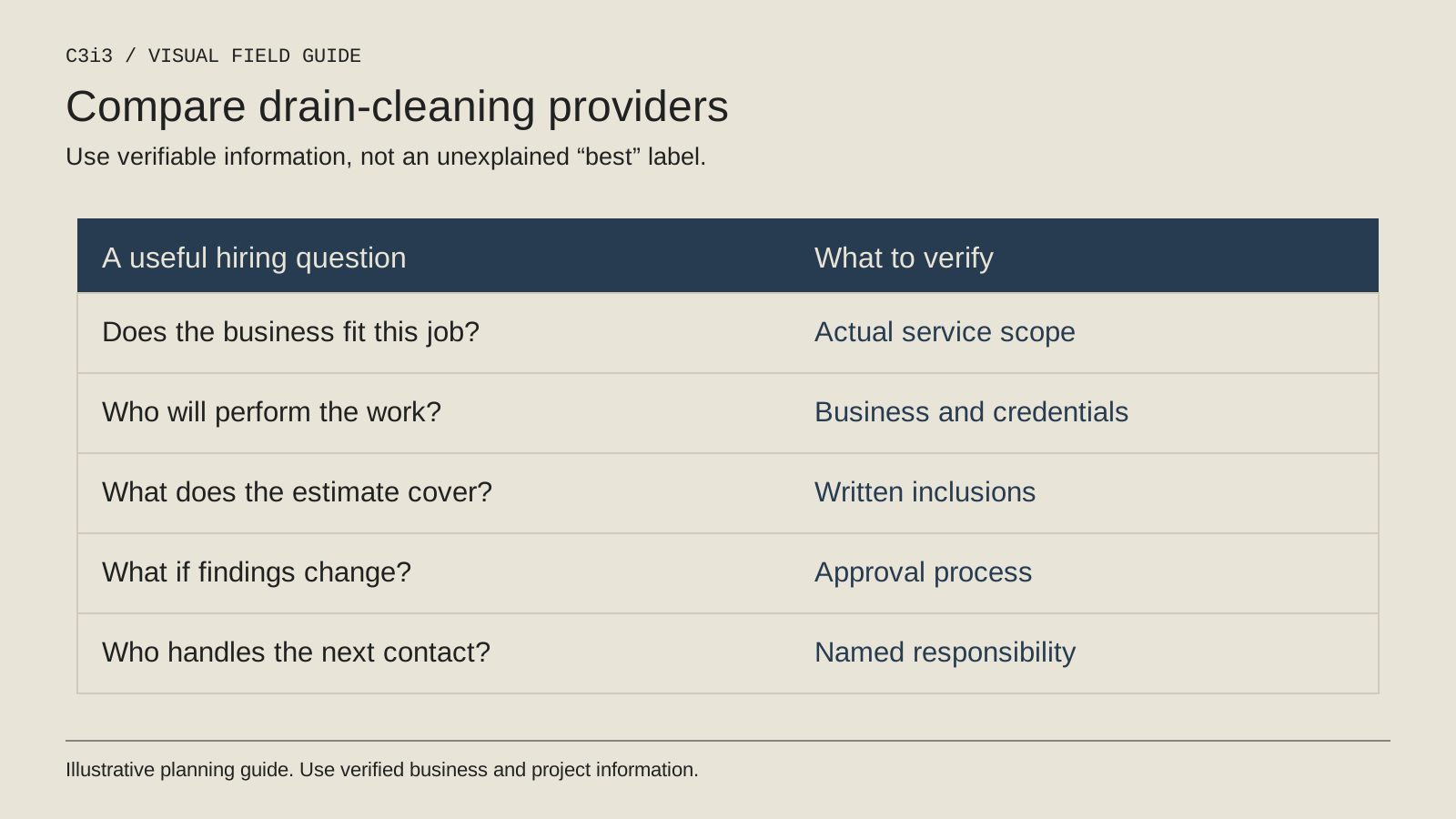
Use these ten checks when considering a San Francisco drain-cleaning provider. This is a practical hiring guide, not a ranking of plumbers or an online diagnosis. Keep the discussion focused on the reported problem, the proposed assessment and the scope you actually agree to.
1. Verify the actual plumbing business
Match the proposal or service authorization to the business you are hiring. Use the CSLB license lookup to check current status and appropriate information rather than relying only on an advertisement or review score.
Ask who is authorized to explain and agree to the work. A displayed number is not a substitute for checking the record. Verification helps establish identity; it is not a government endorsement of the provider or the proposed service.
2. Confirm the company handles your type of request
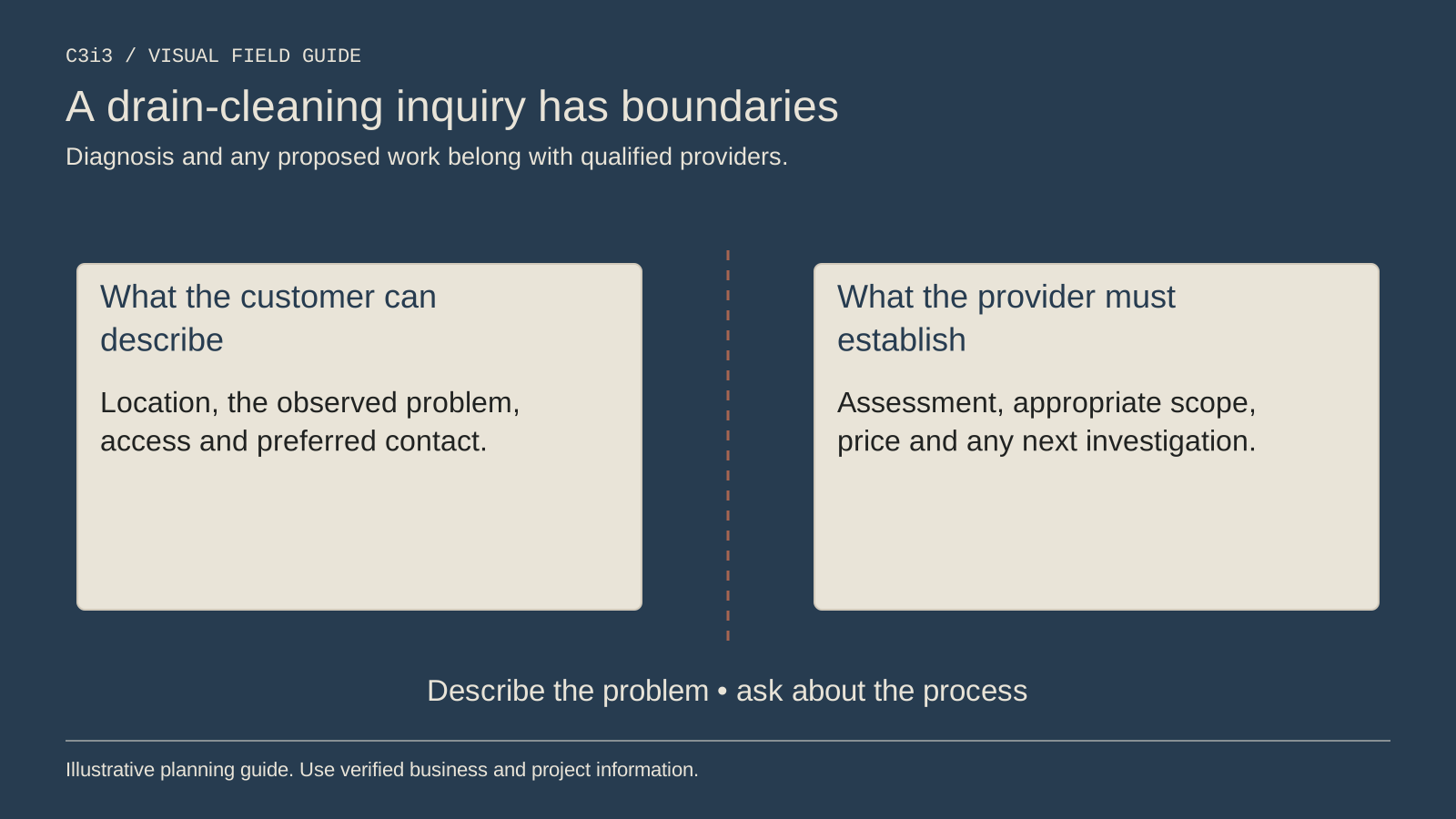
Explain the property and reported problem in ordinary language. Ask whether the company handles that kind of drain-cleaning request and what information it needs before arranging a visit. Do not feel required to diagnose the cause yourself.
Clarify the actual service area and availability. A provider's website may cover a broad region while its schedule or scope has practical limits. Confirm your property and appointment expectations directly instead of treating an online form as a guaranteed dispatch.
3. Ask how the initial assessment works
Understand what the first visit or assessment includes, who performs it and whether there is a separate charge. Ask how findings will be explained before additional work is authorized.
Avoid assuming that a recurring symptom proves a particular repair is necessary. The qualified provider should explain the evidence and limitations of the assessment. If information is incomplete, ask what further investigation is proposed and how that affects the scope and price.
4. Clarify the drain-cleaning work being authorized
Ask the company to describe the intended service and its boundaries. Cleaning, diagnostic work and line repair are not interchangeable labels. You should understand which task the current authorization covers.
If the recommendation changes during the visit, ask for a clear explanation before agreeing to a different scope. Keep a written record of the work and conditions you accept. This checklist does not provide equipment-use or chemical-treatment instructions.
5. Understand charges and conditional costs
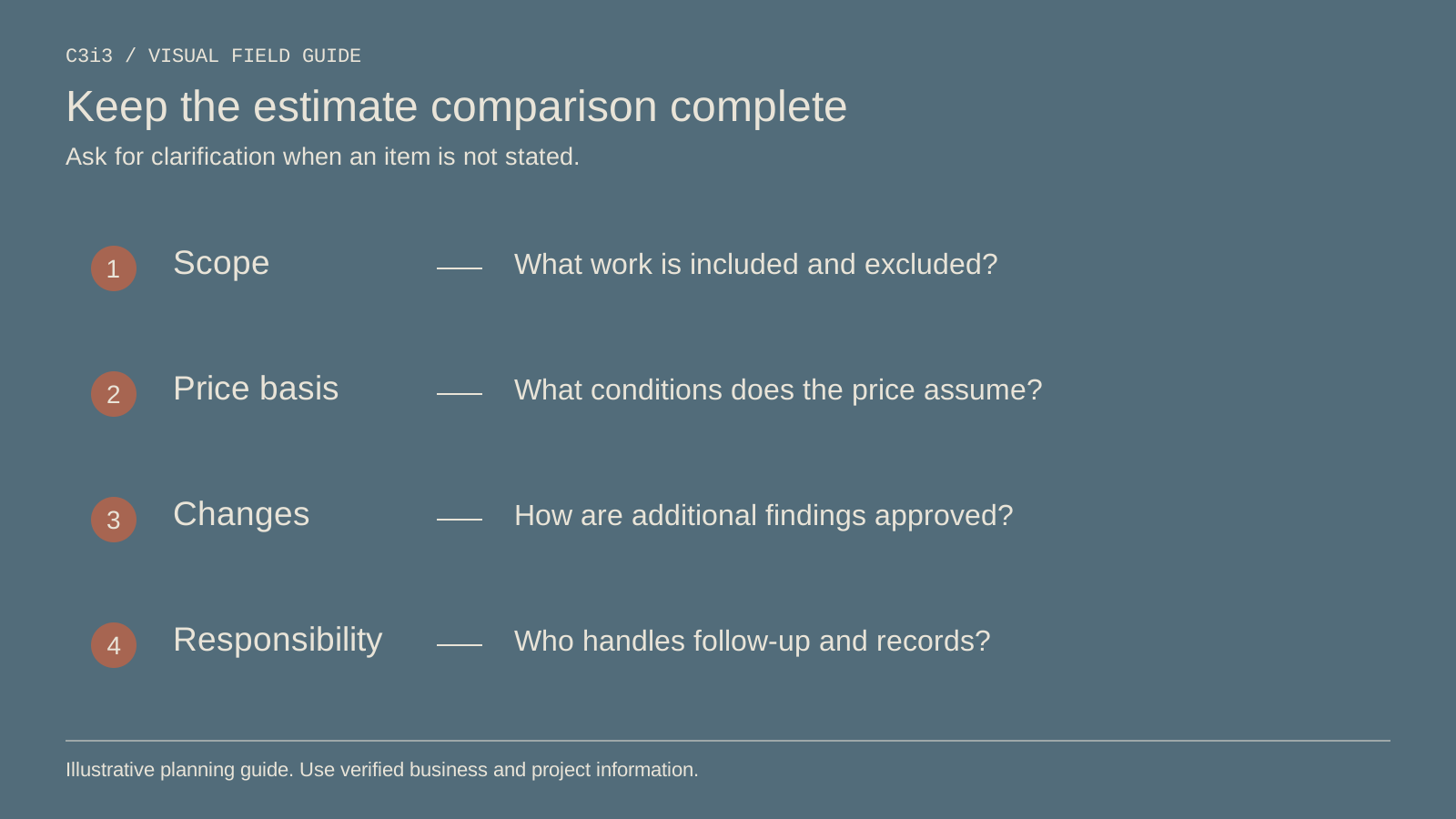
Ask about assessment charges, included work, any quoted limits and the process for additional costs. If the price depends on conditions found at the property, have the provider explain those conditions in understandable terms.
Do not assume a low advertised starting price covers every situation. Equally, do not assume every difference between quotes is improper. Put comparable scope and charges side by side, mark unstated items and request clarification.
6. Discuss access and property protection
Ask what access the provider needs and how the work area will be protected and left afterward. Explain shared access or property-management arrangements relevant to the appointment. Keep entry codes and sensitive access details in an appropriate direct process.
Clarify cleanup responsibilities and any restrictions that affect the visit. These practical arrangements should be understood before work begins, especially when several occupants or responsible parties are involved.
7. Separate cleaning from a proposed repair
If the assessment leads to a repair or replacement proposal, ask what evidence supports it and which part of the system is involved. Request the new scope rather than treating the original cleaning authorization as unlimited permission.
Ask who handles any required approvals and inspections for that actual work. Routine cleaning and construction work raise different questions. Do not assume every drain request needs the same permit, or that every later repair is permit-free.
8. Confirm responsibility when the issue reaches the sewer lateral
San Francisco distinguishes sections of the sewer lateral, and responsibility needs project-specific clarification. The SFPUC lateral guidance explains that it may handle lower-lateral repair or replacement under most circumstances after its inspection.
Ask the qualified provider to identify the location of the issue and the appropriate city contact or process. Do not assume every part must be privately repaired or that every case qualifies for city work. Public-area work can involve separate approvals.
9. Read follow-up terms before the visit ends
Ask what happens if the reported problem returns and what any written follow-up promise includes. Identify the scope, exclusions and contact process. A phrase such as “guaranteed service” should have an explanation you can retain.
Keep the assessment, agreed work and any later repair recommendation together. If the provider identifies unresolved conditions, ask that they be recorded clearly. A completed cleaning visit should not be interpreted as proof of every concealed part's condition.
10. Keep a clear record and contact route
Save the business details, service authorization, findings, invoice and written terms. Identify the person or office to contact with questions. Good records are useful if you need a later assessment or clarification.
For broader repair proposals, use our sewer quote comparison questions while confirming San Francisco's own requirements for your property. A guide for another city is not a substitute for the relevant local process.
Keep this checklist beside you
Questions before the next step
Is this a list of the best San Francisco plumbers?
No. It is a checklist for evaluating providers. No company is ranked or endorsed.
Does a blocked drain always require sewer replacement?
No conclusion should be drawn from that symptom alone. Ask a qualified provider to explain the assessment and evidence behind any proposed repair.

How C3i3 Can Help
Property owners can use these checks with the plumbers they are considering. C3i3 provides website and marketing services, not plumbing diagnosis or drain-cleaning work.
For plumbing business owners, these questions highlight what your website should explain before the first call. C3i3 can help with service-page design, clear copy and local SEO so customers understand your scope and inquiry process. Our drain-cleaning website guide turns those questions into a practical page plan.