



































In this article
The phone rings, but the caller needs a service you do not offer, lives outside your route or assumes a price your website never explained. Meanwhile, a good water-heater prospect submits a form that nobody sees until the next morning.
More plumbing leads will not solve those problems by themselves. A better system connects the service the customer needs with a page that explains it, a contact route that works and an office process that can turn an appropriate inquiry into a booking.
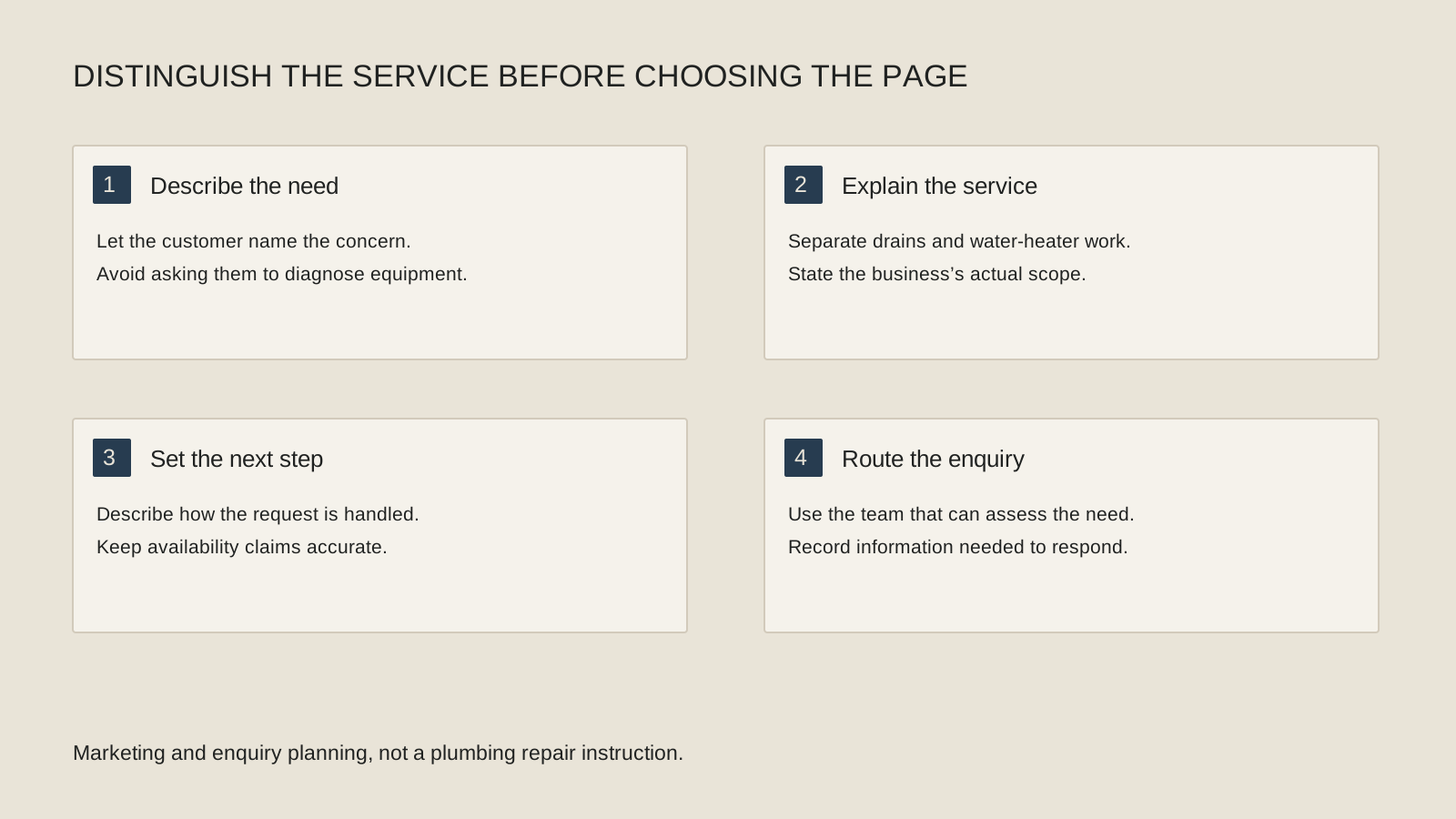
Why do drain-cleaning and water-heater inquiries need different pages?
A customer with a blocked drain may want to know how to reach someone, whether you serve the location and how the assessment works. A water-heater replacement customer may be comparing options, installation scope and an appointment for evaluation. The pages should help with those different decisions.
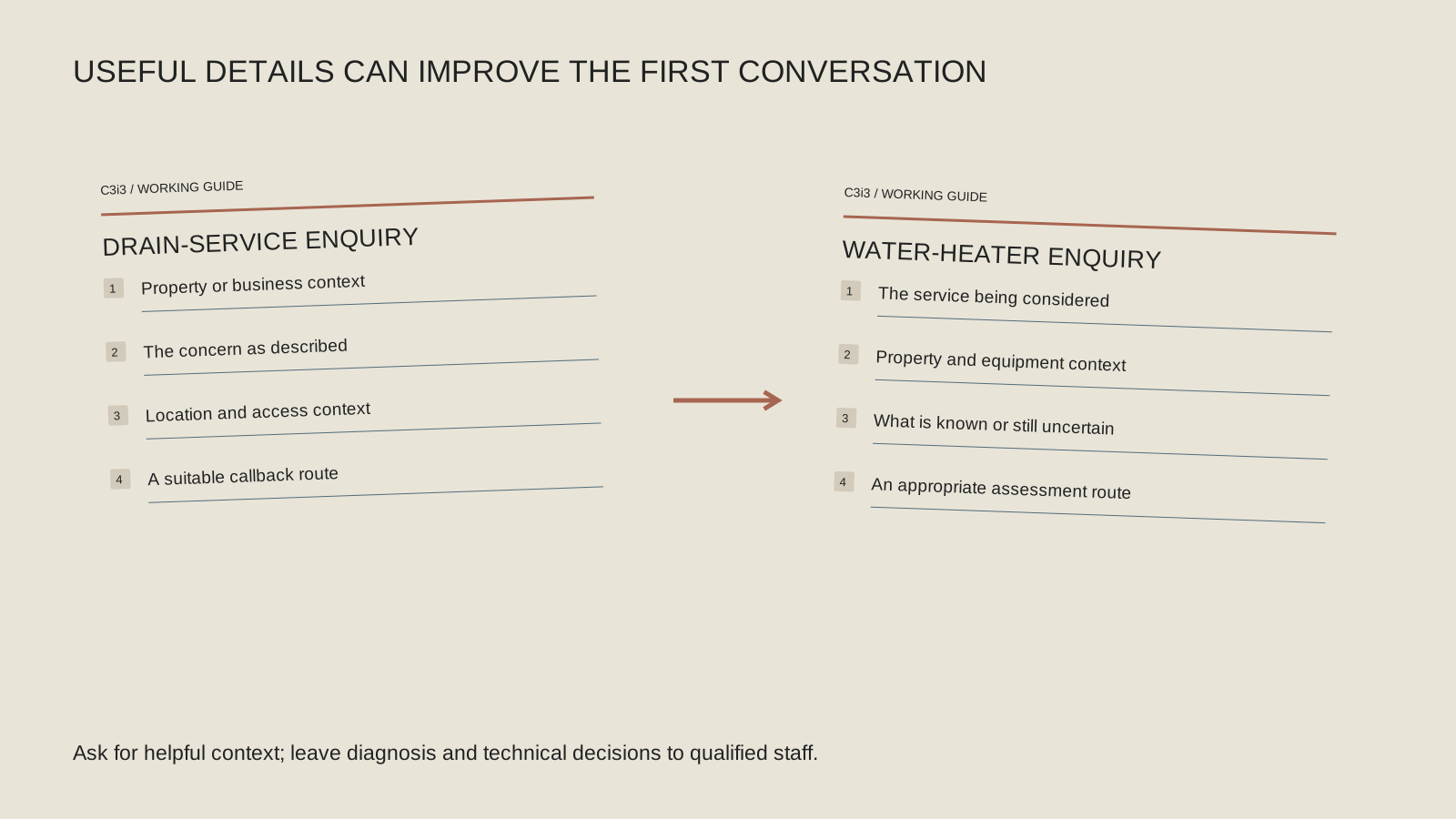
Describe the work you actually provide. If camera inspection, sewer work or particular equipment falls outside your scope, make that boundary understandable. For water heaters, explain what information helps your team plan the first conversation without trying to recommend equipment before assessment.
Use a clear internal route between related services. A drain page can explain that some findings require a different investigation, while the broader plumbing page helps visitors choose where to start. Do not make every page repeat the same generic promise of fast, affordable service.
How should urgent calls and planned work be routed?
Put the appropriate contact option near the relevant explanation. If the office handles urgent requests by phone, say when the line is staffed and what happens after hours. Only claim around-the-clock service if the business can fulfill that promise.
For planned installation inquiries, a short form can gather the property location, requested service, preferred timing and a concise description. Let customers say they are unsure which service applies. They should not need to diagnose the equipment before requesting help.
Test both paths. A click on a phone number is not proof that a call connected, and a submitted form is not proof that an appointment was booked. Confirm the actual message delivery and assign someone to own the follow-up.
What should a plumbing lead-generation provider explain?
Ask where inquiries originate, which business they contact and whether the same inquiry is distributed to other providers. Confirm how invalid or out-of-area inquiries are handled. A useful proposal defines these terms before the invoice arrives.
Ask who controls the advertising account, landing page, tracking numbers and records. If the relationship ends, understand what remains available to your business. Clear access arrangements make performance easier to assess and reduce disruption when a vendor changes.
Request reporting that distinguishes inquiries, suitable requests, appointments and completed jobs. A provider may not control whether your office answers a call, but it should explain what it measures and what it cannot establish. Avoid treating a promised lead total as an agreed business outcome.
Find the leak in the lead process
Match the observed problem with a specific repair.
Wrong service
Review service-page and campaign wording.
Wrong location
Clarify actual coverage and targeting.
No response
Test calls, forms and staff ownership.
No booked work
Review fit, estimate follow-up and outcomes.
What information makes a service page more convincing?
Explain assessment, scope and next steps in plain language. Use photographs of relevant work with permission, and identify the business responsible for it. Describe what an estimate or appointment includes instead of relying on generic badges.
If pricing is shown, make the conditions and exclusions understandable and keep the offer current. Avoid publishing a small starting price that creates an unrealistic expectation for unrelated work. Customers should be able to tell whether they are reading a fixed offer, an example or an explanation of how pricing is determined.
Keep the Business Profile consistent with actual services, hours and coverage. Google's local ranking guidance explains why relevance, distance and prominence all matter. Adding a long city list does not replace accurate information or useful service content.
How do you measure cost per useful plumbing job?
Use the same definition of a qualified inquiry across sources. It might mean a real customer requesting an offered service in your coverage area with timing your team can support. Record the definition so the office and marketing team count consistently.
An illustrative test costing $600 that produces two completed jobs has $300 in campaign cost per job before other costs. That is arithmetic, not a recommended budget or performance benchmark. Include vendor fees and relevant internal costs when making a fuller comparison.
Google's qualified and converted lead guidance distinguishes stages beyond the first inquiry. Your office records remain essential. Track accepted estimates and completed work rather than declaring every contact a customer.
What should you change first when leads are poor?
Sort recent inquiries by the reason they did not fit. Wrong locations suggest a coverage or targeting issue. Wrong services suggest page or campaign language that is too broad. Suitable inquiries that never receive a response point to a handoff problem.
Choose one change tied to that evidence. Improve the drain-cleaning page, clarify water-heater assessment, correct coverage or repair message delivery. Avoid changing the campaign, website and qualification rules at once if that makes the result impossible to interpret.
Use the contractor local SEO framework for the broader plan. Direct acquisition principles from our guide to owned lead sources also apply: control the assets, define fit and follow the inquiry through to the work.
Keep this checklist beside you
Questions before the next step
Is a phone click a plumbing lead?
It is a contact action, not proof of a connected or qualified call. Keep click measurement separate from the office’s call and booking records.
Should drain cleaning and water heaters use the same campaign?
Organize campaigns and pages around meaningful differences in service and customer intent. The right setup depends on budget, coverage and how the business handles each inquiry.

How C3i3 Can Help
Bring your core services and the information your office needs to route a request. C3i3 can help align the page, listing and next step.