



































In this article
A customer with water damage is trying to work out whom to call, what happens next and whether the company can actually reach the property. A property manager arranging mold-related work may have a different timeline and documentation process. Treating both as one urgent “call now” message creates confusion.
Restoration marketing has to be precise under pressure. A useful page explains the business's role, availability and assessment process without diagnosing the building or promising an insurance outcome.
What should an urgent water-damage page say first?
State what your company does and how to reach the person who handles requests. Make actual hours and after-hours arrangements clear. If a third-party service answers the phone, ensure it has accurate routing instructions and does not make commitments your team cannot keep.
Describe the assessment and dispatch process in ordinary language. Do not guarantee an arrival time everywhere in your coverage area unless the business can support the claim. Keep any immediate-danger instruction focused on contacting appropriate emergency services or authorities rather than offering an online diagnosis.
People may be reading on a phone while coordinating access with someone else. Put the contact route and essential service boundaries near the top, then provide enough explanation for them to understand the next step.
How should mold-related inquiries be handled differently?
Explain the actual service your company provides and how scope is established. Inspection, testing, remediation and reconstruction can involve different responsibilities. Do not use those terms interchangeably or imply that every customer needs every service.
Avoid health claims, remote exposure assessments or a promise that a photograph establishes the cause of a problem. The EPA's mold resources provide a useful official starting point for general background; a marketing page should not replace appropriate building or health assessment.
Tell customers which documents or observations help an initial conversation and how to share them securely if needed. Make uncertainty acceptable. Someone who does not know the right technical term should still be able to request the appropriate next step.
What should you say about insurance and documentation?
Explain the documentation your business can provide as part of its work. Do not promise that a claim will be approved or that every service will be covered. Coverage and claim decisions depend on the relevant policy and parties responsible for those decisions.
Clarify your role in communications. If you provide photographs, scope records or other documents, describe that accurately. Avoid language that implies you are the insurer, public adjuster or an authority determining coverage when that is not your role.
Keep sensitive claim and property information out of broad marketing forms. Start with the minimum needed to route the request, then use an appropriate secure process for documents. The first inquiry should make help easier to reach without collecting an unnecessary dossier.
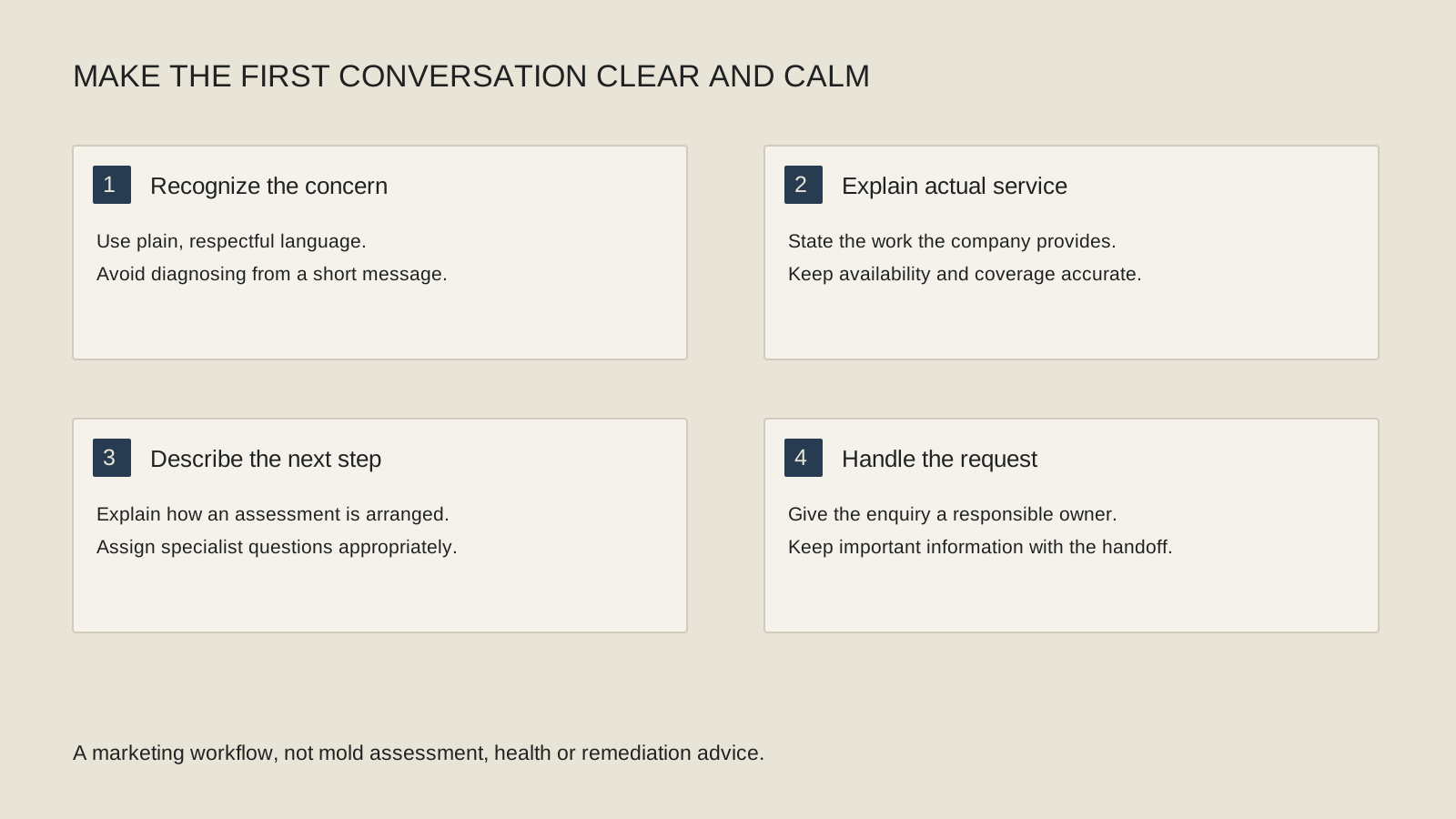
An urgent inquiry needs a truthful handoff
Keep the public promise aligned with operations.
Service
Explain what the company actually handles.
Coverage
State where requests can be assessed.
Availability
Confirm staffing and dispatch expectations.
Outcome
Record suitable requests and the next action.
How do service-area details affect restoration leads?
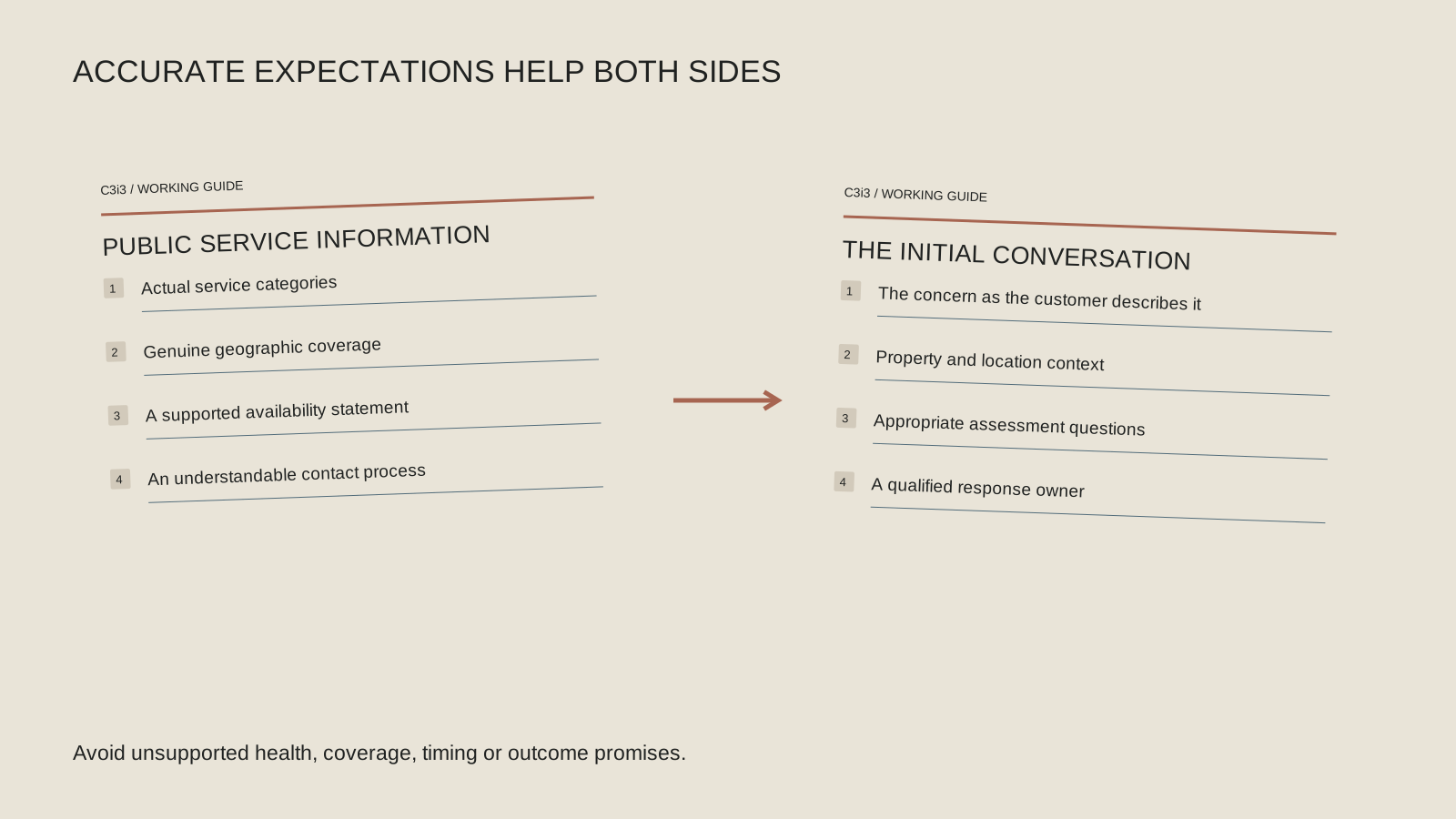
State the areas your team can support and any practical limits on response. A broad regional slogan is less useful than an accurate explanation of who handles a request and how availability is confirmed. Keep the website and Business Profile consistent.
Follow Google's service-area guidance rather than creating fictional local offices. Do not treat a coverage selection as a guarantee of search placement or dispatch capacity.
Differentiate residential, commercial and property-management work if your process differs. Explain access coordination, the responsible contact and how scope discussions begin. Use real operational knowledge when deciding whether separate local pages help; avoid publishing interchangeable city pages merely to expand the footprint.
What should your call and form tests include?
Run a routine test of the published contact paths without misrepresenting an emergency. Confirm phone routing during staffed and after-hours periods. Submit a clearly labeled internal form test and verify that it reaches the person responsible for the next action.
Review the confirmation language. It should acknowledge a request, not imply a crew has been dispatched. If availability requires confirmation, say so. Do not let automated messages promise a response time the team has not agreed to meet.
Ask staff to record the service requested, location, suitability and whether an assessment or mobilization followed. A call-button click measures an interaction, not an answered call. Google's Business Profile performance definitions help clarify that distinction.
Which content should you create after the core pages?
Use the questions that repeatedly delay an appropriate booking. Explain what happens during an initial assessment, what documents your company provides or how restoration and reconstruction responsibilities differ. Keep those articles accurate to your services.
Relevant project stories can help when permissions and privacy are handled properly. Describe the agreed scope and your role without exposing a customer's address, distressing circumstances or confidential claim information. Never imply a guaranteed outcome from one example.
Connect the guide to the relevant service page and the broader contractor local SEO plan. Clear information, accurate availability and a dependable handoff are useful marketing assets even before the next search ranking changes.
Keep this checklist beside you
Questions before the next step
Should every restoration page use emergency language?
Only use urgency and availability claims that match the service and your operation. Planned mold-related work may need a different explanation from an urgent water-damage request.
Can I promise insurance coverage to improve conversion?
Do not promise a coverage decision you do not control. Explain your documentation role accurately and direct coverage questions to the appropriate insurer or adviser.

How C3i3 Can Help
Bring the service boundaries and response commitments your team can support. C3i3 can help make the website explanation and next action clearer.