



































In this article
Your kitchen remodeling video has beautiful finished rooms, smooth camera moves and carefully chosen music. People watch it. Very few ask about a project. Before commissioning another shoot, ask what the viewer learned about hiring your business. A polished montage may show taste without explaining the service.
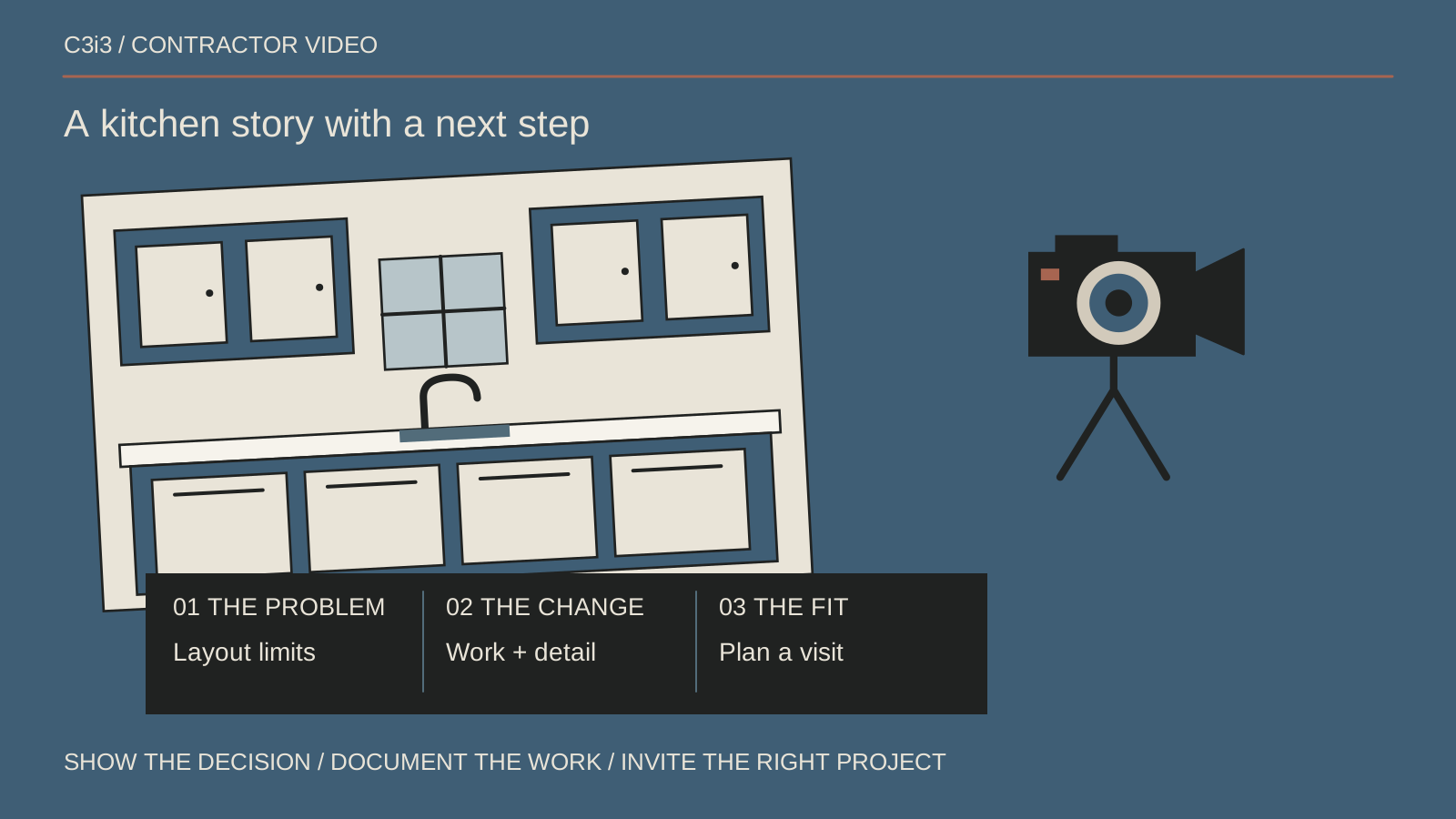
Video production services become more useful when the film has a specific job. For a remodeling contractor, that might be explaining the assessment process, showing a documented project decision or helping a homeowner understand the scope you manage. Choose the job before choosing the shots.
Write the question the video must answer
Begin with a sentence the homeowner might ask: what happens before the kitchen is taken apart, how do you plan the scope, or what kind of remodel does this company handle? Choose one primary question for the film. Supporting versions can address other tasks.
Define the viewer's situation. Someone still exploring ideas needs different information from someone comparing contractors after a design has been prepared. A single video cannot comfortably handle every stage of that decision without becoming unfocused.
Write the desired next step alongside the question. It could be reading a detailed process page, preparing for a consultation or submitting project information. This creates a production brief the writer, camera team and editor can all use.
Build the story from evidence you can actually show
Choose a real project or process that supports the message. Identify your role, the relevant decision and the footage available with permission. Do not create a success story by joining unrelated interiors and implying they belong to one completed job.
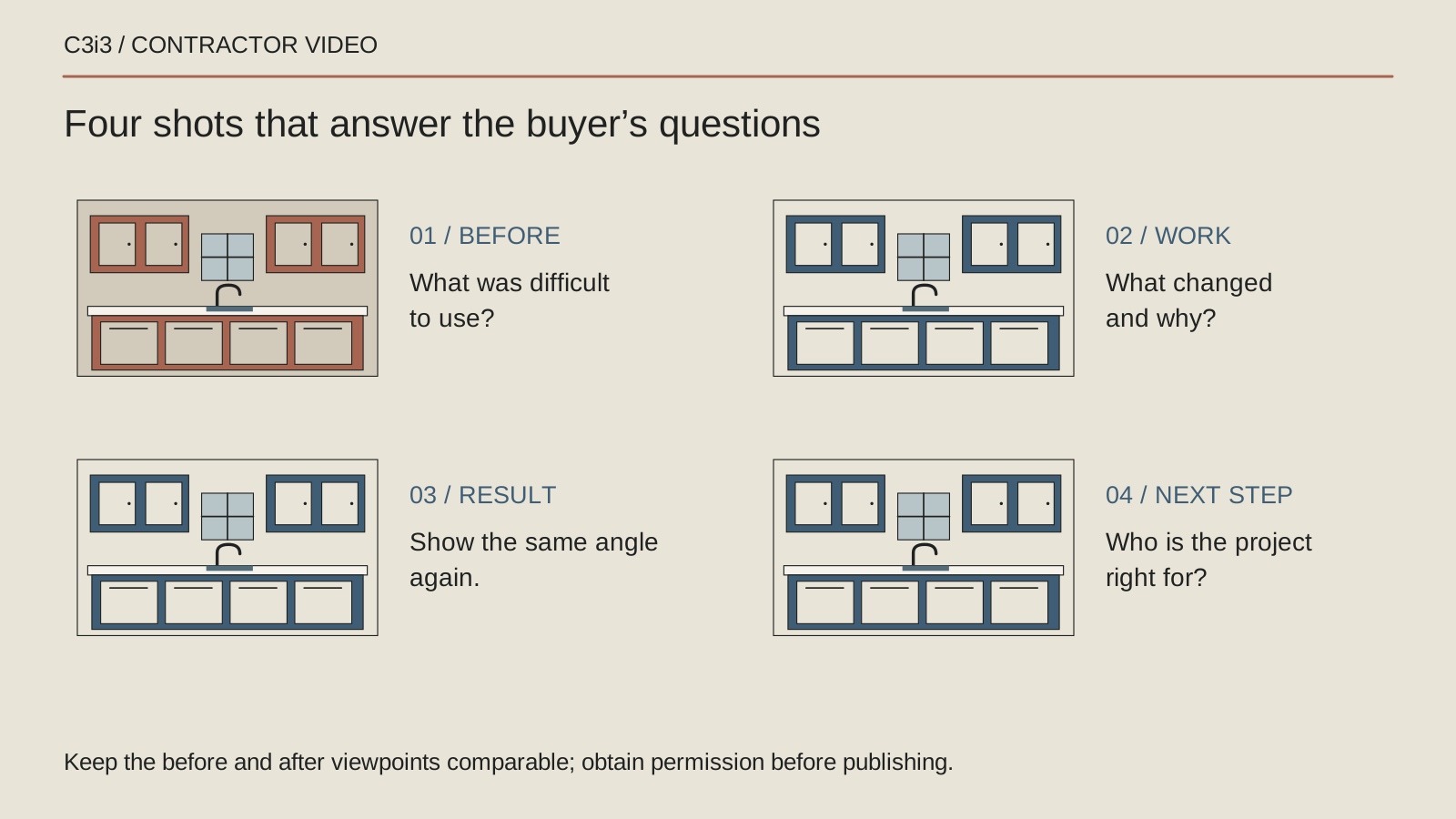
A useful sequence can show the starting condition, a planning choice, work in progress and the completed result. Explain why the sequence matters. The viewer should understand more than the fact that a kitchen changed appearance.
Separate illustrative graphics from documentary footage. A diagram may explain a proposed layout, but it should not be presented as a photograph of completed work. Keep claims aligned with the actual source material and the contribution your team made.
Plan a practical shot list before the crew arrives
Translate the story into a short list of necessary views. Capture an establishing view, relevant details, the decision being explained and the finished context when available. Note which footage depends on access, timing or a stage of construction that cannot be recreated later.
Agree on permissions, property protection and site coordination before filming. Do not ask a crew to repeat hazardous work or interrupt an active task for a better angle. The production should fit the site's approved safety arrangements and the customer's consent.
Plan versions for the intended channels. Wider composition may suit a website film, while a vertical version needs deliberate framing. Leave room for clear captions and graphics instead of assuming any wide shot will survive a narrow crop.
Explain the service while keeping the film watchable
Use a simple structure: recognizable customer question, relevant evidence, a short explanation and the next step. Cut material that does not help the viewer understand the chosen task. A long logo opening can delay the answer the title described.
Use readable captions and useful visual labels. Provide accurate captions for spoken content and avoid relying on music or color alone to communicate a critical point. Check how the film works when someone watches without sound.
Have the responsible team review factual claims before export. A smooth voice-over should not turn an estimate, illustrative schedule or design possibility into a unsupported outcome. Our supporting guides cover scripts, editing, explainers and advertising in more detail.
Give the video a destination that continues the conversation
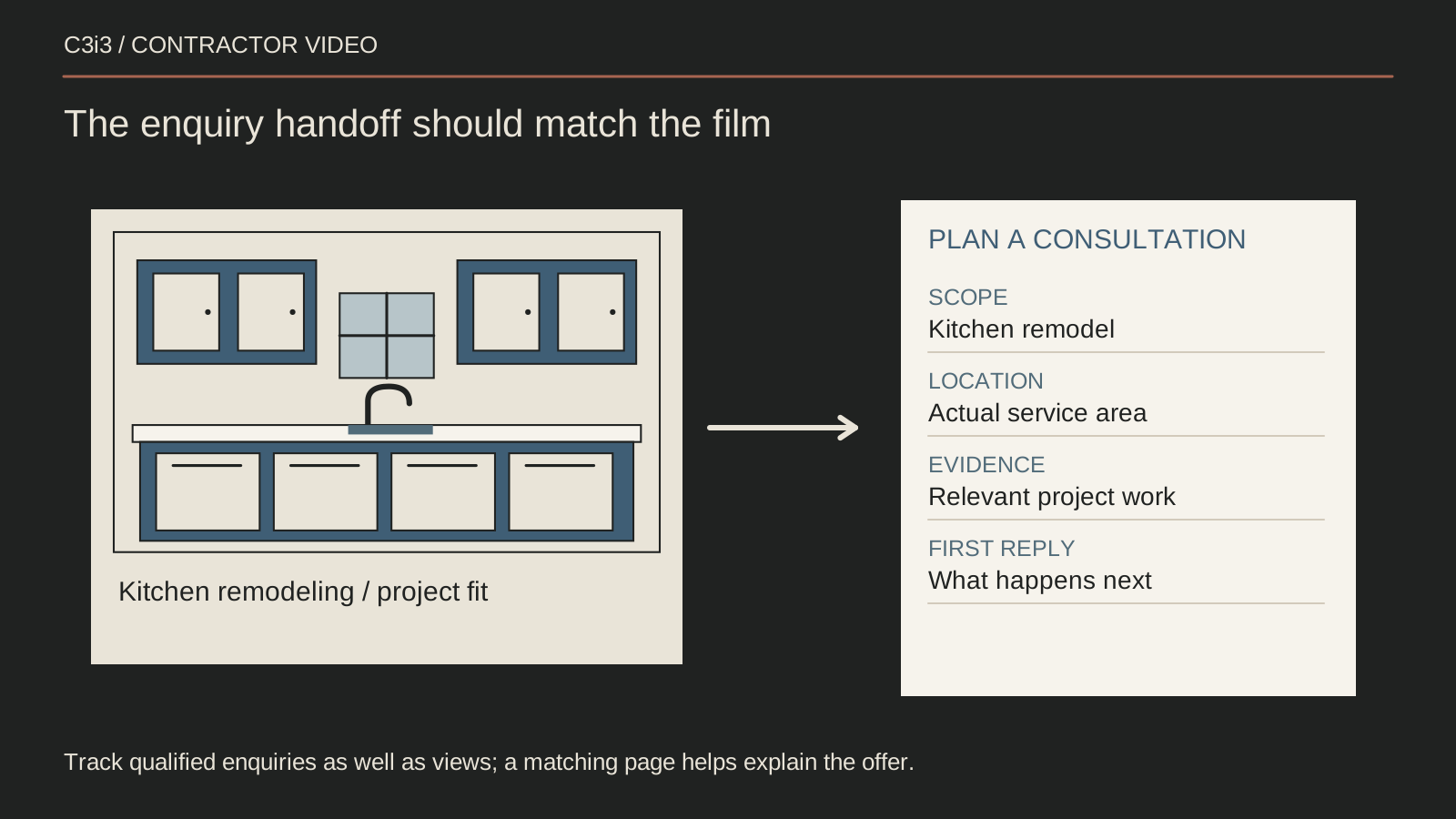
Place the film beside the relevant service explanation or project story. Ensure the surrounding page answers practical questions about scope, coverage and how to contact the business. Sending a viewer to an unrelated homepage breaks the story you carefully produced.
If the video is also on YouTube, use an accurate title, helpful description and an appropriate link to the next step. Google has separate video discovery requirements; adding an embed does not guarantee video indexing or search placement.
Test playback, captions, mobile layout and the contact route together. A film can play perfectly while the form below it fails or the next page does not explain the advertised engagement.
Evaluate the film through the buyer journey
Review whether people understand the offer and reach the intended next step. Where tracking is configured, compare video engagement with relevant page activity and qualified enquiries. Keep those measurements distinct rather than declaring every view a lead.
Ask the office what prospects mention. Did the film answer a recurring question or create a new misunderstanding? Useful qualitative feedback can reveal a production issue that a view count does not explain.
Treat the first film as a maintained business asset. Assign ownership of source files, permissions and future updates. When the service changes, revise the explanation. The nine supporting guides below help connect production choices to customer questions and the services C3i3 can support.
A brief the production team can use
| Production decision | Write it before filming | Review with |
|---|---|---|
| Viewer question | One customer decision | Office and project team |
| Evidence | Authorized project material | Project owner |
| Next step | Matching service page or consultation route | Website and response owner |
Keep this checklist beside you
Questions before the next step
How long should a contractor marketing video be?
Use the length needed to answer the chosen question clearly. A short advertisement and a detailed process explanation have different jobs. Choose a length that suits the question and review the actual viewer response.
Do I need an entirely new shoot for every version?
Not always. A planned source shoot can support several genuinely different edits. Each version still needs a clear purpose, suitable framing and enough context to avoid misleading the viewer.

How C3i3 Can Help
C3i3 can help plan business video production around the question your customer needs answered. We can connect the brief, script, visual explanation, edit and website destination so they support the same next step.
Bring the service you want to explain and any footage or project material you can use. We can identify what is already useful, what requires filming and which version should come first. The aim is a clear, relevant film rather than another attractive asset without a defined role.