



































In this article
The most important part of a sewer repair may happen where the customer cannot see it. A camera clip can be unfamiliar, the terminology sounds technical and a clean finished yard does not explain the work below it. That makes the service difficult to discuss through photographs alone.
Motion graphics can make an underground process understandable. The challenge is to simplify without creating a false message. A clear diagram should help a homeowner ask better questions about the assessed scope, not persuade them that every pipe can be repaired using one attractive animation.
Choose the precise process the graphic explains
Start with the actual subject: an inspection sequence, a proposed lining method or another defined repair approach your qualified team provides. Trenchless is an umbrella description, so a generic animation can become misleading if it mixes methods.
Write the customer's question beside the production brief. They may need to understand what access means, which section is covered or why a method is being recommended. Keep the graphic focused on that decision rather than trying to become a complete technical course.
Ask the specialist to identify the limits of simplification. Record which conditions require assessment and which stages vary by project. Use these notes to keep the script and drawing accurate for the defined process.
Separate actual evidence from explanatory illustration
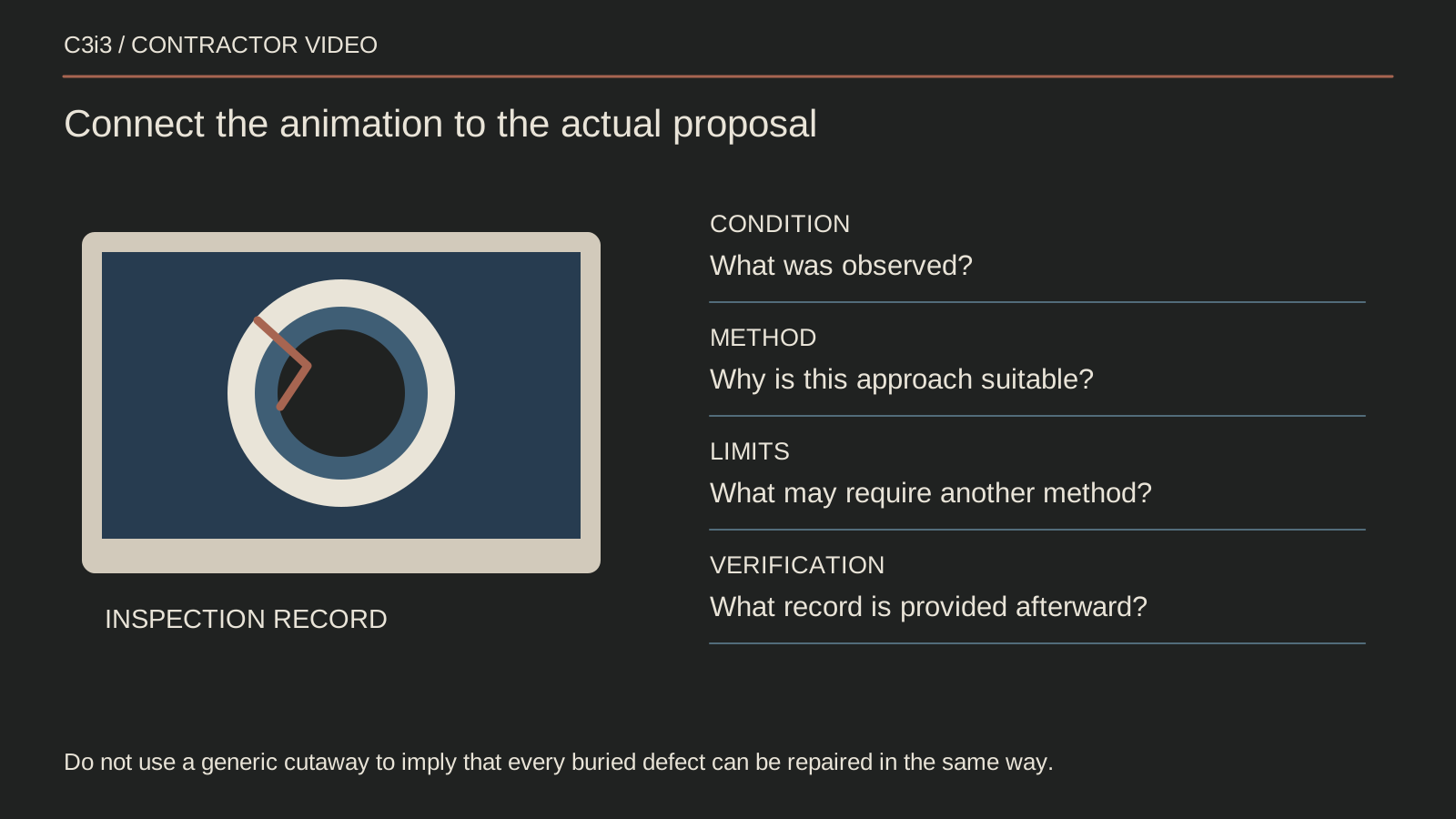
Use inspection material or documented findings as evidence for a real project only with the necessary permissions and context. A motion graphic can then explain the general idea behind the proposed work. Label it as illustrative so the distinction remains visible.
Do not imply the drawing represents a particular property's pipe geometry unless that is an accurate, reviewed project-specific diagram. Keep addresses and private access information out of public marketing material.
Use a consistent visual language: the existing pipe, affected section, access point and work area should remain recognizable throughout the sequence. Avoid changing the meaning of a color or symbol midway through the film just because a different arrangement looks more dramatic.
Explain sequence with a restrained cutaway
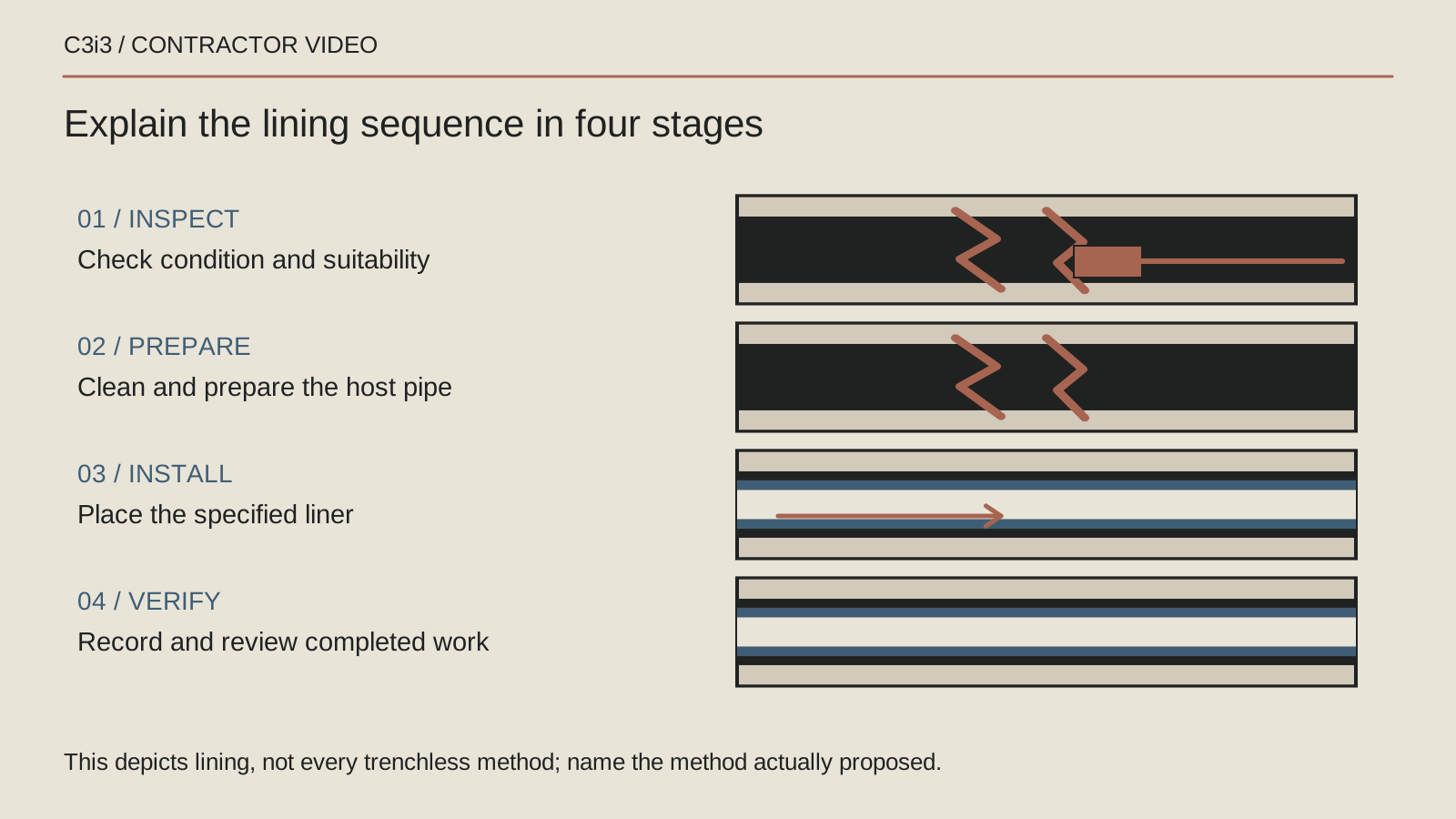
Reveal one stage at a time. Show the relevant starting condition, the assessed work area, the general process and the completion information the business provides. Keep labels close to the objects they describe and give the viewer time to read them.
Avoid turning an invisible process into visual magic. Do not show a damaged system becoming universally perfect without explaining the scope and limitations. The animation should identify where professional decisions occur rather than hide them.
Have the technical reviewer check flow, connections, terminology and the order of operations. Production accuracy includes the drawing itself. A correct narration does not fix arrows or geometry that suggest a different process from the one being described.
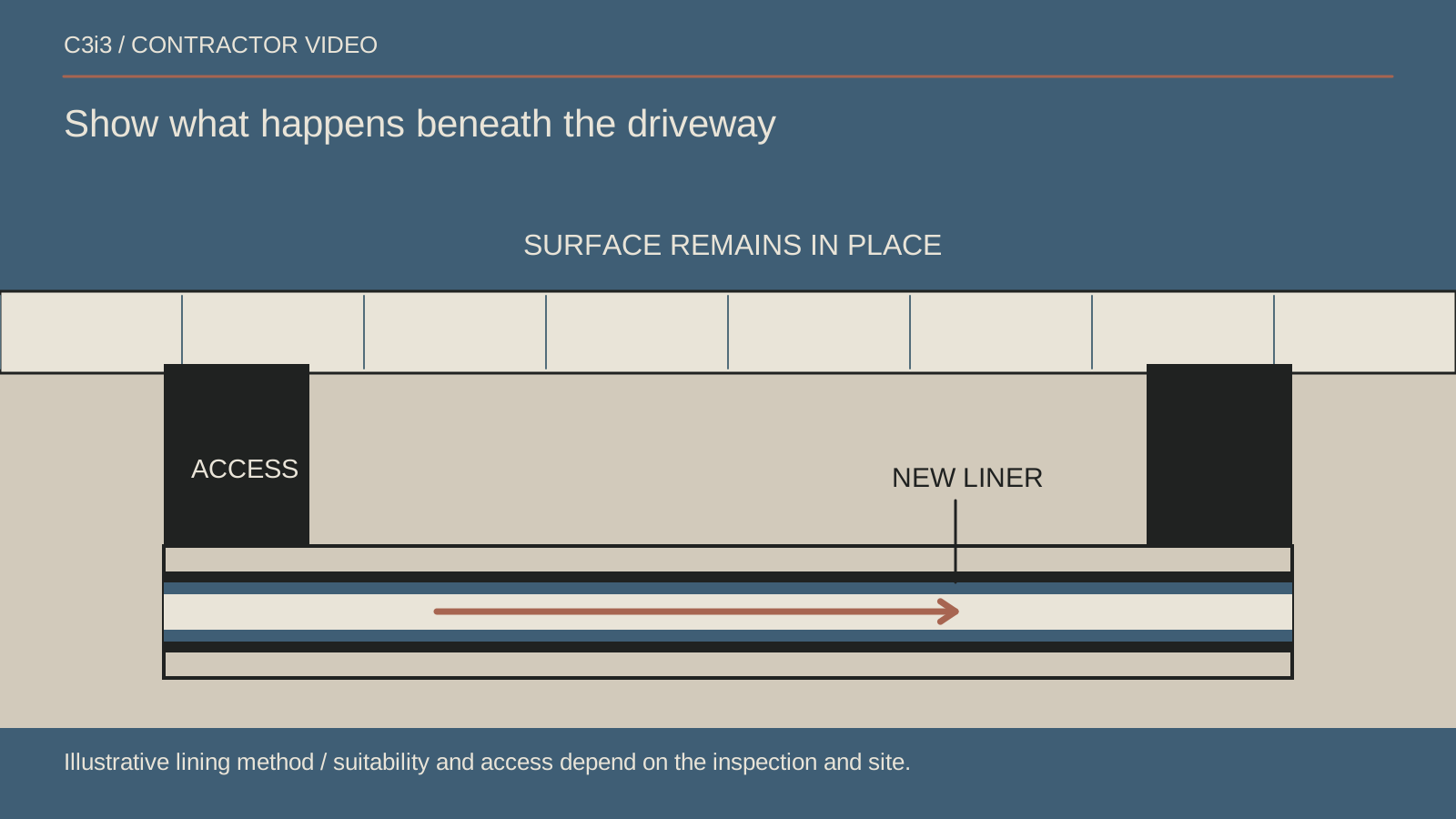
Show access and restoration as part of the story
Explain what the quoted work includes around the pipe, not just inside it. Depending on the actual project, access, surface disturbance, coordination and restoration responsibilities can matter to the customer's decision. Do not imply that trenchless always means no digging or no disruption.
A scope diagram can mark included work, possible additional assessment and responsibilities belonging to other parties. Use clear labels rather than relying only on color. Keep it consistent with the written proposal and the qualified team's explanation.
The sewer repair quote comparison guide offers useful buyer questions. A marketing animation should help the customer understand those questions, not replace the documents and approvals for their project.
Keep the script understandable without exaggerating
Use ordinary language before introducing a necessary technical term. Explain why a stage matters to the customer's question. Remove claims such as suitable for every pipe or a permanent fix unless the responsible specialists can support the precise wording and conditions.
Use accurate captions and check pronunciation in the final narration. Read the script alongside the storyboard so the verbal explanation and the image make the same claim. Approve both before extensive animation revisions accumulate.
California consumers can use the CSLB lookup when checking a provider. A polished explanation should support informed questions about the work; it should not be treated as proof of licensing or technical competence.
Publish a version that supports the actual quotation process
Place the motion graphic beside a service explanation covering assessment, scope and the next step. Provide a readable text summary for visitors who cannot watch. Check that the enquiry route lets a homeowner describe the situation without trying to diagnose it.
Give the office an approved version and a short explanation of when to share it. The same film may help a prospective customer before an assessment and support a later scope conversation, but staff should make clear which parts remain project-dependent.
Keep the source files and review record. When your methods or service boundaries change, update the graphic. The video planning pillar explains how to keep each production asset tied to a useful customer task.
Keep this checklist beside you
Questions before the next step
Can motion graphics replace real inspection footage?
They can explain a concept, but they do not document the condition of a particular property. Keep actual evidence, professional assessment and illustrative material clearly distinguished.
Should the graphic show a perfect pipe at the end?
Only depict an outcome consistent with the explained scope and qualified review. Avoid a visual that implies the entire system has been assessed or restored when the work addresses a defined section.

How C3i3 Can Help
C3i3 can develop motion-led service explanations using original vector diagrams, a clear script and a reviewable storyboard. Your specialist team can verify the process while we make the sequence easier for customers to follow.
Bring the service explanation, common buyer questions and the scope boundaries you need to communicate. We can identify which parts need a diagram, which need actual evidence and which belong in the quotation conversation. The result should improve understanding without making the process seem universally applicable.