



































In this article
A finished driveway looks clean on camera, but so do many other driveways. If your video only shows the final surface, a homeowner may learn little about the work your company manages or the questions they should ask before starting a project.
East Bay video marketing for a concrete contractor can be more useful when it explains a real installation story. Show the scope and relevant stages your team is permitted to document, then connect the result to an understandable next step. The film should make the business's role clearer, not simply add another before-and-after clip to the feed.
Start with one question an East Bay homeowner asks
Choose a useful question from actual enquiries. What does the contractor assess before quoting, what is included in the installation engagement or how is the project prepared for handover? Use the question to decide what footage matters.
Keep geographic context honest. East Bay coverage is a business claim about where you work, not proof that every project has the same approvals or site conditions. Describe the actual service boundary and let the responsible local authority confirm project-specific requirements.
Write a brief identifying the viewer, question, evidence and next step. This keeps the crew focused when the site becomes busy and prevents a collection of attractive clips from replacing the explanation you intended to produce.
Create a stage-based shot list
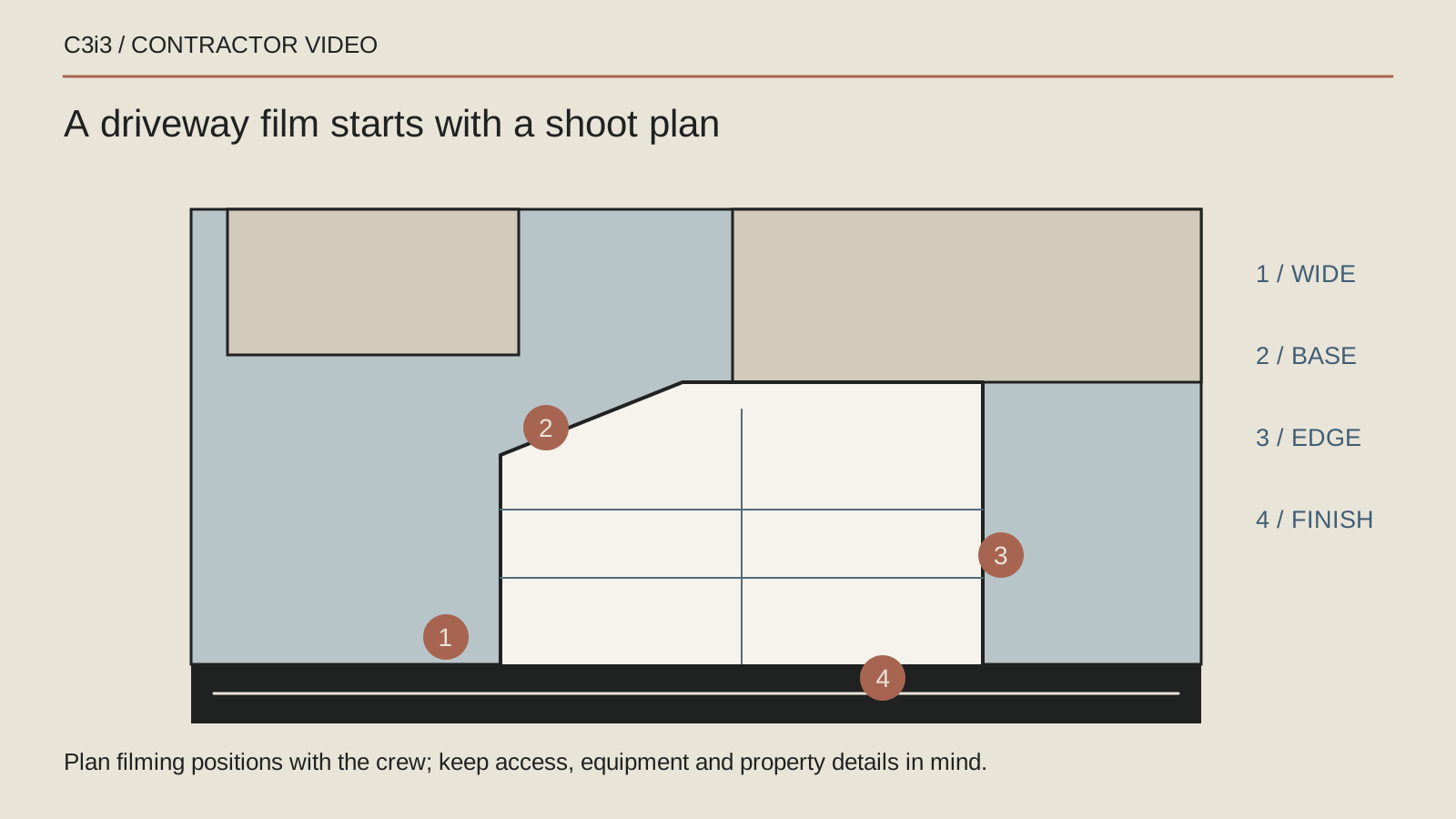
List the stages the project team can responsibly document: existing context, preparation, relevant work and completed access or surface context. Note what each shot should explain and who must approve filming at that stage.
Include wider views that orient the viewer and details that support the story. Capture labels or narration separately if site sound is unsuitable. Do not ask workers to repeat a hazardous operation or commessage the site's safety arrangements for a camera angle.
Record missing material honestly. If an important stage was not filmed, explain it through an approved illustration or omit the claim. A shot from another job should not quietly become evidence for this driveway's construction sequence.
Show decisions and responsibilities, not a universal specification
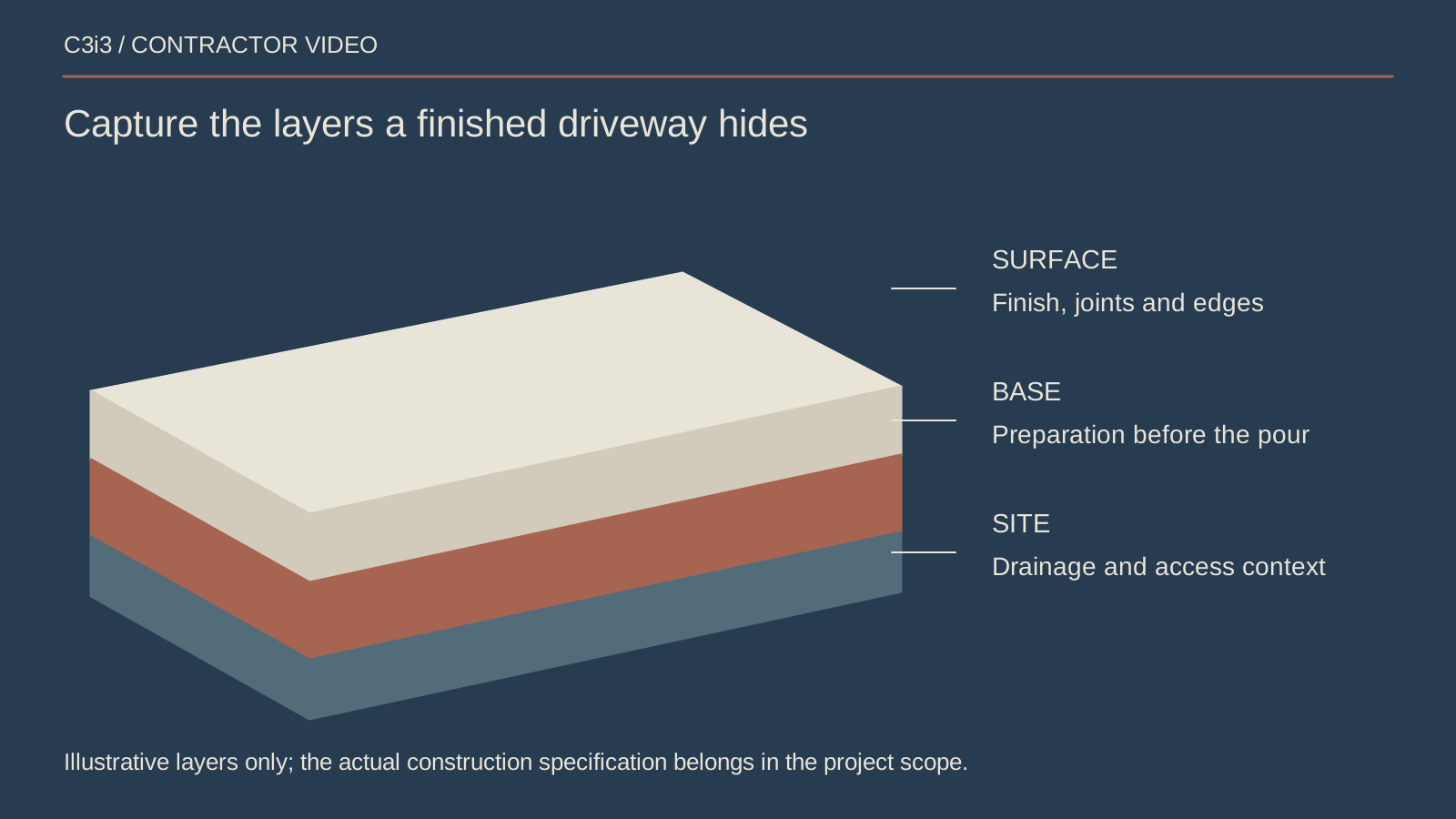
Explain the project's actual scope and why a relevant decision was made, with technical approval. Avoid presenting a single filmed installation as the standard design for every driveway. Site conditions and requirements need qualified evaluation.
A simple scope diagram can distinguish the work your company completed from tasks provided by others. Identify exclusions or follow-on responsibilities when they matter to the story. This makes the film useful without turning it into do-it-yourself construction instructions.
Use accurate captions and labels for materials or methods. Do not infer specifications from the appearance of footage. Have the person responsible for the job confirm the factual account before the final edit is approved.
Make the project story credible and respectful
Get appropriate permission for the property and footage. Avoid showing house numbers, private access details, license plates or identifiable people unnecessarily. Use the project description at the level of detail the customer has approved.
State your company's actual role. If the business provided only part of the work, explain that clearly. Do not imply an illustrative rendering, stock shot or unrelated finished driveway documents a project your team completed.
Include the starting objective and completed scope in the text around the video. A useful project story does not need a dramatic success claim or an invented customer quote. It needs enough context for a potential customer to judge whether the work resembles their own need.
Adapt the film for the website and social destination
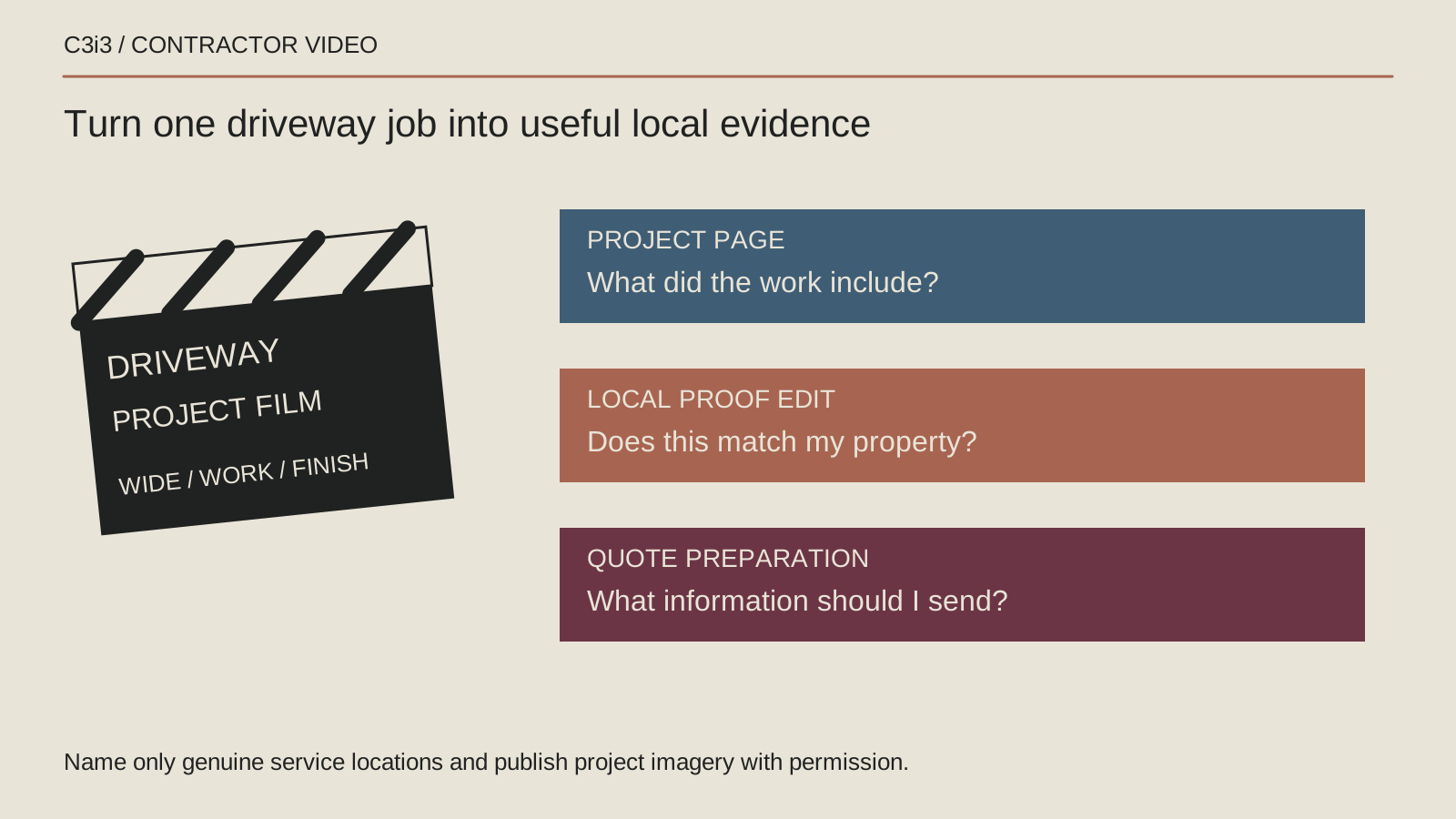
Create a website version that explains the chosen question and a shorter channel version where useful. Plan vertical framing deliberately, keeping important details and captions visible on a phone. Different versions should share an accurate message while fitting their destinations.
Send viewers to a relevant driveway installation page with clear coverage, assessment information and the enquiry process. Check that the page continues the same conversation instead of requiring visitors to navigate a general list of services.
Use an accurate title and description on the hosting platform. Google's video guidance describes separate search eligibility considerations. Review the relevant eligibility requirements and actual discovery evidence alongside the embed.
Use the response to plan the next useful film
Ask the office which questions viewers mention and whether enquiries fit the advertised service. Review available engagement and website data alongside those observations. A popular clip may entertain a broad audience without producing suitable local opportunities.
Keep a record of the film's intended purpose, publication locations, permissions and source files. When you learn that customers need a different explanation, you can plan a targeted follow-up instead of repeating the same finished-surface montage.
The contractor video production framework helps connect that next film to the wider customer journey. Build a library of useful answers, with each project story contributing a distinct piece of evidence.
Keep this checklist beside you
Questions before the next step
Do I need to film every stage of a driveway installation?
No. Capture what is needed to explain the chosen question accurately. If a stage is missing, do not imply it was documented. A clearly labeled illustration may help explain a general concept.
Should I make a different film for every East Bay city?
Only when there is a distinct useful story or local context. Renaming the same film for several places adds little value. Keep coverage accurate and focus on the customer's actual decision.

How C3i3 Can Help
C3i3 can help plan contractor video content with an original shot plan, clear edit structure and supporting vector graphics. We can connect the finished story to the website page where a homeowner can take the next step.
Bring a project you are permitted to document and the question you want it to answer. We can identify which footage will matter, what needs technical review and how to create useful versions without repeating the same imagery across every campaign.