



































In this article
The cabinet painting ad looks lively. There is a fast transformation, upbeat music and a phone number at the end. Yet the enquiries are thin or mostly about work your business does not provide. A more energetic edit may not solve a script that never explains the offer.
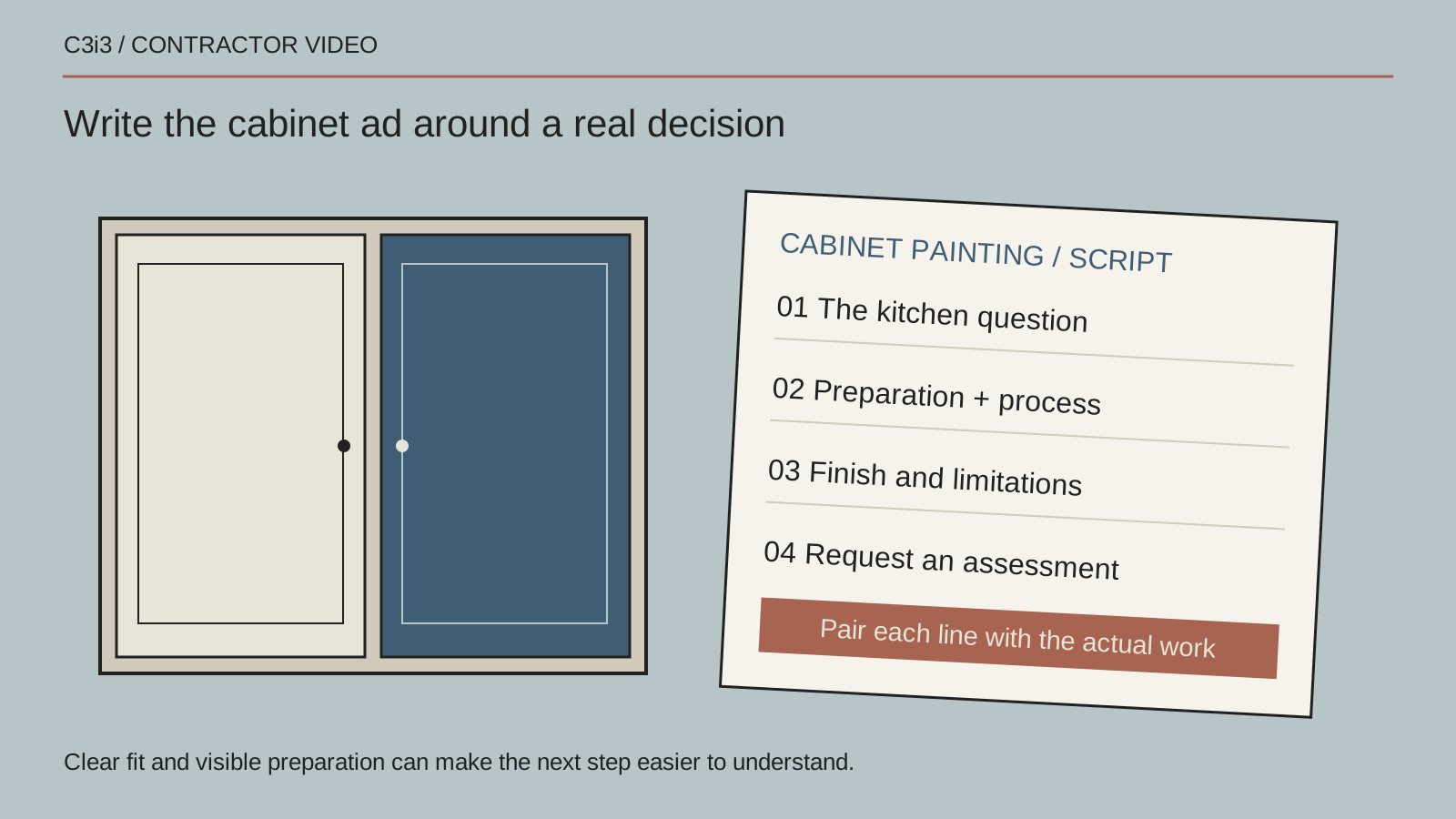
A useful video script for a painting contractor should tell the right homeowner what service is being discussed, why the example matters and what to do next. Focus on cabinet painting first. Combining every interior and exterior service into the same short message can leave the viewer unsure what they clicked.
Define the offer before writing a dramatic opening
Write a short brief describing the actual service, customer, coverage and next step. Clarify how the business assesses cabinet painting work and which related tasks it does or does not provide. Do not let a catchy headline decide the scope.
Review the enquiries the current ad produces. If people mainly ask about cabinet replacement or a different painting service, identify which phrase or image may be causing the confusion. Use that evidence to narrow the message.
Choose one primary action, such as requesting an assessment or reading the service explanation. A short ad that asks viewers to call, subscribe, download, message and book all at once creates unnecessary choices before they understand the offer.
Open with a recognizable question, then name the service
Use a real customer concern and identify the service being discussed. An illustrative opening could be: wondering whether your existing cabinets are suitable for painting? The next line can explain that your process begins with an assessment.
Describe suitability as a question for the qualified assessment, rather than a conclusion established by the video. Keep the uncertainty honest. The opening should invite an informed conversation that the estimator can continue consistently.
Read the first lines aloud without the images. Then review the first frames without sound. Both should give a reasonable indication of the service being offered, even though the full message works best when they are combined.
Pair every claim with a shot that supports it
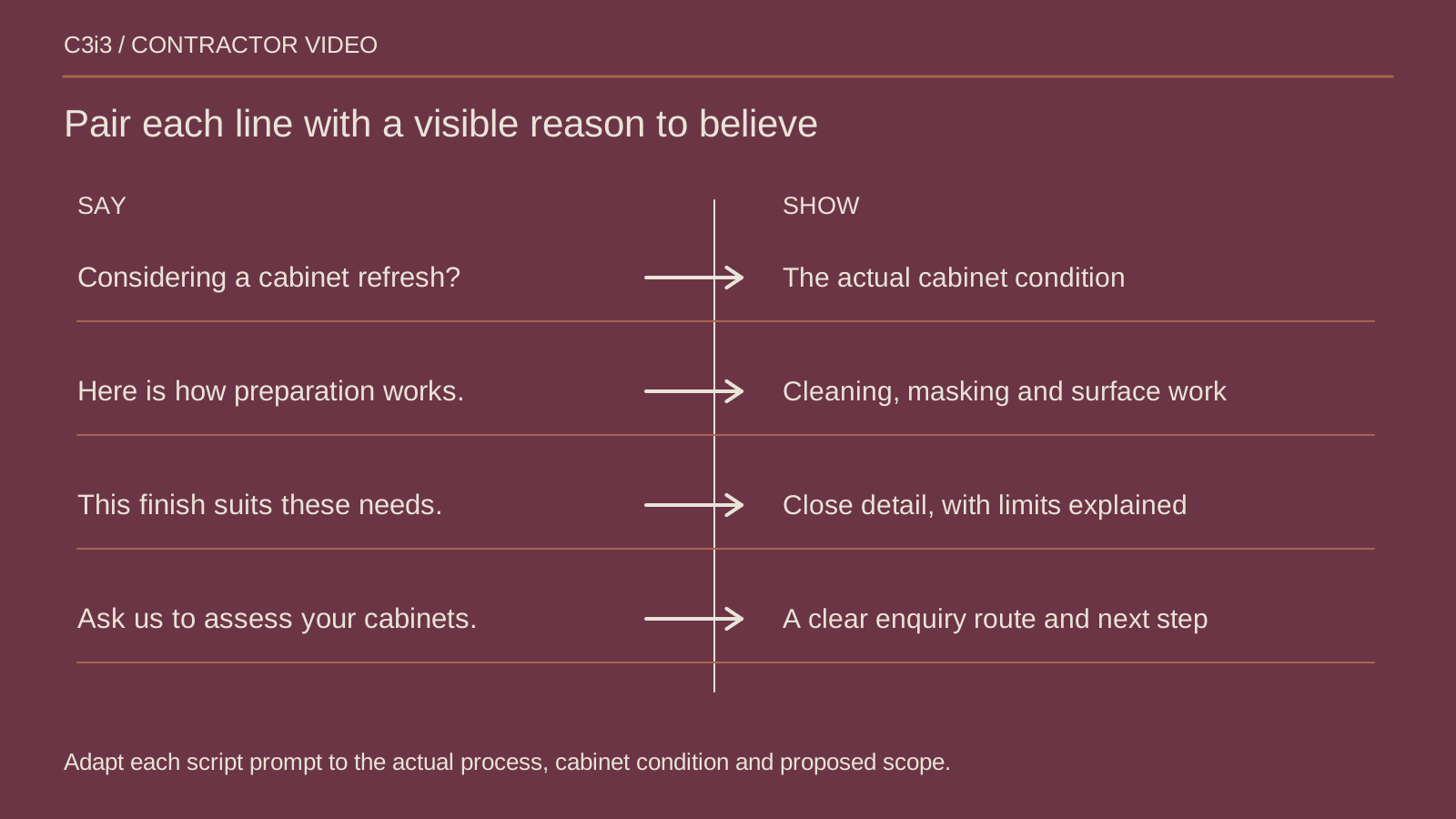
Create a simple script table with narration, visual, on-screen text and approval notes. If the line describes a completed project, use authorized footage of that project. If a graphic explains a general process, label it accordingly.
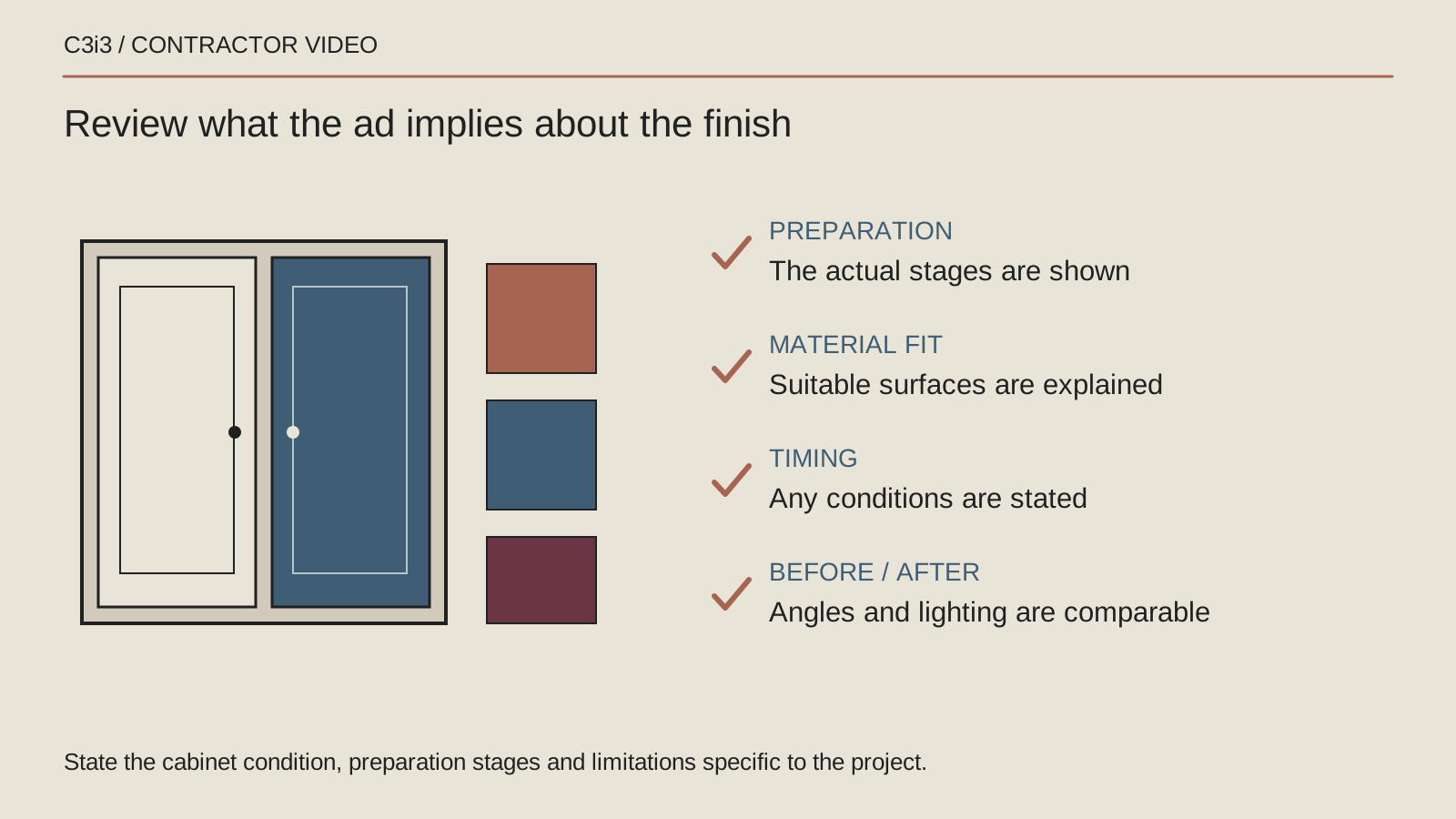
Show the service clearly without turning the ad into a technical instruction manual. The responsible painting specialist should approve descriptions of preparation, suitability, finish and timing. Keep durability and completion statements within the facts approved for the actual engagement.
Keep before-and-after material comparable and honest. Do not use unrelated kitchens as if they document a single transformation. Remove identifying customer details that are not needed for the story and retain permission records with the source files.
Use a compact storyboard that earns each frame
A working sequence is question, service, evidence, assessment explanation and next step. This is an editorial structure, not a fixed platform formula. Adjust the length to the material needed to make the point clearly.
Give captions enough space and reading time. Keep on-screen copy brief while preserving the meaning of spoken content through accurate captions. Do not cover the cabinet detail the viewer needs to see with a large block of promotional text.
Cut anything that does not support the chosen question. A long logo animation or an unrelated exterior painting montage may look polished but weaken the cabinet painting offer. Save those subjects for content with its own purpose.
Make the final invitation continue the same message
Ask viewers to describe the project or explore the assessment process. Use an action the business can handle and explain the response expectation accurately. Avoid describing an instant binding quote when the scope requires evaluation.
Send the ad to a dedicated service explanation with appropriate coverage, relevant evidence and an accessible contact route. The landing page should use the same service language as the script. A mismatch can waste the attention the ad earns.
Check the entire route on a phone: final frame, link, page, form and acknowledgement. The video production pillar explains why the destination belongs in the production brief rather than being chosen after the film is finished.
Review clarity before adding more production polish
Show the storyboard or rough cut to someone unfamiliar with the business and ask what is being offered, who it is for and what happens next. Use their interpretation to find ambiguity. Do not ask only whether they like the music.
Review available campaign data alongside actual enquiry quality. If the message is clear but the audience is outside coverage or the response process is weak, another script may not be the next useful investment. Keep the diagnosis tied to evidence.
YouTube's viewer response guidance can inform a review of channel versions, but it does not prescribe a universal winning script. Maintain the approved wording and source files so later versions remain accurate.
Keep this checklist beside you
Questions before the next step
Should the ad always begin with fear?
A genuine problem can create a useful opening, but do not invent danger, damage or urgency. The hook should accurately describe a concern the service can help assess.
Can I use the same script for exterior painting?
The structure may be reusable, but the customer question, evidence and service explanation should change. Give each service a focused message rather than replacing a few words in an otherwise unrelated ad.

How C3i3 Can Help
C3i3 can help develop a service-focused video script and storyboard for your cabinet painting business. We can connect the opening question, visual evidence and website destination before production begins.
Bring the current ad, the enquiries it attracts and the offer you want customers to understand. We can identify where the message drifts and prepare a reviewable direction. Your specialist team can approve technical statements while we shape a clearer customer-facing story.