



































In this article
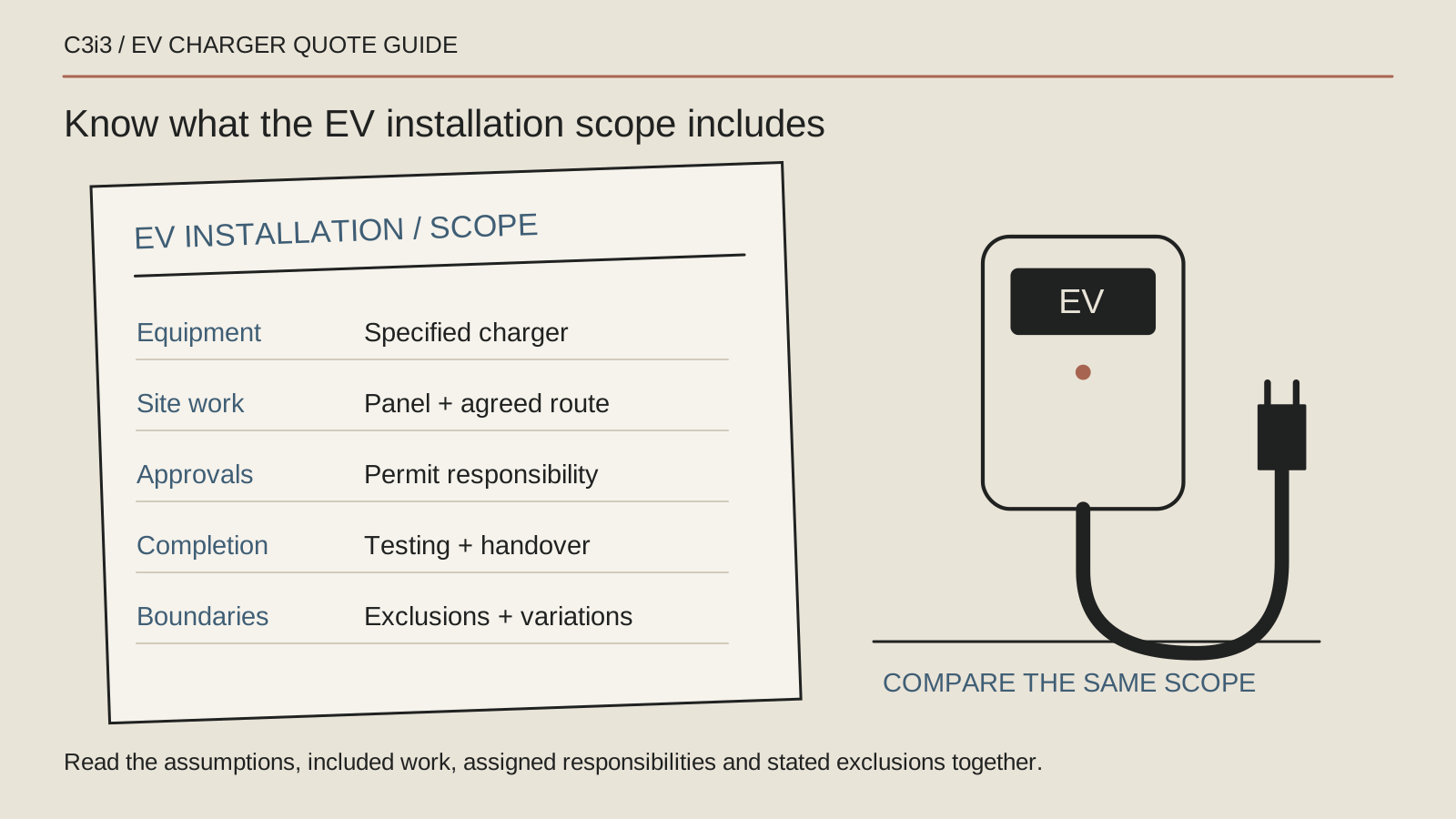
One EV charger quote is a short email. Another contains several pages of electrical work and possible extras. Before deciding which is the better offer, you need to know whether they describe the same installation and the same responsibilities. Differences in the documents may reflect different assumptions about equipment, access or completion.
These five questions help homeowners compare an electrician's proposal for EV charger installation. They are a nameless buyer guide with California context, not a list of recommended companies or instructions for electrical work. Ask qualified professionals to explain the assessment for your actual property.
1. What assessment supports this installation proposal?
Ask the electrician to explain the property-specific findings behind the proposed scope. Discuss your vehicle, parking arrangement and charging needs, then ask how those needs and the electrical assessment led to the recommendation. You should not have to choose a circuit design from an online menu.
Request clarification where a proposal assumes a panel upgrade, service change or another significant task. Ask what finding supports that work and whether an alternative needs evaluation. Do not assume every home requires the same arrangement or that existing capacity can be judged from appearance alone.
The DOE home charging resource provides general background. Use it to prepare questions while leaving electrical evaluation and design to appropriately qualified professionals. Verify the business identity and relevant license through the CSLB lookup.
2. What equipment and installation work does the proposal include?
Identify whether you or the contractor supplies the charger and what exact equipment the proposal assumes. Ask who confirms compatibility, supplies necessary accessories and handles a product issue. A quote labeled charger installation may exclude the charging equipment itself.
Request a clear description of the electrical work, route, access, protection and restoration included. Identify work by other trades and any tasks dependent on further assessment. Keep scope differences visible rather than comparing the service label alone.
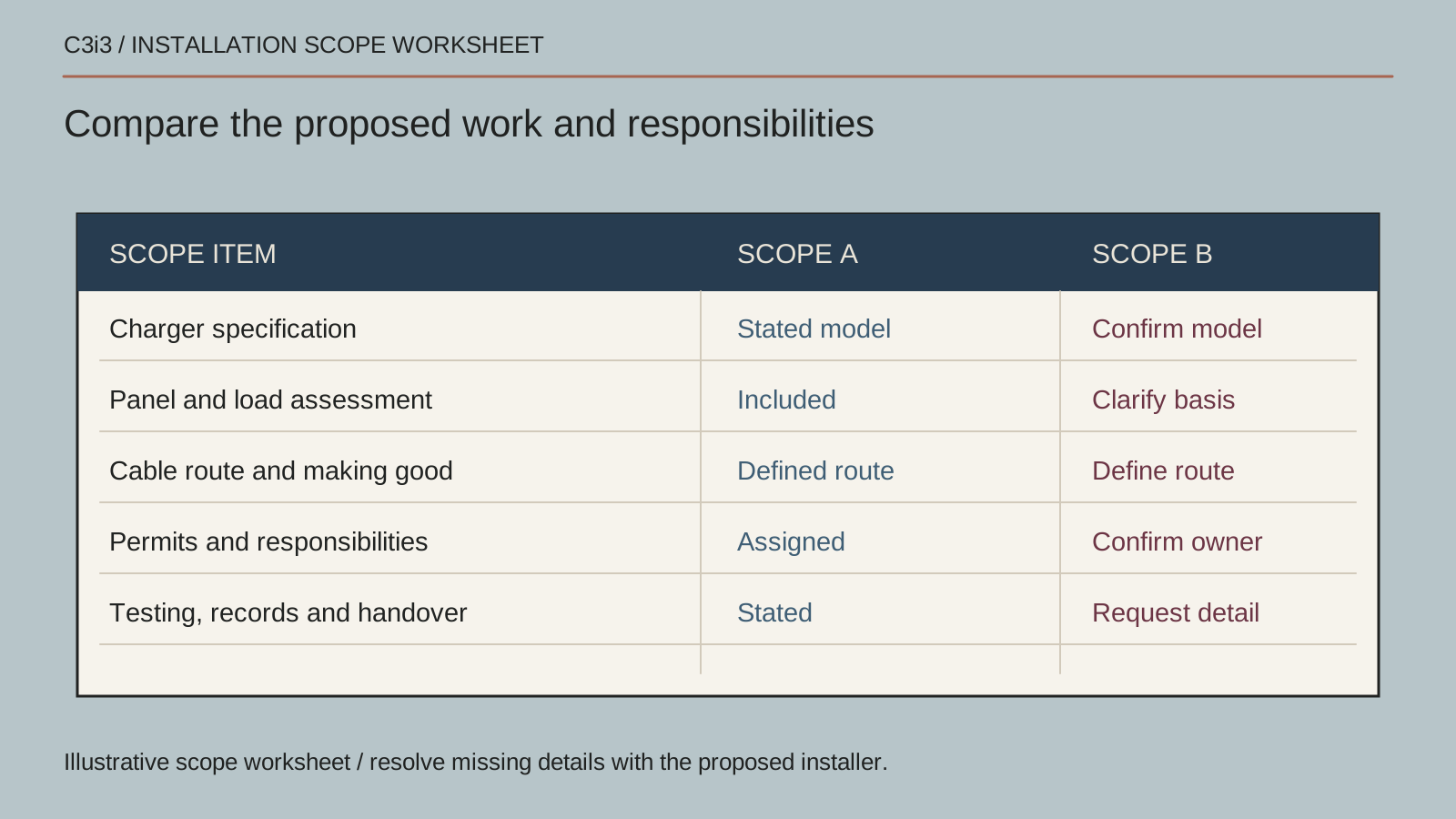
Use a simple worksheet: item, included responsibility, unresolved assumption and clarification requested. You do not need to understand every technical detail to notice that one proposal includes restoration and another does not. Ask the professional to explain unfamiliar terms and put material clarifications into the written scope before you accept it.
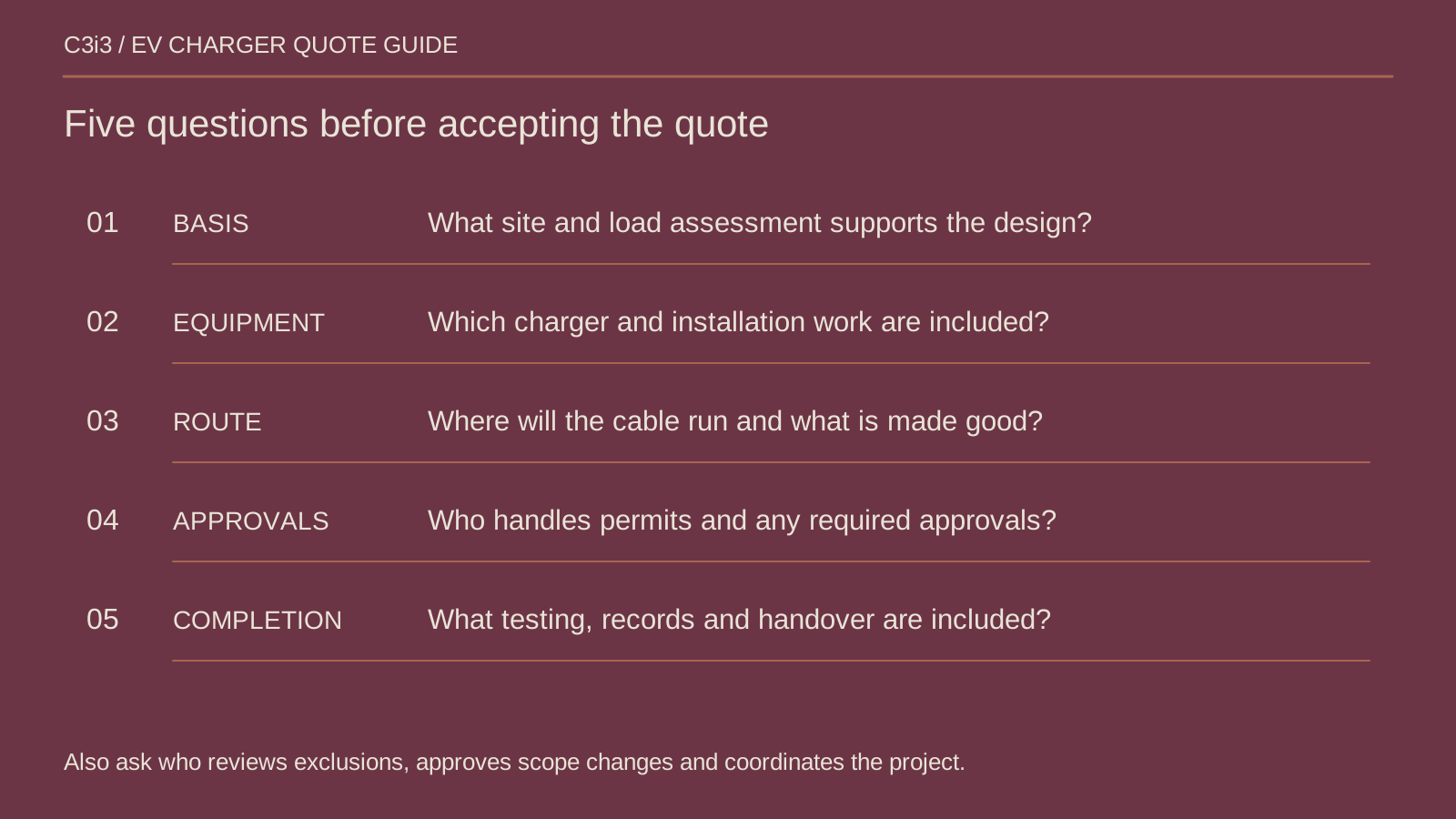
3. Who handles permits, inspections and utility coordination?
Ask who determines the required approvals, submits the applications and arranges inspections. Confirm the current process with the relevant local authority for your property. In San Jose, start with the city's EV charging guidance; other jurisdictions have their own requirements.
If the assessed project involves utility coordination, distinguish it from the electrician's contracted work. Identify who contacts the utility, which decisions or work remain with it and whether the proposed schedule depends on that process. Do not assume a contractor controls another organization's timing.
Record any separate work or unresolved responsibilities appropriately. A complete comparison identifies who owns each step, including those outside the installation quote. Ask what completion records you receive when the agreed approvals and inspections have been addressed.
4. How will scope changes be reviewed and approved?
Ask which conditions remain unresolved in the proposed scope and what additional assessment could change the work. Identify who explains a new finding, how the revised responsibilities are documented and who can authorize a change.
Use a clear comparison row for each condition: observed information, current assumption, affected work and next decision. If one proposal assumes an accessible route and another includes further investigation, request the reasoning before treating them as equivalent. An unresolved assumption should remain visible in the document.
Keep the original proposal and approved revisions together. Review the written responsibilities and seek appropriate advice when a significant condition remains unclear. The CSLB’s contract information is a useful starting point for questions about the agreement. The purpose is an understandable record of the work you are authorizing.
5. What does completion include, and who supports it afterward?
Ask how the installation is tested and what information you receive at handover. Clarify equipment setup, operating guidance, inspection records where applicable and any remaining items. The professional should explain what has been completed within the agreed scope.
Distinguish the equipment manufacturer's warranty from the contractor's installation or labor terms. Identify who to contact for each kind of issue and what exclusions apply. If software setup or network-dependent features are included, ask who handles them and what access the provider needs.
Keep product documents, proposal, agreement and completion information in one place. The goal is not to predict every possible future problem. It is to know what you are accepting, which responsibilities have been fulfilled and how to obtain support for the work and equipment you actually purchased.
Compare responsibilities line by line
| Scope item | Proposal A | Proposal B |
|---|---|---|
| Equipment supply | Record the stated responsibility | Record the stated responsibility |
| Site assessment | Identify the documented basis | Identify the documented basis |
| Access and restoration | Mark included work and exclusions | Mark included work and exclusions |
| Approvals and handover | Name the responsible parties | Name the responsible parties |
Keep this checklist beside you
Questions before the next step
Should I buy the charger before speaking with an electrician?
Confirm the installation approach, compatibility and supply responsibilities first. Buying equipment early can create a mismatch with the assessed scope or the provider's support arrangements. Ask the qualified installer what needs to be established before purchase.
Can I compare proposals with unresolved site conditions?
Compare the documented responsibilities and keep the uncertainty visible. Ask what information resolves each condition and who obtains it. Do not treat an assumption in one proposal as equivalent to assessed work in another.

How C3i3 Can Help
C3i3 helps service businesses explain complex engagements through video and visual content, clear service pages and useful customer journeys. An electrical business can show what an assessment establishes and how its enquiry process works with the technical limits and responsibilities clearly explained.
Bring the questions customers ask when comparing your proposal. We can help turn them into accurate website explanations, with specialist review by your team. Business owners interested in advertising in this guide can contact us to explore clearly labeled opportunities without changing the editorial comparison criteria.